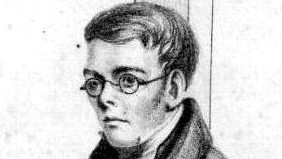
William Corder
Murderer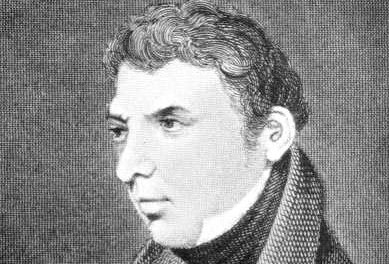 John Thurtell
Murderer · United Kingdom · 1823
John Thurtell (born December 21, 1794) was hanged at Hertford on January 9, 182…
1 victim
John Thurtell
Murderer · United Kingdom · 1823
John Thurtell (born December 21, 1794) was hanged at Hertford on January 9, 182…
1 victim
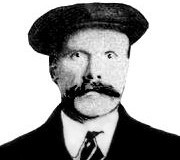 Albert Burrows
Murderer · United Kingdom · 1920
Albert Burrows (also named Albert Edward Burrows): married farm labourer who to…
4 victims
Albert Burrows
Murderer · United Kingdom · 1920
Albert Burrows (also named Albert Edward Burrows): married farm labourer who to…
4 victims
 Dale Cregan
Murderer · United Kingdom · 2012
Dale Christopher Cregan (born 6 June 1983) was convicted in the United Kingdom…
4 victims
Dale Cregan
Murderer · United Kingdom · 2012
Dale Christopher Cregan (born 6 June 1983) was convicted in the United Kingdom…
4 victims
 John Cooper
Murderer · United Kingdom · 1985
John Cooper was a serial killer from Milford Haven, Pembrokeshire. Cooper was c…
4 victims
John Cooper
Murderer · United Kingdom · 1985
John Cooper was a serial killer from Milford Haven, Pembrokeshire. Cooper was c…
4 victims
 Rahan Arshad
Murderer · United Kingdom · 2006
Rahan Arshad (born 1970) was a taxi driver. He lived at Turves Road, Cheadle Hu…
4 victims
Rahan Arshad
Murderer · United Kingdom · 2006
Rahan Arshad (born 1970) was a taxi driver. He lived at Turves Road, Cheadle Hu…
4 victims
 Spencer Brasure
Murderer · 1996
Spencer Brasure was sentenced to death on August 25, 1998. The state’s highest…
1 victim
Spencer Brasure
Murderer · 1996
Spencer Brasure was sentenced to death on August 25, 1998. The state’s highest…
1 victim
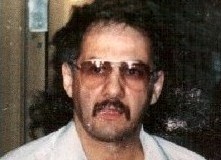 Allan Legere
Murderer · Canada · 1986
Name: Allan Legere · Citation: R. v. Legere (1988), 89 N.B.R. (2d) 361 · Other…
5 victims
Allan Legere
Murderer · Canada · 1986
Name: Allan Legere · Citation: R. v. Legere (1988), 89 N.B.R. (2d) 361 · Other…
5 victims
 Devon Stuart Olson
Murderer · USA · 1986
Devon Stuart Olson was a transient. Texas authorities arrested California parol…
2 victims
Devon Stuart Olson
Murderer · USA · 1986
Devon Stuart Olson was a transient. Texas authorities arrested California parol…
2 victims
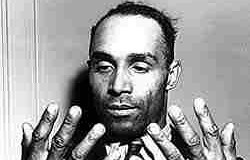 Jarvis Catoe
Serial killer · USA · 1935
Jarvis Theodore Roosevelt Catoe was convicted of killing a woman in Washington…
8 victims
Jarvis Catoe
Serial killer · USA · 1935
Jarvis Theodore Roosevelt Catoe was convicted of killing a woman in Washington…
8 victims
 Charles Milton
Murderer · USA · 1977
Charles Milton was convicted of capital murder by a Fort Worth, Texas jury and…
1 victim
Charles Milton
Murderer · USA · 1977
Charles Milton was convicted of capital murder by a Fort Worth, Texas jury and…
1 victim
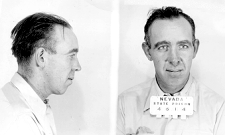 Floyd McKinney
Murderer · USA · 1943
Floyd L. McKinney was a native of Gateway, Oregon. He was 34 at the time of his…
2 victims
Floyd McKinney
Murderer · USA · 1943
Floyd L. McKinney was a native of Gateway, Oregon. He was 34 at the time of his…
2 victims
- Gender
- male
- Country
- United Kingdom
- Location
- Posteal, Suffolk, England, United Kingdom
- Date of birth
- 1803
- Age at first offence
- 24
- Characteristics
- —
- Victim profile
- Maria Marten, 26 (his lover)
- Method of murder
- Shooting
- Date(s) of murder
- May 18, 1827
- Years active
- 1827
- Date of arrest
- —
- Status
-
Executed
Executed by hanging in Bury St.
Case record: William Corder
Background
William Corder was executed by hanging in Bury St. He was tried for the murder of Maria Marten, committed in the Red Barn.
Maria Marten was born in July 1801. She was brought up by her father, who was a mole-catcher, at Polstead, in Suffolk. She received an education far superior to her situation in life. Maria Marten was described as having a pretty face and a fine form and figure.
Maria Marten had admirers and, as an artless and inexperienced young woman, fixed her affections upon an unworthy object. An unfortunate step ruined the character of the young woman. A second mishap with a gentleman of fortune, residing in the neighbourhood of her father’s house, left her with a child. At the time of Maria Marten’s death, the child was three and a half years old.
About the year 1826, Maria Marten formed a third liaison with the man who became her deliberate murderer, William Corder. William Corder was described as the son of an opulent farmer at Polstead. After becoming acquainted with Maria Marten, illicit intercourse between them resulted in a child. From that time, William Corder became much attached to her and was a frequent visitor at her father’s house.
The child died within a short period after its birth. An idea was entertained that the child had come unfairly by its death because of the circumstances: William Corder took the child away at night and disposed of its body in a manner which he would never explain. Maria Marten used the circumstance as a means of endeavouring to procure the father of the child to fulfil a promise to make her his wife.
The offence
On 18 May 1827, William Corder called at the house of old Marten and expressed his willingness that the ceremony be performed. He said that, in order that no time should be lost and that the marriage might be as private as possible, he had made up his mind to have it celebrated by licence instead of by banns.
The next day was appointed for the wedding. William Corder persuaded Maria Marten to dress herself in a suit of his clothes to secure the greatest secrecy, and to accompany him to a part of his premises called the Red Barn. Maria Marten would exchange those clothes for her own there, and William Corder would convey her in a gig to a church at Ipswich.
Maria Marten consented to this proposition. William Corder quitted the house and was soon after followed by his victim, carrying such part of her own clothes as would be necessary to appear in church.
During a conversation between William Corder and the mother of the girl before they went away, William Corder repeatedly declared his intention to make Maria Marten his lawful wife. He urged Maria Marten to go with him immediately and gave as a reason that he knew a warrant had been issued against her for her bastard children.
Within a few minutes after William Corder quitted the house, he was seen by the brother of the girl to walk in the direction of the Red Barn with a pickaxe over his shoulder. From that time nothing was ever heard of Maria Marten except through fictitious communications received from William Corder, who still remained at his mother’s house at Polstead.
The return of Maria Marten had been expected to take place within a day or two after Maria Marten quit her father’s house, but because of irregularity in the duration of her visits to William Corder and an understanding that William Corder would procure her a temporary lodging, little anxiety or alarm was at first felt.
A fortnight elapsed. Her mother then proceeded to question William Corder. He declared that Maria Marten was quite safe and well and that he had placed her at some distance to avoid his friends discovering the fact of his marriage and exhibiting displeasure. William Corder put off inquiries from time to time.
In September, William Corder declared he was in ill-health and quitted Suffolk with the avowed object of proceeding to the Continent. Before he left Polstead, he expressed anxiety that the Red Barn should be well filled with stock, a desire which he personally saw fulfilled. He took with him about four hundred pounds in money. Several letters were later received by his mother, who was a widow, and by the Martens. In those letters, he stated that he was living at the Isle of Wight with Maria Marten. It was remarked that although he represented his residence to be in the Isle of Wight, his letters always bore the London postmark.
Investigation
Strange surmises and suspicions began to be entertained because no personal communication had been received from the supposed wife. The parents became more and more disturbed and dissatisfied.
In the course of March 1828, Mrs Marten dreamed on three successive nights that her daughter had been murdered and buried in the Red Barn. Terrified by the repetition of the vision and confirmed in an undefined suspicion that her daughter had been unfairly dealt with, Mrs Marten persuaded her husband to apply for permission to examine the Red Barn on Saturday 19 April, with the professed object of looking for their daughter’s clothes.
The grain deposited in the barn had been removed by then. After permission was obtained, the father proceeded to the spot pointed out to his wife in her dream. There, when he dug, he turned up a piece of the shawl Maria Marten had worn at the time of quitting her home. Alarmed, the father prosecuted the search still further. When he dug to the depth of eighteen inches with his rake, he dragged out a part of a human body.
Subsequent examination proved the discovery was Maria Marten’s murdered daughter. The body was in an advanced state of decomposition. The dress was perfect, and certain marks in the teeth afforded sufficient proofs of identity.
Information was immediately conveyed to the coroner, and an inquest was held. By the time the coroner’s jury assembled, a surgical examination of the body had taken place. Mr John Lawden, a surgeon, said the appearances remained sufficient to indicate the deceased had come to her death by violent means. He said there was a visible appearance of blood on the face and on the clothes of the deceased, and also on a handkerchief round the neck. The handkerchief appeared to have been tied extremely tight, and beneath the folds a wound was visible in the throat, inflicted by some sharp instrument. There was also a wound in the orbit of the right eye, as if something had been thrust in which had fractured the small bones and penetrated the brain.
When the body was found, it was partly enveloped in a sack and clothed only in a shift, flannel petticoat, stays, stockings and shoes.
Information having been dispatched to London, Lea, an officer of Lambeth Street, was sent in pursuit of the supposed offender. With a loose clue, he traced William Corder from place to place until he found him residing at Grove House, Ealing Lane, near Brentford. William Corder was carrying on a school for young ladies. Lea found William Corder there with his wife, who William Corder had married only about five months before. It was said that William Corder introduced himself to her through a matrimonial advertisement.
It was necessary to employ stratagem to obtain admission to the house. Lea represented that he had a daughter he wished to put to school and was shown into a parlour. In the parlour, Lea found William Corder sitting at breakfast with four ladies, in his dressing-gown, with his watch before him, minuting the boiling of eggs. Lea called him aside and informed him he had a serious charge; Lea also asked whether William Corder was acquainted with a person named Maria Marten at Polstead. William Corder denied having knowledge of such a person even by name.
William Corder was secured. Upon his house being searched, a brace of pistols, a powder-flask and some balls were found in a velvet bag. When Mrs Marten saw it, it was identified by her as having been in the possession of her daughter at the time of her quitting the house for the last time. A sharp-pointed dagger was also found. It was identified by Offord, a cutler, as one which he had ground for William Corder a few days before the murder was committed.
William Corder was conducted to Polstead to undergo an examination before the coroner. Vast crowds gathered to catch a glimpse of him being brought into town. On his appearance before the coroner he was dreadfully agitated. The circumstances deposed to by various witnesses resulted in a verdict of wilful murder returned against William Corder.
Trial
Thursday 7 August 1828 was appointed for the trial of William Corder. Hundreds of well-dressed persons of both sexes gathered around the front and back entrances to the shire hall, Bury St Edmunds, as early as five o’clock in the morning. The rain fell heavily, but many remained without shelter until nine o’clock, when the Lord Chief Baron (Alexander) arrived to try the prisoner.
At the moment his Lordship gained admission to the court, the scene was described as beggaring description. Barristers attending the circuit, including the counsel for the prosecution and defence, struggled against crowd pressure and were carried back exhausted to the far edge of the assembled multitude. The jury names were called, but it was almost impossible to make way for them into the court due to crowd size. After nearly an hour, they were brought over the heads of the crowd into the passage leading into the hall; some had their coats torn, shoes off, and nearly fainting.
Curiosity extended to the jail and road leading to the shire hall. Hundreds assembled to obtain a glimpse of the accused. William Corder left the jail at a quarter before nine, wearing a new suit of black and combed hair over his forehead, previously brushed up in front. Because of numerous challenges made by William Corder, time was required before a jury was empanelled.
William Corder was arraigned on the indictment. He pleaded not guilty.
At trial, evidence differed but slightly from previously described circumstances. Proof was given that at the time of discovery of the body, marks were visible showing she had received a pistol-shot or gun-shot wound. It was also proved by the brother of the deceased girl that William Corder, when quitting old Marten’s house on the day of the murder, carried a loaded gun.
William Corder declared he deeply deplored the death of the unfortunate female. He urged the jury to dismiss prejudice excited against him by foul imputations cast by the public press. He admitted evidence sufficient to create suspicion but said his explanation would clarify the real bearings of the case.
William Corder made the following address:
"No man regrets more sincerely than I do the death of the unfortunate Maria, the circumstances attending which I am now about to state; and much have I to regret, that I for a moment concealed them, but I did so because I was stupefied and horror-struck at the time, and knew not how to act. You have heard of the nature of my connection with the unfortunate Maria; that connection was contrary to the will of my mother, and to conceal her situation, I took lodgings for her at Sudbury, where she was confined. In the usual time she returned to her father's house; in a fortnight after which the infant died -- not, as has been intimated, by violence, but a natural death. Being anxious to conceal the circumstance from my friends and neighbours, it was agreed between her father, and mother, and myself, that Maria and I should bury the child in the fields, and we took it away for that purpose. After this Maria returned to my house at Polstead; and by means of a private staircase I took her to my own room, where she remained concealed for two days. The pistols which have been spoken of were hanging up in the room loaded. I had before that shown her the use of them, and on returning to her father's, she, by some means unknown to me, contrived to get the pistols into her possession. It is well known that at that period Maria was much depressed in spirits, and was anxious that I should marry her, although I had reason to suspect that she was at the time in correspondence with a gentleman in London by whom she had had a child. My friends objected to the match, and I declined it at the time. But although poor Maria's conduct was not altogether free from blame, I was much attached to her, and at length agreed to her wishes; and it was arranged that we should go to Ipswich and obtain a licence for that purpose. Whether I did or did not say anything about a warrant having been issued by the parish officers for her apprehension, I cannot now pretend to say; but if I did, it must have been because such a report was abroad at the time, It was agreed that Maria should go in male attire to the Red Barn so often mentioned in the course of the trial. You have heard from the mother of the unfortunate Maria, that she and I had had words, As we proceeded to the Barn she was in tears. To that Barn we had often repaired before, and frequently passed the night there. When we reached the Barn, words arose, and Maria flew into a passion. I told her that if we were to be married, and to live together, she must not go on so. Much conversation ensued, and on changing her dress, she at length told me, that if we were married we should never be happy together -- that I was too proud to marry her and take her to my mother's, and that she did not regard me. I was highly irritated, and asked her, if she was to go on this way before marriage, what was I to expect after? She again upbraided me, and being in a passion, I told her I would not marry her, and turned from the Barn, but I had scarcely reached the gate when a report of a pistol reached my ear. I returned to the Barn, and with horror beheld the unfortunate girl extended on the floor, apparently dead: I was for a short time stupefied with horror, and knew not what to do. It struck me to run for a surgeon; and well would it have been for me had I done so. But I raised the unfortunate girl, in order, if possible, to afford her some assistance; but I found her altogether lifeless; and, to my horror, I discovered that the dreadful act had been committed by one of my own pistols, and that I was the only person in existence who could tell how the fatal act took place The sudden alarm which seized me suspended my faculties, and I was some time before I could perceive the awful situation in which I was placed, and the suspicions which must naturally arise from my having delayed to make the circumstance instantly known. I, at length, found that concealment was the only means by. which I could rescue myself from the horrid imputation; and I resolved to bury the body as well as I was able. Having done so, I subsequently accounted for her absence in the manner described by the witnesses, saying sometimes one thing to one person, and at other times other things to another. 1 may be asked why, if innocent of the crime imputed to me, I felt it necessary to give those answers? To which I answer, that some persons are driven to do acts from fear which others do from guilt, which is precisely the case with me in this instance. It may be asked, too, why I have not called evidence to prove the facts I have stated; but, gentlemen, I put it to you whether things do not sometimes take place which are only known to the parties between whom they happen; and what direct proof can I give when the only person who knew of these facts is no more? I can for the same reason give no direct proof of the unhappy woman's having got possession of my pistols. I say pistols, because I found the other loaded pistol in the unfortunate Maria's reticule. As to the stabs and other wounds described by the witnesses, I can only say that no stab or cut was given by Maria or my self; and I firmly believe that the surgeons would never have sworn to them, were it not for the circumstance, of a sword having been found in the room in which I was arrested. If any stab did appear on the body, it must have been done with the instrument used in disinterring it."
Having concluded his address, witnesses spoke to William Corder’s good character. The Lord Chief Baron summed up, and a verdict of "Guilty" was returned.
During the subsequent passing of the sentence of death, William Corder was described as dreadfully affected and was first observed raising his handkerchief to his eyes.
Sentencing
A verdict of "Guilty" was returned after the Lord Chief Baron summed up. A sentence of death followed.
Appeals
No appeal information was included.
Outcome
After sentencing, William Corder was permitted to see his wife. At two o’clock on Saturday afternoon, she was admitted to the prisoner. Their meeting was described as affecting and lasting nearly an hour.
During the evening, William Corder was constantly attended by the reverend chaplain of the jail. He did not show inclination to confess. The following day he attended chapel and appeared deeply affected. He then threw himself upon his bed and wept bitterly for a considerable time.
It was hinted to him that his defence could scarcely be believed. He answered that "Confession to God was all that was necessary, and that confession to man was what he called popedom or popery, and he never would do it."
When it was suggested he must have had great nerve to dig the grave while the body lay in sight, William Corder replied:
"Nobody knows that the body lay in the barn and in sight, whilst I dug the bole;"
He then checked himself and exclaimed:
"O God! nobody will dig my grave."
He had a second and last interview with his wife in the course of the afternoon. He expressed anxious fears about the way she would be treated in the world. He implored her, if she ever married again, to be cautious about accepting a proposition reaching her through a public advertisement. After Mrs Corder retired, Mr Orridge, governor of the jail, made efforts to induce William Corder to confess, pointing out that if he continued denying his guilt, he would quit the world still denying it despite the importance of confession.
William Corder then exclaimed:
"O sir, I wish I had made a confidant of you before, I often wished to have done it, but you know, sir, it was of no use to employ a legal adviser and then not follow his advice."
Mr Orridge replied that this was proper up to conviction, but that now earthly considerations must cease. William Corder then exclaimed:
"I am a guilty man,"
and immediately afterwards made the following confession:
"Bury Jail, August 10, 1828 -- Condemned Cell, Sunday Evening, Half-past Eleven." "I acknowledge being guilty of the death of poor Maria Marten, by shooting her with a pistol. The particulars are as follows:-- When we left her father's house we began quarrelling about the burial of the child, she apprehending that the place wherein it was deposited would be found out. The quarrel continued for about three-quarters of an hour upon this and about other subjects. A scuffle ensued, and during the scuffle, and at the time I think that she had hold of me, I took the pistol from the side-pocket of my velveteen jacket and fired. She fell, and died in an instant. I never saw even a struggle. I was overwhelmed with agitation and dismay -- the body fell near the front doors on the floor of the barn. A vast quantity of blood issued from the wound, and ran on to the floor and through the crevices. Having determined to bury the body in the barn (about two hours after she was dead), I went and borrowed the spade of Mrs Stowe; but before I went there, I dragged the body from the barn into the chaff-house, and locked up the barn. I returned again to the barn, and began to dig the hole; but the spade being a bad one, and the earth firm and hard, I was obliged to go home for a pick-axe and a better spade, with which I dug the hole, and then buried the body. I think I dragged the body by the handkerchief that was tied round her neck. It was dark when I finished covering up the body. I went the next day and washed the blood from off the barn floor. I declare to Almighty God I had no sharp instrument about me, and that no other wound but the one made by the pistol was inflicted by me. I have been guilty of great idleness, and at times led a dissolute life, but I hope through the mercy of God to be forgiven. "W. CORDER." Witness to the signing by the said William Corder, "John ORRIDGE."
The next morning, the confession was read over to William Corder. He declared it was quite true. In answer to a question by the under-sheriff, he thought the ball entered the right eye. He appeared easier in mind afterward and attended service in chapel immediately before he was carried out for execution. He still wore the clothes in which he was dressed at the time of trial. As prayers made allusions to his situation, he appeared convulsed with agony. When service ended, his limbs failed and he was obliged to be carried to his cell.
At a few minutes before twelve o’clock, he was removed from the dungeon where he had been confined and conveyed to the press-room. He was pinioned by the hangman carried down from London to superintend the execution. William Corder was described as resigned but too weak to stand without support. When his cravat was removed, he groaned heavily and appeared to labour under great mental agony. When his wrists and arms were made fast, he was led round toward the scaffold. As he passed yards where prisoners were confined, he shook hands with them and spoke to two by name, saying:
"Good bye, God bless you!"
The prisoners were affected. As he passed, they frequently uttered:
"God bless you!"
"May God receive your soul!"
The chaplain preceded him, reading the usual Burial Service. The governor and officers walked immediately after him. He was supported up the steps to the scaffold. A constable supported him while the hangman adjusted the fatal cord. A few moments before the drop fell, William Corder groaned heavily and would have fallen without a second constable catching hold. The fatal drop fell. He was described as not struggling. He raised his hands once or twice as if in prayer. The hangman pulled his legs and he was motionless within a moment. About nine minutes later, his shoulders rose in a convulsive movement. He died with little apparent pain. Just before being turned off, he said, in a feeble tone:
"I am justly sentenced, and may God forgive me."
Mr Orridge then informed the crowd that William Corder acknowledged the justice of his sentence. He died in peace with all men.
The mob collected was computed to amount to upwards of seven thousand persons. A considerable portion were women. After execution, they dispersed and proceeded to the Shire Hall where many had assembled to view the body. At two o’clock, the body was exposed on the table in the centre of the Shire Hall. It was naked from the navel upwards. The crucial operation had been performed and the skin of the breast and stomach turned back on each side. The body measured five feet five inches in length as it lay. The face and throat were swollen and discoloured. The right eye was open, the left partially so. The mouth was open enough to show the teeth.
The body was taken to the hospital the next day to be dissected, in pursuance of the sentence.
After execution, a bidding took place for the rope used by the hangman. As much as a guinea an inch was obtained. Large sums were offered for the pistols and dagger used in the murder, but they became the property of the sheriff of the county, who refused to put them up for public competition. A piece of the skin of William Corder, which had been tanned, was exhibited for a long time afterwards at the shop of a leather-seller in Oxford-street.
Aftermath
A “private gentleman” advertisement was described as having been inserted. The advertisement read:
"A private gentleman, aged twenty-four, entirely independent, whose disposition is not to be exceeded, has lately lost the chief of his family by the hand of Providence, which has occasioned amongst the remainder circumstances the most disagreeable to relate. To any female of respectability, who would study for domestic comfort, and who is willing to confide her future happiness to one in every way qualified to render the marriage state desirable, as the Advertiser is in affluence; many happy marriages have taken place through means similar to this now resorted to. It is hoped none will answer through impertinent curiosity; but should this meet the eye of any agreeable Lady who feels desirous of meeting with a sociable, tender, kind; and sympathising companion, she will find this advertisement worthy of notice. Honour and secrecy may be depended upon. As some little security against idle application, it is requested that letters may be addressed (postpaid) A.Z., care of Mr Foster, stationer, 68, Leadenhall street, with real name and address, which will meet with most respectful attention,"
A curious conversation in reference to William Corder’s marriage was related as follows:
Attendant:
"Pray, Mr Corder, may I ask whether it is true that it was by advertisement that you were first introduced to Mrs Corder?" Corder: "It is perfectly true. Did you receive any answers to it? -- I received no less than forty-five answers, and some of them from ladies in their carriages. Really! well, that surprises me." Attendant: "It may well surprise you, as it did myself, but I missed of a good -- Pray how was that?" "I will tell you. In one of the answers which I received, it was requested that I should attend a particular church on an appointed day, dressed in a particular way, and I should there meet a lady wearing a certain dress, and both understanding what we came about, no further introduction would be necessary. But how could you know the particular lady, as there might be another lady dressed in the same way?" "Oh, to guard against any mistake, the lady desired that I should wear a black handkerchief, and have my left arm in a sling; and in case I should not observe her, she would discover me and introduce herself. And did you meet her?" "I did not; I went to the church, but not in time, as the service was over when I got there." "Then as you did not meet her, how could you tell that she was a respectable woman?" "Because the pew-opener told me that such a lady was inquiring for a gentleman of my description, and that she had come in an elegant carriage, and was a young woman of fortune. [Here the prisoner sighed heavily.] Then you never saw her afterwards?" "No, never; but I found out where she lived, and who she was; and would have had an interview with her, were it not that I was introduced to Mrs Corder, and we never parted until we were married. Pray, sir, was that long?" "About a week"
The record also stated that there was reason to believe this last assertion was untrue, and that William Corder was introduced to Mrs Corder at a sea-port town in the course of the summer before the marriage. It said they afterwards met at the shop of a pastry-cook in Fleet-street. It further stated that the young lady having answered the advertisement later met her future husband again at the same shop. Mrs Corder’s maiden name was Moore. Before her marriage she kept a school in the neighbourhood of Gray’s-inn-lane and was described as very respectably connected.
A fictionalized account of the murder was produced in 1953 for the CBS radio series "Crime Classics". The incident had inspired contemporary musicians, including No Roses by the Albion Country Band (released in 1971), which included the traditional song "Murder of Maria Martin". More recently, "Murder in the Red Barn" by Tom Waits (co-written with his wife Kathleen Brennan) from his 1992 album Bone Machine, and Kathryn Roberts and Sean Lakeman’s "The Red Barn" on the 2004 album "2" commemorated the event. The song "Maria Martin" included on the folk album White Swans Black Ravens was recorded live in Moyse's Hall Museum. Swavesey Village College Theatre Company produced a stage adaptation in 2000 and later revived the production in 2006. The latest revival toured to theatres and received critical acclaim. In November 2007 a report of a fire that nearly destroyed Marten's still-standing cottage was on the front page of the East Anglian Daily Times. Firefighters saved 80% of the thatched roof at Marten's former home after a chimney fire threatened the “iconic Suffolk cottage”, now run as a bed and breakfast.
Other details
The record contained references including Brown, Margaret (Ed.) (1999) The Letters of Charles Dickens: 1865–1867 Vol 11; Cairns, David (1999) Advocacy and the Making of the Adversarial Criminal Trial 1800–1865; Caulfield, Catherine (2005) The Man Who Ate Bluebottles: And Other Great British Eccentrics; Curtis, James (1828) The Mysterious Murder of Maria Marten; Donaldson, Willie (2004) Brewer's Rogues, Villains and Eccentrics; Gatrell, V. A. C. (1996) The Hanging Tree: Execution and the English People, 1770–1868; Hardy, Thomas (2004); Hindley, Charles [1869] (1969) The History of the Catnach Press; Langbein, John H. (2003) The Origins of Adversary Criminal Trial; Mackay, Charles (1995) Extraordinary Popular Delusions and the Madness of Crowds; Maclaren, Angus (1997) The Trials of Masculinity; Neuburg, Victor (1977) Popular Literature: A History and Guide; Picard, Liza (2006) Victorian London: The Tale of a City 1840—1870, and Wikipedia.org.

Spotted an error, or have more information about this case?