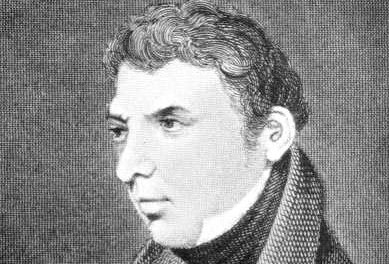
John Thurtell
Murderer William Corder
Murderer · United Kingdom · 1827
William Corder was executed by hanging in Bury St. He was tried for the murder…
1 victim
William Corder
Murderer · United Kingdom · 1827
William Corder was executed by hanging in Bury St. He was tried for the murder…
1 victim
 Albert Burrows
Murderer · United Kingdom · 1920
Albert Burrows (also named Albert Edward Burrows): married farm labourer who to…
4 victims
Albert Burrows
Murderer · United Kingdom · 1920
Albert Burrows (also named Albert Edward Burrows): married farm labourer who to…
4 victims
 Dale Cregan
Murderer · United Kingdom · 2012
Dale Christopher Cregan (born 6 June 1983) was convicted in the United Kingdom…
4 victims
Dale Cregan
Murderer · United Kingdom · 2012
Dale Christopher Cregan (born 6 June 1983) was convicted in the United Kingdom…
4 victims
 John Cooper
Murderer · United Kingdom · 1985
John Cooper was a serial killer from Milford Haven, Pembrokeshire. Cooper was c…
4 victims
John Cooper
Murderer · United Kingdom · 1985
John Cooper was a serial killer from Milford Haven, Pembrokeshire. Cooper was c…
4 victims
 Rahan Arshad
Murderer · United Kingdom · 2006
Rahan Arshad (born 1970) was a taxi driver. He lived at Turves Road, Cheadle Hu…
4 victims
Rahan Arshad
Murderer · United Kingdom · 2006
Rahan Arshad (born 1970) was a taxi driver. He lived at Turves Road, Cheadle Hu…
4 victims
 Somkhid Phumphuang
Serial killer · Th ailandia · 2005
Somkhid Phumphuang was sentenced to death on March 2, 2010. He was described as…
5 victims
Somkhid Phumphuang
Serial killer · Th ailandia · 2005
Somkhid Phumphuang was sentenced to death on March 2, 2010. He was described as…
5 victims
 Rigoberto Avila
Murderer · USA · 2000
Rigoberto Avila, Jr. was convicted of capital murder in El Paso County, Texas.…
1 victim
Rigoberto Avila
Murderer · USA · 2000
Rigoberto Avila, Jr. was convicted of capital murder in El Paso County, Texas.…
1 victim
 Jose Carranza
Murderer · USA · 2007
Jose Carranza was a suspect in the slayings of three college students in a Newa…
3 victims
Jose Carranza
Murderer · USA · 2007
Jose Carranza was a suspect in the slayings of three college students in a Newa…
3 victims
 Roy Willard Blankenship
Murderer · USA · 1978
Roy Willard Blankenship was a white male born in 1955. He was incarcerated in G…
1 victim
Roy Willard Blankenship
Murderer · USA · 1978
Roy Willard Blankenship was a white male born in 1955. He was incarcerated in G…
1 victim
 Syvasky Poyner
Spree killer · USA · 1984
Syvasky Lafayette Poyner challenged three Virginia state court judgments that s…
5 victims
Syvasky Poyner
Spree killer · USA · 1984
Syvasky Lafayette Poyner challenged three Virginia state court judgments that s…
5 victims
- Gender
- male
- Country
- United Kingdom
- Location
- Radlett, Hertfordshire, England, United Kingdom
- Date of birth
- December 21, 1794
- Age at first offence
- 29
- Characteristics
- revenge, rape
- Victim profile
- William Weare (a solicitor and gambler)
- Method of murder
- D riving the pistol into his head with such force that his brains were literally dashed out over the ground
- Date(s) of murder
- October 23, 1823
- Years active
- 1823
- Date of arrest
- —
- Status
-
Executed
Executed by hanging at Hertford on January 9, 1824
Case overview
John Thurtell (born December 21, 1794) was hanged at Hertford on January 9, 1824 for the murder of William Weare.
Thurtell had a grudge against fellow gambler and solicitor William Weare. Thurtell accused Weare of cheating him of £300 in a game of cards, and he owed Weare, by the standards of the day, a sum described as “this vast sum.” Thurtell believed Weare had cheated him of the money. When Weare demanded payment, Thurtell chose to murder him rather than pay up.
The murder was committed at Radlett, Hertfordshire, and the body was disposed of in a pond in Elstree. The killing was dubbed “The Elstree Murder.” The case attracted substantial press and public attention and was described as sensational at the time.
The offence
On October 24, 1823, Thurtell invited Weare to spend a weekend gambling with him and friends at a cottage owned by fellow gambler William Probert at Radlett in Hertfordshire. Thurtell and Weare travelled up from London in Thurtell’s gig.
As they neared the cottage, Thurtell confronted Weare outside the Wagon and Horses Inn in Watling Street, Radlett. Thurtell drew a pistol and fired it at Weare’s face. The gun had misfired and the bullet glancing off Weare’s cheekbone.
After the shooting failed, Thurtell set about Weare with a penknife and cut his throat. Thurtell also rammed the muzzle of the gun into Weare’s skull with maximum force, leaving blood, hair, and tissue in the barrel.
After the killing, William Probert and Joseph Hunt helped Thurtell dispose of Weare’s body. The first disposal involved placing the body into a pond in the garden of Probert’s cottage. Under cover of darkness, the body was later moved to and thrown into another pond in Elstree.
Investigation
A labourer found the bloody knife and pistol by the cottage and took them to the authorities. A murder investigation began.
The owner of the cottage, William Probert, was first questioned. Probert turned King’s Evidence against Weare, and he implicated Hunt. Hunt was soon arrested and led the police to the body.
Two matching pistols were relevant to the investigation. The pistol left behind was one of a pair, with the other remaining in Thurtell’s possession.
A contemporary street ballad, “The Hertfordshire Tragedy,” emphasized the killing in the following lines: “They cut his throat from ear to ear, His head they battered in. His name was Mr William Weare, He lived in Lyons Inn.”
Arrest and custody
Thurtell and Hunt were taken into custody. Trial proceedings followed at the January sitting of the Hertford Assizes.
Trial
Thurtell and Hunt came up for trial at the January sitting of the Hertford Assizes before Mr. Justice Park. Thurtell was charged with the murder of Weare, and Hunt with being an accessory to it. Thurtell and Hunt were not represented by counsel.
Fair trial concerns
The case received unprecedented publicity, raising questions about whether defendants could have a fair trial. The trial judge, Mr. Justice Park, remarked that if “these statements of evidence before trial which corrupt the purity of the administration of justice in its source are not checked, I tremble for the fate of our country.”
It was described that this was to be the last trial in England conducted under old 16th century principles. Under those principles, the accused had to defend himself against the prosecution with only a speech allowed after the evidence against them had been heard, and there was no right to cross examine prosecution witnesses.
Thurtell’s address and witness remarks
Thurtell made a lengthy and somewhat rambling address, attempting to shift blame for the killing to Probert. He referred to his Christian upbringing and also made references, apparently, to Voltaire and Saint Paul, which failed to impress the judge or the jury.
A witness for Thurtell said: “I always thought him (Thurtell) a respectable man.” When asked by the judge what he meant by this, the witness replied: “He kept a gig.”
Thurtell’s guilt was viewed as self-evident by both the press and the public.
After deliberations, the jury found both accused guilty in just twenty minutes.
A broader account also stated that Thurtell, at the time of trial, swore he was innocent, and he later stated: “I am quite satisfied, I forgive the world; I die in peace and charity with all mankind. . . I admit that justice has been done me.”
Sentencing
Mr. Justice Park sentenced both men to death and ordered that Thurtell’s body be anatomised after execution, as was the norm at that time for murderers. Hunt’s sentence was commuted to transportation for life.
Hunt was shipped to Australia and went to Botany Bay.
Appeals
No appeals were provided in the case material.
Execution and immediate aftermath
Thurtell was returned to Hertford prison to await execution.
Gallows and preparations
A new gallows was built for the execution. Construction began before the trial. The under sheriff, Mr. Nicholson, supervised the work.
The gallows described in detail included:
- a “temporary platform with a falling leaf (single trap door) supported by bolts which could be withdrawn in an instant”
- a substantial cross beam supported by two equally substantial uprights, about 8 feet high
- an enclosure beneath the beam consisting of boards 7 feet high and dovetailed into each other so that there were no gaps “(through which the body could be viewed)”
- the gallows being 30 feet long and 15 feet deep
- a short flight of steps up to the platform at the back leading directly from the prison door
- the whole gallows painted black and presented “a very gloomy appearance”
- platform walls rising approximately 2 feet above the platform so that much of the prisoner’s body was hidden from view after the drop
- an enclosure beneath the beam for the javelin men who stood guard to prevent escape or rescue attempts
James Foxen arrived from London on the Thursday and made usual preparations.
Confession to the chaplain
A few moments before mounting the scaffold, Thurtell confessed his guilt to the chaplain.
Thurtell dressed for the occasion and was described as “elegantly attired in a brown great coat with a black velvet collar, light breeches and gaiters, and a fashionable waistcoat with gilt buttons”.
On Friday, January 9, 1824, Foxen pinioned Thurtell’s hands in front of him with handcuffs (unusual). Thurtell was led from his cell with the tolling of the prison bell and the prison chaplain reading the burial service.
Verbatim exchange
The Governor of Hertford Gaol and the Chief Warder shook hands with Thurtell before Foxen adjusted the noose.
Wilson said: “Good bye Mr. Thurtell, may God Almighty bless you” Thurtell replied: “God bless you, Mr. Wilson, God bless you.”
Foxen drew the white cotton cap over Thurtell’s head and placed the noose around his neck after Thurtell had finished praying.
At two minutes past midday, on the signal from Mr. Nicholson, the Under Sheriff, Foxen drew the bolts and Thurtell dropped into the trap with a crash.
It was reported that his neck broke “with a sound like a pistol shot,” though the case material states this was considered unlikely. It was stated that by the standards of the day Thurtell died easily and was not seen to struggle.
After hanging for the customary hour, his body was taken down and sent to London for dissection in Surgeon's Hall in accordance with his sentence.
Exhibitions and post-execution use
A wax work of Thurtell was made and exhibited in Madame Tussauds.
The case material stated that the gallows had been designed to be quickly dismantled and was taken back into the prison after the execution. It was judged to be a success and speeded up the process.
It was stated that the gallows was used for a further 14 hangings up to 1838, including:
- two double executions for burglary later in 1824
- a treble hanging in 1838, when three men were executed for murder
After that, it stated there were no more public hangings in Hertfordshire, and the next execution in the county was in 1876 out of the public gaze and using Marwood’s “long drop” method.
The material also described the concept of carrying out hangings at midday as common at that time.
Outcome
Thurtell was executed by hanging at Hertford on January 9, 1824.
Hunt was taken to Botany Bay, where he served and later became rehabilitated, eventually gaining his freedom, marrying, and raising two daughters. The material additionally claimed that he became a police constable and died in 1861.
Probert was never punished for his role in Weare’s death. He escaped prosecution over Weare’s murder.
Other details
Probert’s subsequent execution
William Probert was convicted of horse stealing the following year and was hanged outside Newgate on June 20, 1825 along with three other men.
Thurtell’s family and later notoriety
The material described Thurtell as the “black sheep” of the Thurtell family. It stated he was the second surviving son of Thomas Thurtell, a prominent member of Norwich City Council and (from 1828) Mayor of Norwich, and Susanna Browne.
It stated that Thurtell became the subject of numerous books, articles, and plays. It also stated that some relatives changed their names to avoid disgrace.
Military record (as provided)
The case material included a “Military Record” for Thurtell:
- On 8 May 1809, at age 15, Thurtell received a commission in Company 99 of the Royal Marines, based at Chatham, and was transferred a month later to HMS Adamant, flagship of Rear Admiral Sir Edmund Nagle.
- In July 1810, Lieutenant Thurtell was discharged “at the personal order of Nagle's successor, Rear Admiral William Otway, for some misconduct the nature of which is unknown”.
- On 7 November 1811, he joined the 74-gun HMS Bellona.
- It stated that in early 1813 the Bellona proceeded to St Helena to pick up a convoy of East Indiamen returning from the Orient.
- It described an account about the Bellona and its activity near San Sebastián in 1813.
- It stated that Thurtell resigned his commission as second lieutenant in June 1814, when peace was signed.
- It stated that in the following year, his father set him up in business as a manufacturer of bombazine, partnering with John Giddings (or Giddens).
- It stated that Thurtell became interested in prize-fighting and formed a friendship with a prize-fighter who had moved to Norwich from London.
Frauds and bankruptcies (as provided)
The case material included claims about fraud and bankruptcies:
- It stated that Thurtell went to London to collect several thousand pounds for goods sold to a firm there, which he owed to creditors of the partnership in Norwich, and claimed on his return that he had been robbed by footpads.
- It stated the partnership with John Giddings went bankrupt in February 1821.
- It stated his brother Tom Thurtell went bankrupt that year as well, owing 4000.
- It stated that in March 1822, Jack arranged for Tom to be thrown into the King’s Bench prison for a debt of 17.
- It stated that Tom was released in April 1823 after 14 months in jail.
- It stated that Jack took the lease of the Cock tavern in the Haymarket in Tom’s name and appears to have run it himself.
- It stated that the Thurtells had interests in gambling houses and a tavern called “The Black Boy.”
- It described a “long firm” scheme in which goods were bought for credit and sold for cash and promissory notes dishonoured.
- It stated that at the end of 1822 they insured a warehouse full of bombazine goods with the County Fire Office for 1900, transferred the stock elsewhere, sold it at a discount, and that the warehouse was destroyed by fire on 26 January 1823.
- It stated that the County Fire Office refused to pay, and Tom sued; it stated Tom won his case in June 1823.
- It stated Barber Beaumont, managing director of the County Fire Office, refused to pay out and procured an indictment against the Thurtells for conspiracy to defraud the insurance company.
- It stated “Tom Thurtell apparently went to prison for fraud in 1824, after Jack was hanged, and served 3 years.”
- It stated that reports appeared in The Times.
- It stated that the Thurtells absconded from the Cock Tavern due to unpaid bills and to avoid arrest on the conspiracy charge.
Leads-up to the murder (as provided)
The case material stated that after absconding the brothers hid at the Coach and Horses in Conduit Street. It also stated that Jack Thurtell was brooding on wrongs and grievances against people, particularly the ex-waiter and cardsharp William Weare, whom he blamed for cheating him at cards and making him the laughingstock of London’s gamblers.
Deposition and trial quotations (as provided)
The case material included additional verbatim lines connected to trial testimony:
- “Was the supper postponed?”—“No, it was pork.” It also included a quotation attributed to H.B. Irving: “Such callousness is almost unsurpassed in the annals of criminal insensibility. Nero fiddling over burning Rome, Thurtell fresh from the murder of Weare, inviting Hunt, the singer and his accomplice, to ‘tip them a stave’ after supper . . .”
Subsequent commemoration and literary references (as provided)
The case material stated:
- seventeen books were written in the following year after the murder and later; it also mentioned stage plays
- the case was commemorated by a rhyme given earlier in this record
- Sir Walter Scott visited the spot and wrote a diary entry quoted in the material: “[t]he landlord had dismantled the place because no respectable person would live there.” The material also included a quote attributed to Thomas Babington Macaulay: “There is a possibility that Thurtell may have killed Weare only in order to give the youth of England an impressive warning against gaming and bad company. There is a possibility that Fauntleroy may have forged powers of attorney, only in order that his fate might turn the attention of the public to the defects of the penal law. These things, we say, are possible. But they are so extravagantly improbable that a man who should act on such suppositions would be fit only for Saint Luke’s [a mental asylum].”
Dissection and remains (as provided)
The material stated that Thurtell expected dissection after his death and hoped the remainder would be interred in a tomb.
It stated his skeleton was still at the Royal College of Surgeons, London.
The material also described customary practice in England for flaying some criminals’ skins after execution, and it mentioned examples including William Burke and Corder of the “Red Barn,” as well as other individuals said to be held at the Royal College of Surgeons in London, including John Thurtell.
Spotted an error, or have more information about this case?