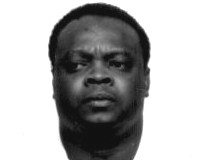
Charles Milton
Murderer Ervil LeBaron
Murderer · USA · 1972
Ervil Morrell LeBaron (1925 to August 16, 1981) was the leader of a polygamous…
35 victims
Ervil LeBaron
Murderer · USA · 1972
Ervil Morrell LeBaron (1925 to August 16, 1981) was the leader of a polygamous…
35 victims
 Brian Kevin Rosenfeld
Murderer · USA · 1985
Brian Kevin Rosenfeld Brian Kevin Rosenfeld was sentenced to three concurrent l…
23 victims
Brian Kevin Rosenfeld
Murderer · USA · 1985
Brian Kevin Rosenfeld Brian Kevin Rosenfeld was sentenced to three concurrent l…
23 victims
 Marvin Gray
Murderer · USA · 1975
Marvin Gray was convicted killer who claimed responsibility for 23 slayings and…
23 victims
Marvin Gray
Murderer · USA · 1975
Marvin Gray was convicted killer who claimed responsibility for 23 slayings and…
23 victims
 Yahweh ben Yahweh
Murderer · USA · 1980
Yahweh ben Yahweh was born and legally named Hulon Mitchell Jr. (October 27, 19…
23 victims
Yahweh ben Yahweh
Murderer · USA · 1980
Yahweh ben Yahweh was born and legally named Hulon Mitchell Jr. (October 27, 19…
23 victims
 Darryl Elroy Stewart
Murderer · USA · 1980
Darryl Elroy Stewart was 38 at the time of his execution and had an education l…
1 victim
Darryl Elroy Stewart
Murderer · USA · 1980
Darryl Elroy Stewart was 38 at the time of his execution and had an education l…
1 victim
 Wayne Clifford Boden
Serial killer · Canad a · 1969
Wayne Clifford Boden was a Canadian serial killer and rapist active from 1968 t…
4 victims
Wayne Clifford Boden
Serial killer · Canad a · 1969
Wayne Clifford Boden was a Canadian serial killer and rapist active from 1968 t…
4 victims
- Gender
- male
- Country
- USA
- Location
- Tarrant County, Texas, USA
- Date of birth
- March 15, 1951
- Age at first offence
- 26
- Characteristics
- robbery
- Victim profile
- Menaree Denton (liquor store owner)
- Method of murder
- Shooting ( .38 caliber Smith & Wesson revolver)
- Date(s) of murder
- June 24, 1977
- Years active
- 1977
- Date of arrest
- —
- Status
-
Executed
Executed by lethal injection in Texas on May 25, 1985
Case overview
Charles Milton was convicted of capital murder by a Fort Worth, Texas jury and was sentenced to death. He was executed by lethal injection in Texas on May 25, 1985.
Timeline
- May 25, 1985 — Charles Milton was executed by lethal injection in Texas.
- June 26, 1985 — The New York Times reported that earlier in the day Charles Milton had been executed by lethal injection after last-minute appeals to Gov. Mark White of Texas and the United States Supreme Court failed.
- Oct. 10, 1984 — The United States Court of Appeals for the Fifth Circuit decided 744 F.2d 1091 in Charles Milton v. Raymond K. Procunier, Director, Texas Department Of Corrections, Respondent-Appellee.
- Nov. 14, 1984 — Rehearing and rehearing en banc were denied.
- Sep. 15, 1981 — Execution was scheduled.
- Sep. 8, 1981 — Milton simultaneously filed petitions for writs of habeas corpus and stays of execution with the 213th Judicial District Court of Tarrant County, Texas and the Court of Criminal Appeals of Texas.
- Oct. 9, 1978 — The jury returned a verdict of guilty of the capital offense.
- Oct. 9, 1978 (10:15 AM–2:24 PM) — The penalty phase of the trial commenced and concluded.
- Oct. 9, 1978 (3:24 PM–4:50 PM) — The jury retired and returned with answers to the three death-sentence-resulting questions.
- March 2, 1984 — The district court formally vacated the stay first granted in September 1981.
- April 25, 1984 — The Fifth Circuit issued a stay of execution.
- May 5, 1984 — Execution was set for May 5, 1984.
- Sept. 1981 — A stay of execution was first granted.
The offence
Leonard and Menaree Denton owned and operated L & M Liquor, a local liquor store in Fort Worth, Texas.
At about 2:30 p.m., a black male entered the store. After asking about a coconut cream mix, the robber drew a .38 caliber Smith & Wesson revolver and ordered the Dentons to put money from the register and their wallets into a paper sack. When the robber ordered the Dentons into a back room, Leonard grabbed the robber’s gun while Menaree broke two wine bottles over the robber’s head, with no apparent effect.
In the ensuing struggle, both Menaree and Leonard were shot. During the struggle, Leonard and the robber fell through the front door. Despite his wound, Leonard managed to take possession of the gun. With the approach of a customer, the robber fled, leaving Leonard wounded in the doorway and Menaree dead behind the counter, shot through the heart.
The gun was traced to Milton. Leonard identified Milton at a police lineup.
The state trial judge also noted that, under Texas law, before the inquiries of Tex. Code Crim. Proc. art. 37.071(b) were submitted to the jury, the jury had to find that murder was committed under one of five circumstances, including “in the course of committing or attempting to commit kidnapping, burglary, robbery, aggravated rape, or arson.” Tex. Penal Code Sec. 19.03(a).
Investigation and identification
A police lineup occurred fourteen days after the offence. Leonard identified Milton at the police lineup.
At the federal evidentiary hearing, attorney Bill Chambers testified and detective Darrell Thompson testified about the lineup. Detective Thompson testified that Milton was placed in a lineup with four other black males. Detective Thompson testified that Milton was not the only person in the lineup with facial hair, and that the heights were 5'5" (Milton), 5'7", 5'9", 5'8", and 5'11". Detective Thompson expressed the opinion that the participants in the lineup closely resembled Milton. Milton testified that the other persons did not resemble him and that they had facial hair and did not have straight hair as he did.
Trial
Milton was convicted of capital murder by a Fort Worth jury. The jury then answered the three death penalty questions required by Article 37.071(b), Tex. Code Crim. Proc. Ann.
The conviction and sentence were affirmed by the Court of Criminal Appeals of Texas: Milton v. State, 599 S.W.2d 824, 825 (Tex. Crim. App. 1980) (en banc). The Supreme Court denied certiorari: Milton v. Texas, 451 U.S. 1031, 101 S.Ct. 3022, 69 L.Ed.2d 400 (1980), reh'g denied, 453 U.S. 923, 101 S.Ct. 3160, 69 L.Ed.2d 1006 (1981).
At trial, defense attorneys said the shooting was an accident. Milton chose not to take the stand.
A quote from the trial jury argument fragment appeared in the appellate decision during discussion of an alleged improper comment on Milton’s failure to testify. It included the following quoted exchange:
- “Q. All right, and you yourself, Mr. Denton, being honest--you can't tell this jury that this gun didn't go off by accident while you two were struggling, can you? “
- “A. By accident, no sir. I can't say that the man didn't pull the trigger. He pulled the trigger this--he was steady, pulling the gun down on my wife each time I would push it away from him. This is what he was trying to do. “
- “Q. He was--he was steady pulling the gun, but you were steady pulling the gun, too? “
- “A. I was steady pushing the gun away from him, sir. “
- “Q. Pushing this way and that way (attorney indicating)? “
- “A. Yes, sir. “
- “Q. And you can't tell this jury that this gun wasn't discharged by accident, can you, sir? “
- “A. I can't say that it wasn't discharged by intentional. “
- “Q. Mr. Denton, please sir. The question is: can you tell this--you can't tell this jury that this gun wasn't discharged by accident, can you, sir? “
- “A. I don't see why it would be, sir. “
A further quote appeared regarding Denton’s testimony that Milton responded after Denton said, “Why don't you leave? Haven't you done enough? You've killed my wife.” The appellate decision included:
- “Hell no, I haven't killed her yet, but she is going to die.”
During penalty phase sentencing, the jury retired at 3:24 PM and returned at 4:50 PM, with answers to the questions required to impose death.
Penalty phase evidence
During the penalty phase, evidence included:
- proof of Milton’s 1972 conviction for theft over fifty dollars;
- proof that a few days before the June 24, 1977 robbery, Milton was found unlawfully carrying a pistol;
- proof that on each of the two days before the Denton murder, Milton committed an armed robbery; each victim testified Milton entered their store, demanded money, and ordered them to a back room while he made his escape.
Milton argued that the admission of “unadjudicated” extraneous offenses into evidence at the sentencing phase violated the Fifth, Sixth, Eighth and Fourteenth Amendments.
The Court of Criminal Appeals of Texas rejected Milton’s contention and the Fifth Circuit affirmed, discussing relevance and proof in the context of Article 37.071(c), Tex. Code Crim. Proc. Ann.
Appeals and habeas corpus
Fifth Circuit habeas appeal
Milton filed a first federal habeas attack upon his conviction of capital murder by a Fort Worth jury. Because this was Milton’s first federal habeas petition, the court granted his unopposed request for stay of execution.
The United States District Court dismissed Milton’s petition for writ of habeas corpus after an evidentiary hearing, and the Fifth Circuit affirmed.
In his federal habeas appeal, Milton “levels eight arguments,” including:
- insufficient evidence supported the jury finding that he deliberately caused the death;
- the prosecutor improperly commented on his failure to testify;
- the trial court improperly prevented voir dire into the jurors' understanding of the word “deliberately”;
- the admission into evidence of prior unadjudicated offenses during the penalty phase violated multiple amendments;
- ineffective assistance of counsel for not offering evidence in the penalty phase;
- voir dire instructions about not considering capital punishment influenced any issue of fact violated the rule in Adams v. Texas;
- the death penalty was disproportionate, arbitrary, discriminatorily imposed, and based on an inadequate inquiry into future dangerousness;
- the conviction was the fruit of an illegal arrest and detention flowing from an impermissibly suggestive lineup.
The Fifth Circuit addressed these arguments and concluded “AFFIRMED.”
Prior direct review and Supreme Court
The Fifth Circuit record included that:
- The Court of Criminal Appeals of Texas affirmed the conviction and sentence.
- The Supreme Court denied certiorari in Milton v. Texas and rehearing was denied.
District court stays
Milton’s execution was scheduled for September 15, 1981. On September 8, 1981, Milton filed petitions for writs of habeas corpus and stays of execution with:
- the 213th Judicial District Court of Tarrant County, Texas; and
- the Court of Criminal Appeals of Texas.
The state habeas courts denied relief without an evidentiary hearing. A stay of execution was granted by the United States District Court in Fort Worth, Texas, “without hearing or opinion.” The district court adopted certain magistrate findings, held an evidentiary hearing on others, and then denied all relief. The district court later denied a certificate of probable cause. On March 2, 1984, the district court vacated the stay first granted in September 1981. Execution was set for May 5, 1984, and the Fifth Circuit issued a stay on April 25, 1984.
Arguments on trial issues (as discussed in the appellate decision)
Milton argued insufficient evidence to support the penalty stage finding that his shooting of Menaree was “committed deliberately and with the reasonable expectation that her death would result.” The Fifth Circuit found the evidence supported the Texas courts’ conclusion and stated it had no legally sufficient basis to quarrel with the state court’s decision.
Milton argued an improper comment on his failure to testify. During voir dire, the appellate decision quoted a statement: “At one point Mr. Carter, during the voir dire examination, said ‘you, know, this is not a monster movie.’ And he gave an example about the martians coming down and doing it, reasonable doubt. Boy, he's right. This is a nightmare. People, a person who lived through that nightmare is still here to tell you about it. Easiest thing in the world for you to do is not to find him guilty of capital murder. But, you know, we picked a jury. Twelve people who had the integrity, the backbone to bow their necks and call it like they see it. I think you're that jury.” (emphasis supplied.)
Milton argued the refusal to allow voir dire into jurors’ understanding of terms “deliberately,” “probability,” and “criminal acts of violence” denied him due process and sixth amendment rights to trial by jury and counsel. The appellate decision discussed expert testimony from an English professor at Texas Christian University at the evidentiary hearing on federal habeas about linguistics and semantics. It also discussed the trial court’s sustained objections to efforts to inquire into jurors’ understanding of “deliberately” and “criminal acts of violence,” and that Milton had no right to ask prospective jurors to articulate their understanding.
The appellate decision also addressed Milton’s claim about admission of extraneous “unadjudicated” offenses at sentencing. It stated: “The focus of Article 37.071(c), Tex.Code Crim.Proc.Ann. is in part predictive,” and that the concern about blending wrongs was addressed because extraneous offenses were received only at the sentencing phase.
Milton argued ineffective assistance of counsel for not offering evidence at the penalty stage. The appellate decision described testimony at the May 26, 1983 United States District Court evidentiary hearing on four claims, including ineffective assistance of counsel, and quoted or summarized key parts of that testimony.
Milton argued voir dire instructions violated Adams v. Texas because jurors were instructed that “their duty to answer questions propounded to them without any consideration that the death penalty was involved” and the appellate decision addressed:
- the oath jurors took, including: “the mandatory punishment of death or imprisonment for life will not affect your deliberations on any issue of fact so help you God?”
- the jury instruction accompanying the three death penalty questions, including: “During your deliberations you shall not consider or discuss what the effect of your answer to the above issues might be. More particularly, you are not to consider or discuss any possible actions of the Board of Pardons and Paroles or the governor nor how long this defendant will be requested to serve.”
The appellate decision described also an “accused instruction” quoted as: “So you see that even though you as a juror are not signing your name to the word ‘D-E-A-T-H,’ if the jury should return three ‘Yes’ answers, you are instructing me that that's what I must do, and I will do so. I want you to see that doesn't leave much doubt in your mind but what you know what are doing. Now, here is where the law gets just a little bit difficult and quite a bit tough. It says that--I am now going to quote from Article 12.31(b) of the Texas Penal Code that says this: ‘The prospective jurors shall be informed that a sentence of life imprisonment or death is mandatory upon the conviction of a capital felony, and a prospective juror shall be disqualified from serving as a juror unless he states under oath that the mandatory penalty of death of imprisonment for life will not affect this deliberation on any issue of fact.’ Now, let's examine that just a minute to see what it means, and what it means is this: when you are selected as a juror, you will be given an oath that you will determine the facts in the case you are serving on strictly from the evidence you hear and from nothing else and from no other source and that you will call it just exactly the way that you see it regardless of the outcome. So what that really means when you come down to it is, when you get back in the jury room if you were on a jury in which a capital murder verdict had been returned and were deliberating on the punishment and you had two of those questions to answer and you felt under the evidence that two questions had to be answered ‘Yes,’ then it would be your duty to answer those two questions ‘Yes’ even though you know full well it's going to result in a death penalty. By the same token, if you felt that one of those questions should be answered ‘No,’ it's your duty to answer that question ‘No’ because it needs to be answered ‘No,’ not because I don't want to vote a death penalty. Now do you see the difference? It's important that you do. You're going to have to decide a capital case strictly on its own facts and nothing else without regard to the effect of your answers. If it comes out with two yeses or if it comes out with two noes or one yes and one no, then so be it so long as that's the way you see it. “
Milton argued lack of proportionality review. The appellate decision noted the Supreme Court rejected an argument in Pulley v. Harris.
Milton argued his arrest was the product of an impermissibly suggestive lineup and that he was identified by Denton as his assailant and his wife’s killer. The appellate decision concluded there was no basis for concluding that a substantial likelihood of misidentification existed and that the district court findings were not clearly erroneous.
Ineffective assistance of counsel evidentiary hearing details
The appellate decision described that on May 26, 1983, the United States District Court held an evidentiary hearing upon four claims including ineffective assistance of counsel. It heard testimony of ten persons, including Milton and Don Carter, one of his trial counsel. Harry Williams, lead trial counsel, had died about two weeks before the evidentiary hearing.
Milton testified that he asked Williams “if he could testify” during the sentencing phase, but Williams neither allowed him to do so nor told him why he could not. Milton also testified he had two sisters and a brother living in Fort Worth at the time of trial and that he gave Williams their names, the name of “Reverend” Brown, and his “bossman’s” name. None testified at Milton’s trial.
Reverend Brown testified he met with Milton once and could not recall the subjects discussed. He testified Williams attended a church service he conducted each Sunday in jail, and that he would have testified at Milton’s trial if asked.
Joyce Smith, Milton’s sister, testified that Milton was a good boy when young and was not “given to” acts of violence. She testified he would baby-sit her children and occasionally accompany her to church. She testified she would have testified at Milton’s trial if asked and would have told the jury she did not think Milton would again commit criminal acts of violence. She acknowledged Milton had a “pretty extensive drug problem” but denied knowledge of his earlier robberies.
James Lee Smith (Milton’s brother-in-law) and Frankie Smith (Milton’s sister) gave similar testimony.
Don Carter testified that when appointed to assist Harry Williams, his experience included some fifty trials and, in addition to private practice, approximately three years in the local district attorney’s office. Carter described that Williams investigated the case with the assistance of Bob Jones, a local investigator. Carter recalled discussing trial strategy with Williams in the presence of Milton and noted it included whether Milton ought to testify.
Carter confirmed Milton wanted to testify. Carter explained that he and Williams were concerned about the extent of available evidence of extraneous offenses if Milton and members of his family testified, including:
- a conviction for theft over fifty dollars;
- possessing heroin;
- needle marks on Milton’s arm;
- that Milton “had needle marks on his arm and had ‘shot up the ward’ at a local hospital where he was being treated for drug addiction.”
Carter testified the concern included the possibility of the prosecutor asking “have you heard” questions, such as “Have you heard he was a heroin addict?” Carter summarized the strategy: “all the things combined, we made a strategy decision not to put on any of the family members because they weren't good witnesses. There were extraneous matters that could be brought out, and we were concerned about all of these things, not just the fact that they could ask the witnesses whether or not he had a heroin problem.”
The appellate decision also described Carter’s testimony that Williams was about age sixty when he died, was the public defender assigned to the trial court, and enjoyed an excellent reputation while trying fifteen to twenty felony cases a year. It also stated Carter was rated by a bar poll as one of the top ten criminal defense attorneys in Fort Worth.
Constitutional and procedural issues (as discussed in the appellate decision)
The appellate decision applied Strickland v. Washington standards, quoting the Court’s explanation that ineffective assistance claims had two components: deficient performance and prejudice.
The appellate decision also discussed arguments about proportionality review in light of Pulley v. Harris, and addressed lineup suggestiveness in light of Manson v. Brathwaite, Neil v. Biggers, and Branch v. Estelle.
Concurrence by Tate, Circuit Judge
Tate, Circuit Judge, concurred in the panel’s opinion.
The concurrence included discussion about ineffective assistance of counsel and Eighth Amendment concerns. It stated that Tate agreed the panel’s majority should reject what would otherwise be a compelling argument because of Strickland’s test requiring affirmative proof of prejudice. Tate also expressed a concern that failure to present mitigating evidence could produce an arbitrary and unreliable capital sentence.
Tate described trial and sentencing proceedings, including that:
- Milton was convicted of the killing during an armed robbery of the wife of a liquor store proprietor;
- the proprietor attempted to disarm Milton;
- the jury accepted testimony that the killing was deliberate;
- Milton’s counsel argued the shooting was accidental and Milton chose not to take the stand;
- the jury returned a verdict at 9:10 AM, October 9, 1978;
- the penalty phase commenced at 10:15 AM and concluded at 2:24 PM, with only the state producing evidence;
- the jury retired at 3:24 PM and returned at 4:50 PM.
Tate listed the evidence produced at sentencing by the prosecution, including the 1972 theft conviction, the unlawful carrying of a pistol a few days before the June 24, 1977 robbery, and armed robberies on each of two days before the Denton murder where he had not harmed the victims therein. Tate described that the jury was not given testimony from Milton’s two sisters and brother and members of their family.
Tate’s concurrence stated concerns about the absence of mitigating evidence and referenced death penalty standards and Supreme Court cases including Woodson v. North Carolina, Lockett v. Ohio, and Spaziano v. Florida. It included a description of sentencing safeguards and expressed doubt about the prejudice analysis under Strickland given that no mitigating evidence was presented. The concurrence emphasized that a death sentence required consideration of mitigating circumstances.
Outcome
The Fifth Circuit affirmed Milton’s conviction and death sentence.
After last-minute appeals failed, Milton was executed by lethal injection in Texas on May 25, 1985.
Aftermath
The New York Times reported that Charles Milton prayed to Allah in a final statement before being executed in Texas. It also reported that he had converted to Islam while in prison in Huntsville, Texas.
Milton’s last statement was: “There’s no God but Allah, and unto thy I belong and unto thy I return. I want to continue to tell my brothers and sisters to be strong.”
The New York Times report stated Milton was pronounced dead at 1:33 A.M. and that he was 34 years old at the time of execution. It also stated he was the fourth Texas inmate executed that year and the eighth to be executed since Texas resumed the death penalty in 1982.
The New York Times report also stated that defense attorneys said the shooting was an accident and that Menaree Denton was shot in the heart eight years earlier during the aborted robbery while she and her husband Leonard struggled with Milton, and that Milton was sentenced to death for that slaying.

Spotted an error, or have more information about this case?