Charles Corliss
Murderer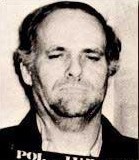 Ervil LeBaron
Murderer · USA · 1972
Ervil Morrell LeBaron (1925 to August 16, 1981) was the leader of a polygamous…
35 victims
Ervil LeBaron
Murderer · USA · 1972
Ervil Morrell LeBaron (1925 to August 16, 1981) was the leader of a polygamous…
35 victims
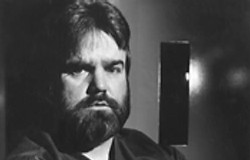 Marvin Gray
Murderer · USA · 1975
Marvin Gray was convicted killer who claimed responsibility for 23 slayings and…
23 victims
Marvin Gray
Murderer · USA · 1975
Marvin Gray was convicted killer who claimed responsibility for 23 slayings and…
23 victims
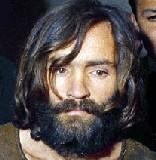 Charles Manson
Murderer · USA · 1969
Charles Milles Manson (born November 12, 1934) was an American criminal and mus…
9 victims
Charles Manson
Murderer · USA · 1969
Charles Milles Manson (born November 12, 1934) was an American criminal and mus…
9 victims
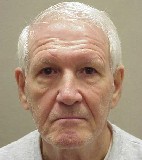 Robert Reldan
Murderer · USA · 1974
Name: Robert Reldan Robert Reldan was sentenced to life in prison on two counts…
8 victims
Robert Reldan
Murderer · USA · 1974
Name: Robert Reldan Robert Reldan was sentenced to life in prison on two counts…
8 victims
 Dennis Duane Webb
Murderer · USA · 1973
Defendant: Dennis Duane Webb · Victims: John Rainwater and Lori Rainwater · Cou…
7 victims
Dennis Duane Webb
Murderer · USA · 1973
Defendant: Dennis Duane Webb · Victims: John Rainwater and Lori Rainwater · Cou…
7 victims
 Gary Gene Tison
Murderer · USA · 1967
Gary Gene Tison was serving life sentences at the Arizona state prison. He had…
7 victims
Gary Gene Tison
Murderer · USA · 1967
Gary Gene Tison was serving life sentences at the Arizona state prison. He had…
7 victims
 Jacob Robida
Murderer · USA · 2006
Jacob D. Robida (June 13, 1987 – February 5, 2006) was a Massachusetts teenager…
2 victims
Jacob Robida
Murderer · USA · 2006
Jacob D. Robida (June 13, 1987 – February 5, 2006) was a Massachusetts teenager…
2 victims
 Maureen McDermott
Murderer · USA · 1985
Maureen McDermott was convicted of one count of murder and one count of attempt…
1 victim
Maureen McDermott
Murderer · USA · 1985
Maureen McDermott was convicted of one count of murder and one count of attempt…
1 victim
 Frank Silva Roque
Murderer · USA · 2001
Frank Silva Roque was born July 8, 1959. He was a Boeing aircraft mechanic at a…
1 victim
Frank Silva Roque
Murderer · USA · 2001
Frank Silva Roque was born July 8, 1959. He was a Boeing aircraft mechanic at a…
1 victim
- Gender
- male
- Country
- USA
- Location
- Mont ana /Washington , USA
- Date of birth
- 1940
- Age at first offence
- 25
- Characteristics
- kidnapping, robbery, drug addict, domestic violence
- Victim profile
- Donald Hammer / Kimberly Starkenburg, 23
- Method of murder
- Shooting
- Date(s) of murder
- 1965 / 1990
- Years active
- 1965–1990
- Date of arrest
- October 23, 1990
- Status
-
Imprisoned
Sentenced to life in prison in Montana in 1966; released on parole in 1983; sentenced to 74 years and eight months in prison in Washington on June 17, 1991
Overview
Charles Corliss and an accomplice kidnapped and murdered Donald Hammer, a Montana businessman, in 1965. Corliss was sentenced to imprisonment for life at the Montana State Prison (Prison) for the execution-style murder and to an additional ten-year sentence for the kidnapping, to be served consecutively to the life sentence.
While at the Prison, Corliss attempted to escape several times. In one such attempt in 1968, he and other inmates tied up a Prison employee. Corliss pled guilty to holding a person against his will and received a three-year deferred sentence.
Corliss escaped from the Prison in 1974 and was apprehended nine days later at the home of his wife, Betty Corliss, in Deer Lodge, Montana. He pled guilty to escape and received a five-year sentence to be served consecutively to his sentences for kidnapping and murder.
Corliss attempted suicide several times while incarcerated and was transferred from the Prison to the Warm Springs State Hospital (Warm Springs) in 1979 as a result of such a suicide attempt. Corliss was released from Warm Springs in 1983 on a furlough and subsequently was granted parole in 1985. Corliss’s parole included standard conditions prohibiting owning, possessing or being in control of any firearm or other deadly weapon.
From 1986 through the time period relevant here, David Robbins was Corliss’s parole officer.
Timeline
- 1965 — Charles Corliss and an accomplice kidnapped and murdered Donald Hammer, a Montana businessman.
- 1966 — Corliss was sentenced to imprisonment for life in Montana for an execution-style murder; he was also sentenced to an additional ten-year sentence for kidnapping to be served consecutively.
- 1968 — Corliss attempted escape; he and other inmates tied up a Prison employee; he pled guilty to holding a person against his will and received a three-year deferred sentence.
- 1974 — Corliss escaped from the Prison; he was apprehended nine days later at the home of Betty Corliss in Deer Lodge, Montana.
- 1979 — Corliss was transferred from the Prison to the Warm Springs State Hospital as a result of suicide attempt(s).
- 1983 — Corliss was released from Warm Springs on a furlough.
- 1985 — Corliss was granted parole.
- April 13, 1990 — Robbins authorized Corliss to travel to Bellevue, Washington, for a vacation and to look for employment under a written two-week travel permit.
- July 1, 1990 — Farrington alleged Corliss backhanded her twice across the face, put sugar in her gas tank and threatened her life.
- July 5, 1990 — A temporary restraining order (TRO) was filed.
- July 5, 1990 — Corliss sent Robbins a letter informing Robbins that he was unable to find a parole officer.
- July 12, 1990 — Farrington sent Robbins a letter.
- July 13, 1990 — Corliss returned to Montana and met with Robbins.
- August 1, 1990 — Corliss obtained a TRO against Betty Corliss.
- October 10, 1990 — Corliss sent Robbins a letter stating that Farrington was not going to "quietly go out of [his] life."
- Mid-October (five days after October 10, 1990) — Corliss broke into Farrington’s home while she was away, hid until her return, held Brenda Mhoni at gunpoint, made April McCarty and Brenda kneel, shot Kimberly Starkenburg, April McCarty and Brenda Mhoni, and shot April McCarty again when she tried to leave.
- October 15, (year implied by trial coverage) — Kimberly Starkenburg was killed.
- October 23, 1990 — Corliss was arrested in Cody, Wyo.
- May 10, 1991 — Corliss was found guilty by a King County Superior Court jury.
- June 17, 1991 — Corliss was sentenced in King County Superior Court.
Background
Charles Corliss was a former Montana resident and was on parole from a Montana homicide at the time of the attacks.
The parole carried standard conditions prohibiting owning, possessing or being in control of any firearm or other deadly weapon.
The offence
Corliss broke into Farrington’s home while she was away. Farrington arrived home with three friends: Kimberly Starkenburg, April McCarty, and Brenda Mahoni. Farrington, April and Brenda went inside while Kimberly remained outside. Brenda opened a bedroom door and Corliss stepped out holding an "old revolver" to Brenda’s face. He made April and Brenda kneel on the floor next to each other. He hit Farrington, knocking her to the floor, and then stepped outside, grabbed Kimberly by the arm and dragged her inside. Corliss made Kimberly kneel beside April and Brenda. Farrington ran out the front door. Corliss fired a shot at her but missed. He then returned to the three women and shot Kimberly first, then shot April and Brenda. April and Brenda fell to the floor after being shot while Kimberly remained kneeling. Corliss shot Kimberly a second time and she fell to the floor. He fled out the front door.
April went to Kimberly’s aid and tried to get her to speak. April could hear gurgling noises coming from Kimberly that sounded "like she was trying to breathe, catch her breath." April then tried to go out the back door for help. Corliss was hiding in the back yard and, when April opened the door, he shot her a second time.
Kimberly arrived home with the police approximately fifteen to twenty minutes later. Kimberly died as a result of her gunshot wounds. April and Brenda survived. A .38 caliber bullet was lodged near April’s spine.
Investigation
Cody police and Park County sheriff’s office officers arrested Corliss in Cody, Wyo., after a friend of Corliss told them the fugitive was staying at a local motel. The officers arrested him after he went into the motel office to make a phone call and then stepped out.
Cody Police Sgt. Mike Hanson described the arrest:
"He raised his hands immediately and said, I'm not going to give you any trouble,"
Hanson also described transport to headquarters:
"En route to headquarters, we had to keep assuring him that we weren't going to hurt him."
King County Police spokesman Tony Burtt said that when Corliss had not turned himself in by the morning, the friend called police.
Arrest
Corliss was arrested without incident at the Buckaroo Motel at 10 a.m. He was wanted for killing Kimberly Starkenburg and wounding two other women after he forced them to kneel before him in his former girlfriend’s Fall City home. Cody was about 50 miles east of Yellowstone Park.
Corliss had been staying at the motel for two or three days. Officers suspected all along that Corliss might be coming to the area. Hanson said that last summer, Corliss lived there with his girlfriend, Tamera Ferrington, before moving to Fall City. Hanson said Corliss was also living with his wife and son in Kent.
Hanson said Corliss arrived in Cody on Saturday and had met up with a friend who rented him a cabin there. The friend had been bringing Corliss food and supplies for several days. Corliss told his friend he was being wrongly accused of the shooting incident in Washington but that he would turn himself in that day; when he did not, the friend called police.
Trial
Corliss was convicted of:
- first-degree murder in the Oct. 15 death of Kimberly Starkenburg, 23, of West Seattle,
- two counts of attempted first-degree murder in the gunning down of Brenda Mhoni, 24, and April Williams, 21,
- one count of second-degree assault in the attempted shooting of Tamara Farrington, 31.
The King County Superior Court jury deliberated just under nine hours. Corliss showed no emotion as the verdict was read. Betty Corliss, the defendant’s wife, sobbed even before all counts were announced; she was overcome, helped from the courtroom by a male friend, and left without comment. The Corliss’ son, Charles E. Corliss Jr., 18, hugged his mother and sobbed in the hallway.
Deputy Prosecutor Jeff Baird said the standard sentencing range for Corliss, 51, would be about 60 to 81 years in prison. Corliss also faced punishment over accusations he violated parole in Montana, since he was on parole from a Montana homicide at the time of the attacks.
Baird argued that Corliss was consumed with hatred for his ex-lover, Farrington, after being spurned, and devised an elaborate scheme to distance himself from the shootings. In closing arguments, Baird said:
"This case demonstrates just how far domestic violence can go. It can escalate and spread outside the relationship and into the community. "
Baird also said:
"In this case three innocent women were victims,"
and:
"The woman who died was someone the defendant had never met. The defendant was so consumed with hated for his ex-girlfriend that he tried to execute three of her acquaintances when she escaped from the cottage."
Baird described Corliss as having written letters to his wife, Betty, while on the lam, stating he was "describing a burning desire to kill."
Corliss denied he was the gunman in the execution-style slaying of Starkenburg in the cottage he formerly shared with Farrington. He testified he left the cottage before the shootings occurred. He blamed the attacks on drug dealers seeking revenge against Farrington for what he said was an unpaid narcotics deal. He maintained that he was set up to be the triggerman because he knew too much about a mystery figure he said Farrington killed.
Lois Starkenburg, mother of the slain woman, made a tearful statement after the verdict. She called Corliss:
"a lily-livered coward. I wish they could hang him."
She also said:
"I hope he has to walk the rest of his life looking over his shoulder,"
Starkenburg said Kim was a loving daughter who always helped people, and that she was:
"helping someone when she died,"
She also said:
"He might as well have killed me."
Both Williams and Farrington were tearful after the verdict. April Williams, who had a bullet lodged behind her heart as a result of the shooting, said she was:
"totally excited"
She said she was pleased and had brought some:
"bubbly cider to celebrate."
Farrington said that although the trial was over, the impact of the shootings:
"will hang on for a long time. It's not over."
She said she was disappointed but understood the jury’s decision to find Corliss guilty of the lesser degree charge of assault in the attempt to shoot her.
Deputy Prosecutor Baird said:
"is one of the most dangerous and sadistic individuals we've ever run across . . . the only way he'll ever leave prison is in a pine box."
Jurors left quickly after the trial. One juror said:
"they hadn't wanted to rush the deliberations and the system had worked."
The juror also said:
"Justice has been served,"
Sentencing
On June 17, 1991, Charles E. Corliss was sentenced to 74 years and eight months in prison.
In sentencing proceedings, Lois Starkenburg told Corliss:
"You murdered the light of my life . . . you disgusting old man."
She demanded:
"Do you have any idea what it's like to get a call from the medical examiner, to have your whole world fall apart?"
Starkenburg set two color portraits of her 23-year-old daughter on a courtroom table.
Corliss, 51, of Kent, was convicted of the execution-style slaying in Fall City of Kimberly Starkenburg and of wounding Brenda Mhoni and April Williams.
In her courtroom remarks, Lois Starkenburg said her daughter loved to help people and:
"had friends of all ages, from 2 to 80."
She also said:
"She would have been married this spring and she wanted kids of her own."
She said:
"You, Charles Corliss, cheated her, her fiance and her family of all that and so much more."
Glenn Starkenburg told Corliss he expected to greet him in hell, and said that if Corliss ever got out of prison:
"the Starkenburg family is planning a coming-out party for you."
King County Superior Court Judge Jim Bates ordered the longest sentence provided under the state's sentencing guidelines for the murder and attempted murders.
Farrington spoke in court and said Corliss had displayed:
"the 'thoughtlessness and viciousness of a rabid dog attacking.'"
Farrington told Bates that:
"no punishment on Earth would be adequate for the crimes Corliss committed"
and:
"may his soul - if he has one - rot in hell for eternity."
In addition to the prison sentence of 74 years and eight months, Corliss was ordered to pay $13,520 in restitution to his victims.
Corliss professed his innocence and said:
"I was tried and convicted by the media before I ever stepped in this courtroom."
Corliss told Bates that the murders were committed by a man who had helped put Corliss in prison for a murder in Montana.
He told jurors he was framed, admitted being at the cottage that day, and said he left before the shootings occurred. He blamed the attack on an angry drug dealer seeking revenge against Farrington for an unpaid narcotics deal.
After sentencing, Lois Starkenburg told reporters:
"He got what he deserves. Death's too good for him. I hope he stays in there until he's dead."
Outcome
Charles Corliss was convicted by a King County Superior Court jury of first-degree murder in the Oct. 15 death of Kimberly Starkenburg, two counts of attempted first-degree murder in the gunning down of Brenda Mhoni and April Williams, and one count of second-degree assault in the attempted shooting of Tamara Farrington.
He was sentenced to 74 years and eight months in prison in Washington on June 17, 1991. He had previously been sentenced in Montana to imprisonment for life in 1966 for execution-style murder, with an additional ten-year kidnapping sentence to run consecutively, and he had been released on parole in 1983.
Other details
Corliss had attempted to escape several times while incarcerated and tied up a Prison employee during an escape attempt in 1968.
Corliss was transferred to Warm Springs State Hospital in 1979 as a result of suicide attempt(s).
Corliss was released from Warm Springs in 1983 on a furlough and was granted parole in 1985. His parole included prohibition against owning, possessing or being in control of any firearm or other deadly weapon.
Robbins authorized Corliss to travel to Bellevue, Washington, on April 13, 1990, for a vacation and to look for employment, under a written two-week travel permit. Under the permit, Corliss was to reside with his brother-in-law in Bellevue, but Corliss did not live with his brother-in-law.
Robbins did not verify Corliss’s living arrangement in Washington and did not notify Washington authorities of Corliss’s presence there, and Corliss failed to visit a parole officer while in Washington.
Corliss sent Robbins a letter dated July 5, 1990, informing Robbins that he was unable to find a parole officer. By that time, the travel permit had been expired for approximately two months. Robbins did not take any action to ensure compliance with the instruction to report to a Washington parole officer.
While in Washington, Corliss called Robbins and told him that he had a girlfriend, Tamera Farrington, and that she had obtained a temporary restraining order (TRO) against him for allegedly putting sugar in her gas tank. Robbins said Farrington then reiterated on the telephone that the TRO was the result of a misunderstanding; Farrington denied that she spoke with Robbins on the telephone.
Robbins did not make a record of his conversation with Corliss or Farrington. Robbins did not ask Corliss to send him a copy of the TRO or attempt to obtain a copy from Washington authorities.
The TRO was filed on July 5, 1990 and described incidents in which Corliss had acted violently toward Farrington. Farrington alleged in the TRO that Corliss struck her on two occasions in March 1990 and repeatedly hit her on two other occasions in April and May 1990. She stated that Corliss "threatened to kill [her] and described the places he could 'hide [her] body.' He threatened [her] family, [and] friends. . . ."
Farrington further alleged that, on July 1, 1990, Corliss backhanded her twice across the face, put sugar in her gas tank and threatened her life.
Farrington sent Robbins a letter dated July 12, 1990, stating:
"[t]his is to assure you that what [Corliss] is telling you is true."
She stated she had no intention of filing charges because she could not be sure he was the one who put sugar in her gas tank.
Farrington included her address and telephone number at work in the letter. Robbins did not attempt to contact her regarding the TRO or her letter.
Corliss returned to Montana on July 13, 1990 and met with Robbins. Robbins issued Corliss a thirty-day travel permit the same day allowing Corliss to relocate his family to Washington.
Approximately two weeks later, Robbins received a telephone call from Corliss and his wife, Betty. Corliss informed Robbins that Betty had learned of his affair with Farrington and had threatened him with a gun and a knife at their home. Betty denied threatening Corliss with the weapons, and expressed anger about Robbins’s failure to tell her about Corliss’s affair prior to her quitting her job in Montana and relocating to Washington.
Corliss obtained a TRO against Betty on August 1, 1990 and sent a copy of the TRO to Robbins. The TRO described an altercation where Betty "went to a bedroom and took a .38 pistol and said she was going to kill [Corliss]."
Although possession of a firearm was a parole violation, Robbins did not investigate whether there was, in fact, a firearm in the Corliss residence.
Corliss contacted Robbins in early October and informed Robbins that he was reconciling with Betty and moving back into their home. Robbins did not ask whether the .38 pistol involved in the altercation was still located in the home.
In a letter to Robbins dated October 10, 1990, Corliss stated:
Farrington was not going to "quietly go out of [his] life."
Five days later, Corliss broke into Farrington’s home while she was away and hid until her return.
Spotted an error, or have more information about this case?