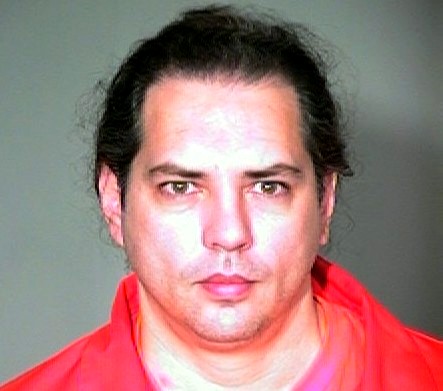
Michael Correll
Murderer Brian Kevin Rosenfeld
Murderer · USA · 1985
Brian Kevin Rosenfeld Brian Kevin Rosenfeld was sentenced to three concurrent l…
23 victims
Brian Kevin Rosenfeld
Murderer · USA · 1985
Brian Kevin Rosenfeld Brian Kevin Rosenfeld was sentenced to three concurrent l…
23 victims
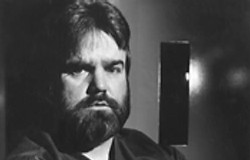 Marvin Gray
Murderer · USA · 1975
Marvin Gray was convicted killer who claimed responsibility for 23 slayings and…
23 victims
Marvin Gray
Murderer · USA · 1975
Marvin Gray was convicted killer who claimed responsibility for 23 slayings and…
23 victims
 Yahweh ben Yahweh
Murderer · USA · 1980
Yahweh ben Yahweh was born and legally named Hulon Mitchell Jr. (October 27, 19…
23 victims
Yahweh ben Yahweh
Murderer · USA · 1980
Yahweh ben Yahweh was born and legally named Hulon Mitchell Jr. (October 27, 19…
23 victims
 Russell Ellwood
Murderer · USA · 1991
Russell Ellwood was a former taxi driver. Authorities suspected him of killing…
20 victims
Russell Ellwood
Murderer · USA · 1991
Russell Ellwood was a former taxi driver. Authorities suspected him of killing…
20 victims
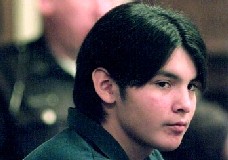 Omer Ninham
Homicide · USA · 1998
Omer Ninham was sentenced to life in prison without the possibility of parole o…
1 victim
Omer Ninham
Homicide · USA · 1998
Omer Ninham was sentenced to life in prison without the possibility of parole o…
1 victim
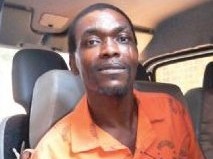 Mukosi Freddy Mulaudzi
Serial killer · South Africa · 1990
Mukosi Freddy Mulaudzi (46) from Mandala Village was a convicted serial killer…
13 victims
Mukosi Freddy Mulaudzi
Serial killer · South Africa · 1990
Mukosi Freddy Mulaudzi (46) from Mandala Village was a convicted serial killer…
13 victims
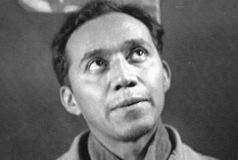 Gregorio Cardenas
Spree killer · Mexico · 1942
Gregorio Cárdenas buried the bodies in his garden. · Gregorio Cárdenas Hernánde…
4 victims
Gregorio Cardenas
Spree killer · Mexico · 1942
Gregorio Cárdenas buried the bodies in his garden. · Gregorio Cárdenas Hernánde…
4 victims
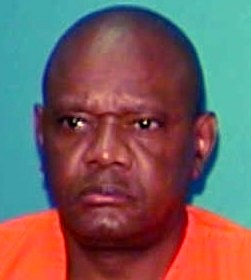 Leroy Pooler
Murderer · USA · 1995
Leroy Pooler (born 01/27/48) was tried in the Fifteenth Judicial Circuit, Palm…
1 victim
Leroy Pooler
Murderer · USA · 1995
Leroy Pooler (born 01/27/48) was tried in the Fifteenth Judicial Circuit, Palm…
1 victim
 Susan Hendricks
Mass murderer · USA · 2006
Susan Hendricks was accused of killing four members of her own family in order…
5 victims
Susan Hendricks
Mass murderer · USA · 2006
Susan Hendricks was accused of killing four members of her own family in order…
5 victims
 Junko Ogata
Serial killer · Japan · 1996
Junko Ogata (緒方 純子 Ogata Junko, born February 25, 1962) was a Japanese woman wh…
7 victims
Junko Ogata
Serial killer · Japan · 1996
Junko Ogata (緒方 純子 Ogata Junko, born February 25, 1962) was a Japanese woman wh…
7 victims
- Gender
- male
- Country
- USA
- Location
- Maricopa County, Arizona, USA
- Date of birth
- January 8, 1960
- Age at first offence
- 24
- Characteristics
- armed robbery, kidnapping, drugs
- Victim profile
- Debra Rosen, Robin Cady and Shawn D'Brito
- Method of murder
- Strangulation - Shooting
- Date(s) of murder
- April 11, 1984
- Years active
- 1984
- Date of arrest
- 9 days after
- Status
-
Sentenced to death
Sentenced to death on November 23, 1984
Case details
Michael Correll was convicted of three counts of first-degree murder, one count of attempted first-degree murder, one count of first-degree burglary, one count of armed robbery, and four counts of kidnapping.
Background
Guy Snelling and his companion, Debra Rosen, returned to the mobile home where Snelling resided after attending a Wang Chung concert. Throughout the preceding evening, Snelling had been drinking bourbon, and had consumed both cocaine and marijuana.
John Nabors, Snelling’s co-worker, knocked at the door of the mobile home saying, "Guy, it's me, John, I've got to talk to you-I've got to see you." When Snelling answered the door, he encountered Nabors and a man whom Nabors introduced as his friend, Rick. Snelling later identified "Rick" as Michael Correll. Snelling let Nabors and Rick into the mobile home.
Nabors asked Snelling if he had any speed and if he had a gun. After Snelling answered negatively, Nabors produced a gun, cocked it, aimed it at Snelling, and said "I hate to do this--I know you've got some money."
At Nabors’ direction, Snelling summoned Rosen and told her "we're being robbed." Rick secured Snelling’s and Rosen’s hands and feet with duct tape.
The offence
Soon thereafter, a car pulled up to the mobile home, frightening Nabors and Rick. The occupants were Robin Cady, who rented a room from Snelling, and her companion, Shawn D'Brito. When Cady and D'Brito entered the mobile home, Nabors held the gun up to Snelling's head and told the couple, "You guys just walked into a whole bunch of shit." Rick taped Cady's and D'Brito's hands and feet.
Nabors and Rick escorted Snelling throughout the mobile home, retrieving marijuana and approximately $4,700 in cash from various rooms and from Rosen’s and Cady’s purses.
About forty-five minutes later, Nabors and Rick forced Snelling, Cady, and D'Brito into Snelling’s car. While Rick sat in the driver’s seat holding the gun, Nabors returned to the mobile home, explaining that he was going to "tape Debbie up a little better." When Nabors returned to the car, Rick drove the car to a deserted area nearby where Nabors’ truck was parked.
Nabors got into his truck and, with Rick following in the car, drove to a desert area north of Phoenix. Nabors and Rick pulled Snelling, Cady, and D'Brito out of the car and forced them to lie on the ground. Rick told Snelling, "I'm going to have to knock you out now," and shot him in the head.
The bullet entered Snelling’s left earlobe, passed down the skull, chipped the vertebrae between the trachea and esophagus and came to rest in his jawbone. Snelling survived and remained conscious and fully aware of his surroundings.
Meanwhile, Nabors had taken the gun. As Snelling watched, Nabors killed D'Brito and tried to shoot Cady but the gun misfired. Cady pleaded for her life, but Nabors got down on one knee and told her, "Now, girl, just hold still," and finally succeeded in shooting her.
After Nabors and Rick had left, Snelling freed himself and ran to Cady. Seeing that she was swallowing her tongue, he ran to the nearest residence to call his parents, who lived in a house next to his mobile home. Snelling told his mother that he had been shot in the head and asked her to go next door and rescue Rosen before Nabors and Rick could return to harm her. The parents found Rosen already dead from strangulation.
In addition, Correll and Nabors decided to rob a victim of money and drugs. On the night of April 11, 1984, Correll and Nabors went to the victim’s trailer and tied him up and his girlfriend, Debra Rosen. When Robin Cady and Shawn D'Brito arrived at the trailer a short time later, they were also bound and gagged. Rosen was killed at the trailer by strangulation with a heavy shoelace knotted around her neck. Correll and Nabors took the first victim, Cady and D'Brito to a desert area north of Phoenix where all three were shot in the head. The victim survived and lived to testify against Correll. Nabors committed suicide when police were about to arrest him.
Investigation
Snelling contacted the police and described both Nabors and Rick.
The officers found Snelling "extremely excited," but "definitely coherent."
They found D'Brito and Cady dead from gunshot wounds to the head.
While Snelling was hospitalized for his injury, the police showed him two photographic lineups. One of the lineups contained a photograph of Nabors, whom Snelling identified as one of his assailants. About a week later, a police detective showed Snelling another photographic lineup containing a photograph of Michael Correll, whom Snelling identified as the second assailant.
Arrest
On April 20, 1984, Michael Correll was apprehended at his father’s residence in Las Vegas, Nevada, where he had fled.
The evidence incriminating Correll included a photographic lineup identification by a taxi driver who recalled picking up Correll from a Phoenix hotel on April 13 and driving him to the airport. Additional evidence included boot prints that Correll had left at the crime scenes; Correll’s known association with Nabors and his use of the alias "Rick Watson"; and a recorded phone call that Correll’s brother, Terry, had placed to Correll in Nevada at the request of the police.
During the call, Terry informed Correll that Nabors had been found dead in a hotel room after a police shootout, resulting in the following exchange:
Mike: Okay, uh, they don't know who I am.
Terry: Yeah, they don't?
Mike: Uhhuh (no)
Terry: Okay, right on.
Mike: Okay. Right on. Is it safe back there?
Terry: Um, probably not., haha, but you know um, because you know, um, I guess whoever, who, you know, whoever was used, you know, you're worried about is uh, um is pretty mad at you too.
Mike: well, they don't know, they don't know (unintelligible) who I am.
Terry: Yeah, but one of the guys is still alive.
Mike: Right, well, he won't, he won't be for long.
Terry: Okay, well, I guess, you know.
Mike: I'll take care of business there.
Trial
Before Correll’s trial began, Correll unsuccessfully moved for the appointment of new counsel, asserting that he and his court-appointed attorney did not "see eye to eye on matters in the case."
Correll also moved to suppress evidence, including marijuana, that the police had seized from his car and the Las Vegas apartment at the time of his arrest. After the prosecution agreed not to offer as evidence any of the items the suppression motion covered, the court dismissed the motion as moot.
Finally, Correll moved for a mental examination pursuant to Ariz. R. Crim. P. 11. During a colloquy with the prosecution and defense counsel concerning this motion, trial judge Joseph D. Howe stated:
I got a call from Dr. Garcia [the court-appointed psychiatrist] Friday. He looked at Mr. Correll and said he is, in Dr. Garcia's word, antsy, but he has no pathology of any sort to indicate that there is any mental difficulty or that there ever has been and he sees no grounds for proceeding with the Rule 11 unless you have some other information.
When he learned that the defense had no further information, Judge Howe denied the Rule 11 motion, observing: "Your [sic] are disgustingly healthy, Mr. Correll, mentally at least, according to Dr. Garcia."
Correll’s trial began on October 16, 1984, and lasted for three days. Rather than calling any witnesses for the defense, Correll’s attorney sought through cross-examination to present a defense of misidentification—namely, that Snelling had wrongly identified Correll as one of his assailants and that it was reasonably likely that Correll’s brother Terry, who resembled Correll, had committed the crimes in Correll’s stead.
Of the twenty witnesses the prosecution called, Correll’s attorney cross-examined eleven. The cross-examination focused on two areas. First, he attacked the reliability of Snelling’s identification by eliciting testimony regarding the alcohol and drugs that Snelling had consumed during the evening preceding the murders, available sources of light during the crimes, and the acuity of Snelling’s vision, with and without the glasses he customarily wore. Correll’s attorney also cross-examined Terry Correll about his resemblance to his brother.
Second, Correll’s counsel cast doubt on the reliability of the boot prints and pointed out that Correll’s fingerprints had not been found in Snelling’s mobile home. The defense also established that it was impossible to determine the date of the fingerprints Correll had left inside Nabors’ truck.
Correll’s counsel had also cross-examined Correll’s brother, Terry.
The jury found Correll guilty on all counts.
Sentencing
At Correll’s November 23, 1984 pre-sentencing hearing, which lasted twenty-three minutes, counsel called no witnesses and presented no evidence. Counsel had submitted a brief sentencing memorandum devoting less than one page to mitigating circumstances and failing to discuss Correll’s psychiatric condition at the time of the murders. Counsel’s argument at sentencing occupied roughly eight transcript pages and, beyond a passing allusion to the fact that Correll’s parents had abandoned him when he was fourteen years old, made no reference to Correll’s psychiatric condition. Counsel again failed to call any witnesses or produce any evidence and declined to cross-examine the State’s witness.
Judge Howe found four aggravating circumstances and no mitigating circumstances and sentenced Correll to death on each of the murder counts.
Aggravating circumstances included:
- 4 Prior conviction involving violence
- Pecuniary gain
- Especially heinous/cruel/depraved
- Multiple homicides (struck on appeal)
Mitigating circumstances were described as: None sufficient to call for leniency.
Appeals
On direct appeal, the Arizona Supreme Court affirmed Correll’s convictions. In its January 28, 1986 opinion, the Arizona Supreme Court concluded that the trial court had erred in determining that Correll had intended to kill Debra Rosen, and that the aggravating circumstance stemming from the commission of "one or more other homicides" had been wrongfully applied retroactively in Correll’s sentence. The court modified Correll’s death sentence for the murder of Debra Rosen to a sentence of life imprisonment and invalidated the "other homicides" aggravating factor. After reweighing the remaining aggravating circumstances against Correll’s claimed mitigating factors, the court affirmed Correll’s other three death sentences.
On January 27, 1987, Correll filed a petition for post-conviction relief pursuant to Ariz. R. Crim. P. 32. The petition asserted multiple violations of his constitutional rights, including his right to effective assistance of counsel during the guilt and penalty phases of his trial, his right to confrontation, and his right to reliability in capital sentencing. The claim of ineffective assistance of counsel during the guilt phase was based on counsel’s failure to investigate Correll’s mental state at the time of the offense and to develop and present evidence that he did not have the requisite mens rea for first degree murder. Correll did not claim ineffective assistance for mishandling the misidentification defense actually presented at trial. Correll later filed five supplements to the petition, adducing evidence of his mental impairment and his attorney’s ineffectiveness.
On May 14, 1987, the trial court summarily dismissed Correll’s petition. Correll’s motion for rehearing was denied, and the Arizona Supreme Court denied review without comment on July 8, 1987.
On September 15, 1987, Correll filed a petition for writ of habeas corpus under 28 U.S.C. § 2254, alleging fifty-three constitutional violations at trial, at sentencing, and during the appeal process.
On July 22, 1993, the district court deemed twenty-six claims to be procedurally barred. On March 1, 1995, the district court entered summary judgment against Correll on the remaining constitutional claims. On March 27, 1995, the district court denied Correll’s motion under Fed.R. Civ. P. 59 to alter or amend its summary judgment order. Correll timely appealed on April 25, 1995.
Correll’s habeas appeal advanced four main claims: (1) denial of an evidentiary hearing on ineffective assistance of counsel claims; (2) an informal ex parte communication between Judge Howe and Dr. Garcia-Bunuel violating due process rights under Gardner v. Florida; (3) testimony at trial that he possessed marijuana at the time of arrest violating due process rights; and (4) that the Arizona Supreme Court violated Eighth Amendment rights by reweighing aggravating and mitigating circumstances in a conclusory manner after invalidating one aggravating circumstance.
The United States Court of Appeals for the Ninth Circuit held that Correll was not entitled to an evidentiary hearing on guilt-phase ineffective assistance but was entitled to an evidentiary hearing on ineffective assistance at sentencing. The Ninth Circuit also held that Correll’s Gardner claim did not warrant federal habeas review, and that his due process challenge regarding marijuana testimony was unavailing. The Ninth Circuit affirmed dismissal of Correll’s Eighth Amendment claim challenging the Arizona Supreme Court’s reweighing approach and declined to disturb the Arizona Supreme Court’s decision affirming Correll’s death sentence on that ground.
The Ninth Circuit reversed the district court’s decision to allow an evidentiary hearing on ineffective assistance of counsel at sentencing and remanded. It affirmed in all other respects. The final disposition was: AFFIRMED IN PART; REVERSED IN PART AND REMANDED.
Other outcomes and publications
Published opinions included:
- State v. Correll, 148 Ariz. 468, 715 P.2d 721 (1986).
- Correll v. Stewart, 137 F.3d 1404 (9th Cir. 1998).
The Ninth Circuit case identified Michael Emerson Correll as Petitioner-Appellant and Terry L. Stewart, Director, Arizona Department of Corrections as Respondent-Appellee, in No. 95-99012.
The Ninth Circuit panel consisted of SCHROEDER, O’SCANNLAIN and THOMAS, Circuit Judges, and the case was argued and submitted Dec. 8, 1997 and decided March 9, 1998.
Timeline
- April 11, 1984 — Correll and Nabors went to the victim’s trailer and tied up the victim and Debra Rosen; Robin Cady and Shawn D'Brito arrived and were also bound and gagged.
- April 20, 1984 — Michael Correll was apprehended at his father’s residence in Las Vegas, Nevada.
- October 15, 1984 — Start of trial.
- October 23, 1984 — Verdicts.
- October 16, 1984 — Trial began and lasted for three days.
- November 23, 1984 — Sentencing hearing; Correll was sentenced to death on each of the murder counts.
- January 28, 1986 — Arizona Supreme Court modified the death sentence for the murder of Debra Rosen to life imprisonment and invalidated the "other homicides" aggravating factor, while affirming the other three death sentences.
- January 27, 1987 — Correll filed a petition for post-conviction relief pursuant to Ariz. R. Crim. P. 32.
- May 14, 1987 — Trial court summarily dismissed Correll’s Rule 32 petition.
- July 8, 1987 — Arizona Supreme Court denied review without comment.
- September 15, 1987 — Correll filed a petition for writ of habeas corpus under 28 U.S.C. § 2254.
- July 22, 1993 — District court deemed twenty-six claims procedurally barred.
- March 1, 1995 — District court entered summary judgment against Correll on remaining constitutional claims.
- March 27, 1995 — District court denied Correll’s motion under Fed.R. Civ. P. 59 to alter or amend.
- April 25, 1995 — Correll timely appealed to the Ninth Circuit.
- Dec. 8, 1997 — Argued and submitted to the Ninth Circuit.
- March 9, 1998 — Ninth Circuit decided Correll v. Stewart.
- 1998 — Correll’s evidentiary-hearing entitlement on ineffective assistance at sentencing was recognized, with the judgment affirmed in part, reversed in part, and remanded.
Other details
- Correll and Nabors took marijuana and approximately $4,700 in cash from various rooms and from Rosen’s and Cady’s purses.
- Snelling identified Nabors and Correll through photographic lineups.
- A taxi driver identified Correll via a photographic lineup and recalled picking up Correll from a Phoenix hotel on April 13 and driving him to the airport.
- Boot prints that Correll left at the crime scenes were used as evidence.
- Correll used the alias "Rick Watson" and had known association with Nabors.
- Correll’s brother Terry placed a recorded phone call to Correll in Nevada at the request of police.
- Before trial, the defense moved for suppression of marijuana seized from Correll’s car and the Las Vegas apartment; the prosecution agreed not to offer those items and the court dismissed the motion as moot.
- The jury found Correll guilty on all counts after a three-day trial.
- Judge Howe denied the Rule 11 motion for mental examination and described Correll as "disgustingly healthy, Mr. Garcia."
- During trial, testimony about marijuana possession was elicited by Butch Johnson, a Maricopa County detective, who testified on direct examination that the property included two ziplock plastic bags of marijuana.
- Correll’s counsel moved for a mistrial after Johnson’s mention of marijuana; Judge Howe denied the motion and found it had not prejudiced Correll.
- The Arizona Supreme Court altered the death sentence for the murder of Debra Rosen to life imprisonment, while affirming the other three death sentences.
- Correll’s claim that he is entitled to an evidentiary hearing on whether trial counsel ineffectively assisted him at sentencing was granted in the Ninth Circuit decision, while his other habeas claims were denied.
Spotted an error, or have more information about this case?