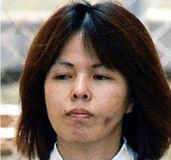
Junko Ogata
Serial killer Miyoko Sumida
Serial killer · Japan · 2003
Miyoko Sumida was a Japanese serial killer who killed six people in a case invo…
6 victims
Miyoko Sumida
Serial killer · Japan · 2003
Miyoko Sumida was a Japanese serial killer who killed six people in a case invo…
6 victims
 Hiroaki Hidaka
Serial killer · Japan · 1996
Hiroaki Hidaka (日高 広明; Hidaka Hiroaki; April 1962 – December 25, 2006) was a Ja…
4 victims
Hiroaki Hidaka
Serial killer · Japan · 1996
Hiroaki Hidaka (日高 広明; Hidaka Hiroaki; April 1962 – December 25, 2006) was a Ja…
4 victims
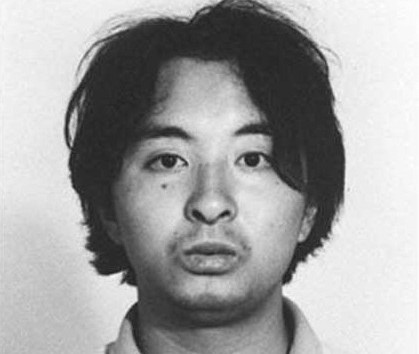 Tsutomu Miyazaki
Serial killer · Japan · 1988
Tsutomu Miyazaki was a Japanese serial killer. He murdered four girls aged betw…
4 victims
Tsutomu Miyazaki
Serial killer · Japan · 1988
Tsutomu Miyazaki was a Japanese serial killer. He murdered four girls aged betw…
4 victims
 Hiroshi Maue
Serial killer · Japan · 2005
Hiroshi Maeue ( 前上 博 , Maeue Hiroshi ) was born August 8, 1968. He was a Japane…
3 victims
Hiroshi Maue
Serial killer · Japan · 2005
Hiroshi Maeue ( 前上 博 , Maeue Hiroshi ) was born August 8, 1968. He was a Japane…
3 victims
 Kanae Kijima
Serial killer · Japan · 2009
Kanae Kijima was sentenced to death on April 13, 2012. She was convicted of thr…
3 victims
Kanae Kijima
Serial killer · Japan · 2009
Kanae Kijima was sentenced to death on April 13, 2012. She was convicted of thr…
3 victims
 Christine Malèvre
Serial killer · France · 1997
Christine Malèvre Christine Malèvre (born 1970) was a French serial killer. She…
30 victims
Christine Malèvre
Serial killer · France · 1997
Christine Malèvre Christine Malèvre (born 1970) was a French serial killer. She…
30 victims
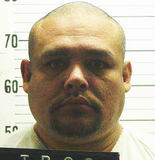 Heck Van Tran
Murderer · USA · 1987
Heck Van Tran was sentenced to death on August 28, 1989. The Supreme Court of T…
3 victims
Heck Van Tran
Murderer · USA · 1987
Heck Van Tran was sentenced to death on August 28, 1989. The Supreme Court of T…
3 victims
 Roger Girerd
Mass murderer · France · 1965
Roger Girerd was the perpetrator of a mass murder in Charvieu-Chavagneux on May…
10 victims
Roger Girerd
Mass murderer · France · 1965
Roger Girerd was the perpetrator of a mass murder in Charvieu-Chavagneux on May…
10 victims
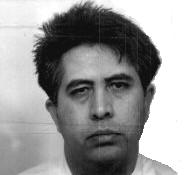 Genaro Ruiz Camacho
Murderer · USA · 1988
Name: Genaro Ruiz Camacho Also known as: Geno Camacho Alias in federal appellat…
6 victims
Genaro Ruiz Camacho
Murderer · USA · 1988
Name: Genaro Ruiz Camacho Also known as: Geno Camacho Alias in federal appellat…
6 victims
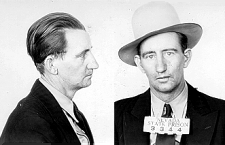 Ray Elmer Miller
Murderer · USA · 1932
Ray Elmer Miller was a native of Nebraska and was 34 years old. He worked as a…
1 victim
Ray Elmer Miller
Murderer · USA · 1932
Ray Elmer Miller was a native of Nebraska and was 34 years old. He worked as a…
1 victim
- Gender
- female
- Country
- Japan
- Location
- Kitakyushu/Fukuoka, Japan
- Date of birth
- February 25, 1962
- Age at first offence
- 34
- Characteristics
- abuse, torture
- Victim profile
- Kumio Toraya, 34 / Takashige Ogata, 61 / Shizumi Ogata, 58 / Rieko Ogata, 33 / Kazuya Ogata, 38 / Yūki Ogata, 5 / Aya Ogata, 10 ( six of Ogata's relatives and a 34-year-old man )
- Method of murder
- Electrocution - Strangulation - Starvation
- Date(s) of murder
- 1996 - 1998
- Years active
- 1996–1998
- Date of arrest
- March 6, 2002
- Status
-
Life imprisonment
Sentenced to death on September 28, 2005; commuted to life in prison on September 26, 2007
Case record: Junko Ogata
Background
Junko Ogata (緒方 純子 Ogata Junko, born February 25, 1962) was a Japanese woman who acted as an accomplice to serial killer Futoshi Matsunaga.
Ogata was born on Kurume, Fukuoka Prefecture, and grew up in a wealthy family. She was Matsunaga’s schoolmate in high school, but she did not know him very well, and he transferred to another school. She was originally described as a gentle person and got a job in a preschool, but changed after she started dating Matsunaga in 1982.
Ogata remained a virgin until she became involved with Matsunaga, but he suspected her of having relationships with other men. During their relationship, she and Matsunaga had two sons.
Matsunaga abused Ogata severely. He insisted that Junko’s mother tried to seduce him, so he abused her. During the trial, Ogata began to suspect that Matsunaga had raped her mother. She eventually joined Matsunaga in his murder spree and became cruel under his influence.
Ogata and Matsunaga began their relationship in 1982. In February 1985, Ogata left her parents’ home in Kurume, Fukuoka Prefecture, to live with Matsunaga. Matsunaga and Ogata moved into an apartment in Kitakyushu with the teenage girl and her father in October 1994.
In February 1996, the 34-year-old father died from repeated physical abuse.
The following year, six members of Ogata’s family—her parents, Takashige and Shizumi, her sister, Rieko, and her brother-in-law, Kazuya, and their two children, Aya and Yuki—were forced to live with the couple in the Kitakyushu apartment.
Ogata was arrested in March 2002.
A Japanese writer, Masayoshi Toyoda, supported her and created doubt about the trial in his book published in November 2005. When he first tried to meet with her, he was not allowed because she was a murderer; he was eventually allowed to meet her on September 27, 2005.
The offence
Matsunaga and Ogata killed at least seven people between 1996 and 1998. Their victims included Ogata’s parents and two children: Ogata’s nephew and niece.
The victims of the killings included:
- Takashige Ogata, Ogata’s father
- Shizumi Ogata, Ogata’s mother
- Aya Ogata, Ogata’s nephew
- Yūki Ogata, Ogata’s niece (also written as Yuki)
- Rieko Ogata, Ogata’s sister
- Kazuya Ogata, Rieko’s husband
- Kumio Toraya, who was held captive and tortured before being killed
Ogata and Matsunaga confined and assaulted their victims to extract money. When the money ran out or the pair feared they would be discovered, the victim was killed, and the corpse was dismembered and thrown into the sea. The court also said some victims were forced to borrow huge sums of money before they were slain. Some victims were ordered to take part in the killings and dismembering before being murdered themselves.
The couple tried to destroy all traces of the crimes.
Investigation
The Japanese police never recovered any human remains and found no physical evidence. The prosecutors’ case relied on testimony from Ogata and a 21-year-old woman who escaped from the pair’s apartment, where she had been held captive and tortured with electric shocks. The court deemed the two women’s statements and court testimony as reliable.
The murders came to light in March 2002 when the woman, then a teen, escaped and alerted police. Her father was one of the victims.
Throughout the trial, Matsunaga denied having committed murder, claiming he only abused the victims because he did not like their attitude and did not intend to kill them because they were his “money trees.” He insisted that Ogata committed the murders on her own.
Ogata basically owned up to the charges during the trial, but her attorneys asked the court to spare her life. Ogata claimed Matsunaga abused and manipulated her into a physical and mental state in which she had no choice but to obey his orders.
Arrest
Kumio’s daughter, who was being held captive, escaped from Matsunaga on January 30, 2002, but Matsunaga found the girl on February 15, 2002 and took her back into captivity. He then tortured the girl with electric shocks.
On March 6, 2002, the girl escaped from Matsunaga again and reported the crimes to the police. The girl was 17 years old.
The police arrested Matsunaga and Ogata the next day when they tried to retrieve the girl.
The twins and the couple’s two children were taken into police protection.
Trial
The pair were charged with Aya’s murder on September 18, 2002; Takashige’s murder on October 12, 2002; Shizumi’s murder on December 6, 2002; Yuki’s murder on January 11, 2003; Kumio’s murder on February 3, 2003; Rieko’s murder on February 25, 2003; and Kazuya’s murder on May 30, 2003.
No murder charges were brought against Kumio’s daughter.
Ogata calmly confessed to her part in the murders, while Matsunaga professed his own innocence. Matsunaga insisted that the women had fabricated their stories about him.
Ogata “spoke candidly and in concrete terms, including facts that were disadvantageous for her,” Judge Wakamiya said.
During a court session in March, prosecutors called Matsunaga “the mastermind who lost his sense of right and wrong,” while Ogata was “a loyal executor of (his) instructions.”
The couple’s relationship was described by prosecutors as a necessary element of the crimes, like “two sets of wheels.” Prosecutors added that the murders were deeply connected with “Matsunaga’s abnormal desire for money and his self-centered nature, which caused him not to care if others were destroyed.”
The trial began in May 2003.
The district court tried six cases and considered that Matsunaga and Ogata had not killed Takashige directly and had only injured him by electric shocks, which later resulted in his death.
Presiding Judge Toshinobu Wakamiya called the couple’s actions brutal and unprecedented. The court said the couple conspired to kill six of their victims, and Matsunaga was the mastermind and Ogata his willful executioner.
Sentencing
On September 28, 2005, a district court in Fukuoka sentenced Matsunaga and Ogata to die by hanging. The court tried six cases, but considered that Matsunaga and Ogata had not killed Takashige directly, they had only injured him by electric shocks, which later resulted in his death.
The court sentenced Ogata to die in a Fukuoka district court on September 28, 2005. She appealed the sentence on October 11.
On September 26, 2007, the high court in Fukuoka sentenced her to life in prison, rejecting the death penalty. It upheld Matsunaga’s original sentence but changed Ogata’s sentence from death by hanging to life imprisonment because Matsunaga had exerted control over Junko to force her to kill the victims.
Prosecutors appealed to the Supreme Court, which narrowly upheld the life sentence.
Outcome
Ogata’s death sentence was commuted to life imprisonment on September 26, 2007, after the Fukuoka High Court rejected the death penalty for her.
Other details
Japanese writer Masayoshi Toyoda supported Ogata and was eventually allowed to meet her on September 27, 2005.
The court noted several of the victims were forced to borrow huge sums of money before they were slain.
Victim deaths and timing included:
- Takashige (61) died in December 1997 after being electrocuted.
- Shizumi (58), Rieko (33), and Yuki (5) were strangled between January and May 1998.
- Kazuya (38) died in April 1998 from physical abuse.
- Aya (10) was killed in June 1998; prosecutors were unable to establish whether Aya was electrocuted or strangled.
Matsunaga and Ogata dismembered and boiled their victims’ remains in pots. The other residents of the condominium heard strange noises and smelled the stench. The victims’ remains were finally disposed of in washrooms or put out to sea. The condominium was renovated after the murders.
During the trial, Kumio’s daughter testified that Matsunaga and Junko had tortured Aya with electricity. Ogata denied Kumio’s daughter’s testimony about this, saying the girl’s recollections might have been inaccurate because of guilt feelings about committing her first murder.
Futoshi Matsunaga was described as being sentenced alongside Ogata and as the main culprit for the deaths of seven people, including five of Ogata’s relatives, between 1996 and 1998 in Kitakyushu. The sentence issued to his common-law wife was reduced from capital punishment to life in prison.


Spotted an error, or have more information about this case?