
John Spenkelink
Murderer Ervil LeBaron
Murderer · USA · 1972
Ervil Morrell LeBaron (1925 to August 16, 1981) was the leader of a polygamous…
35 victims
Ervil LeBaron
Murderer · USA · 1972
Ervil Morrell LeBaron (1925 to August 16, 1981) was the leader of a polygamous…
35 victims
 Marvin Gray
Murderer · USA · 1975
Marvin Gray was convicted killer who claimed responsibility for 23 slayings and…
23 victims
Marvin Gray
Murderer · USA · 1975
Marvin Gray was convicted killer who claimed responsibility for 23 slayings and…
23 victims
 Yahweh ben Yahweh
Murderer · USA · 1980
Yahweh ben Yahweh was born and legally named Hulon Mitchell Jr. (October 27, 19…
23 victims
Yahweh ben Yahweh
Murderer · USA · 1980
Yahweh ben Yahweh was born and legally named Hulon Mitchell Jr. (October 27, 19…
23 victims
 Charles Manson
Murderer · USA · 1969
Charles Milles Manson (born November 12, 1934) was an American criminal and mus…
9 victims
Charles Manson
Murderer · USA · 1969
Charles Milles Manson (born November 12, 1934) was an American criminal and mus…
9 victims
 Richard Allen Williams
Murderer? · USA · 1992
Boone County Prosecutor Kevin Crane dismissed the charges in August 2003 after…
10 victims
Richard Allen Williams
Murderer? · USA · 1992
Boone County Prosecutor Kevin Crane dismissed the charges in August 2003 after…
10 victims
 Farda Gadirov
Murderer · Azerbaijan · 2009
Farda Gadirov (also given as Farda Asad oglu Gadirov; Azeri: Fərda Qədirov; Geo…
12 victims
Farda Gadirov
Murderer · Azerbaijan · 2009
Farda Gadirov (also given as Farda Asad oglu Gadirov; Azeri: Fərda Qədirov; Geo…
12 victims
 Lizzie Lloyd King
Murderer · USA · 1873
Elizabeth “Lizzie” Lloyd King (born 1847) was accused of murdering Charles Good…
1 victim
Lizzie Lloyd King
Murderer · USA · 1873
Elizabeth “Lizzie” Lloyd King (born 1847) was accused of murdering Charles Good…
1 victim
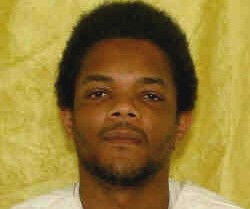 William Gardner
Mass murderer · USA · 1992
Name: William L. Garner · Inmate number: OSP #A264-900 · DOB: September 26, 197…
5 victims
William Gardner
Mass murderer · USA · 1992
Name: William L. Garner · Inmate number: OSP #A264-900 · DOB: September 26, 197…
5 victims
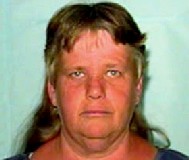 Christine Falling
Homicide · USA · 1980
Christine Falling (1980-1982) was a 17-year-old babysitter from Perry, Florida.…
5 victims
Christine Falling
Homicide · USA · 1980
Christine Falling (1980-1982) was a 17-year-old babysitter from Perry, Florida.…
5 victims
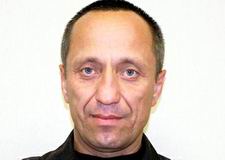 Mikhail Popkov
Serial killer · Russia · 1992
Mikhail Viktorovich Popkov (Russian: Михаил Викторович Попков; born March 7, 19…
29 victims
Mikhail Popkov
Serial killer · Russia · 1992
Mikhail Viktorovich Popkov (Russian: Михаил Викторович Попков; born March 7, 19…
29 victims
- Gender
- male
- Country
- USA
- Location
- Leon County, Florida, USA
- Date of birth
- March 29, 1949
- Age at first offence
- 24
- Characteristics
- hitchhiking, rape, escape, arsonist
- Victim profile
- Joseph J. Szymankiewicz, 45
- Method of murder
- Shooting
- Date(s) of murder
- February 4, 1973
- Years active
- 1973
- Date of arrest
- 5 days after
- Status
-
Executed
Executed by electrocution in Florida on May 25, 1979
Case information
John Spenkelink was executed by electrocution in Florida on May 25, 1979.
Timeline
- February 4, 1973 — John Spenkelink, a 24-year-old twice convicted felon and an escapee from a California correctional camp, picked up Joseph J. Szymankiewicz, a hitchhiker, while traveling in the midwest; both men had criminal records and were heavy drinkers.
- February 3, 1973 — Spenkelink and Szymankiewicz ended up in Room 4 of the Ponce de Leon Motel in Tallahassee.
- Early morning of May 25, 1979 — Spenkelink’s execution took place.
- May 25, 1979 — Spenkelink died in Starke, Florida, after being put to death for the 1973 slaying in a Tallahassee motel room.
- May 18, 1979 — Governor Robert Graham signed two black-bordered death warrants for Willie Jasper Darden and John Arthur Spenkelink.
- 1977 — Governor Reubin O’Donovan Askew signed Spenkelink’s first death warrant; the court stayed execution.
- 1979 — Governor Bob Graham signed the second death warrant; Supreme Court Justice Thurgood Marshall issued a stay.
- 1972 — Spenkelink walked away from the minimum-security Slack Canyon Conservation Camp near Big Sur; in the same period he was in prison serving a five-year sentence for armed robbery.
- 1976 — Capital punishment was reinstated in Florida after a state law was declared constitutional.
- 1976 (in the description of capital punishment law) — Florida drafted a new state law; the law was declared constitutional.
- 1972 — The U.S. Supreme Court ruled that executions were barred nationwide after a four-year moratorium.
- 1975 — Spenkelink v. State appears as “313 So.2d 666 (Fla.1975) (Direct Appeal).”
- December 20, 1973 — After a jury verdict of guilty of first degree murder, Spenkelink was sentenced to the death penalty by a Florida state court trial judge on the jury’s recommendation.
- Spring 1979 — Ted Bundy would occupy the same cell at Florida State Prison as Spenkelink had occupied.
- June 4, 1979 — A Time.com piece described the Venetian blinds opening at 10:11 a.m. and electricity being applied at the Florida State Prison.
Background
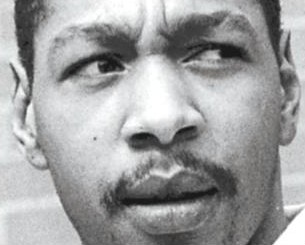
John Arthur Spenkelink was born March 29, 1949 in Le Mars, Iowa, and he died May 25, 1979 in Starke, Florida. He was a twice convicted felon and an escapee from a California correctional camp.
Spenkelink picked up Joseph J. Szymankiewicz while traveling in the midwest. Both men had criminal records and both were heavy drinkers.
The description of Spenkelink’s troubles included that:
- At twelve, he discovered the body of his alcoholic father, who had committed suicide in the front seat of his truck in Buena Park, Calif.
- Two years later, he was arrested for the first time for driving a stolen car.
- He was arrested for disturbing the peace, for burglary and for armed robbery.
- Stints in reform schools were to no avail.
- When he married briefly at 18, his probation officer could find only two positive things to say about him: he had not been in trouble before his teens and he had been “a wonderful paper boy.”
During the period in which he was serving a five-year sentence for armed robbery, he walked away from the minimum-security Slack Canyon Conservation Camp near Big Sur. He drove through Nebraska and picked up a hitchhiker, Joe Szymankiewicz, described as a 43-year-old Ohio parole violator who had spent 16 years behind bars for forgery, burglary, theft and other crimes.
Less than one week after the motel slaying, Spenkelink and Frank Bruum were arrested for suspicion of armed robbery in Buena Park, California.
The offence
On February 4, 1973, Spenkelink murdered his traveling companion Joseph J. Szymankiewicz in their Tallahassee, Florida motel room (Room 4 of the Ponce de Leon Motel).
Szymankiewicz was asleep in bed when he was shot:
- Spenkelink shot him once in the head just behind the left ear.
- Spenkelink shot him a second time in the back.
- The description stated that the second bullet fragmenting the spine and rupturing the aorta resulted in the victim’s death.
After the shooting, Spenkelink recounted a cover story to the motel proprietor in order to delay discovery of the body and to leave:
- Spenkelink told the proprietor that Szymankiewicz was his brother.
- Spenkelink told the proprietor that Szymankiewicz was so drunk that Spenkelink could not get him into their automobile and that Szymankiewicz therefore would be left behind.
- Spenkelink paid for an extra night’s lodging.
- The description also stated that Spenkelink prepared the cover story to delay discovery of the body and gave him the opportunity to leave with Bruum.
Spenkelink then left with Frank Bruum, another hitchhiker.
Spenkelink’s account
Spenkelink alleged that he shot Szymankiewicz in self-defense after returning to the motel to retrieve belongings that Szymankiewicz had allegedly stolen. He claimed that:
- Szymankiewicz forced sexual relations on him earlier.
- Szymankiewicz forced him to play “russian roulette.”
- He also claimed that the gun went off accidentally during a fight between the two.
At trial, the description indicated that Spenkelink admitted having killed his companion but insisted that he acted in self-defense. The account included that Szymankiewicz:
- stole $8,000 from him,
- forced him at gunpoint to perform fellatio,
- made him play Russian roulette.
The firearms examiner testimony described in the direct appeal narrative included that laboratory test-firing reproduced the pattern of powder residue found on the outer surface of the pillow case “so as to indicate that the weapon was fired alongside the pillow rather than through it.”
Investigation
Authorities apprehended Spenkelink less than one week later in Buena Park, California.
Less than one week later, Spenkelink and Bruum were arrested for suspicion of armed robbery in Buena Park, California. The murder weapon was found in an apartment leased to Bruum and others.
The direct appeal account stated that:
- California police learned that all three had signed the apartment lease.
- Moore signed as “uncle” to “Derek” and Frank.
- Moore’s verbal permission to search the apartment and the use of his key allowed a search.
- An intoxicated Frank Bruum was discovered at the apartment and placed under arrest for suspicion of armed robbery.
- In the open kitchen drawer, the gun later proved to be the murder weapon.
The direct appeal narrative also included that one suspect was John Moore, a hitchhiker picked up in Texas by Spenkelink (alias Derek or Derk) and another known to Moore only as Frank. It stated that the California police learned the three had signed the apartment lease.
Arrest
Spenkelink was arrested in connection with suspicion of armed robbery in Buena Park, California less than one week after the February 4, 1973 motel murder.
Trial
Spenkelink and Frank Bruum were tried for first degree murder after Spenkelink was returned to Florida with Bruum.
Verdicts
- The jury returned a verdict of guilty as to Spenkelink.
- The jury returned a verdict of not guilty as to Bruum.
A subsequent mitigation trial occurred and the jury brought in its advisory verdict recommending that the court impose a sentence of death on Spenkelink.
Sentencing
On December 20, 1973, the jury’s recommendation resulted in Spenkelink being sentenced to death by a Florida state court trial judge.
Appeals
In the habeas corpus proceeding summary, it was stated that after a conviction and sentence, there were:
- an unsuccessful direct appeal and
- an unsuccessful collateral review in the Florida state courts, and
- two unsuccessful petitions for certiorari to the United States Supreme Court.
Spenkelink v. Wainwright (Habeas)
The case “Spinkellink v. Wainwright, 578 F.2d 582 (5th Cir. 1978) (Habeas)” described that:
- The United States District Court for the Northern District of Florida dismissed the petition.
- On appeal, the Court of Appeals affirmed. The listed holdings in the description were that:
- the district court did not err in its conduct with respect to habeas evidentiary hearing,
- exclusion of two veniremen who had conscientious scruples against death penalty did not violate defendant’s constitutional rights,
- application of Florida death penalty statute did not violate defendant’s constitutional rights,
- the Due Process Clause of the Fourteenth Amendment did not apply to clemency decision by the Governor and Cabinet of Florida,
- objection as to admission of one of defendant’s custodial statements was waived by failure to object at trial, and
- the death penalty statute was not unconstitutional on ground that jury was precluded from considering mitigating factors before imposing death penalty.
The narrative of the habeas review stated that:
- Spenkelink contended he murdered Szymankiewicz in self-defense following a scuffle.
- Florida contended Spenkelink murdered Szymankiewicz while he was asleep in bed.
- It referenced a description by the United States Supreme Court in “Proffitt v. Florida” as “ ‘career criminal’ shot sleeping traveling companion.”
- It stated that the only witness to alleged activities (including “Russian roulette” and forced oral sodomy at gunpoint) was Szymankiewicz, who was now dead.
- It stated that the jury apparently disbelieved Spenkelink, as evidenced by its verdict and recommended sentence.
It further listed the aggravating circumstances found under Florida law in the narrative:
- the felony “was committed for pecuniary gain, either for another person’s money or to re-coup his own,”
- the crime “was especially heinous, atrocious and cruel,”
- Spenkelink “was previously convicted of a felony involving the use, or threat of violence to another, to-wit: armed robbery,”
- the crime was committed while he “was under sentence of imprisonment.”
The narrative stated the only mitigating circumstance found by the trial court was:
- “that possibly the defendant was under the influence of extreme mental or emotional disturbance,” and it stated that based on the record as a whole the court did not regard it “as a substantial factor.”
Direct appeal: Spenkelink v. State
In the direct appeal description “Spenkelink v. State, 313 So.2d 666 (Fla.1975) (Direct Appeal),” the Leon County Circuit Court found defendant guilty of murder in the first degree and sentenced him to death, and the Supreme Court affirmed the conviction and sentence.
The holdings described included:
- Under the “plain view” doctrine, the gun was properly seized by police during a warrantless search of defendant’s California apartment he shared with two others, where the record showed the gun was found in open drawer in kitchen despite defendant’s claim it was found in his bedroom in a drawer. The description also stated that because a codefendant arrested on suspicion of armed robbery was only a few feet away from the drawer, it fell within the “search incident to arrest” exception.
- Premeditation was established by evidence including proof that defendant endeavored to evade prosecution by flight and that shortly before the homicide he warned a companion that if the companion happened to hear a gunshot it would come from defendant’s motel room.
- The aggravating circumstances disclosed by the record justified the imposition of the death sentence.
The direct appeal description also included a statement that:
- “Conviction and sentence affirmed.” and that:
- “Ervin (Retired), J., dissented with opinion.”
The detailed factual narrative in the direct appeal description included the following items:
- Spenkelink admitted he returned to the motel to remove his personal belongings and to force Szymankiewicz to return the money stolen.
- He picked up Frank Bruum and agreed to take him as far as New Orleans.
- It quoted Spenkelink’s testimony:
“We started back toward the motel and I told this guy, I said, 'If you don't mind waiting a little ways from the motel, I think it would be better, because there is another guy in the motel room that is pretty drunk. He's going to be mad because I was gone this long.' And I didn't mention nothing to the hitchhiker about Joe taking my money or hiding my money. And--well, I dropped him off a little ways from the motel And I told him if he should happen to hear a gunshot or something, It's in the Ponce de Leon Motel in No. 4. And so what I intended on doing was carrying the (Joe's) gun on me and going into the motel room, and if I had to, by pointing the gun I was going to pick up my baggage and leave that motel room.' (Emphasis supplied.)”
The direct appeal factual narrative also included:
- that he hid the pistol in his clothing,
- that he sought to show mitigating circumstances by showing first that he was carrying the gun because he was afraid for his own life, and secondly that the gun discharged during a fight between the two,
- that evidence showed he established a cover-up enabling him to flee the scene of the crime with Bruum, and it also stated he said he remembers nothing after the first shot was fired.
Sentencing
The sentencing described in the habeas narrative stated the trial court found aggravating circumstances and imposed death, and the trial court found one mitigating circumstance “possibly” related to extreme mental or emotional disturbance but did not treat it “as a substantial factor.”
Execution
Execution method and timing
Spenkelink was executed by electrocution in Florida on May 25, 1979.
A Time.com description stated that:
- The Venetian blinds opened at 10:11 a.m.
- He was strapped tightly into an oak chair.
- A black gag was across his mouth.
- A black hood dropped over his face.
- Six attendants stepped back.
- The executioner, described as having an identity kept secret and face shrouded in black, flipped a red switch sending “2,250 volts” of electricity through his body, followed by two more surges.
- At 10:18 a.m., a doctor pronounced him dead and the Venetian blinds closed.
A separate description stated that:
- fellow inmates grabbed cell bars and shook them for several minutes at 7 a.m. for the send-off,
- after the first jolt Spenkelink stiffened and his fingers extended then clutched,
- after the second jolt his body jerked then relaxed,
- a doctor examined him with a stethoscope and silently declared him dead,
- “The whole thing had taken only a few minutes.”
Last words and religious items before execution
Spenkelink kissed his mother and girlfriend goodbye, took Communion, and delivered a cryptic epitaph to Episcopal Priest Thomas Feamster:
“Man is what he chooses to be. He chooses that for himself.”
A “Last Words” entry quoted:
“Capital punishment -- Them without the capital get the punishment.”
Allegations and response
After the execution, rumors spread that Spenkelink was dragged to the electric chair, gagged, beaten, and had his neck broken. Because of the rumors, Spenkelink’s body was exhumed for an autopsy, and the state further decided to perform autopsies on all executed inmates. Some witnesses believed Spenkelink was already dead when placed in the electric chair. An investigation found no evidence that he had been mistreated.
Seating, witnesses, and observers
Witnesses included 32 witnesses described in one account, including 10 reporters. There were also:
- 70 demonstrators gathered near the prison chanting “Death row must go” and singing “We shall overcome.”
- Demonstrators protested outside Governor Graham’s mansion and filled the lobby of Graham’s office, and Graham recalled the protests as “very frightening to my young daughters. I had to spend a lot of time reassuring them why this was happening, that this was part of what it was to be in a country that respected freedom of speech.”
- Andy Johnson, then a state representative opposed to the death penalty, witnessed the execution.
A description of the governor signing death warrants included that on May 18, 1979 Governor Robert Graham signed two black-bordered death warrants, one for Willie Jasper Darden and one for John Arthur Spenkelink. The narrative stated that Darden’s lawyers later won an indefinite stay so a federal judge could consider whether the prosecutor prejudiced the jury by saying the defendant “shouldn't be out of his cell unless he has a leash on him.”
Other details
Key people mentioned
- Joseph J. Szymankiewicz — victim; hitchhiker; identified as 45 in one account and as 43 in another account.
- Frank Bruum — hitchhiker; acquitted at trial.
- John Moore — described as a hitchhiker; listed in the direct appeal factual narrative.
- Frank — described as known to Moore only as Frank; present in lease-related facts in the direct appeal narrative.
- Willie Jasper Darden — named in the death warrant signing account (not Spenkelink’s case).
- Reubin O’Donovan Askew — governor who signed Spenkelink’s first death warrant.
- Bob Graham (Robert Graham) — governor who signed the second death warrant.
- Thurgood Marshall — Supreme Court Justice who issued a stay.
- Elbert Tuttle — Federal Judge referenced in the appeals narrative.
- Joel Berger — lawyer who went from Justice to Justice referenced in the appeals narrative.
- Henry Schwarzschild — named in the appeals and debate narrative.
- Ramsey Clark — named in the appeals and debate narrative.
- David Kendall — chief attorney named in the clemency appeal narrative.
- Lois — Spenkelink’s mother, identified as 67 in one account.
- Carla Key — Spenkelink’s girlfriend and divorcee, identified as 43 in one account.
- Thomas Feamster — Episcopal Priest to whom Spenkelink delivered his epitaph.
- Richard Dugger — then assistant superintendent of Florida State Prison; referenced in the execution logistics narrative.
- Dave Brierton — superintendent who oversaw the Spenkelink execution; referenced in the blinds-drawn narrative.
- Jim Smith — Florida’s attorney general at the time; referenced in the statement about determination to carry out the laws of Florida.
- Andy Johnson — state representative opposed to the death penalty; later hosted a radio talk show in Jacksonville as stated in the narrative.
- Albert Camus — quoted in an opinion narrative (not a case participant).
Quotes
Spenkelink and his statements included:
“Capital punishment -- Them without the capital get the punishment.” (Quote attributed to John Spenkelink before his execution in Florida on May 25, 1979)
“Man is what he chooses to become. He chooses that for himself.”
Other quotations reproduced verbatim from named individuals included:
- David Kendall, chief attorney, told the clemency board in April:
“If you want to execute a bad kid, then this is the case," his chief attorney, David Kendall, told the clemency board in April. "But he has evolved, he has changed.”
- Spenkelink (to the clemency appeal narrative) said:
“I know the changes I've made since being here. I want him to know who he is killing—the real person, not some idea he has in his head about me.”
- Spenkelink’s mother, Lois, said:
“He doesn't even know my son. How can he kill my son, my only son?”
- Governor Robert Graham, while signing the death warrants, said:
“There are other values of life involved here, including the value of the lives that were taken.”
- Jim Smith, Florida’s attorney general at the time, said:
“I was determined and Gov. Graham was determined that the laws of Florida be carried out,” “It was a very emotional day. There was no great joy.”
- Andy Johnson said:
“We saw a man sizzle today , and if you leaned forward and looked close you could see that he sizzled and sizzled again,” “It's a matter of justice and vengeance. There are some people who deserve to die,”
- Former Gov. Bob Graham, now a U.S. senator, said:
“It was one of the most searing experiences of my governorship,”
- Jim Smith, in the same execution narrative, was also quoted as above regarding determination and emotion.
- Henry Schwarzschild warned of:
“a constitutional, legal and political disaster that will shock and appall the rest of the world.”
- Ramsey Clark called the occasion:
“a tragic moment in American history” and gibed: “If you work at city hall you get voluntary manslaughter,”
- Spenkelink’s contemporaneous earlier reference of a caption was described as “Spirit of '76” on a picture of a red, white and blue electric chair.
- Albert Camus quote in the opinion narrative:
“For there to be an equivalency, the death penalty would have to punish a criminal who had warned his victim of the date at which he would inflict a horrible death on him and who, from that moment onward, had confined him at his mercy for months. Such a monster is not encountered in private life.”
- Attorney statements in the warrant-debate narrative included the quote about Darden’s prosecutor:
“shouldn't be out of his cell unless he has a leash on him.”
- Graham recalled the protests as:
“very frightening to my young daughters. I had to spend a lot of time reassuring them why this was happening, that this was part of what it was to be in a country that respected freedom of speech.”
Other legal procedural and statutory material included
The case description for the habeas corpus narrative reproduced language regarding Florida’s first degree murder statute and death penalty procedure, including references to:
- Fla.Stat.Ann. s 921.141 and related subsections.
- The statutory findings and lists of aggravating and mitigating circumstances.
- Fla.Stat.Ann. s 775.082 and the requirement of life imprisonment unless findings support death.
Mentioned controversies and related outcomes
- Spenkelink was offered a chance to admit to second-degree murder and receive a life sentence but refused.
- Rumors spread after the execution; exhumation and autopsies were conducted, and an investigation found no evidence of mistreatment.
- The execution was described as the first person executed in Florida and the second nationwide after reinstatement of capital punishment in 1976, and as the first involuntary execution since 1967 in the United States in one account.
- Spenkelink contested his execution to the end.
Spotted an error, or have more information about this case?