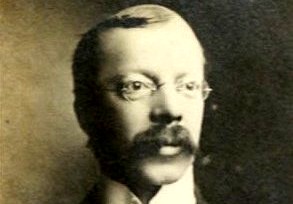
Dr. Hawley Harvey Crippen
Murderer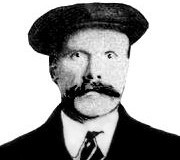 Albert Burrows
Murderer · United Kingdom · 1920
Albert Burrows (also named Albert Edward Burrows): married farm labourer who to…
4 victims
Albert Burrows
Murderer · United Kingdom · 1920
Albert Burrows (also named Albert Edward Burrows): married farm labourer who to…
4 victims
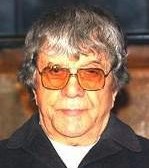 Andras Pandy
Serial killer · Belgium · 1986
András Pándy (born June 1, 1927, Chop, Ukraine) was a convicted Belgian serial…
13 victims
Andras Pandy
Serial killer · Belgium · 1986
András Pándy (born June 1, 1927, Chop, Ukraine) was a convicted Belgian serial…
13 victims
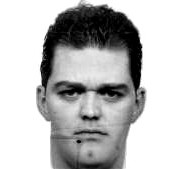 Jeffery Eugene Tucker
Murderer · USA · 1988
Jeffery Eugene Tucker was convicted of capital murder in connection with a robb…
1 victim
Jeffery Eugene Tucker
Murderer · USA · 1988
Jeffery Eugene Tucker was convicted of capital murder in connection with a robb…
1 victim
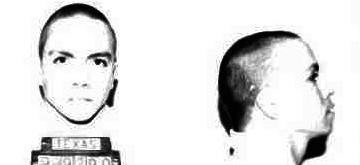 Ignacio Gomez
Murderer · USA · 1996
Ignacio Gomez was a Hispanic male. He was born in 1969 and was a Mexican nation…
3 victims
Ignacio Gomez
Murderer · USA · 1996
Ignacio Gomez was a Hispanic male. He was born in 1969 and was a Mexican nation…
3 victims
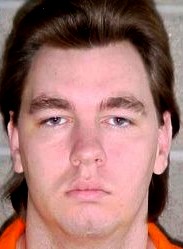 Michael Gene Blakley
Murderer · USA · 1998
Defendant: Michael Gene Blakley ADC#: 152228 Blakley was sentenced to death on…
1 victim
Michael Gene Blakley
Murderer · USA · 1998
Defendant: Michael Gene Blakley ADC#: 152228 Blakley was sentenced to death on…
1 victim
 Ma Jiajue
Mass murderer · China · 2004
Ma Jiajue was executed by firing squad on June 16, 2004. Ma Jiajue had a Guangx…
4 victims
Ma Jiajue
Mass murderer · China · 2004
Ma Jiajue was executed by firing squad on June 16, 2004. Ma Jiajue had a Guangx…
4 victims
- Gender
- male
- Country
- United Kingdom
- Location
- London, England, United Kingdom
- Date of birth
- September 11, 1862
- Age at first offence
- 48
- Characteristics
- poisoner, parricide
- Victim profile
- His second wife Cora Turner ( also known as Belle Elmore )
- Method of murder
- Poisoning (hyoscine)
- Date(s) of murder
- January 31, 1910
- Years active
- 1910
- Date of arrest
- J uly 31, 1910
- Status
-
Executed
Executed by hanging at Pentonville Prison in London on November 23, 1910
Case details
Hawley Harvey Crippen (11 September 1862 – 23 November 1910), usually known as Dr. Crippen, was hanged at Pentonville, England, on November 23, 1910 for murdering his wife.
Timeline
- Circa 1885 — Crippen became a homeopathic doctor and started working for a homeopathic pharmaceutical company, Dr. Munyon’s.
- 1900 — Crippen and his spouse moved to England.
- January 31, 1910 — After a party at their home, Belle disappeared.
- January 31, 1910 (evening) — There were two guests to dinner at 39 Hilldrop Crescent: a retired music-hall performer called Mr. Matinetti and his wife.
- February 1, 1910 (morning) — The Martinetti’s left after playing whist.
- February 2, 1910 — Two letters signed “Belle Elmore” and dated 2 February 1910 were received by the Secretary of the Music Hall Ladies Guild.
- February 3, 1910 — Ethel le Neve moved permanently into 39 Hilldrop Crescent.
- July 31, 1910 — Crippen and le Neve were arrested on board the Montrose.
- October 18, 1910 — Crippen’s trial opened before Lord Chief Justice Lord Alverstone, in the No. 1 Court of London’s Central Criminal Court (Old Bailey).
- October 20, 1910 — Dr. Spilsbury was called to give evidence.
- November 23, 1910 — Crippen was hanged by John Ellis at Pentonville Prison.
People
- Dr. Hawley Harvey Crippen — defendant; usually known as Dr. Crippen
- Cora Crippen (Belle Elmore / Belle Elmore) — wife; missing after January 31, 1910; identified from skin from the abdomen; her head, limbs and skeleton were never recovered
- Ethel le Neve — lover of Crippen; accomplice; tried separately; acquitted
- Kate Williams (Vulcana) — friend of Belle; informed the police of Belle’s disappearance
- Chief Inspector Walter Dew — police chief inspector; interviewed Crippen; later disguised as a pilot to arrest him
- Sir Bernard Spilsbury — forensic pathologist who found traces of hyoscine and identified remains
- Captain Henry George Kendall — captain keeping abreast of the news by wireless; identified the fugitives and sent a wireless telegram
- John Ellis — who hanged Crippen
- Lord Chief Justice Richard Everard Webster, 1st Viscount Alverstone (Lord Alverstone) — judge at Crippen’s trial
- A.A. Tobin, KC — defence counsel (later a judge)
- Mr Huntly Jenkins — assisted defence counsel
- Mr. Roome — assisted defence counsel
- Mr R.D. Muir — one of the three prosecuting counsel
- Ethel le Neve’s name used at departure — “Miss Allen”
- Giovanni di Stefano — legal advisor for Patrick Crippen
Background
Crippen was born in Coldwater, Michigan, USA to Andresee Skinner and Myron Augustus Crippen.
Circa 1885 Crippen became a homeopathic doctor and started working for a homeopathic pharmaceutical company, Dr. Munyon’s.
Crippen’s second wife was Cora Turner, born Kunigunde Mackamotski to a German mother and a Polish-Russian father. She was a would-be opera singer, who went under the name of Belle Elmore. She tried to control every aspect of her husband’s life and openly had affairs.
In 1900, Crippen and his spouse moved to England. They moved to 39 Hilldrop Crescent, Holloway, London, where they had lodgers to compensate for Crippen’s income. Crippen was not a homeopath in the classic sense and used many potions aside from homeopathic remedies.
Crippen ended his 16 year relationship with the Munyon firm on 31 January 1910. He had previously worked as manager at Munyon’s offices in London’s Shaftesbury Avenue, and later his wife joined him in rooms in South Crescent, off Tottenham Court Road. During an earlier period it was said that he practised as a dentist and a women’s consultant. He was also in partnership with The Yale Tooth Specialists. While working there, he employed Ethel le Neve as his typist. He had first met her when they had been working for The Drouet Institute.
Crippen and Cora lived at 34-37 Store Street, Bloomsbury, after Crippen returned to London. They later moved into 39 Hilldrop Crescent.
Cora was described as a Roman Catholic and converted her husband to that faith. She became well known and popular in certain theatrical circles and was Honorary Treasurer of the Music Hall Ladies Guild for two years before her death.
Crippen appeared to be mildness itself, dapper in dress, with a high, bald forehead, a heavy, sandy moustache, and rather prominent eyes behind gold-rimmed spectacles. Witnesses at his forthcoming trial described him as kindly, gentle and well mannered.
The offence
After a party at their home on January 31, 1910, Belle disappeared.
Crippen told everyone she had returned to the United States, later adding that she had died in California and had been cremated.
During the period after Belle’s disappearance, Ethel le Neve moved into Hilldrop Crescent and began openly wearing Belle’s clothes and jewelery.
The prosecution presented evidence including the purchase of poison by Crippen and that no one had seen Mrs. Crippen since the Martinetti’s left the whist game early on the morning of 1 February 1910.
During trial evidence, it was stated that Crippen disposed of his wife’s body in a meticulous manner. After killing her, he professionally removed her bones and limbs, which he then burned in the kitchen stove. Her organs were dissolved in acid in the bathtub, and her head was placed in a handbag and thrown overboard during a day trip to Dieppe, France.
At sentencing, Crippen showed no remorse, and he was concerned about Ethel’s reputation and prospects. At his request, her photograph was placed in his coffin and buried with him.
Investigation
The police were informed of Belle’s disappearance by her friend, Kate Williams, better known as Vulcana.
The house was searched but nothing was found, and the doctor was interviewed by police Chief Inspector Walter Dew.
After the interview and a quick search of the house, Dew was satisfied and had no doubts regarding the truth of Crippen’s story.
Crippen and le Neve panicked and fled to Brussels spending the night in a hotel. The following day they went to Antwerp where they took the SS Montrose to Canada.
Scotland Yard performed another three searches of the house. During the fourth and final search they found the remains of a human body buried under the brick floor of the basement.
Sir Bernard Spilsbury found traces of hyoscine, a calming drug.
Mrs. Crippen had to be identified from a piece of skin from her abdomen, because her head, limbs and skeleton were never recovered.
Crippen and le Neve fled across the Atlantic on the Montrose, with le Neve disguised as a boy.
A wireless telegram was sent by Captain Henry George Kendall to British authorities: “Have strong suspicions that Crippen London cellar murderer and accomplice are among saloon passengers. Mustache taken off growing beard. Accomplice dressed as boy manner and build undoubtedly a girl.”
On board the Montrose there was a wait of several days because the ship was out of range of wireless communication.
Dew boarded the faster White Star liner, the SS Laurentic, arriving in Quebec ahead of Crippen, where he contacted the Royal Canadian Mounted Police.
As the Montrose entered British territorial waters of the St Lawrence River, Inspector Dew, disguised as a pilot, came aboard.
Crippen was invited to meet the pilots as they came aboard. Dew removed his pilot’s cap and said, “Good morning, Dr Crippen. Do you know me? I’m Inspector Dew from Scotland Yard.”
After a pause Crippen replied, “Thank God it’s over. The suspense has been too great. I couldn’t stand it any longer.”
Crippen then held out his wrists for the handcuffs, and Crippen and le Neve were arrested on board the Montrose on 31 July 1910.
After discovering the circumstances of his arrest when Crippen alighted, he cursed both Kendall and his ship.
Crippen was returned to England on board the Laurentic’s sister ship, SS Megantic.
Trial
Crippen and le Neve were tried separately at the London assizes held at the Central Criminal Court, Old Bailey, London E.C.
Crippen’s trial opened on 18 October 1910 before Lord Chief Justice Lord Alverstone in the No. The trial lasted five days.
After just 27 minutes of deliberations, the jury found Crippen guilty of murder and he was sentenced to death by hanging.
Crippen was defended by A.A. Tobin, KC (later a judge), and he was assisted by Mr Huntly Jenkins and Mr. Roome.
The prosecution’s evidence included purchase of the poison by Crippen and that no one had seen Mrs.
Prosecution witnesses on the 1st day included Mrs. Martinetti, other acquaintances of the Crippens, and some of Mr. Crippen’s business associates.
Bruce Miller and Mrs. Crippen’s sister travelled from the USA to provide evidence.
At the start of the 2nd day, Chief Inspector Dew gave evidence, including the reading of a long statement provided by Crippen.
In the afternoon, Dr. Pepper took the stand. He stated that the mark on the piece of skin (produced in the court) was caused by an abdominal operation. He stated that someone skilled in dissection carried out the dismemberment of the body. He also stated that the remains were those of an adult, young or middle-aged, but there was no certain anatomical indication of the body’s sex. He stated the burial had been around 4 to 8 months before examination and took place soon after death had occurred.
During cross-examination, Dr. Pepper was asked whether he had cut a piece of the skin sample across the area of the scar and handed it to Dr. Spilsbury. He confirmed that this was the case.
On 20 October 1910, Dr. He confirmed the analysis performed on the sample by Dr. Pepper and confirmed that Dr. Pepper had provided him with a sample for microscopical analysis. Dr. Spilsbury stated that the provided sample was 1½ inches long and almost ½ inch wide and included a portion of the scar. He stated that at each end of this fragment he found glands, but there were none in the centre, proving it was indeed a scar and not a skin fold. He also stated that the presence and arrangement of certain muscles provided further proof that the specimen came from the lower abdomen.
The defence asked how long he had been associated with Dr. Pepper and whether before his own examination he had heard that Mrs. Crippen had had an abdominal operation.
Dr. Spilsbury replied: “The fact that I have acted with Mr. Pepper has absolutely no influence upon the opinion that I have expressed here. The fact that I had read in the papers that there had been an operation on Belle Elmore had no effect at all upon the opinion I have expressed. I have no doubt that this is a scar.”
The evidence presented by Wilcox and Luff took up the majority of this day, concerning their analysis of a small portion of liver, one kidney, a pair of combinations, hair in a curler, and three fragments of a pyjama jacket.
The day finished with the opening of the defence and the examination of Crippen by Mr. Huntly Jenkins.
The 4th day mainly consisted of Crippen’s cross-examination by the prosecution. When asked when he purchased the pyjamas, Crippen replied that he had purchased them in either 1905 or 1906.
A buyer for the firm Jones Brother of Holloway was able to prove that the pyjama material was not acquired by his firm until the end of 1908 and that three suits of pyjamas, made from this material, were delivered to 39 Hilldrop Crescent in January 1909.
The prosecution stated in summing up: “Who alone during the next 12 months could have buried the jacket in that house?” and “Who was missing who could be buried in it?”
Crippen’s trial was presided over by Lord Chief Justice Richard Everard Webster, 1st Viscount Alverstone.
There were accounts that during the trial Crippen was bullied by Mr R.D. Muir, one of the three prosecuting counsel.
There were also claims that Crippen made Masonic signs appealing for assistance, namely interlaced fingers held above the head.
Crippen requested that her photograph be placed in his coffin.
Ethel le Neve was tried 4 days later and found not guilty as an accessory after the fact.
Sentencing
The jury took 27 minutes to find Crippen guilty and sentenced him to death by hanging.
Outcome
Crippen was hanged by John Ellis at Pentonville Prison in London on November 23, 1910.
Ethel le Neve was acquitted.
Aftermath
Before his execution, Crippen requested that a photograph of Ethel le Neve be buried with him.
Ethel le Neve sailed for New York, under the name of Miss Allen, on the morning of Crippen’s execution. After reaching her final destination of Toronto, she started calling herself Ethel Harvey. During the period 1914–18 she returned to London and married a clerk called Stanley Smith. They settled down in Croydon and had several children, eventually becoming grandparents. Ethel died in hospital in 1967, aged 84.
The remains were also said to have been reburied in Finchley Cemetery, a week before the start of the husband’s trial.
Crippen’s grave on the prison grounds was not marked by a stone, and tradition held that soon after his burial a rose bush was planted over it.
In December 2009 the Criminal Cases Review Commission, having reviewed the case, declared that the court of appeal will not hear the case to pardon Crippen posthumously.
Crippen’s relative, Patrick Crippen, asked through his legal advisor Giovanni di Stefano that Crippen’s remains be exhumed for reburial in a family plot in the U.S. Permission from the relatives of several other executed prisoners sharing the same unmarked grave was required for the exhumation from the prison cemetery within the walls of HMP Pentonville.
Evidence details and forensic findings (trial and related)
Human remains were found in the coal cellar area: medical organs of chest and abdomen removed in one mass.
Four large pieces of skin and muscle were recovered, including one from the lower abdomen with an old operation scar 4 inches long broader at lower end. It was stated that identification of sex was impossible.
Hyoscine was found: 2.7 grains.
Hair in Hinde’s curler had roots present and hair was 6 inches long.
A man’s pyjama jacket label was said to read “Jones Bros., Holloway,” and odd pair of pyjama trousers were also referenced.
It was stated that there was no head, all the limbs were missing, and no bones except for what appeared to be part of a human thigh.
One of the pieces of skin recovered had a scar made as a result of an operation.
The organs were analysed by Drs. Wilcox and Luff.
The skin was analysed by Drs. Pepper assisted by Spilsbury.
Mitochondrial DNA work was later claimed: In October 2007, Michigan State University forensic scientist David Foran claimed mitochondrial DNA evidence showed that remains found beneath the cellar floor were not those of Cora Crippen. This research was based on alleged genealogical identification of three matrilineal relatives of Cora Crippen whose mitochondrial DNA haplotype was compared with DNA extracted from a slide with flesh said to be taken from the torso in Crippen’s cellar.
The research was said to have raised new questions about Crippen’s guilt and the actual identity of the remains found in the cellar. One theory mentioned was that Crippen may have been carrying out illegal abortions.
The remains were tested for gender at Michigan State, using an innovative test, and researchers concluded the body parts were those of a man. If accepted, this would destroy the illegal abortion patient theory, as stated.
The research team argued that a scar on the abdomen was incorrectly identified, due to tissue having hair follicles; scars do not, which Dr. Crippen’s defense argued at the time.
Dr. Foran’s colleague, John Trestrail, claimed it would have been unusual for a poisoner to dismember and hide the corpse because most poisoners are anxious to obtain certification of death by natural causes.
These arguments for innocence were stated as disputed by several commentators. It was argued that the DNA sample could have been tainted or mislabelled or that the alleged relatives were not actually blood relatives.
The DNA results were stated not to affect the fact that human remains were found in Crippen’s basement, and it was said that the judge in the trial placed great weight on the issue of identification of the remains, stating in the summing up that if the remains were those of a man, Crippen could not be found guilty.
As noted above, a further test was claimed to have shown that samples were not female but male.
Speculation about discrepancies included a suggestion that Dr. Crippen killed Cora’s lover Bruce Miller and buried part of his body there (or alternatively that he was a serial killer), but there was no evidence to support either claim.
In a skeptical review and in discussion of the body being male, David Aaronovitch wrote: “As to the body being male, well the American team was using a ‘special technique’ that is ‘very new’ and ‘done only by this team’ and working on a single, century-old slide, described by the team leader as a ‘less than optimal sample’”.
Foran stated in an interview: “I and my graduate students regularly work on biological material as old and much older than the Spilsbury slide. We have conducted a large amount of research on skeletal remains dating as far back as 1000 B.C. So the tissue on the slide was relatively fresh by our standards.” “He said that removing the cover-slip from the slide was tricky due to the fixative used, ‘But once it was off, the ‘scar’ tissue was in fine condition.’” “A slide in a museum is a pretty nice way to preserve DNA. Compare that to bones that have been in the ground for thousands of years.” “He stated, ‘There was a lot more DNA work than what is portrayed in the film. Those tests showed unequivocally that the remains were male.’”
John Trestrail had previously requested New Scotland Yard to provide samples of blond hair found in curlers at the scene (and preserved in New Scotland Yard’s museum) to conduct DNA testing to see if they were Cora’s. It was stated that obtaining a DNA sample from these sources would lessen any questions of contamination, and New Scotland Yard denied his request. New Scotland Yard was willing to test a hair from the crime scene for a fee, and investigators rejected this as “over the top,” leaving it open as an option.
Trestrail hypothesized that the police planted the body parts and particularly the fragment of the Jones Bros. pajama top at the scene to incriminate Crippen, describing it as a case of “Noble Cause Corruption,” in which an investigator who is truly convinced a suspect is guilty plants and/or manufactures evidence to frame a “guilty” man. Trestrail admitted he provided no support for this hypothesis and that it was his best guess.
An independent observer pointed out that the case did not become public until after the remains were found.
Other details
Crippen had a first wife who died in Utah during 1890 or 1891, and he sent his 3 year old son to live with his late wife’s mother in California. During a stay in New York he married again.
It was said that during one of Crippen’s stays in New York, he married again, and Crippen’s wife Cora Turner was 17 years old and he knew her as Cora Turner. Her real name was Kunigunde Mackamotski, with father being a Russian Pole and mother German.
Crippen was described as small in height, with an appearance including a high, bald forehead, heavy sandy moustache, and prominent eyes behind gold-rimmed spectacles. Witnesses described him as kindly, gentle and well mannered.
In the period around January 1910, it was stated that Crippen ordered five grains of hyoscin hydrobromide at Lewis and Burrow’s shop in New Oxford Street. It was said to be such a large order that a special order had to be placed with the wholesalers. He collected it on 19 January 1910.
On 1 February 1910, Crippen pawned a diamond ring and some earrings for £80. That night Ethel le Neve slept at 39 Hilldrop Crescent.
On 3 February 1910, two letters signed “Belle Elmore” and dated 2 February 1910 were received by the Secretary of the Music Hall Ladies Guild. Mrs. Crippen had resigned from her position as Honorary Treasurer as she had been summoned to the USA because one of her relatives had been taken seriously ill. The letters were not in Mrs. Crippen’s handwriting.
Mrs. Martinetti called on Crippen later that day and rebuked him for not telling her directly about her friend’s sudden departure. Crippen told her they had been busy packing, and Mrs. Martinetti replied: “Packing and crying.” Crippen relied that they had got over that.
Crippen then pawned more rings and a broach for £115.
On 20 February 1910, Crippen took Ethel le Neve to the ball of the Music Hall Ladies Benevolent Fund, where it was noticed le Neve was clearly wearing a broach known to belong to Mrs. Crippen.
Just before Easter 1910, Crippen told Mrs. Martinetti that Mrs. Crippen had been taken seriously ill in the USA and that she was not expected to live. If she died, Crippen told Mrs. Matinetti that he would take a week’s holiday in France.
On 24 March 1910, the day before Good Friday 1910, a telegram arrived for Mrs. Martinetti: “Belle died yesterday at 6pm”. It was sent from London’s Victoria Rail Station before Crippen and le Neve set off for Dieppe.
During Crippen’s absence in France, Mrs. Crippen’s friends had discussions about her sudden trip to the USA and her death. When he returned, Crippen made attempts to prevent the sending of tokens of remembrance, stating that she had died in Los Angles, her ashes were returning to England, and gifts sent to the USA would arrive too late.
A friend named Mr. Nash visited the USA where he made unsuccessful enquiries about Mrs. Crippen. When he returned he spoke to Crippen, and dissatisfied with his answers, he went to Scotland Yard and told them his story.
A week after Mr. Nash’s visit, Chief Inspector Dew called upon Mr. Crippen at his work place located in Albion House. He admitted he had been lying about his wife’s death. He believed she was still alive and had gone to Chicago to be with her friend from early music-hall days, Bruce Miller, to shield her and himself from any scandal.
After Dew obtained a search warrant and visited Hilldrop Crescent accompanied by Mr. Crippen, he found nothing and began to believe Crippen’s explanation about his wife’s disappearance.
Crippen panicked and left for Antwerp with le Neve disguised as a boy. When Dew returned to the house, he found it empty and raised the alarm. While Crippen and le Neve’s description was being circulated, Dew returned to Hilldrop Crescent and searched the house again, probing the brick floor and finding the remains of Mrs. Crippen buried in lime.
During their voyage from Antwerp to Canada, Ethel le Neve disguised herself as a boy. The Montrose’s Captain became suspicious of the couple’s affectionate behaviour and radioed his concerns back to London.
It was stated that Crippen was arrested by Chief Inspector Drew board a faster ship, the SS Laurentic, on 31 July 1910.
It was also stated that Spilsbury’s first murder case and the one that established the reputation of his name was this case.
Crippen’s relative Patrick Crippen asked that Crippen’s remains be exhumed for reburial in a family plot in the U.S., but representatives needed permission from relatives of several other executed prisoners sharing the same unmarked grave.
In popular culture:
- John Boyne’s novel “Crippen” portrayed a fictionalized account of Crippen’s life.
- Erik Larson’s book “Thunderstruck” interwove the story of the murder with the history of Marconi’s invention of radio.
- In Episode 33 (third season, episode 7, “Salad Days”) of Monty Python’s Flying Circus, in the skit entitled Climbing the North Face of the Uxbridge Road, a climber said: “Aye, well but they said Crippen was crazy didn’t they?” and another line included: “Crippen was crazy” followed by: “Oh, well there you are then.”
- In the BBC sitcom Coupling, Steve cited Crippen and his wife as an example of a couple that should never have been together while desperately trying to break up with his girlfriend, Jane.
- In the video game Grand Theft Auto: San Andreas, the hospital in the fictional village Montgomery was named “Crippen Memorial”.
- In the comic book The League of Extraordinary Gentlemen, the invisible man was named Hawley Griffin after Crippen.
- In the BBC comedy Blackadder Goes Forth, Captain Blackadder referred to the magazine King and Country as, “about as convincing as Dr. Crippen’s defence lawyer”.
- Mystery writer John Dickson Carr referenced Crippen in multiple books, most notably “Poison In Jest”.
- A hardcore punk band, Dr. & the Crippens, performed and recorded in the UK throughout most of the 1980s and 1990s.
- In the Ken Ludwig play Leading Ladies, Florence used the name Dr. Crippen as an insult to her physician Doc Myers.
- In the British TV show Jericho 2: The Hollow Men, Detective Jericho said a lonely false confessor named John Bull would confess to being Dr. Crippen or the iceberg that sank the Titantic if you asked him.
- In the Kate Bush song “Coffee Homeground” from her Lionheart album, the lyrics were generally about poisoning and mention “pictures of Crippen”.
- On TNT’s television drama series The Closer, the recurring character of the medical examiner was named “Dr. Crippen”, played by actor James Avery.
- The blog Dr Crippen was called the most popular UK based medical themed blog, and the web master signed himself “John” rather than “Hawley”.
Spotted an error, or have more information about this case?