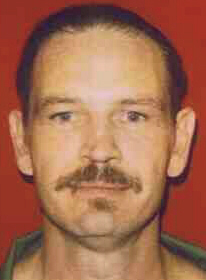
Jeffery Eugene Tucker
Murderer Brian Kevin Rosenfeld
Murderer · USA · 1985
Brian Kevin Rosenfeld Brian Kevin Rosenfeld was sentenced to three concurrent l…
23 victims
Brian Kevin Rosenfeld
Murderer · USA · 1985
Brian Kevin Rosenfeld Brian Kevin Rosenfeld was sentenced to three concurrent l…
23 victims
 Yahweh ben Yahweh
Murderer · USA · 1980
Yahweh ben Yahweh was born and legally named Hulon Mitchell Jr. (October 27, 19…
23 victims
Yahweh ben Yahweh
Murderer · USA · 1980
Yahweh ben Yahweh was born and legally named Hulon Mitchell Jr. (October 27, 19…
23 victims
 Russell Ellwood
Murderer · USA · 1991
Russell Ellwood was a former taxi driver. Authorities suspected him of killing…
20 victims
Russell Ellwood
Murderer · USA · 1991
Russell Ellwood was a former taxi driver. Authorities suspected him of killing…
20 victims
 Robert Martines Perez
Murderer · USA · 1994
Name: Robert Martines Perez · Other name used in proceedings: Robert Martinez P…
15 victims
Robert Martines Perez
Murderer · USA · 1994
Name: Robert Martines Perez · Other name used in proceedings: Robert Martinez P…
15 victims
 Martsay Bolder
Murderer · USA · 1973
Martsay Bolder was executed by lethal injection in Missouri on January 27, 1993…
2 victims
Martsay Bolder
Murderer · USA · 1973
Martsay Bolder was executed by lethal injection in Missouri on January 27, 1993…
2 victims
 Robert Consalvo
Murderer · 1991
Defendant: Robert Consalvo Victim: Lorraine Pezza · 09/27/91 — Date of offense.…
1 victim
Robert Consalvo
Murderer · 1991
Defendant: Robert Consalvo Victim: Lorraine Pezza · 09/27/91 — Date of offense.…
1 victim
 Pauline Parker
Homicide · New Zealand · 1954
Pauline Parker was born on 26 May 1938. She was from Christchurch, New Zealand,…
1 victim
Pauline Parker
Homicide · New Zealand · 1954
Pauline Parker was born on 26 May 1938. She was from Christchurch, New Zealand,…
1 victim
 Walter Mickens
Murderer · USA · 1992
Walter Mickens was convicted of capital murder in the killing of Timothy Jason…
1 victim
Walter Mickens
Murderer · USA · 1992
Walter Mickens was convicted of capital murder in the killing of Timothy Jason…
1 victim
 David Lee Cox
Murderer · USA · 1998
1998 — A dispute arose between David Lee Cox and Mark Davis; Davis asked Cox fo…
1 victim
David Lee Cox
Murderer · USA · 1998
1998 — A dispute arose between David Lee Cox and Mark Davis; Davis asked Cox fo…
1 victim
 Devon Stuart Olson
Murderer · USA · 1986
Devon Stuart Olson was a transient. Texas authorities arrested California parol…
2 victims
Devon Stuart Olson
Murderer · USA · 1986
Devon Stuart Olson was a transient. Texas authorities arrested California parol…
2 victims
- Gender
- male
- Country
- USA
- Location
- Parker County, Texas, USA
- Date of birth
- January 1, 1960
- Age at first offence
- 28
- Characteristics
- robbery, drugs, drug addict, convicted rapist
- Victim profile
- Wilton B. Humphreys (male, 65)
- Method of murder
- Shooting
- Date(s) of murder
- July 11, 1988
- Years active
- 1988
- Date of arrest
- 3 days after
- Status
-
Executed
Executed by lethal injection in Texas on November 14, 2001
Background
Jeffery Eugene Tucker was convicted of capital murder in connection with a robbery.
Tucker had answered a newspaper ad for a pickup truck and travel trailer for sale using the alias J.D. Travis. He went to see the owners of the vehicle, Wilton B. Humphreys, 65, and his wife, Peggy. Tucker told Mr. and Mrs. Humphreys that he would buy the pickup and trailer and pay the $18,000 asking price in cash. Mr. Humphreys said he would accompany Tucker to the bank so he could deposit the money once the paperwork was completed.
The offence
On the afternoon of July 11, 1988, a passing motorist found the body of Wilton Benthel Humphreys lying on a rural road in Parker County about 20 miles outside of Granbury, Texas.
Wilton Humphreys had been shot twice in the chest and once in the face, had blood coming from his mouth and back of his head, had broken legs, and had tire marks on his pants. His driver’s license was found in his pants pocket and led investigators to his home, where his wife explained that her husband had left earlier that day with a man, later identified as Tucker, to finalize the title transfer of a truck and travel trailer they had advertised for sale in the Fort Worth Star Telegram.
Events leading to the killing
Tucker had recently been released from prison and searched classified advertisements for a vehicle suitable for travel and camping where he could inexpensively and unnoticeably travel cross-country in a nationwide robbery spree. Tucker spotted the Humphreys’ ad in the newspaper and, using an assumed name, called to arrange a test drive.
The Humphreys were selling the truck and trailer because they had purchased a large RV to travel in together. They met with Tucker at their home. Tucker went on a test drive with Wilton and later visited with Mrs. Humphreys in her living room while Wilton left to get some attachments for the trailer. After making a pretextual phone call, Tucker and Wilton left together in the truck to go to the bank in Granbury to transfer the paperwork and finalize the sale for $18,000.
Robbery and shooting
Once the two men were in the truck alone, Tucker pulled a pistol from a paper sack he had been carrying. He told Humphreys he was stealing the truck and trailer.
Tucker forced Humphreys to drive out of town. About 20 miles outside of town, Tucker forced Humphreys to pull onto a road off the main highway. Tucker instructed Humphreys to stop and get out of the truck, allegedly so Tucker could tie him up on a fence post.
Tucker alleges that while both he and Humphreys were out of the truck, Humphreys tried to get back into the truck and lock Tucker out. A struggle ensued that ended up with Tucker shooting Humphreys two times. Other details in the case description state that Tucker shot Humphreys three times in the chest and face. The autopsy revealed that Humphreys had been shot twice in the chest and once in the face.
After Tucker shot Humphreys, Tucker shoved him out of the truck and drove off. At that time, the rear wheels of the truck and the wheels on the left hand side of the trailer ran over Humphreys’ legs.
Investigation
Humphreys’ wife explained that her husband had left earlier that day with a man, later identified as Tucker, to finalize the title transfer of a truck and travel trailer they had advertised for sale.
Tucker was arrested three days later in New Mexico driving the stolen truck in the course of a high-speed chase resulting from an armed robbery of a gas station of $800.
After Tucker’s arrest, he confessed in detail to Humphreys’ murder and to other crimes committed during the four-day crime spree culminating in his arrest, including an armed robbery of an Arlington motel clerk the day after Humphreys’ murder.
Arrest
Tucker was arrested in New Mexico three days later while driving the stolen truck, after a high-speed chase resulting from an armed robbery of a gas station of $800.
Trial
Tucker was indicted on October 13, 1988, for the capital offense of murdering Wilton Benthel Humphreys in the course of committing and attempting to commit robbery.
On Tucker’s plea of not guilty, he was tried and convicted of capital murder. A punishment hearing followed. Based on the jury’s answers to the special issues, the trial court assessed a punishment of death in accordance with state law.
Sentencing
Tucker received a death sentence.
The Texas Court of Criminal Appeals affirmed the conviction and sentence in an unpublished opinion dated June 9, 1993.
Appeals
State proceedings
Tucker’s appeal was automatic to the Texas Court of Criminal Appeals, which affirmed the conviction and sentence in an unpublished opinion dated June 9, 1993.
Tucker then filed a petition for writ of certiorari, which the Supreme Court denied on March 28, 1994.
Tucker filed an initial application in federal district court without going through the state habeas appeal process because Texas law at the time did not provide indigent defense for state habeas appeals. The federal district court limited Tucker’s federal claims to those that he had raised on his state direct appeal. He appealed this ruling to the Fifth Circuit Court of Appeals. The Fifth Circuit dismissed Tucker’s federal petition without prejudice to permit Tucker to go back to state court and file a state habeas appeal in light of a then newly-enacted state law that provided for the appointment of counsel to indigent applicants.
Through court-appointed state habeas counsel, Tucker filed his original application for writ of habeas corpus in the state trial court on April 11, 1997, followed by a supplemental application. The state trial court issued findings of fact and conclusions of law recommending that relief be denied. Based on the trial court’s recommendation, the Texas Court of Criminal Appeals denied relief in an October 21, 1998, unpublished order.
Tucker filed a petition for certiorari review in the Supreme Court on June 25, 2001. The Supreme Court denied both the writ of certiori and the stay.
By order dated July 2, 2001, the 43rd Judicial District Court of Parker County, Texas, scheduled Tucker’s execution for September 11, 2001.
Tucker’s application for stay of execution in the Supreme Court was also pending.
Tucker’s final appeal was denied by the Texas Court of Criminal Appeals on 10 October. His execution was then rescheduled for 14 November.
Federal proceedings
Tucker initiated his federal habeas proceedings on November 2, 1998, by filing a preliminary petition for writ of habeas corpus in the United States District Court for the Northern District of Texas, Fort Worth Division.
On September 9, 1999, the court denied Tucker’s request for federal habeas relief. The court next denied Tucker’s motion to alter or amend the judgment, but granted Tucker’s application for a certificate of appealability.
The Fifth Circuit affirmed the district court’s judgment denying Tucker habeas relief. Tucker’s petition for rehearing was denied on March 28, 2001.
Criminal history
Prior to the capital murder of Humphreys and the two armed robberies that followed, Tucker had been convicted of nine felony offenses and had been to the penitentiary three times.
In 1979, Tucker was convicted of two counts of passing a forged check that, after parole violations, resulted in two concurrent three-year terms of incarceration.
In 1980, Tucker was convicted of third-degree felony theft and sentenced to three years in prison.
Also in 1980, Tucker was found guilty of possession of marijuana and was sentenced to four years incarceration in the Texas Department of Corrections.
Tucker’s prison records reflected disciplinary offenses including soliciting the assistance of an inmate to violate prison rules and failing to obey orders.
In 1984, Tucker was convicted of two counts of forgery by the making of a check and was sentenced to concurrent six year terms of imprisonment.
On November 30, 1984, Tucker was convicted of third degree felony theft and was sentenced to six years incarceration.
Tucker’s prison records revealed numerous disciplinary offenses during this term, including damaging property, possession of contraband, sexual misconduct, destruction of property, possession of a weapon, refusing to obey orders, fighting without a weapon, failure to work, creating a disturbance, and stabbing an inmate.
The stabbing incident involved Tucker’s attack on his cellmate by stabbing him in the head with a homemade knife made of a metal rod and a toothbrush. Testimony at Tucker’s capital murder trial revealed that the cellmate was found shoved under the bunk in the cell with a piece of a toothbrush handle attached to a metal rod protruding from his temple, and another rod that was stuck in his throat. A search of the cell revealed another weapon fashioned from a sharpened piece of a red drinking glass found underneath Tucker’s mattress.
Tucker pleaded guilty to aggravated assault and received a five-year sentence.
Other details
Parole and related conduct
Tucker was paroled in June 1988, one month before murdering Wilton Humphreys.
The description of the case includes that, at the time, parole was easily obtained in Texas because of strict prison population caps imposed by U.S. District Judge William Wayne Justice.
Check theft and gun purchase
Before the murder, Tucker stole two checks from his brother’s checkbook and wrote one out for $423, which he then cashed at his brother’s bank.
In violation of his parole, Tucker used the money to buy a gun at a pawn shop, which he used in the murder of Humphreys and in two armed-robberies following the murder.
Confession details about the confrontation
Tucker’s confession included that he and Humphreys left together to go to the bank in Granbury to transfer paperwork and finalize the sale for $18,000. Once the two men were in the truck alone, Tucker pulled out the gun from a paper sack he had been carrying and forced Humphreys to drive out of town.
Tucker alleged that Humphreys tried to get back into the truck and lock Tucker out, and a struggle ensued that ended with Tucker shooting Humphreys.
After Tucker shot Humphreys, Tucker shoved him out of the truck and drove off, while the rear wheels of the truck and the wheels on the left hand side of the trailer ran over Humphreys’ legs.
Execution arrangements and reactions
Tucker was executed by lethal injection in Huntsville, Texas.
Tucker’s execution was scheduled for September 11, 2001. A 30-day reprieve was granted by Gov. Rick Perry. The reprieve was described as occurring in immediate response to the attacks on New York and Washington Sept. 11, the same day Tucker had been scheduled for lethal injection, and was described as based on concerns that government offices, including the federal courts, were shut and the courts might not be able to respond to any 11th-hour plea from attorneys.
A reprieve was not welcomed by the inmate. Donald Schnebly, the Parker County district attorney, said: "He sent us a letter saying he just wanted it go through." and "He just wants the sentence carried out."
When the reprieve expired, the execution date was set. Tucker said: "Death to me would be relief," and: "The hardest thing for me is to look in a mirror for 13 years and know I took a life. "The memory haunts me. I say put me on the gurney and maybe the pain will stop."
At the execution, Tucker reiterated apology and acceptance. He said, looking at Peggy Humphreys: "To the Humphreys family, I am sorry for the pain and suffering I caused them," and: "It was just a simple accident, and if my death can bring you peace and solace, then I bring that to you. I know that I leave this world for the crime I committed."
He thanked his family, attorneys, and spiritual advisor and recited the Lord’s Prayer. After he said "Amen", lethal injection was administered. Tucker was pronounced dead at 6:26 p.m.
Humphreys’ son, Jon Brad Humphreys, said "Amen" with him.
Quotes from Tucker while on death row
In a death row interview, Tucker said: "I'm sorry it happened," and: "I've had to wake up every day for the last 13 years and look at myself in the mirror and know that I took a man's life."
Tucker accepted full responsibility and accepted his punishment. Tucker said: "I am guilty of this crime," and: "If my death will give [Humphreys' family] peace, then I will give them that peace."
Tucker also said: "I wish they would have rehabilitated me. If they'd put me in a drug rehab and counseling the first time I was in, it would have been over and that would have been it."
In the same description, Tucker said: "He lunged at me," and: "I had the gun in my hand. It went off."
The description also includes Tucker saying: "I'm guilty," and: "I've never denied my guilt."
Requests for clemency
An American Civil Liberties Union letter urged the governor to commute Tucker’s sentence of death to life imprisonment. The letter stated: "On behalf of the American Civil Liberties Union, we urge you to commute Mr. Tucker's sentence of death to life imprisonment."
The letter was signed: Diann Rust-Tierney; it also lists William Harrell, Vladimir Kouznetsov, and Pro Bono Counsel at Squire, Sanders & Dempsey LLP, with the address provided in the letter.
Conflicting descriptions of the conviction year
One part of the case description states that Tucker was scheduled to be executed after 6 p.m. on Tuesday, September 11, 2001, and includes procedural details through the appeals.
Another part of the description states that Tucker "was convicted in October, 1989 for the murder of Wilton Humphries" and also states that "After being denied state habeas relief in 1997, he first petitioned for federal relief in 1998." The record also includes that Tucker’s indictment date was October 13, 1988 and that the Texas Court of Criminal Appeals affirmed the conviction and sentence in an unpublished opinion dated June 9, 1993.
Spotted an error, or have more information about this case?