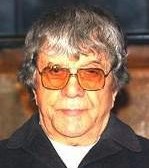
Andras Pandy
Serial killer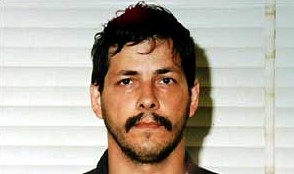 Marc Dutroux
Serial killer · Belgium · 1995
Marc Dutroux (born 6 November 1956 in Brussels) was a Belgian serial killer and…
5 victims
Marc Dutroux
Serial killer · Belgium · 1995
Marc Dutroux (born 6 November 1956 in Brussels) was a Belgian serial killer and…
5 victims
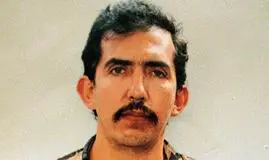 Luis Alfredo Garavito
Serial killer · Colombia/Ecuador · 1992
Luis Alfredo Garavito Cubillos, also known as "La Bestia" ("The Beast") or "Tri…
192 victims
Luis Alfredo Garavito
Serial killer · Colombia/Ecuador · 1992
Luis Alfredo Garavito Cubillos, also known as "La Bestia" ("The Beast") or "Tri…
192 victims
 Rodney Alcala
Serial killer · USA · 1977
Rodney James Alcala (born August 23, 1943) was also known as Rodrigo Jacques Al…
100 victims
Rodney Alcala
Serial killer · USA · 1977
Rodney James Alcala (born August 23, 1943) was also known as Rodrigo Jacques Al…
100 victims
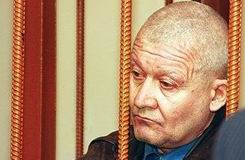 Serhiy Tkach
Serial killer · Ukraine · 1980
Serhiy Tkach (Russian: Серге́й Фёдорович Ткач, born 12 September 1952 in Kisely…
100 victims
Serhiy Tkach
Serial killer · Ukraine · 1980
Serhiy Tkach (Russian: Серге́й Фёдорович Ткач, born 12 September 1952 in Kisely…
100 victims
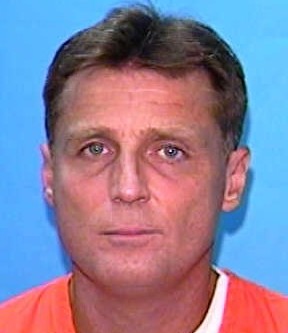 Glen Edward Rogers
Serial killer · USA · 1993
Glen Edward Rogers was a spree killer whose cross-country rampage in 1994-95 le…
70 victims
Glen Edward Rogers
Serial killer · USA · 1993
Glen Edward Rogers was a spree killer whose cross-country rampage in 1994-95 le…
70 victims
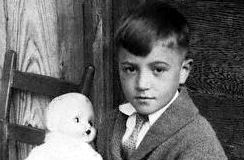 Carl Newton Mahan
Homicide · USA · 1929
Name: Carl Newton Mahan Carl Newton Mahan was described as a 6-year-old from Pa…
1 victim
Carl Newton Mahan
Homicide · USA · 1929
Name: Carl Newton Mahan Carl Newton Mahan was described as a 6-year-old from Pa…
1 victim
- Gender
- male
- Country
- Belgium
- Location
- Brussels, Belgium
- Date of birth
- J une 1, 1927
- Age at first offence
- 59
- Characteristics
- incest, rape, parricide
- Victim profile
- His first two wives and four of his eight children
- Method of murder
- Hitting with a hammer
- Date(s) of murder
- 1986 - 1992
- Years active
- 1986–1992
- Date of arrest
- October 20, 1997
- Status
-
Died in custody
Sentenced to life in prison on March 8, 2002; died in prison on December 23, 2013
Background
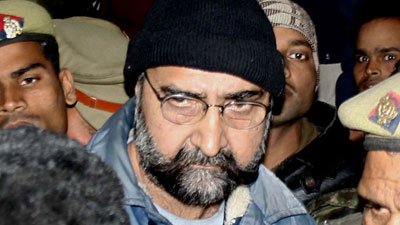
András Pándy (born June 1, 1927, Chop, Ukraine) was a convicted Belgian serial killer. He was a former clergyman and was dubbed “Vader blauwbaard” (“Father Bluebeard”) by Belgian press.
Pándy met his first wife, Ilona Sőrés, in 1957. In the wake of the communist era, they fled from Hungary to Belgium. A daughter, Ágnes Pándy, was born about a year later, and sons Dániel and Zoltán were born in 1961 and 1966 respectively. The couple divorced one year later after Pándy accused Ilona of infidelity and they separated. Ilona moved away from the house, taking her sons, but leaving her daughter behind, who soon started an incestuous relationship with her father.
In the beginning of the 1970s, Pándy began courting other women through dating services, often giving them a faux name and job description, using the motto “European Honeymoon” in the ads. By the end of the decade, he visited Hungary again and met his future second wife, Edit Fintor, a married woman and mother of three children: Tünde, Tímea, and Andrea. He seduced Edit, and according to her then-husband, she was effectively eloped by Pándy to Belgium.
In 1992, Pándy resigned from his church duties. By then, his second spouse and four of Pándy’s eight children were listed as missing. By 2002, authorities described that Pándy dissolved victims’ bodies in chemical drain cleaner.
The offence
Pándy was convicted for the murder of his two wives and four children. He was also convicted of raping his daughters.
The disappearances began in 1986. First, wife Edit disappeared, and later her 13-year-old daughter Andrea disappeared. Pándy claimed to Edit’s lover that they moved to Germany. In 1988, Pándy’s ex-wife Ilona and her sons disappeared. Pándy first claimed they moved to France and later claimed South America.
In 1990, after sending Ágnes to a vacation with his children, Tünde disappeared. Pándy claimed he couldn’t handle her and threw her out of the house.
Pándy began another incestuous relationship with his daughter Tímea in 1984. Ágnes, in a fit of jealousy, tried to bludgeon Tímea to death like the others, but was startled; Tímea fled the house and soon immigrated to Canada.
Pándy’s daughter Ágnes bottomed out in November 1997. After reporting her father in 1992 for sexual abuse, she turned herself in for the police and confessed to the murders of the disappeared relatives. Ágnes said she was solely responsible for the murder of her mother Ilona, and took part in the murder of Dániel, Zoltán, and Andrea. She refused to mention Tünde’s case.
According to Ágnes’s account, the modus operandi included murder by a handgun in two cases and head trauma caused by a heavy blunt object. The corpses were then dismembered, partly dissolved in acid in the basement, and partly taken to a local abattoir. Investigators also recovered evidence including bones, ashes, blood-spattered walls, and human tissue fragments, and later learned that the bodies were dissolved using a strong acid cleanser described as chemical drain cleaner.
Investigation
Hungarian police conducted searches for human remains and investigated missing-person cases. Belgian authorities began digging for human remains in abandoned properties owned by Pándy in Brussels. Police recovered kneecaps, teeth, bone fragments, and ashes in one cellar. DNA tests showed the remains were not from the missing Pandy family members.
Authorities found a blood-spattered wall in another of the homes and large pieces of unspecified flesh stocked inside fridges. Hungarian authorities searched six interconnected basements at Pándy’s former home at Dunakeszi, north of Budapest.
Belgian police later found teeth belonging to eight different people in a former home. Forensic tests indicated the teeth came from seven women between the ages of 35 and 55, plus one man between 18 and 23, none of whom were related to Pándy.
Police in Hungary announced that an “old family tragedy” could explain why Pándy might have killed his two ex-wives and four of his children, while preferring to wait in case the suspect decided to confess. Questions were also raised about the identity of the pastor. Belgian investigators thought the person in custody could be the younger brother of the real Andras Pandy, who had died in Hungary in 1956.
Investigators also looked for victims whose identities were not established, noting that some recovered remains did not match the missing family members.
Arrest
Pándy was arrested October 16, 1997. Another account in the material described an arrest in Belgium on October 20, 1997.
Police arrested Ágnes Pándy on November 21, 1997 and charged her with playing an active role in the murders of her two brothers, her step-mother, and two step-sisters. Ágnes confessed on November 25, 1997 to helping kill five relatives: her mother, two brothers, a stepmother, and her daughter. She was investigated for possible links to the disappearance of others in the family.
On November 26, 1997, the Hungarian Nepszava newspaper reported that Pándy fostered an undetermined number of orphaned or homeless Romanian children in his home in Brussels. The children became orphaned or homeless after the 1989 revolution in Romania. They were taken in by a charity club named YDNAP (PANDY backwards) founded by Pándy. The report said “and nobody knows what happened to them or if they returned home.”
Trial
A trial began in a Brussels court on February 18, 2002. Pándy was described as a Hungarian pastor living in Belgium and as being accused of murdering his first two wives and four of his eight children; police believed the number of victims might be as high as 13.
Ágnes Pándy was also on trial, and she confessed to helping kill several family members. She claimed her father sexually abused her from the age of 13.
On March 6, 2002, a Belgian court convicted Pándy of killing six family members and dissolving their bodies in chemical drain cleaner. He was sentenced to life in prison.
Ágnes Pándy, described as 44-year-old, received a 21-year sentence for being an accomplice in five murders and one attempted murder.
The court found that Pándy murdered two wives and four children, including a daughter whom he was also convicted of raping. The court also found he raped two other daughters, and the oldest daughter helped him with the killings.
In court, Pándy dismissed the proceedings as a “witch trial” against him. He told the jury that the allegedly dead were still alive and he was “in contact with them through angels.”
Prosecutors had requested a 29-year sentence for Ágnes, but her lawyers pushed for leniency by describing her as being under the “overwhelming irresistible spell” of a father raping her as he coerced her into collaborating in the killings of her mother and siblings. Ágnes said in her closing statement: “I had no way out. I was completely in his grip,”
Sentencing
Pándy was sentenced to life in prison on March 8, 2002.
Ágnes Pándy was sentenced to 21 years in prison on March 8, 2002.
The material also described that Pándy attempted to be released early in March of an unspecified year, and that he was still in prison at the time.
Outcome
On March 8, 2002, after twelve hours of deliberation, a jury convicted Pándy of six counts of murder.
Ágnes Pándy was convicted of five counts of murder and of the attempted murder of her stepsister Timea. She was sentenced to 21 years in prison.
In prison, Pándy was later transferred for health reasons from Leuven Centraal to Bruges.
On December 23, 2013, Pándy died in the prison of Bruges. The death was described as natural.
Aftermath
The material described that police diggers had recovered fragments from likely victims whose stories had not been told, and that authorities refused to speculate on Pándy’s final body count.
It also described that Timea, his stepdaughter, and her son survived, and that in a remote corner of Hungary, two women, Eva Kincs and her elder sister Margit Magyar, described themselves as survivors after being kept locked in Pándy’s home for a time and later being sent back to Hungary. It stated that they believed they would become Pándy’s third wife and sister-in-law respectively, and that he took them out only once during their stay.
Quotations included in the material:
- Ágnes Pándy told a Belgian newspaper: “I am ashamed that my father might turn out to be one of the worst serial killers in history,”
- Pándy told authorities: “It is up to justice to prove they are dead. When I'm free again, they will come and visit me.”
- Pándy told the jury: “It is up to justice to prove they are dead.
- Pándy told the jurors in a statement peppered with obscure references: “Here in the capital of Europe I have been subjected to a trial for sorcery,”
- Pándy said: “At every turn, the proceedings have been very black, full of tragedy, full of Satanism.”
- Pándy said: “I am going to tell you how we killed five people.”
- Ágnes Pándy said: “I had no way out. I was completely in his grip,”
- Ágnes Pándy said: “It felt cold.”
- The material quoted a defense attorney: “she had been under the overwhelming irresistible spell”
Spotted an error, or have more information about this case?