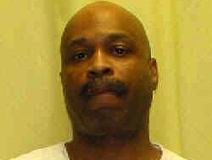
Clarence Carter
Murderer Brian Kevin Rosenfeld
Murderer · USA · 1985
Brian Kevin Rosenfeld Brian Kevin Rosenfeld was sentenced to three concurrent l…
23 victims
Brian Kevin Rosenfeld
Murderer · USA · 1985
Brian Kevin Rosenfeld Brian Kevin Rosenfeld was sentenced to three concurrent l…
23 victims
 Yahweh ben Yahweh
Murderer · USA · 1980
Yahweh ben Yahweh was born and legally named Hulon Mitchell Jr. (October 27, 19…
23 victims
Yahweh ben Yahweh
Murderer · USA · 1980
Yahweh ben Yahweh was born and legally named Hulon Mitchell Jr. (October 27, 19…
23 victims
 Russell Ellwood
Murderer · USA · 1991
Russell Ellwood was a former taxi driver. Authorities suspected him of killing…
20 victims
Russell Ellwood
Murderer · USA · 1991
Russell Ellwood was a former taxi driver. Authorities suspected him of killing…
20 victims
 Robert Martines Perez
Murderer · USA · 1994
Name: Robert Martines Perez · Other name used in proceedings: Robert Martinez P…
15 victims
Robert Martines Perez
Murderer · USA · 1994
Name: Robert Martines Perez · Other name used in proceedings: Robert Martinez P…
15 victims
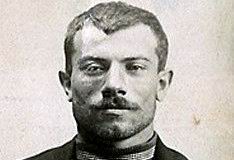 Luigi Lucheni
Murderer · Switzerland · 1898
Luigi Lucheni (April 22, 1873 – October 19, 1910) was an Italian anarchist. Lui…
1 victim
Luigi Lucheni
Murderer · Switzerland · 1898
Luigi Lucheni (April 22, 1873 – October 19, 1910) was an Italian anarchist. Lui…
1 victim
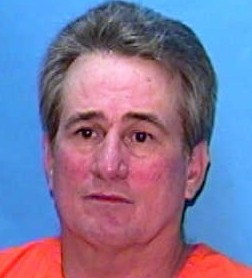 Ken Eldon Lott
Murderer · USA · 1994
Defendant: Ken Eldon Lott Date of birth: 02/14/53 Jurisdiction: Ninth Judicial…
1 victim
Ken Eldon Lott
Murderer · USA · 1994
Defendant: Ken Eldon Lott Date of birth: 02/14/53 Jurisdiction: Ninth Judicial…
1 victim
 Alexander Greb
Spree killer · Russia · 2004
Alexander Greb was arrested by law enforcement officers of the Rakitinsky depar…
4 victims
Alexander Greb
Spree killer · Russia · 2004
Alexander Greb was arrested by law enforcement officers of the Rakitinsky depar…
4 victims
- Gender
- male
- Country
- USA
- Location
- Hamilton County, Ohio, USA
- Date of birth
- March 9, 1962
- Age at first offence
- 26
- Characteristics
- murder for hire, argument
- Victim profile
- Michael Hadnot / Johnny Allen, 33 (fellow inmate)
- Method of murder
- Shooting / Beating
- Date(s) of murder
- August 13, 1988 / January 11, 1989
- Years active
- 1988–1989
- Date of arrest
- —
- Status
-
Executed
Executed by lethal injection in Ohio on April 12, 2011
Case details
Defendant: Clarence Carter Sex: Male Race: Black
Victim: Johnny Allen Victim age: 33
Case number: B890531 County of conviction: Hamilton Presiding judge: Richard A. Niehouse Prosecuting attorney: Arthur M. Ney, Jr.
Timeline
- 05/27/1982 — Admission date: AGG ROBBERY (ORC: 2911.01), committing county: HAMILTON; Degree of Felony: First; Admission date: 05/27/1982.
- 05/27/1982 — Admission date: AGG ASSAULT (ORC: 2903.12), committing county: HAMILTON; Degree of Felony: Fourth; Admission date: 05/27/1982.
- 12/09/1988 — Clarence Carter was found guilty of aggravated murder in the death of Michael Hadnot.
- 12/28/1988 — Clarence Carter was in the Hamilton County Jail Annex on “E” range and got into a fight with fellow inmate Johnny Allen, arguing over what to watch on television; the confrontation led to Allen’s injuries and hospitalization.
- 02/01/1989 — The Grand Jury of Hamilton County, Ohio returned an indictment against Clarence Carter charging him in a single count with the aggravated murder of Johnny Allen.
- 01/05/1989 — Clarence Carter was sentenced to life imprisonment for the prior aggravated murder (in the death of Michael Hadnot).
- 01/10/1989 — Doctor Harry J. Bonnell, Chief Deputy Coroner, stated that Allen’s heart and breathing stopped, but doctors revived him.
- 01/11/1989 — Allen was brain dead following a January 11 examination; Allen died as a result of Clarence Carter’s assault.
- 01/12/1989 — Dr. Bonnell performed an autopsy on Allen.
- 07/17/1989 — Trial began on the aggravated murder indictment count and specifications.
- 07/26/1989 — The jury found Clarence Carter guilty of the aggravated murder of Johnny Allen with prior calculation and design.
- 07/27/1989 — The penalty phase commenced.
- 07/28/1989 — The penalty phase concluded with the jury recommending the imposition of the death penalty.
- 08/01/1989 — Clarence Carter was sentenced to death; the trial court adopted the jury recommendation.
- 08/16/1989 — The trial judge placed of record a separate opinion independently reviewing the evidence and determining that the aggravating circumstances outweighed the mitigating factors beyond a reasonable doubt.
- 04/12/2011 — Clarence Carter was executed by lethal injection at the Southern Ohio Correctional Facility in Lucasville; time of death was 10:25 a.m.
People
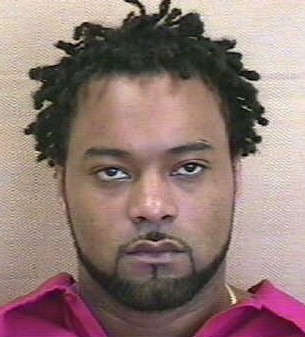
Clarence Carter
Clarence Carter was the defendant and was executed by lethal injection in Ohio on April 12, 2011. Carter was awaiting sentencing for aggravated murder in 1988 when he attacked Johnny Allen Jr. Carter was described as 49 years old at the time of execution.
Johnny Allen (victim)
Johnny Allen died after Clarence Carter assaulted him in the Hamilton County Jail Annex. Johnny Allen was 33 years old.
Helen L. Bonner (victim’s mother)
Helen L. Bonner released a statement saying she had no animosity against Clarence Carter and had forgiven him. Helen L. Bonner stated: “I have no animosity against him and I have forgiven him for taking my child from me...I am glad that justice is finally served, but my forgiveness toward him will never ease the pain of the loss of my son Johnny.” Another statement attributed to Helen L. Bonner included: “But my forgiveness of him will never ease the pain of the loss of my son,”.
Lamarck Carter
Lamarck Carter was Clarence Carter’s brother. Lamarck Carter witnessed the execution. After the execution, the people witnessing clasped hands and Carter smiled.
Attorney and imams
Carter’s execution was witnessed by Carter’s brother, Lamarck Carter, and “an attorney.” Carter met with two imams before the execution.
Background
Clarence Carter had been found guilty of aggravated murder on December 9, 1988, and was awaiting sentencing while incarcerated in the Hamilton County Jail Annex on “E” range. Allen was being held on a theft charge while incarcerated in the Hamilton County Jail Annex to the Hamilton County Courthouse. Clarence Carter was described as a self-described “hit man” for a group of Cincinnati drug traffickers while awaiting trial on a murder charge.
The offence
The altercation and beating
On December 28, 1988, Clarence Carter got into a fight with fellow inmate Johnny Allen, arguing over what program would be watched on a shared television. Witnesses described that the dispute led to Clarence Carter punching Allen in the eye. After lunch on December 28, Carter yelled to Allen to sweep the range; Allen responded by leaving his cell to get a broom. Carter then ambushed Allen, knocked him down, and began punching, kicking, and choking Allen. Witnesses said Carter periodically stopped to mop blood from his sneakers using a mop. Carter left Allen to wipe Allen’s blood off shoes with a mop and returned to resume kicking, choking, and stomping on Allen’s head. Witnesses described the beating as lasting about a half-hour period and, in court testimony, lasting twenty or twenty-five minutes. Inmate Joseph Carroll testified that Allen and Carter exchanged words on a December evening when Carter switched channels and punched Allen in the eye. Inmate Calvin Johnson and Phillip Brewer confirmed that Allen and Carter exchanged words, and that Carter struck Allen.
Evidence concerning a spoon handle and a shank
A broken metal spoon handle was described as being found in a hole in the shower ceiling. Inmate Calvin Johnson saw Clarence Carter retrieve the metal handle after lunch on December 28. The prosecution described the shank as the sharpened end of a spoon, recovered when the guards arrived. Deputy Raymond J. Loebker saw Carter drop the shank. Sheriff’s Lieutenant John Douglas saw the metal handle on the floor, four feet from Allen, and retrieved it for later examination. The shank had no fingerprints.
Competing accounts
Clarence Carter’s theory of defense was that Allen attacked him with the shank and Carter merely defended himself, being carried away with rage. A defense witness, Robert Chapman, acknowledged that he previously told investigators he was asleep. Chapman testified as a defense witness that the fight began when Allen, holding the metal spoon handle, began hitting Carter. Howard “Tub” Burns, a high school friend of Carter, heard Carter yell, “Tub, get the police.” Inmate Robert Chapman’s account was contrasted with other testimony describing Allen never throwing a punch or provoked Carter.
Injuries and medical course
When guards arrived, they found Allen lying face down on the floor in a pool of blood. Allen was described as unconscious and having difficulty breathing; his ribs were pulsating and blood was running out of his mouth. At University Hospital, Doctor Christopher Miller, a resident neurosurgeon, found bruises and lacerations about Allen’s head, face, and neck, and blood exuded from behind Allen’s eardrums signifying probable basilary skull fractures. Allen had a low level of brain system reflex functioning, was neither conscious nor able to communicate, and doctors connected life support systems. Doctors found soft tissue swelling between Allen’s larynx and spine, but the cervical region was not fractured. A December 28 CAT scan revealed prominent soft tissue swelling over Allen’s left front temporal region, a subdural hematoma between the brain’s surface and the skull, and diffuse bleeding within the brain. Trauma was described as the cause of the injuries, and deprivation of oxygen was described as a possible additional factor. Doctor Harry J. Bonnell, Chief Deputy Coroner, stated that Allen’s heart and breathing stopped on January 10, but doctors revived him. A January 11 examination revealed that Allen was brain dead, after which doctors disconnected life support systems. Dr. Bonnell performed an autopsy on January 12. Allen was 5'10" and weighed 122 lbs. Dr. Bonnell opined that Allen died as a result of multiple bruises and swelling of the brain caused either by blunt objects striking his head or his head striking blunt objects. Dr. Bonnell also stated that Allen’s brain had been deprived of oxygen prior to arrival at the emergency room. Dr. Bonnell stated that injuries were consistent with Allen’s head having been banged against the floor or against steel bars. Dr. Bonnell stated that the injuries were fatal and that Allen would have died within twenty-four hours of the trauma without medical intervention. At the time of execution, it was stated that Allen died two weeks after the December 1988 beating in the Hamilton County jail in Cincinnati.
Investigation and evidence
Police and prison staff observations
Around 1:30 p.m., sheriff’s deputies heard unusual noises like an object being banged against steel bars and went to investigate. When they arrived at “E” range, they found Allen lying face down on the floor in a pool of blood. Deputy Raymond J. Loebker described Carter dropping the shank. Sheriff’s Lieutenant John Douglas retrieved the metal handle for later examination. Around 5:00 p.m. on December 28, Carter showed Detective John Hinrichs scratches Carter said he sustained in his fight with Allen. Carter had two or three scratches on his right thigh, scratches on his right arm, and a cut on his chest; the material stated none was deep or serious and only the chest cut showed any sign of possible bleeding. Carter was described as muscular and strong and in excellent physical condition.
Forensic evidence
Forensic examination revealed that Carter’s socks, pants, and tennis shoes all contained type “O” human blood. Allen had type “O” blood, but Carter’s blood type was not revealed at trial. Carter’s T-shirt also had human blood, but the stain was not typed. Forensic examination revealed two human blood stains on the metal shank—one stain was type O and the other was undetermined. The shank had no fingerprints.
Trial
Charges and specifications
On February 1, 1989, a Grand Jury of Hamilton County, Ohio returned an indictment charging Clarence Carter with aggravated murder of Johnny Allen in a single count. The count included two specifications:
- that at the time of the offense, Carter was a prisoner in a detention facility as defined in R.C. 2921.01; and
- that prior to the offense, Carter had been convicted of aggravated murder, an essential element of which was the purposeful killing or purposeful attempt to kill another.
Verdict and findings
A trial lasting from July 17, 1989 through August 1, 1989 ended with a jury finding Carter guilty of aggravated murder as charged in the indictment and guilty of the first specification that the offense had been committed while Carter was a prisoner in a detention facility. By request of Carter, the second specification was tried separately to the court and resulted in a finding of guilty. The jury found Carter guilty of aggravated murder with prior calculation and design. Carter stipulated to the first death-penalty specification that the offense occurred while Carter was a prisoner in a detention facility. The second specification that Carter was previously convicted of an offense an essential element of which is the purposeful killing of another was tried to the court, which found Carter guilty.
Mitigation
The only evidence submitted at mitigation was Carter’s own statement.
Sentencing
On July 27, 1989, the penalty phase commenced, and on July 28, 1989, the jury recommended a capital sentence. The trial court adopted the recommendation and sentenced Carter to death on August 1, 1989.
Appeals
State direct appeal (Ohio Supreme Court)
The Ohio Supreme Court decision is listed as State v. Carter, 64 Ohio St.3d 218, 594 N.E.2d 595 (Ohio 1992). The appeal included review of assignments of error presented by the appellant (six in number). The court stated it found no prejudicial error and overruled all six assignments of error. The court held that the aggravating circumstances outweighed the mitigating factors beyond a reasonable doubt and determined that the sentence of death was appropriate and not excessive or disproportionate. The court affirmed the appellant’s conviction and the sentence of death imposed.
In a remand, on December 12, 1990, an order of limited remand required the trial judge to clarify certain ambiguous language in the conclusionary paragraph of the sentencing opinion. On December 21, 1990, the trial judge’s supplemental opinion was entered of record.
Federal habeas and Rule 60(b)(6)
The case included a habeas background: after affirmance of the aggravated murder conviction and death sentence and affirmance of denial of habeas relief, the United States District Court for the Southern District of Ohio denied a motion for relief from judgment. The Court of Appeals held: (1) the warden did not engage in conduct that was intentionally false, willfully blind to truth, or in reckless disregard for truth to commit fraud on court; (2) the warden did not engage in conduct that was positive averment or concealment by one under duty to disclose to commit fraud on court; and (3) the warden did not engage in conduct that deceived the court to commit fraud on court. The Court of Appeals affirmed.
The federal appeal concerned Clarence Carter’s claim under Federal Rule of Civil Procedure 60(b)(6). Clarence Carter argued the warden did not turn over the interview transcript to the court during the evidentiary hearing in federal habeas proceedings. The district court concluded the failure to sua sponte turn over the transcript did not warrant relief under Rule 60(b)(6) because it did not undermine the integrity of the proceeding. The Court of Appeals affirmed.
Outcome
Clarence Carter was executed by lethal injection in Ohio on April 12, 2011. It was stated that his time of death was 10:25 a.m. at the Southern Ohio Correctional Facility in Lucasville.
Clarence Carter apologized to the family of his victim. He said: “Let them know I'm sorry for what I did.” Another statement attributed to Clarence Carter included: “I'd like to say I'm sorry for what I did, especially to his mother. I ask God for forgiveness and them for forgiveness,” He also was described as smiling and nodding at his brother and appearing to pray as the lethal injection began. Witnesses said Allen’s mother did not attend but released a statement that she had no animosity against Carter and had forgiven him.
Other details
Victim and prison fight context
The fight occurred in the Hamilton County jail annex to the Hamilton County Courthouse. The incident occurred in the “E” range common area. In the “E” range, approximately twelve cells opened to a common area. It was stated that inmate-on-inmate violence in lockups was often pursued to establish oneself as fearsome and to deter others from threatening or attacking the inmate. A letter obtained by The Dispatch described the death of inmate Johnny Allen resulting from a “jailhouse fight” and stated it did not warrant the death penalty. The letter included quoted language: “It is much more likely that this was an inmate fight that got tragically out of hand,” and “Inmate-on-inmate violence in lockups is often pursued to establish oneself as fearsome and to deter others from threatening or attacking the inmate.” and “There is no evidence that Carter planned to kill Allen, they said.”
Witness and testimony details
Inmate Joseph Carroll testified that he and Allen were watching television on a mid-December evening when Carter came in and switched channels. Carroll testified that Allen said to Carter, “Don’t we vote on this?” Inmate Calvin Steele described the initial blow as a “sucker punch,” delivered suddenly and without warning. Steele testified that Carter told Steele to “[g]et my ass back downstairs.” Sheriff’s Lieutenant John Douglas retrieved the metal handle four feet from Allen.
Blood typing
The material stated the forensic examination showed type “O” human blood on Carter’s socks, pants, and tennis shoes, and that Allen had type “O” blood, while Carter’s blood type was not revealed at trial. Forensic examination found two blood stains on the metal shank, one type O and the other undetermined.
Execution day details
Prisons department spokesman Carlo LoParo said Carter had been calm and in good spirits Monday, meeting with two imams, laughing during visits with his brother and lawyers, and saying, “doing good, happy and I'm a smiling,” Just ahead of the lethal injection, Carter knelt and put his head to the ground in prayer. Only two media representatives witnessed the execution: a reporter from The Associated Press and one from The Columbus Dispatch representing the Ohio Legislative Correspondents Association. Larry Greene said it was the fewest number of media to witness an execution since the state resumed executions in 1999. Prisons director Gary Mohr said each execution was a “significant event.” LoParo said about five protesters gathered outside the prison.
Prior convictions and sentences listed
Clarence Carter’s convictions were listed as including:
- AGG MURDER (Death) (2 Specifications)
- AGG ASSAULT (Counts: 1 and associated ORC: 2903.12; ORC references included 2903.11 and 2903.12 with committing county HAMILTON and admission dates)
- AGG ROBBERY (Counts: 1 and ORC: 2911.01; committing county HAMILTON; admission date 05/27/1982; degree of felony First) The record lists multiple offense information lines: AGG ASSAULT and its ORC references; AGG ROBBERY; and AGG MURDER with ORC 2903.01 and committing county HAMILTON. Admission dates and degrees of felony were recorded for these prior offenses.
Spotted an error, or have more information about this case?