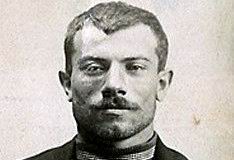
Luigi Lucheni
Murderer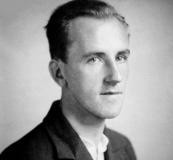 Hans Vollenweider
Murderer · Switzerland · 1940
Hans Vollenweider was born in 1908 in Zurich. He was last in Switzerland. Volle…
3 victims
Hans Vollenweider
Murderer · Switzerland · 1940
Hans Vollenweider was born in 1908 in Zurich. He was last in Switzerland. Volle…
3 victims
 Mischa Ebner
Murderer · Switzerland · 2002
Mischa Ebner was a Swiss man who was accused of stabbing two young women near B…
1 victim
Mischa Ebner
Murderer · Switzerland · 2002
Mischa Ebner was a Swiss man who was accused of stabbing two young women near B…
1 victim
 Vitaly Kaloyev
Murderer · Switzerland · 2004
Vitaly Konstantinovich Kaloyev was born in 1956 in Vladikavkaz. He was an archi…
1 victim
Vitaly Kaloyev
Murderer · Switzerland · 2004
Vitaly Konstantinovich Kaloyev was born in 1956 in Vladikavkaz. He was an archi…
1 victim
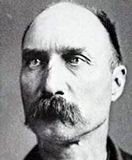 John Makin
Murderer · Australia · 1892
John Makin (14 February 1845 – 15 August 1893) was an Australian baby farmer wh…
12 victims
John Makin
Murderer · Australia · 1892
John Makin (14 February 1845 – 15 August 1893) was an Australian baby farmer wh…
12 victims
 Siswanto
Serial killer · Indonesia · 1994
Siswanto, also known as Robot Gedek, was a homeless Indonesian man. Siswanto mu…
12 victims
Siswanto
Serial killer · Indonesia · 1994
Siswanto, also known as Robot Gedek, was a homeless Indonesian man. Siswanto mu…
12 victims
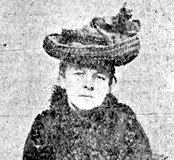 Emily Swann
Murderer · United Kingdom · 1903
Emily Swann (42-year-old mother of 11 children; defendant; convicted of murderi…
1 victim
Emily Swann
Murderer · United Kingdom · 1903
Emily Swann (42-year-old mother of 11 children; defendant; convicted of murderi…
1 victim
 Timea Faludi
Homicide · Hungary · 2000
Timea Faludi was a Hungarian nurse dubbed the “Black Angel”. She was sentenced…
30 victims
Timea Faludi
Homicide · Hungary · 2000
Timea Faludi was a Hungarian nurse dubbed the “Black Angel”. She was sentenced…
30 victims
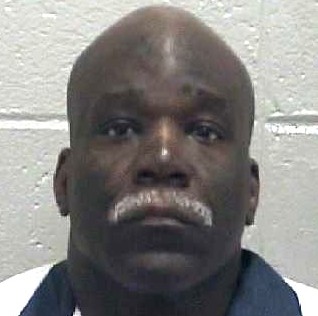 Michael Anthony Cohen
Murderer · USA · 1985
Michael Anthony Cohen, 40, was sentenced to death in Glynn County in December 1…
1 victim
Michael Anthony Cohen
Murderer · USA · 1985
Michael Anthony Cohen, 40, was sentenced to death in Glynn County in December 1…
1 victim
 Tonya Ford
Murderer · USA · 2009
Tonya Ford was a Taylor County woman convicted of killing her police officer hu…
1 victim
Tonya Ford
Murderer · USA · 2009
Tonya Ford was a Taylor County woman convicted of killing her police officer hu…
1 victim
- Gender
- male
- Country
- Switzerland
- Location
- Geneva, Switzerland
- Date of birth
- April 22, 1873
- Age at first offence
- 25
- Characteristics
- anarchist, angel of death
- Victim profile
- The Austrian Empress Elisabeth of Bavaria (commonly referred to as Sisi)
- Method of murder
- St abbing with a needle file
- Date(s) of murder
- September 10, 1898
- Years active
- 1898
- Date of arrest
- —
- Status
-
Executed
Sentenced to life in prison; found hanged in his cell by his belt on October 19, 1910, apparently a suicide
Name and identity
Luigi Lucheni (April 22, 1873 – October 19, 1910) was an Italian anarchist.
Background
Luigi Lucheni was born in Paris to an Italian mother. He grew up in an orphanage and worked odd jobs before joining the Italian Army for three and a half years. He was later employed in Switzerland, where he developed his anarchistic ideas. Other anarchists referred to him as "the stupid one" and considered him inept at understanding the philosophy of anarchy. Lucheni believed in propaganda by the deed, a philosophy advocating spreading beliefs through direct action. In his diary, he penned: "How I would like to kill someone — but it must be someone important so it gets in the papers."
The offence
Luigi Lucheni sought to kill a member of what he felt was an elite and oppressive upper class and did not care which member he killed. He initially decided that he would kill Philippe, Duke of Orleans. After the Duke’s itinerary changed and another royal being was discovered in town, Lucheni later settled on taking the life of Elisabeth. Elisabeth was an Austrian Empress of Bavaria, commonly referred to as Sisi. At the time of the killing, Elisabeth traveled with few bodyguards. While boarding a steamship to Montreux on September 10, 1898 in Geneva, Lucheni stabbed Elisabeth with a needle file (also described as a triangular file). Elisabeth did not realize she was hurt and got to her feet straight way and walked onto the ship, where she later collapsed and died. A needle file is noted as part of the Vienna Sisi Museum’s exhibition.
Investigation and arrest
Lucheni was arrested near the scene of the crime and gave himself up proudly. When he heard of the Empress’s death he was exultant.
Trial
Luigi Lucheni openly admitted to his crimes at his trial. At the age of 25, he was sentenced to life in prison. Switzerland had abolished the death penalty at the time of sentencing.
Sentencing
He was sentenced to life imprisonment.
After sentencing
After his memoirs were confiscated by prison guards, he was found hanged in his cell by his belt on October 19, 1910, apparently a suicide. Parts of his body were preserved for scientific purposes. His head was preserved in a jar of Formalin and kept under lock and key at the Institute of Forensic Science of the University of Geneva. At Austria’s request it was transferred to the Federal Museum of Pathology and Anatomy in Vienna in 1985 on condition that the head would not be publicly displayed. In 2000 the murderer’s head was interred in Vienna’s Central Cemetery in the special graves reserved for human anatomical remains. He had demanded to be extradited to Italy, and his application was rejected.
Political aftermath
Luigi Lucheni’s assassination of Elisabeth gave rise to the International Conference of Rome for the Social Defense Against Anarchists held from November 24 to December 21, 1898. The conference agreed on a definition of anarchism as "any act that used violent means to destroy the organization of society".
Timeline
- April 22, 1873 — Luigi Lucheni was born in Paris.
- 1896 — Lucheni fought in the Abyssinian campaign of 1896.
- 1898 — Lucheni assassinated Elisabeth after learning she was staying at Geneva and after laying in wait for the Empress.
- September 10, 1898 — Elisabeth boarded a steamship to Montreux in Geneva; Lucheni stabbed her with a needle file/triangular file; Elisabeth collapsed and died.
- November 24, 1898 — The International Conference of Rome for the Social Defense Against Anarchists began.
- December 21, 1898 — The International Conference of Rome for the Social Defense Against Anarchists ended.
- October 19, 1910 — Lucheni was found hanged in his cell by his belt, apparently a suicide.
- 1985 — Lucheni’s head was transferred to the Federal Museum of Pathology and Anatomy in Vienna at Austria’s request on condition it would not be publicly displayed.
- 2000 — Lucheni’s head was interred in Vienna’s Central Cemetery in special graves reserved for human anatomical remains.
Other details
Lucheni was described as having sought to kill someone important so it would "get in the papers" and as having been exultant when he heard of the Empress’s death. He had aimed to be remembered as a martyr of the anarchist movement. He demanded extradition to Italy to secure a public execution, but his application was rejected. A triangular file is described as having been used to stab Elisabeth, and a needle file is described as the weapon associated with the museum exhibition.
Spotted an error, or have more information about this case?