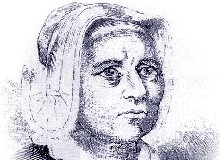
Elizabeth Jeffries
Murderer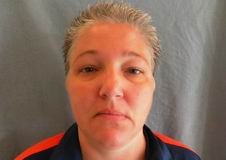 Diane Spencer
Murderer · USA
Diane Louise Spencer was sentenced to life in prison in Michigan on March 13, 1…
1990 victims
Diane Spencer
Murderer · USA
Diane Louise Spencer was sentenced to life in prison in Michigan on March 13, 1…
1990 victims
 Miranda Barbour
Murderer · USA · 2013
Miranda Barbour, 19, defendant. · Elytte Barbour, 22, defendant and husband of…
100 victims
Miranda Barbour
Murderer · USA · 2013
Miranda Barbour, 19, defendant. · Elytte Barbour, 22, defendant and husband of…
100 victims
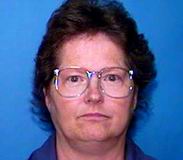 Bobbie Sue Terrell
Murderer · USA · 1984
Bobbie Sue Dudley Terrell was a Pinellas County nurse and worked as the night s…
12 victims
Bobbie Sue Terrell
Murderer · USA · 1984
Bobbie Sue Dudley Terrell was a Pinellas County nurse and worked as the night s…
12 victims
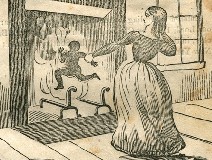 Patty Cannon
Murderer · USA · 1821
Martha “Patty” Cannon (circa 1760 – May 11, 1829) led a gang in the early 19th…
11 victims
Patty Cannon
Murderer · USA · 1821
Martha “Patty” Cannon (circa 1760 – May 11, 1829) led a gang in the early 19th…
11 victims
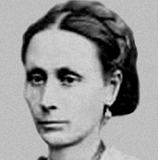 Lydia Sherman
Murderer · USA · 1864
Lydia Sherman was also known as “The Derby Poisoner.” She was born in 1824 in B…
10 victims
Lydia Sherman
Murderer · USA · 1864
Lydia Sherman was also known as “The Derby Poisoner.” She was born in 1824 in B…
10 victims
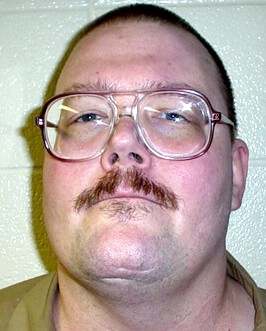 Gregory Scott Johnson
Murderer · USA · 1985
Gregory Scott Johnson was scheduled to be executed by lethal injection at the I…
1 victim
Gregory Scott Johnson
Murderer · USA · 1985
Gregory Scott Johnson was scheduled to be executed by lethal injection at the I…
1 victim
 Richard Pryde Boggs
Murderer · USA · 1988
Richard Pryde Boggs (born 1933; died March 6, 2003) was a California neurologis…
1 victim
Richard Pryde Boggs
Murderer · USA · 1988
Richard Pryde Boggs (born 1933; died March 6, 2003) was a California neurologis…
1 victim
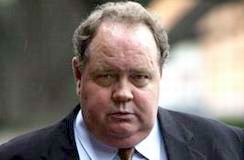 Bruce Burrell
Murderer · Australia · 1995
Bruce Allan Burrell was an Australian convicted double murderer who was sentenc…
2 victims
Bruce Burrell
Murderer · Australia · 1995
Bruce Allan Burrell was an Australian convicted double murderer who was sentenc…
2 victims
 Roy Willard Blankenship
Murderer · USA · 1978
Roy Willard Blankenship was a white male born in 1955. He was incarcerated in G…
1 victim
Roy Willard Blankenship
Murderer · USA · 1978
Roy Willard Blankenship was a white male born in 1955. He was incarcerated in G…
1 victim
- Gender
- female
- Country
- USA
- Location
- Walthamstow, London, England , USA
- Date of birth
- 1727
- Age at first offence
- 24
- Characteristics
- to inherit
- Victim profile
- Joseph Jeffries (her uncle)
- Method of murder
- Shooting
- Date(s) of murder
- July 3, 1751
- Years active
- 1751
- Date of arrest
- —
- Status
-
Executed
Executed by hanging in Epping Forest on March 28, 1752
Case record: Elizabeth Jeffries
Elizabeth Jeffries (1727, Bridgnorth, Shropshire – March 28, 1752 in Leytonstone, England) was executed after being convicted for her role in the murder of her uncle Joseph Jeffries.
Background
Elizabeth Jeffries was adopted by her wealthy and childless uncle Joseph Jeffryes after she was five years old. Joseph Jeffryes made his fortune as a butcher in Central London, and later lived in Walthamstow, Essex.
Joseph Jeffryes made a will in Elizabeth’s favour and threatened to change it because of Elizabeth’s behaviour. Elizabeth’s “good behaviour” had been a condition of inheritance. Joseph Jeffries lived as a wealthy man but was childless.
John Swan was employed by Joseph Jeffries. Elizabeth entered into a relationship with Swan that was described as “intimate” in contemporary terms, and she and Swan also became accomplices in the murder plot.
Elizabeth was believed to have been thinking of murdering her uncle for some 2 years before the killing.
The offence
Joseph Jeffries was murdered.
Elizabeth started an affair with her uncle’s man-servant, John Swan, and they plotted to kill Joseph Jeffries when it became increasingly likely that Joseph Jeffryes would carry out his threat regarding the will.
They tried to persuade a former servant named Matthews to murder Joseph Jeffries by offering him a substantial share of the proceeds. Matthews initially declined or relented before the killing, and he was described as having been probably present at the killing.
The plan involved obtaining a brace of pistols. Matthews was said to have been given half a guinea (52.5p in today’s money) for the pistols. Matthews used the money on drink but still joined the others in Joseph Jeffries’ house around ten o’clock on the night of Tuesday July 3, 1751.
At around midnight, Matthews was hidden in the pantry and Swan and Elizabeth joined him there. They asked if he was ready and where the pistols were. Matthews said: "I cannot find it in my heart to do it."
Elizabeth replied: " You may be damned for a villain, for not performing your promise!"
Swan feared Matthews might prove unreliable. Swan made Matthews swear not to disclose what had passed between them: "unless it was to save his own life."
Matthews heard a pistol shot and then left by the back way, crossed the ferry, and proceeded to Enfield Chase. Later that evening, Elizabeth raised the alarm and claimed that Joseph Jeffries had been robbed and murdered by an intruder. Before doing so, they had staged what was to appear to be a botched robbery by hiding plate and silver in a sack downstairs.
After the neighbours entered the house, they found Joseph Jeffries dying but failed to discover evidence suggesting anyone had left the house.
Investigation and arrest
Elizabeth was initially arrested because there was no sign of forced entry. Authorities began a search for Matthews, whom she had implicated.
However, authorities could produce no evidence against Elizabeth, and she was released. After her release, Elizabeth took control of Joseph Jeffries’ assets and began spending them.
Suspicion later returned when Matthews was located and provided a statement of events to the police.
Following Matthews’ statement, Elizabeth and John Swan were re-arrested and committed to Chelmsford prison for trial at the next Assizes.
At the time of Elizabeth’s initial arrest, no evidence arose to incriminate her and she was discharged.
Trial
Elizabeth Jeffries and John Swan were tried together at the Essex Assizes before Mr Justice Wright.
The trial began eight months later, on Tuesday March 10, 1752. The previous year’s Assizes had opened on July 31, 1751, and they had missed that Assize.
Matthews was the principal witness for the prosecution. Both Elizabeth and Swan were found guilty.
The Crown counsel summed up Elizabeth’s motive for killing her uncle: "to alter his will, if she did not alter her conduct."
John Swan, as a servant of Joseph Jeffries, was convicted of Petty Treason “for the cruel and wicked murder of his late master”.
Elizabeth was convicted “of aiding, helping, assisting, comforting and maintaining the said John Swan to commit the murder”.
The trial account also stated that Elizabeth was not charged with murder under the doctrine of common purpose that applied in the 20th century, but rather with the crime she had actually committed.
It was stated that Elizabeth confessed her part in the crime on the Thursday. Both were brought back before the court on the Saturday to be sentenced.
When her death sentence was pronounced, Elizabeth fainted.
Nine men also received death sentences, with five reprieved and three hanged at Chelmsford on March 26.
Sentencing
Both Elizabeth Jeffries and John Swan were sentenced to hang.
John Swan’s punishment also included the procedure mandated for Petty Treason: he was drawn along behind tied to a sledge.
Timeline
- July 3, 1751 — Matthews was involved in the murder plot at Joseph Jeffries’ house, and a pistol shot was heard during the killing.
- March 10, 1752 — Elizabeth Jeffries and John Swan were tried at the Essex Assizes before Mr Justice Wright and were found guilty.
- March 28, 1752 — Elizabeth Jeffries was executed by hanging in Epping Forest.
Execution and aftermath
On Saturday March 28, 1752, the execution procession left Chelmsford Gaol at 4 a.m.
Elizabeth rode in a cart, while John Swan was drawn along behind, tied to a sledge as part of the mandatory punishment for Petty Treason. The procession was led by the Under Sheriff of Essex and was described as being escorted by a troop of javelin men.
The execution took place near the sixth milestone in Epping Forest. The location was described as about 23 miles and perhaps 8-9 hours away from Chelmsford. The crowd that gathered to witness the proceedings was said to be 7,000 people.
On arrival at the gallows, Swan was made to get up into the cart with Elizabeth and stand beside her. Elizabeth was made to stand on a chair due to her small stature and fainted several times while being prepared.
It was reported that both Elizabeth and John Swan confessed their guilt and justice of their sentences to a member of the jury who questioned them before they were turned off. Neither Elizabeth nor John Swan acknowledged one another, not even by glance, in the cart.
The hangman cracked his whip and drove the cart out from under them.
John Swan died in less than five minutes.
Elizabeth, being lighter, took over fifteen minutes to die and struggled to the end.
After they had hung for the requisite time, both bodies were taken down. Elizabeth’s corpse was taken away in a hearse to be delivered to her friends for burial. Swan’s body was hung in chains in another part of the Forest, said to be near the Bald Faced Stag Inn, in Hainault Road, Chigwell, Essex, as a warning.
Other details
Other people involved
- Joseph Jeffryes — Elizabeth’s uncle; wealthy, childless man who adopted Elizabeth; his will was made in Elizabeth’s favour.
- John Swan — Joseph Jeffries’ gardener/servant and Elizabeth’s accomplice in the murder plot.
- Matthews — the former servant whom Elizabeth and Swan tried to enlist to commit the murder.
Verbatim quotations
Elizabeth replied to Matthews when he refused to carry out the killing: " You may be damned for a villain, for not performing your promise!"
Matthews told the group he would not do the killing: "I cannot find it in my heart to do it."
Swan made Matthews swear: "unless it was to save his own life."

Spotted an error, or have more information about this case?