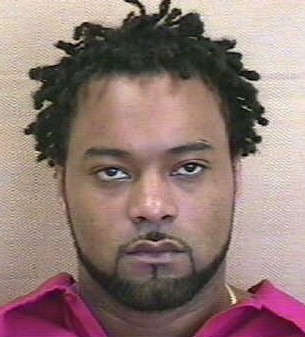
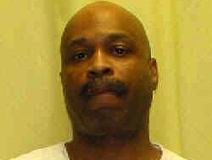
Desmond Keith Carter
Murderer Brian Kevin Rosenfeld
Murderer · USA · 1985
Brian Kevin Rosenfeld Brian Kevin Rosenfeld was sentenced to three concurrent l…
23 victims
Brian Kevin Rosenfeld
Murderer · USA · 1985
Brian Kevin Rosenfeld Brian Kevin Rosenfeld was sentenced to three concurrent l…
23 victims
 Russell Ellwood
Murderer · USA · 1991
Russell Ellwood was a former taxi driver. Authorities suspected him of killing…
20 victims
Russell Ellwood
Murderer · USA · 1991
Russell Ellwood was a former taxi driver. Authorities suspected him of killing…
20 victims
 Robert Martines Perez
Murderer · USA · 1994
Name: Robert Martines Perez · Other name used in proceedings: Robert Martinez P…
15 victims
Robert Martines Perez
Murderer · USA · 1994
Name: Robert Martines Perez · Other name used in proceedings: Robert Martinez P…
15 victims
 Billy Frank Vickers
Murderer · USA · 1993
Billy Frank Vickers Vickers was executed by lethal injection in Texas on Januar…
14 victims
Billy Frank Vickers
Murderer · USA · 1993
Billy Frank Vickers Vickers was executed by lethal injection in Texas on Januar…
14 victims
 The kidnapping of Freddy Heineken
Kidnapping · Netherlands · 1983
The kidnapping of Freddy Heineken, chairman of the board of directors and CEO o…
2 victims
The kidnapping of Freddy Heineken
Kidnapping · Netherlands · 1983
The kidnapping of Freddy Heineken, chairman of the board of directors and CEO o…
2 victims
 Ruby McCollum
Murderer · USA · 1952
Ruby McCollum (August 31, 1909–May 23, 1992) was the subject of a notorious mur…
1 victim
Ruby McCollum
Murderer · USA · 1952
Ruby McCollum (August 31, 1909–May 23, 1992) was the subject of a notorious mur…
1 victim
 Bruce Burrell
Murderer · Australia · 1995
Bruce Allan Burrell was an Australian convicted double murderer who was sentenc…
2 victims
Bruce Burrell
Murderer · Australia · 1995
Bruce Allan Burrell was an Australian convicted double murderer who was sentenc…
2 victims
 Raymond Lee Stewart
Spree killer · USA · 1981
Raymond Lee Stewart was a serial killer convicted and sentenced to death in two…
6 victims
Raymond Lee Stewart
Spree killer · USA · 1981
Raymond Lee Stewart was a serial killer convicted and sentenced to death in two…
6 victims
- Gender
- male
- Country
- USA
- Location
- Rockingham County, North Carolina, USA
- Date of birth
- October 15, 1967
- Age at first offence
- 25
- Characteristics
- robbery, drugs
- Victim profile
- Helen Purdy (his 71 year old neighbor)
- Method of murder
- Stabbing with knife 13 times
- Date(s) of murder
- March 9, 1992
- Years active
- 1992
- Date of arrest
- Same day
- Status
-
Executed
Executed by lethal injection in North Carolina on December 10, 2002
Case record: State of North Carolina v. Desmond Keith Carter
Background
Desmond Keith Carter was tried capitally for first-degree murder and robbery with a dangerous weapon of Helen Purdy, his neighbor.
The victim was Helen Purdy, a seventy-one-year-old resident of Eden, North Carolina. She lived alone beside the home of Carter, his grandmother, and his uncle. Because of her fragile health, friends and family members took turns looking after and checking in on her.
Nadine Carter, Carter’s grandmother, testified that on the morning of 9 March 1992, Carter had called her into his room and told her he needed to go to the hospital. Carter said he had been accosted by four young white males at the car wash when he was coming home the night before and had been stabbed in the leg. He had a towel wrapped around his leg. Nadine Carter believed his story and drove him to Morehead Hospital.
Mary Hertle, an emergency room employee of Morehead Hospital, was on duty on 9 March 1992. Carter arrived around 8:30 a.m. and reported a puncture wound two or three inches deep to the left inner thigh. He said four white men had assaulted him at the car wash the previous night. Hertle observed that Carter smelled of alcohol and said he did not come earlier because he was too drunk, but she observed that he did not appear intoxicated or in pain, his speech was not slurred, and he gave what appeared to be appropriate answers to questions.
Mark Joyce, an Eden police officer, also saw Carter at Morehead Hospital that morning. Carter told him essentially the same story about his leg wound. Joyce’s opinion was that although Carter had been drinking and there was a strong odor of alcohol about him, Carter was not impaired.
The offence
On 9 March 1992, Gchuther Morris, Mrs. Purdy’s sister-in-law, tried calling Mrs. Purdy all day and became concerned when she did not get an answer.
Around 9:15 p.m., Linda Purdy, Shirley Gray, and Ralph Carter went to Mrs. Purdy’s house. They found her dead on her living room floor, lying in a pool of blood. Aside from the front door being unlocked, everything in the house generally appeared in order; there was no sign of a struggle.
In Mrs. Purdy’s bedroom the bed covers were turned back to one side, as if someone had been lying on the bed, and Mrs. Purdy’s purse was lying open on the bed.
Dr. Robert L. Thompson, the forensic pathologist who performed the autopsy, found thirteen cut and stab wounds as well as numerous minor cuts and abrasions to Mrs. Purdy’s hands, neck, and face. The significant findings included:
- Two incised or cut wounds in the victim’s right chest, both with depths of 4 3/4 inches, one penetrating the pericardium sac and the other the liver.
- Two incised or cut wounds in the left chest with depths of 4 1/2 inches and 6 inches, again penetrating the pericardium sac and liver.
- Two incised or cut wounds in the left armpit with depths of 6 inches and 3 1/2 inches.
- Wounds to the back of the left arm, two of which went completely through the arm.
- A small abrasion of the lower lip.
- A superficial one-inch-long cut in the area of the left ear and a one-half inch cut below the angle of the jaw on the left side.
- Scratches and cuts on both wrists.
- A 5 1/8 inch cut on the left first finger, described as a defensive wound.
- A large incised wound in the left side of the neck measuring 4 inches down to the bone.
Thompson opined that death was caused by the wounds to the chest, none of which would have been instantly fatal. It would have taken several minutes for death to occur.
Carter’s guilt-phase evidence tended to show that Carter went to Helen Purdy’s home to borrow money, and after she refused, he stabbed her and took money.
Investigation
Greg Moore, an Eden Police Department detective, was assigned to investigate the murder. He had seen Carter on crutches on 9 March 1992 at the magistrate’s office and knew Carter was reporting a knife wound to his leg. Moore also knew Carter lived beside the victim.
At approximately 8:40 a.m. on 10 March 1992, Detective Moore and SBI Agent James Bowman interviewed Carter at the Rockingham County jail. At that time, Carter was incarcerated on another charge for which he had been arrested on 9 March 1992.
Carter initially gave the following version of events leading to his leg wound:
- Carter said three white men had jumped him on Monday, 9 March 1992, about 4:30 or 5:00 a.m.
- He said he had been riding around and drinking with his friends, Quentin Broadnax and Jamel Price.
- After Broadnax dropped him off, Carter walked around before stopping at the corner of Henry and Early Streets.
- Carter said he “threw up” at this time.
- He said he then sat on the steps at the YMCA for a few hours and may have dozed off.
- Carter said he had been drinking beer and liquor for most of that day and evening.
- After leaving the YMCA steps, Carter walked up Monroe Street towards home and was in the car wash parking lot when he saw some people getting into a truck.
- Carter said he could tell they were white males and that the truck was directly across the street from Mrs. Purdy’s house.
- Carter said he tried to cut through the lot to avoid them, but they pulled toward him and began shouting obscenities.
- Carter said when he hollered back, the men stopped the truck and began chasing him.
- Carter said he tried to run, but they caught him, and he was too drunk to defend himself.
- Carter said that as one man came up on his left side, Carter tried to kick him but got stabbed in the left leg in the process.
In the course of this interview, Detective Moore was advised that Carter had a doctor’s appointment at 9:45 a.m. Carter signed a consent to have a blood sample drawn prior to leaving for the appointment.
Following the doctor’s appointment, Moore and Bowman again interviewed Carter. Before commencing the second interview, Carter was told a butcher knife had been found in the lot near his residence. Thereafter, Carter confessed to the officers and gave a new statement.
Detective Moore testified that Carter told the officers he went to the home of Helen Purdy in the early morning hours of 9 March 1992. Carter stated that he had been drinking and using cocaine and wanted to borrow money from Mrs. Purdy. Mrs. Purdy let Carter into her home and initially told him he could borrow five dollars. She then changed her mind and said he could not have any money. Carter stated that Mrs. Purdy went towards the telephone, whereupon Carter asked her not to call his grandmother. Carter stated that at that point Mrs. Purdy noticed Carter had a knife, and she became excited. Carter stated that she tried to push him, and in the process the knife went in her. Carter stated that he pulled the knife out and stuck it in his own leg. Carter stated that he did not know what happened after he cut himself and did not know how many times he stabbed Mrs. Purdy. Prior to going home, Carter took fifteen dollars that Mrs. Purdy had placed near the telephone and used it to buy cocaine. Carter stated that he then threw the knife into a field next to his house.
Agent Bowman testified that blood drawn from Carter the day after the murder was not tested for alcohol or drug content.
The State introduced a knife found across the street from the murder scene. Lieutenant Walter Johnson testified that the knife was found on the grass in plain view and that no effort had been made to hide it. Blood of Mrs. Purdy’s type was found on the knife. Nadine Carter identified the knife as one from her kitchen.
Denise Smith, a girlfriend of Carter’s at the time of the murder, testified that in the summer of 1991, she asked Carter if he used cocaine or any other drug. Carter said “no” but told her that if a person is arrested, he should say he was under the influence of drugs and he would get a lighter sentence.
After Carter was arrested for Mrs. Purdy’s murder, Smith visited Carter in jail. While in the presence of another detainee, Carter commented that he had been to a mental health appointment. When the other detainee mimicked “The Twilight Zone” tune, Carter stated, “Man, I’m not crazy.”
Arrest
Carter was incarcerated on another charge for which he had been arrested on 9 March 1992.
Carter was interviewed at the Rockingham County jail on 10 March 1992.
Trial
Carter testified in his own behalf. He said he spent the day on 8 March drinking beer, wine, and bootleg whiskey. He said he also consumed a twenty-five dollar bag of powder cocaine, a twenty dollar rock of crack cocaine, and two pills which he identified as “Zannex.” Carter said that during the early morning hours of 9 March he had wanted to buy cocaine. He said that although he had fifty or sixty dollars on him, he wanted to borrow more so he could get as much cocaine as possible. He testified that Mrs. Purdy’s light was on, so he went to her door to ask for money. Carter’s testimony corresponded with his confession to Detective Moore and Agent Bowman.
Carter presented other evidence tending to show that he was mentally impaired at the time of the murder and that he had had a tumultuous childhood. Dr. John Warren, a clinical psychologist who examined Carter after his arrest, testified that Carter had a low average IQ and suffered from a borderline personality disorder as well as a substance-abuse problem. Warren opined that Carter’s mental capacity was diminished at the time of the offense, making it very unlikely that Carter could make and carry out a plan to kill.
Jury verdicts and sentencing:
- The jury found Carter guilty of first-degree murder on the theories of premeditation and deliberation and felony murder.
- The jury found Carter guilty of robbery with a dangerous weapon.
- The trial court sentenced Carter to death for the murder charge.
- The trial court sentenced Carter to forty years in prison for the robbery, to begin at the expiration of the murder sentence or “any judgment in place of” it.
Carter’s assignments of error pertained to the sentencing phase. Prior to the presentation of any evidence at the sentencing hearing, counsel for Carter conceded that Carter had stabbed and killed Mrs. Purdy, but contended that it was second-degree murder, not first.
The State introduced evidence during the sentencing phase concerning the facts and circumstances of Carter’s prior conviction for second-degree robbery:
- Darwin Neely testified that in March 1986 Carter and three other men abducted him, forced him into a car at gunpoint, stole his money and personal items, and temporarily held him hostage. Neely testified that all four men had guns.
- The State introduced a certified copy of a judgment from Nassau County Court, State of New York, entered upon Carter’s plea of guilty to second-degree robbery.
- Carter served four years in prison for that offense.
Aggravating circumstances:
- The jury found as aggravating circumstances that the crime was committed for pecuniary gain and that Carter had been previously convicted of a felony involving the use or threat of violence.
- The jury rejected all proposed statutory mitigating circumstances.
- The jury found three of the eleven nonstatutory mitigating circumstances submitted.
- The jury unanimously recommended a sentence of death, and the trial court imposed it.
Sentencing-phase legal discussion: Carter argued that the trial court erred in submitting the prior violent felony aggravating circumstance because the evidence did not support the circumstance as submitted to the jury. The trial court had instructed the jury, in pertinent part:
If you find from the evidence, . . . beyond a reasonable doubt that on or about March 9th, 1992, the defendant had been convicted of second degree robbery and that the defendant threatened to use violence to the person in order to accomplish his criminal act and that the defendant killed Helen Moore Purdy after he committed the second degree robbery, you would find this aggravating circumstance . . . .
Carter contended that this instruction required the jury to find that Carter personally threatened or used violence during the prior robbery and argued that evidence did not support such a finding. The court concluded that the instruction, taken as a whole, would not have been viewed by a reasonable juror as limiting the aggravating circumstance so as to require a showing that Carter personally used or threatened violence.
The court also discussed Dr. John Warren’s sentencing testimony that Carter suffered from borderline personality disorder, a low IQ, and substance-abuse disorder, and that Warren opined Carter suffered from mental or emotional disturbance at the time of the offense and was unable to appreciate the criminality of his conduct or to conform his conduct to the requirements of law.
Proportionality review: The court concluded that:
- The evidence supported both aggravating circumstances found by the jury.
- The sentence of death was not imposed under the influence of passion, prejudice, or any other arbitrary factor.
- The death sentence was not excessive or disproportionate when compared to similar cases.
The court described features it considered distinguishing, including that the jury convicted Carter under both felony murder and the malice, premeditation, and deliberation theory; that the victim was killed in her own living room in the middle of the night; that Carter stabbed the victim over thirteen times with an eight-inch butcher knife; that the victim was a seventy-one-year-old woman with cancer and arthritis; and that the victim was killed for fifteen dollars to enable Carter to buy crack cocaine.
Appeals
The U.S. Supreme Court and North Carolina Supreme Court posture included multiple stages:
- 12/8/95 — North Carolina Supreme Court affirmed Carter’s convictions and sentence of death.
- 10/7/02 — U.S. Supreme Court denied Carter’s petition for a writ of certiorari to review the decision of the U.S. Fourth Circuit Court of Appeals which affirmed Carter’s conviction and sentence of death.
- 12/04/02 — Durham Superior Court Judge Orlando Hudson stayed Carter’s execution.
- 12/6/02 — Judge Hudson’s stay lifted by North Carolina Supreme Court.
The record also describes a clemency-related process connected to the pending execution date and last-minute appeals, including appeals to the nation’s highest court challenging a state Supreme Court rejection of a stay issued by a lower court judge. The U.S. Supreme Court turned down the requests without comment.
Sentencing
The trial court sentenced Carter to death for first-degree murder and to forty years for robbery with a dangerous weapon.
At the capital sentencing proceeding, the jury found aggravating circumstances that:
- The crime was committed for pecuniary gain.
- Carter had been previously convicted of a felony involving the use or threat of violence.
The jury rejected all proposed statutory mitigating circumstances and found three nonstatutory mitigating circumstances, including that Carter confessed his guilt and cooperated with law enforcement officers, that his parents had failed to provide him a nurturing and supporting relationship, and that his grandmother had tried to get substance-abuse help for him just prior to the crime.
Timeline
- 9 March 1992 — Mrs. Purdy was found dead on her living room floor after family members became concerned when she did not answer calls.
- 10 March 1992 — Detective Moore and SBI Agent James Bowman interviewed Carter at the Rockingham County jail; Carter confessed after being told a butcher knife had been found.
- 10/7/02 — U.S. Supreme Court denied Carter’s petition for a writ of certiorari to review the U.S. Fourth Circuit Court of Appeals decision affirming the conviction and sentence of death.
- 10/23/02 — Correction Secretary Theodis Beck set Carter’s execution date for Dec. 10, 2002.
- 12/10/02 — Carter was executed by lethal injection; he was pronounced dead at 2:17 a.m.
Outcome
Carter was executed by lethal injection in North Carolina on December 10, 2002.
Carter’s last meal consisted of two cheeseburgers, a steak sub, and two Cokes from the prison canteen. He declined to ask for a special last meal and paid $4.20 from his prison account for the food. Carter died peacefully in the state’s execution chamber after last-minute appeals failed.
In a last statement recorded by Warden R.C. Lee of Central Prison, Carter said:
"The only thing I would like to say is that I apologize to the victim's family of Ms. Purdy and I would like to apologize to my family for the disappointment and pain I have caused them throughout my life. I love you, pop."
Carter was pronounced dead at 2:17 a.m. after being executed early on December 10, 2002.
Aftermath
Carter’s father, William Conway, and defense lawyer Bill Osteen sat in the execution witness room. Two relatives of Helen Purdy watched from the second row.
Carter’s half brother, Tyrone Wallace, stood with death penalty protesters outside the prison after Carter’s execution.
Carter’s case proceeded through multiple appeals and stay proceedings before the execution date.
Other details
Carter had been paroled from a New York prison, where he had served four years of a 12-year sentence for an abduction and beating on Long Island.
Carter told police that he had gone to Helen Purdy’s home carrying a butcher knife to borrow some money to purchase cocaine. Carter claimed Purdy got excited, attempted to push him, and fell on the knife. An autopsy revealed that Purdy had been stabbed thirteen times.
After the murder, Carter drew suspicion because he was a neighbor and had suffered a stab wound to a leg. Carter initially told police that four white men had jumped and stabbed him.
Carter was scheduled to be executed at Central Prison in Raleigh at 2 a.m. The execution chamber and death watch area could be photographed only during a media tour, and the Department of Correction public information office was listed as the contact point for journalists.
Spotted an error, or have more information about this case?