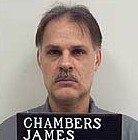
James Wilson Chambers
Murderer Ervil LeBaron
Murderer · USA · 1972
Ervil Morrell LeBaron (1925 to August 16, 1981) was the leader of a polygamous…
35 victims
Ervil LeBaron
Murderer · USA · 1972
Ervil Morrell LeBaron (1925 to August 16, 1981) was the leader of a polygamous…
35 victims
 Brian Kevin Rosenfeld
Murderer · USA · 1985
Brian Kevin Rosenfeld Brian Kevin Rosenfeld was sentenced to three concurrent l…
23 victims
Brian Kevin Rosenfeld
Murderer · USA · 1985
Brian Kevin Rosenfeld Brian Kevin Rosenfeld was sentenced to three concurrent l…
23 victims
 Marvin Gray
Murderer · USA · 1975
Marvin Gray was convicted killer who claimed responsibility for 23 slayings and…
23 victims
Marvin Gray
Murderer · USA · 1975
Marvin Gray was convicted killer who claimed responsibility for 23 slayings and…
23 victims
 Yahweh ben Yahweh
Murderer · USA · 1980
Yahweh ben Yahweh was born and legally named Hulon Mitchell Jr. (October 27, 19…
23 victims
Yahweh ben Yahweh
Murderer · USA · 1980
Yahweh ben Yahweh was born and legally named Hulon Mitchell Jr. (October 27, 19…
23 victims
 Russell Ellwood
Murderer · USA · 1991
Russell Ellwood was a former taxi driver. Authorities suspected him of killing…
20 victims
Russell Ellwood
Murderer · USA · 1991
Russell Ellwood was a former taxi driver. Authorities suspected him of killing…
20 victims
 Amy Hebert
Murderer · USA · 2007
August 9, 1991 — Amy Hebert and Chad Hebert married. · July of 2005 — Amy Heber…
2 victims
Amy Hebert
Murderer · USA · 2007
August 9, 1991 — Amy Hebert and Chad Hebert married. · July of 2005 — Amy Heber…
2 victims
 Marlene Smith
Murderer · USA · 1997
Marlene Smith was convicted of the 1997 murder of Anthony Proviano, a Universit…
1 victim
Marlene Smith
Murderer · USA · 1997
Marlene Smith was convicted of the 1997 murder of Anthony Proviano, a Universit…
1 victim
 Buddy Earl Justus
Serial killer · USA · 1978
Buddy Earl Justus was sentenced to die in the electric chair in Virginia for th…
3 victims
Buddy Earl Justus
Serial killer · USA · 1978
Buddy Earl Justus was sentenced to die in the electric chair in Virginia for th…
3 victims
 Thomas Tomich
Murderer · USA · 1983
Thomas Tomich committed suicide on November 15, 2006, by jumping off an Omaha b…
1 victim
Thomas Tomich
Murderer · USA · 1983
Thomas Tomich committed suicide on November 15, 2006, by jumping off an Omaha b…
1 victim
- Gender
- male
- Country
- USA
- Location
- Jefferson County, Missouri, USA
- Date of birth
- April 15, 1952
- Age at first offence
- 30
- Characteristics
- altercation
- Victim profile
- Jerry Lee Oestricker
- Method of murder
- Shooting
- Date(s) of murder
- May 29, 1982
- Years active
- 1982
- Date of arrest
- Same day
- Status
-
Executed
Executed by lethal injection in Missouri on November 15, 2000
Background
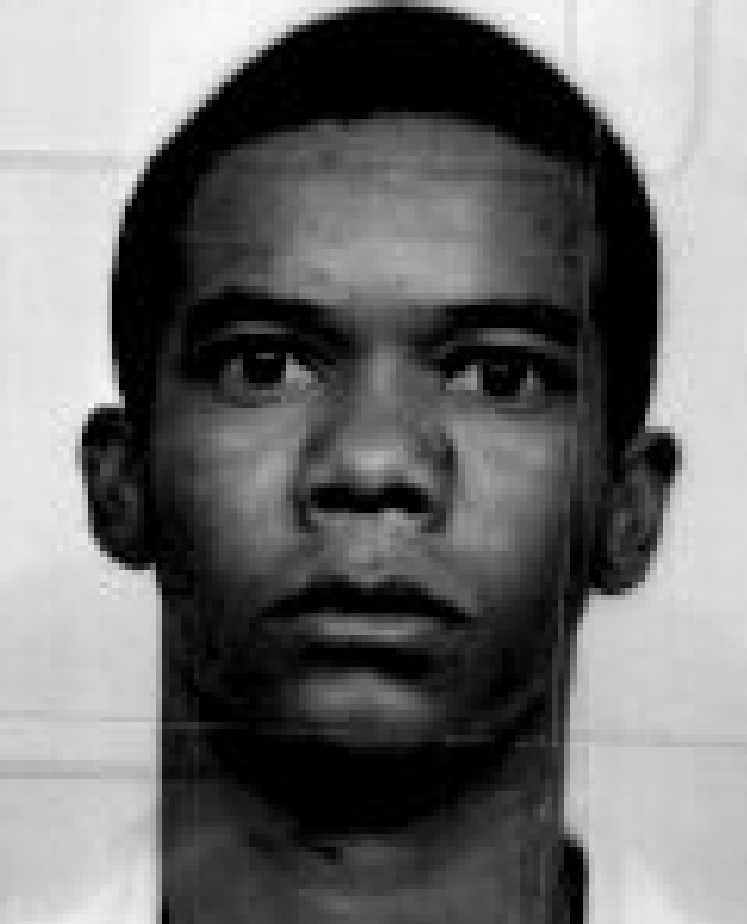
James Wilson Chambers was born in St. Louis, Missouri on April 15, 1952.
In May of 1982, James and his family spent Memorial Day camping on the Meremac River. James decided to try to get a boat to go out on the river fishing. James along with Donny Chapman proceeded to the Country Club Lounge to attempt to get a boat from the Turners, who were friends of Chapman. The Turner family had left the bar before James and Chapman arrived. They found the Turners at their home but the Turners boat was dry docked. The Turners suggested a neighbor had a boat he might be able to use. James and Jackie Turner returned to the Country Club Lounge to find the neighbor and see if they could get the boat. James walked up to Jerry Oestricker and old acquaintance and asked if Oestricker intended to buy him a drink.
Chambers had received a 3-year sentence in July 1972 for the felony of 2nd-degree burglary. Then-Gov. Christopher Bond freed Chambers through commutation about halfway through his sentence. A few weeks later, Chambers was arrested for shooting a man in the stomach outside a bar in Jefferson County.
Chambers received a 15-year sentence in April 1975 for felony assault with intent to kill.
Seven years after beginning his second prison sentence, Chambers received a Memorial Day weekend pass and killed Jerry Oestricker while outside prison walls.
In September 1982, while awaiting trial for the Oestricker killing, Chambers' sentence for shooting Griffin was commuted by Bond.
The offence
Jerry Lee Oestricker was at the Country Club Lounge in Arnold, Missouri, while playing pool he bumped into the chair of another patron, Jackie Turner.
A verbal exchange occurred between Oestricker and members of the Turner party that resulted in the owner of the bar asking the Oestricker and the Turner parties to leave. The Turner party left, but Oestdcker remained at the bar. In the course of events described during the later judicial proceedings, the fight began when Chambers entered the bar later and asked Oestricker to buy him a drink. When the bar owner asked the men to leave, Chambers walked out, saying, "We'll settle this outside." Oestricker followed. What happened next was in dispute.
About three hours later at 10:00 p.m., James Chambers made his first appearance at the Country Club Lounge. Upon entering he asked an employee where the Turner party was and she told him that they had left. Chambers then left the bar. About 30 minutes later Chambers returned to the bar with Jackie Turner.
Once inside the bar Chambers approached Oestricker and asked him to buy him a drink. Oestricker strongly declined the offer calling Chambers by his nickname "Bimbo,' No physical blows were exchanged, but the confrontation was described by one witness as loud. Following this exchange in which Oestricker told Chambers that he was no friend of his, the owner of the bar asked the two men to leave. Witnesses testified that both men challenged each other before they left the bar.
As Oestricker was going through the front door, Chambers struck Oestricker with a pistol knocking him to the ground. As Oestricker got up with his hands raised in the air, Chambers pointed the pistol at the victim and fired a single shot into Oestricker's chest. After shooting Oestricker, who was laying prostrate on the ground, Chambers proceeded to pistol whip the victim about the face. He dragged him across the parking lot stating, "take that you..tough guy," and "get up...and fight like a man." Chambers reportedly told the victim that he "better get up and call the hospital because you are going to die."
Jerry Oestricker was transported to a local hospital where he died the next morning at 4:05 a.m. Chambers then fled the scene in a waiting automobile.
In dispute accounts described during the later appeals, the defense stated that once the two men were outside they faced each other briefly and exchanged words; Oestricker knocked Chambers to the ground; as Oestricker moved toward him, Chambers shot him in self-defense. The prosecution's case was that this was a premeditated attack by James to avenge an altercation between Jackie Turner and Oestricker earlier in the day. According to the state, Chambers shot Oestricker standing in the doorway and shouted into the bar: "The rest of you want some of this?"
Investigation
Arrest
Chambers was later apprehended that evening by Arnold Police in a liquor store in St. Louis County.
Trial
First trial
On 7/7, Chambers was charged in the Jefferson County Circuit Court with capital murder.
On 11/20, a Jefferson County jury found Chambers guilty of capital murder and recommended a sentence of death.
On 12/23, the Circuit Court sentenced Chambers to death.
On 6/19 (1984), the Missouri Supreme Court overturned Chambers' conviction and sentence because the trial court did not give a self-defense instruction.
Second trial
On 5/9 (1985), a second trial was held in Jefferson County. The jury found Chambers guilty of capital murder and recommended a sentence of death.
On 6/5 (1985), Circuit Court sentenced Chambers to death.
On 7/15 (1986), the Missouri Supreme Court affirmed Chambers' conviction and sentence.
On 12/22 (1987), the Missouri Court of Appeals of the Eastern District of Missouri affirmed the denial of Chambers' motion for post-conviction relief.
On 9/15 (1989), a panel of the US Court of Appeals for the Eighth Circuit reversed the judgment of the district court and granted habeas corpus relief on a claim of ineffective assistance of counsel.
On 11/8 (1989), the Eighth Circuit granted a rehearing en banc.
On 7/5 (1990), the en banc court granted habeas corpus relief on a claim of ineffective assistance of trial counsel for not interviewing and calling a witness.
In the narrative of the second trial, the Eighth U.S. Circuit Court of Appeals overturned the second conviction because Chambers' attorney decided against calling a witness, James Jones. Jones could have said that Chambers shot Oestricker in self-defense, the defense said.
Third trial
On 10/28 (1991), a third capital murder trial was conducted on a change of venue to Cole County, Missouri.
On 10/31 (1991), the Cole County jury found Chambers guilty of capital murder and recommended a sentence of death.
On 1/7 (1992), the circuit court sentenced Chambers to death.
The Missouri Supreme Court, the District Court, the Eighth Circuit and United States Supreme Court denied relief from James' third trial.
In the narrative of the third trial, Jones testified he was in the tavern's parking lot at the time of the killing and that Chambers was thrown to the ground first in the fight. Chambers then got up and shot Oestricker, Jones testified.
In 1997, U.S. District Judge Howard F. Sachs denied Chambers' request for a new trial. The denial included the statement: "This case seems to have been comparatively well tried, even If some may consider the result surprising,"
On 9/23 (1998), the US Court of Appeals for the Eighth Circuit affirmed the district court's denial for habeas corpus relief.
On 6/21 (1999), the US Supreme Court declined discretionary review of Chambers' federal habeas corpus case.
Sentencing
Chambers received a sentence of death on multiple occasions after capital murder convictions.
On 12/23 (1982), the Circuit Court sentenced Chambers to death after the first conviction.
On 6/5 (1985), the Circuit Court sentenced Chambers to death after the second conviction.
On 1/7 (1992), the circuit court sentenced Chambers to death after the third conviction.
Appeals
On 9/15 (1989), the Eighth Circuit reversed the judgment of the district court and granted habeas corpus relief on ineffective assistance of counsel.
On 7/5 (1990), the en banc court granted habeas corpus relief on ineffective assistance of trial counsel for not interviewing and calling a witness.
On 9/23 (1998), the Eighth Circuit affirmed the district court's denial for habeas corpus relief.
In a described procedural sequence in which Chambers' attorneys sought Supreme Court review under AEDPA application, Chambers won a stay of execution from the St. Louis-based 8th Circuit last November after the U.S. Supreme Court agreed to decide about the federal Anti-Terrorism and Effective Death Penalty Act law's application in a Nevada death row case. Last April, the Supreme Court upheld the decision from Nevada. Attorney General Jay Nixon filed a motion with the 8th Circuit to lift Chambers' stay of execution. The Missouri Supreme Court sets state execution dates.
Other judicial statements were described: Circuit Judge Richard S. Arnold said: "Delay, in large part, is a function of the desire of our courts, state and federal, to get it right..."
Outcome
Chambers was executed by lethal injection in Missouri on November 15, 2000.
The Missouri Supreme Court issued a warrant of execution scheduling Chambers' execution for September 29, 1999 (8/30/— as described), issued a stay (9/15/— as described), and scheduled a new execution date for November 10, 1999 (as described). The Eighth Circuit issued a stay (11/4/— as described). The US Supreme Court denied a motion to vacate the stay for execution issued by the Eighth Circuit Court of Appeals (11/9/— as described). The Missouri Supreme Court issued a warrant of execution scheduling Chambers' execution for November 15, 2000 (10/5/— as described).
Aftermath
Jessica Oestricker Coplin of Herculaneaum said the May 1982 shooting death of her brother Jerry Oestricker by James Wilson Chambers "should never have happened."
Chambers had received a Memorial Day weekend pass and killed Jerry Oestricker while outside prison walls.
Ms. Coplin said no commutations should have been approved by Bond: "This was senseless and should never have happened."
Chambers' wife, Darlene, hoped a fourth trial would downgrade the capital murder conviction to second-degree murder or manslaughter, which would carry a penalty of about 20 years in prison. If that happened, Chambers already would have served most of that sentence and could be released by his 50th birthday.
Timeline
- April 15, 1952 — James Wilson Chambers was born in St. Louis, Missouri.
- July 14, 1971 — Chambers was arrested in Jefferson County, Missouri for Burglary Second Degree.
- August 12, 1971 — Chambers was arrested in Jefferson County, Missouri for two counts of Intent to Defraud.
- January 1, 1974 — Chambers was arrested in Jefferson County, Missouri for Assault with Intent to Kill with Malice.
- May 22, 1982 — James Chambers shot and killed Jerry Oestricker at the Country Club Lounge in Arnold, Missouri.
- May 29, 1982 — Chambers was arrested in Jefferson County, Missouri on the present charge of Capital Murder; Chambers killed Jerry Lee Oestricker outside the Country Club Lounge in Arnold on May 29, 1982.
- July 7, 1982 — Chambers was charged in the Jefferson County Circuit Court with capital murder.
- November 20, 1982 — A Jefferson County jury found Chambers guilty of capital murder and recommended a sentence of death.
- December 23, 1982 — Circuit Court sentenced Chambers to death.
- June 19, 1984 — The Missouri Supreme Court overturned Chambers' conviction and sentence because the trial court did not give a self-defense instruction.
- May 9, 1985 — A second trial was held in Jefferson County; the jury found Chambers guilty of capital murder and recommended a sentence of death.
- June 5, 1985 — Circuit Court sentenced Chambers to death.
- July 15, 1986 — The Missouri Supreme Court affirmed Chambers' conviction and sentence.
- December 22, 1987 — The Missouri Court of Appeals of the Eastern District of Missouri affirmed the denial of Chambers' motion for post-conviction relief.
- July 19, 1988 — The United States District Court for the East District of Missouri denied Chambers federal habeas corpus challenger to his conviction and sentence.
- September 15, 1989 — A panel of the US Court of Appeals for the Eighth Circuit reversed the judgment of the district court and granted habeas corpus relief on ineffective assistance of counsel.
- November 8, 1989 — The Eighth Circuit granted a rehearing en banc.
- July 5, 1990 — The en banc court granted habeas corpus relief on ineffective assistance of trial counsel for not interviewing and calling a witness.
- October 28, 1991 — A third capital murder trial was conducted on a change of venue to Cole County, Missouri.
- October 31, 1991 — The Cole County jury found Chambers guilty of capital murder and recommended a sentence of death.
- January 7, 1992 — The circuit court sentenced Chambers to death.
- March 31, 1993 — The circuit court held a hearing on Chambers' motion for post conviction relief.
- October 14, 1994 — The circuit court denied Chambers' motion for post-conviction relief.
- December 20, 1994 — The Missouri Supreme Court affirmed Chambers' conviction and sentence and the denial of post-conviction relief.
- April 21, 1995 — Chambers filed a federal habeas corpus petition in the US District Court of Appeals for the Eastern District of Missouri; the case was transferred to the Western District.
- March 12, 1997 — The district court denied Chambers' federal habeas corpus petition.
- September 23, 1998 — The US Court of Appeals for the Eighth Circuit affirmed the district court's denial for habeas corpus relief.
- June 21, 1999 — The US Supreme Court declined discretionary review of Chambers' federal habeas corpus case.
- August 30, 1999 — The Missouri Supreme Court issued a warrant of execution scheduling Chambers' execution for September 29, 1999.
- September 15, 1999 — The Missouri Supreme Court issued a stay of execution and scheduled a new execution date of November 10, 1999.
- November 4, 1999 — The Eighth Circuit Court of Appeals issued a stay.
- November 9, 1999 — The US Supreme Court denied a motion to vacate the stay for execution issued by the Eighth Circuit Court of Appeals.
- October 5, 2000 — The Missouri Supreme Court issued a warrant of execution scheduling Chambers' execution for November 15, 2000.
- November 15, 2000 — Chambers was executed by lethal injection in Missouri.
Other details
Donny Chapman proceeded to the Country Club Lounge with James in order to attempt to get a boat from the Turners.
Chambers challenged the victim to step outside and, after hitting him over the head with a gun, shot him in the chest, pistol-whipped him, then dragged him across the parking lot, and taunted him before fleeing.
Two of the convictions were set aside, with a state court and a federal appeals court each ordering new trials.
Chambers was tried and convicted a 3rd time in 1991.
In the described federal habeas proceedings, the Eighth Circuit granted rehearing en banc and later en banc relief on ineffective assistance of trial counsel for not interviewing and calling a witness.
A quoted statement attributed to George M. Winger said: "The odds are astronomical they will do anything but summarily deny it," and Kent E. Gipson said: "The odds are astronomical they will do anything but summarily deny it,"; Gipson also said: "The death penalty usually is reserved for the most heinous, premeditated murders, those involving torture or rape," and "It's never been proved that Chambers intended to kill Oestricker," and "Witnesses have said Oestricker was drunk and aggressive the entire day leading up to the fight with Chambers." Gipson also said: "The thing that struck me is there has never been a case in America where someone has been executed for killing someone in a bar fight," and "I've researched this exhaustively."
Winger said: "A response from the court is expected in mid-June, said George M. Winger, a Kansas City-based attorney assigned to Chambers' case."
A quoted statement attributed to Kent E. Gipson said: "If the Supreme Court denies Chambers' petition, he'll be executed this year, possibly as early as August," and: "If the court heard the case, it could affirm the capital murder conviction and the death penalty; affirm the conviction but order a new hearing for thepunishment; or order a fourth trial to determine guilt and punishment."
On October 31 (1991), the Cole County jury found Chambers guilty of capital murder and recommended a sentence of death.
On July 14, 1971 Chambers was arrested in Jefferson County, Missouri for Burglary Second Degree and was later sentenced to three years in the Missouri Department of Corrections.
On August 12, 1971 Chambers was sentenced to 30 days in the county jail on one charge and granted a one year probation on the second charge for two counts of Intent to Defraud.
On January 1, 1974 Chambers was sentenced to 15 years in the Missouri Department of Corrections for Assault with Intent to Kill with Malice.
On May 29, 1982 Chambers was arrested in Jefferson County, Missouri on the present charge of Capital Murder.
People
- James Wilson Chambers — defendant; convicted of capital murder and sentenced to death; executed by lethal injection in Missouri on November 15, 2000.
- Jerry Lee Oestricker — victim; shot and killed outside the Country Club Lounge in Arnold, Missouri.
- Jackie Turner — bar patron; involved in earlier altercation.
- Jerry Oestricker — victim as referenced in multiple parts of the narrative.
- Donny Chapman — participant in earlier events related to obtaining a boat.
- Christopher Bond — then-Gov.; freed and commuted Chambers and later commuted a sentence in September 1982.
- Jessica Oestricker Coplin — sister of Jerry Oestricker.
- Darlene — Chambers' wife.
- George M. Winger — attorney assigned to Chambers' case.
- Kent E. Gipson — attorney working with Winger on Chambers' defense.
- Howard F. Sachs — U.S. District Judge who denied a request for a new trial.
- Richard S. Arnold — Circuit Judge who addressed the delay argument.
- Jay Nixon — Attorney General who filed a motion with the 8th Circuit to lift Chambers' stay of execution.
- James Jones — witness whose testimony was described as relevant to Chambers' self-defense claim.
- Griffin — person whose shooting sentence was commuted by Bond (as referenced in commutation information).
- Turners — Turner family who had left the bar and had a dry docked boat.
Spotted an error, or have more information about this case?