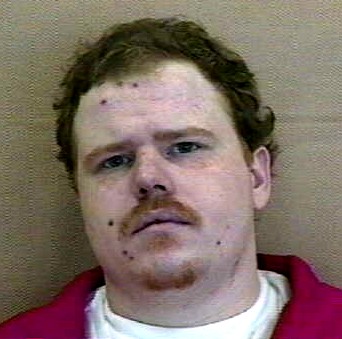
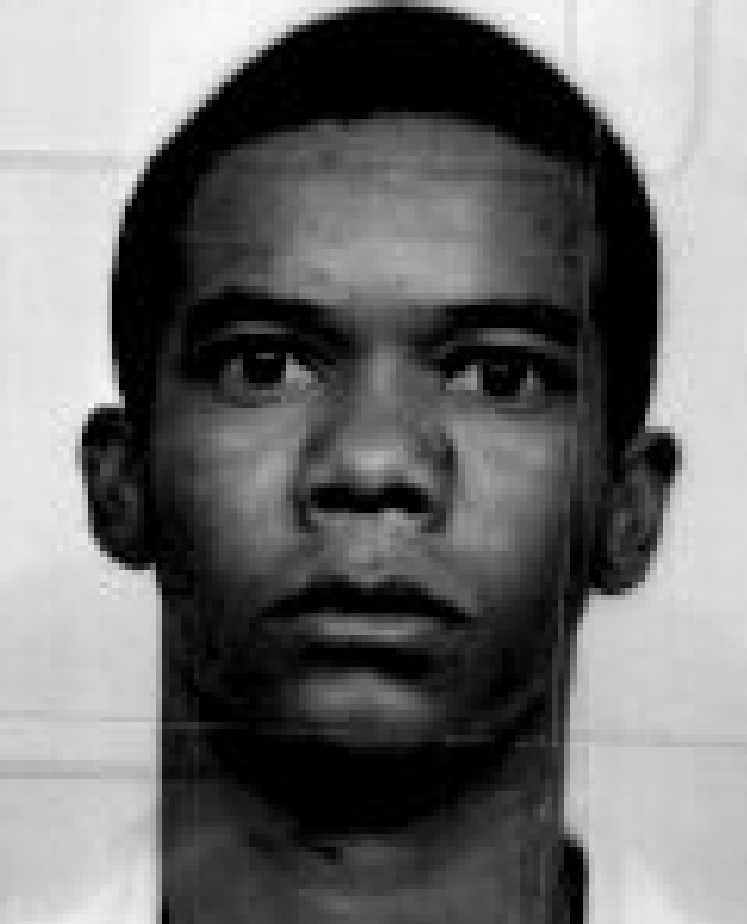
Frank Ray Chandler
Murderer Brian Kevin Rosenfeld
Murderer · USA · 1985
Brian Kevin Rosenfeld Brian Kevin Rosenfeld was sentenced to three concurrent l…
23 victims
Brian Kevin Rosenfeld
Murderer · USA · 1985
Brian Kevin Rosenfeld Brian Kevin Rosenfeld was sentenced to three concurrent l…
23 victims
 Russell Ellwood
Murderer · USA · 1991
Russell Ellwood was a former taxi driver. Authorities suspected him of killing…
20 victims
Russell Ellwood
Murderer · USA · 1991
Russell Ellwood was a former taxi driver. Authorities suspected him of killing…
20 victims
 Robert Martines Perez
Murderer · USA · 1994
Name: Robert Martines Perez · Other name used in proceedings: Robert Martinez P…
15 victims
Robert Martines Perez
Murderer · USA · 1994
Name: Robert Martines Perez · Other name used in proceedings: Robert Martinez P…
15 victims
 Billy Frank Vickers
Murderer · USA · 1993
Billy Frank Vickers Vickers was executed by lethal injection in Texas on Januar…
14 victims
Billy Frank Vickers
Murderer · USA · 1993
Billy Frank Vickers Vickers was executed by lethal injection in Texas on Januar…
14 victims
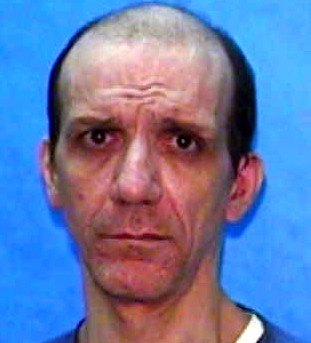 Francisco del Junco
Serial killer · USA · 1995
Francisco del Junco came to Miami in the 1980 Mariel boat lift. He was describe…
4 victims
Francisco del Junco
Serial killer · USA · 1995
Francisco del Junco came to Miami in the 1980 Mariel boat lift. He was describe…
4 victims
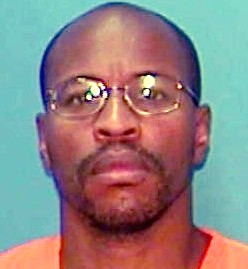 Robert Rimmer
Murderer · USA · 1998
Robert Rimmer was indicted in a case involving 11 counts: two counts of First-D…
2 victims
Robert Rimmer
Murderer · USA · 1998
Robert Rimmer was indicted in a case involving 11 counts: two counts of First-D…
2 victims
 Damien Echols
Murderer · USA · 1993
Damien Wayne Echols was one of the three men known as the West Memphis Three. H…
3 victims
Damien Echols
Murderer · USA · 1993
Damien Wayne Echols was one of the three men known as the West Memphis Three. H…
3 victims
- Gender
- male
- Country
- USA
- Location
- Surry County, North Carolina, USA
- Date of birth
- October 7, 1972
- Age at first offence
- 20
- Characteristics
- burglary, rape?, alcohol, drug addict
- Victim profile
- Doris Poore (a ninety-year-old widow)
- Method of murder
- Beating
- Date(s) of murder
- December 11, 1992
- Years active
- 1992
- Date of arrest
- January 5, 1993
- Status
-
Executed
Executed by lethal injection on November 12, 2004 in North Carolina
Case overview
Frank Ray Chandler was executed by lethal injection in North Carolina on November 12, 2004. He was sentenced to death in Surry County Superior Court for the December 1992 murder of Doris Poore, a ninety-year-old widow who lived alone.
Chandler had been indicted for first-degree murder, first-degree burglary, attempted larceny, attempted first-degree rape, and attempted first-degree sexual offense. A jury found him guilty of first-degree murder under the felony murder rule, with first-degree burglary as the underlying felony, and guilty of attempted larceny. The jury acquitted him of attempted first-degree rape and first-degree sexual offense.
The aggravating factor found at sentencing was pecuniary gain, described as the murder being committed for “pecuniary gain” during Chandler’s attempted theft. The death sentence depended on the jury’s agreement with prosecutors that Chandler killed Poore with the aggravating factor of pecuniary gain during his attempted theft, and a separate set of mitigating factors was found by the jury.
Timeline
- 10 December 1992 — Doris Poore talked by telephone with Grace Vaughn, a friend, until approximately 10:30 p.m.
- 11 December 1992 — Lea Quiros, the victim’s housekeeper, arrived at Mrs. Poore’s house at 8:00 a.m.; Jack Leach entered the house by the back door and found Mrs. Poore dead in her bed in a pool of blood.
- 8:00 a.m. (next day after 10 December 1992 call) — Lea Quiros knocked on the front door; when Mrs. Poore did not answer, Quiros attempted to call her.
- March 8, 1993 — Chandler was indicted for first degree murder, first degree burglary, attempted larceny, attempted first degree rape, and attempted first degree sexual offense.
- 7/20/1993 — Chandler was sentenced to death in Surry County Superior Court for the murder of Doris Poore.
- July 16, 1993 — Chandler was convicted of first degree burglary, attempted larceny, and first degree murder under the felony murder rule, with first degree burglary as the underlying felony; he was found not guilty of attempted rape and attempted sexual offense charges.
- 10/13/2004 — Correction Secretary Theodis Beck set November 12, 2004 as the execution date for Frank Chandler.
- 10/4/2004 — The U.S. Supreme Court denied Chandler’s petition for a writ of certiorari.
- 11/11/2004 — Gov. Mike Easley held a clemency hearing; his decision was pending.
- 11/12/2004 — Chandler requested a last meal and was executed early Friday by lethal injection; he was pronounced dead at 2:13 a.m.
Background
Doris Poore was a ninety-year-old widow who lived alone. She was killed during a burglary of her home.
Chandler moved with his family to Mount Airy, North Carolina when he was in sixth grade. He was born in Paw Paw, Michigan, and was described as the youngest of Franklin and Lorene Chandler’s 12 children.
The offence
Poore died from a blow to the head.
At the time of her death, Poore was lying on her bed with a pool of blood underneath and around her head. A sheet had been pulled over Poore, but her pajama top was open and her body was nude from the waist down. Her underwear and pajama bottoms were wadded together near her feet. Smeared bloody fingerprints were on her abdomen. Pajama bottoms and panties were wadded together at the foot of the bed between her legs, slightly beneath her right foot. An electric heating pad was on the bed.
Chandler testified that he entered the house believing that he could find marijuana. He testified that after knocking on the window, back door, and garage door and receiving no answer, he entered through the unlocked basement door. He proceeded upstairs, cut a screen door with a pocketknife, and opened the back door leading to the kitchen.
Chandler testified that as he started to walk through the house, he saw something out of the corner of his eye. He said that when he started to leave, someone behind him screamed. He testified that he turned and swung, making Poore fall against him; he testified that he caught her as she fell, carried her to her bed, and went to the bathroom to wash the blood off his hand. He testified that he saw Poore’s clothes at the front of the toilet, picked them up, put them next to her in her bed, and covered her up. He testified that after he left the house, he washed his clothes and that he still had them.
Chandler also testified that he had not known who lived in the house, but thought a man lived there because he had seen a blue pickup truck parked in front of the house before and had seen a man smoking “reefer” or marijuana there. On cross-examination, he testified that after he killed Mrs. Poore, he did not look for the marijuana as he had originally planned.
In the investigation, forced entry was found at the rear of Poore’s home. Special Agent R.D. Melton testified that the screen door at the back of the house had been cut with two “L”-shaped cuts above the center support strut on the right side of the door where a latch was located. Melton also testified that the screen was slightly pushed in, and that the wooden door was open and the screws from the chain lock were pulled from the wall and left hanging on the door.
After entering Poore’s house, Melton found Poore’s glasses and hearing aids on the dining room table.
Dr. Gregory James Davis testified that Poore died from a single “massive blow” to the head. He testified that the blow resulted in a hinge fracture to the scalp, which effectively caused the skull to snap in two resulting in extensive swelling and hemorrhaging of the brain. He also testified that Poore had numerous abrasions, lacerations, and bruises.
Investigation
Special Agent Ricky Navarro, a latent evidence specialist with the SBI, testified that palm and fingerprints matching Chandler were found on the wooden door leading into the kitchen. Special Agent J.L. Eddins testified that after he took Chandler’s fingerprints, he asked Chandler to sign a consent to search form. Chandler signed the fingerprint card but refused to sign the other related documents. After Chandler asked to make a phone call, he proceeded to destroy all of the documents and the card.
Poore’s body was found the following day by a housekeeper in some descriptions, and in trial evidence described Poore’s housekeeper and son-in-law finding her after knocking attempts.
Arrest
Chandler was arrested less than a month after Poore’s death.
Trial
Charges considered by the indictment
Chandler was indicted for:
- first-degree murder,
- first-degree burglary,
- attempted larceny,
- attempted first-degree rape,
- attempted first-degree sexual offense.
The jury found him guilty of:
- first-degree murder under the felony murder rule, with first-degree burglary as the underlying felony,
- attempted larceny.
The jury found him not guilty of:
- attempted first-degree rape,
- first-degree sexual offense.
Evidence presented at trial
The prosecution presented evidence that on 10 December 1992 Poore talked by telephone with Grace Vaughn until approximately 10:30 p.m.
The next morning at 8:00 a.m., Lea Quiros arrived, knocked on the front door, and when no one answered attempted to call Poore on the telephone. Quiros contacted Mr. Jack Leach, who arrived and entered by the back door.
Chandler’s palm and fingerprints matching him were found on the wooden door leading into the kitchen. After he was fingerprinted, Chandler signed the fingerprint card but refused to sign the other related documents; then he destroyed all documents and the card.
Jeffrey Kyle Wilson, Chandler’s cellmate from January 1993 until April 1993, testified about Chandler’s statements in jail. Wilson testified that while Chandler was in jail, Chandler asked him what he should do. Wilson told him to tell the truth so that he would not get the electric chair. Wilson testified that Chandler replied that “they” did not have the evidence to convict him. Wilson testified that Chandler then described how he had committed the murder and that as a defense he planned to “play crazy.”
In the habeas proceedings, additional context was described about Wilson’s testimony: Wilson repeatedly denied having sought or been offered any benefit in exchange for his testimony, despite pending charges. Wilson acknowledged that an investigating officer appeared on his behalf at a parole revocation hearing that took place four days after Wilson’s initial contact with police regarding Chandler, and Wilson’s parole was revoked.
Sentencing
After a capital sentencing hearing, the jury recommended and the trial judge imposed a sentence of death for the first-degree murder conviction and a three-year prison sentence for the attempted larceny conviction.
The sentencing-phase jury found pecuniary gain as the sole aggravating factor. It found three mitigating factors:
- Chandler’s lack of proper parental role models during his formative years,
- Chandler’s history of alcohol and drug abuse,
- Chandler’s acknowledgment that he had killed Mrs. Poore.
Appeals
Direct appeal
The North Carolina Supreme Court affirmed Chandler’s conviction and death sentence on 3/8/1996. It later affirmed the denial of certiorari on 7/23/1999.
The North Carolina Supreme Court’s decision described that the jury recommended and the trial court imposed the death penalty. The Supreme Court concluded the death sentence was not disproportionate and held that Chandler received a fair trial free of prejudicial error, stating: “NO ERROR.” Justice Orr filed a dissenting opinion.
Justice Orr’s dissent included these points:
- The trial court erred in submitting the “(e)(6) aggravating circumstance— that the capital felony was committed for pecuniary gain,” and
- the death sentence was disproportionate.
Justice Orr wrote in his dissent:
“I respectfully dissent from the majority opinion on two grounds. First, the trial court erred in submitting the (e)(6) aggravating circumstance--that the capital felony was committed for pecuniary gain, N.C.G.S. § 15A-2000(e)(6) (Supp.1995)--and second, the death sentence is disproportionate.”
Justice Orr also wrote:
“While the defendant clearly had pecuniary motive for breaking into Mrs. Poore’s house, it is only unsupported speculation that the actual killing had anything to do with pecuniary gain.”
Justice Orr further wrote:
“The sole aggravating circumstance was improperly submitted and the sentence imposed is disproportionate, the defendant should be resentenced and a life sentence imposed.”
In descriptions of clemency and press coverage, Orr urged Gov. Mike Easley to stop the execution and expressed:
“There's no question that he's guilty,” Orr said Thursday.
“There are some cases that merit the death penalty. I don't think this is one of them.”
In other quoted remarks:
“I think the whole pecuniary gain aggravator has been stretched well beyond the intent of the law,” Orr said Thursday.
“This case stretched it even farther.”
Habeas corpus
Chandler sought federal habeas corpus relief, and habeas relief was denied.
- Chandler v. Lee, 89 Fed. Appx. 830 (4th Cir. 2004) (Habeas) affirmed.
- Chandler v. French, 252 F. Supp. 2d 219 (M.D.N.C. 2003) (Habeas) denied relief.
The appellate court described that it found no error and affirmed the denial of the petition. It held, among other things, that:
- a state court ruling that the prosecution did not knowingly allow Wilson to testify falsely was entitled to deference,
- the state’s failure to disclose allegedly exculpatory evidence did not violate Brady,
- prior representation by defense co-counsel of the key prosecution witness did not result in conflict of interest,
- failure to submit statutory mitigating circumstance instruction did not violate Chandler’s constitutional rights.
Outcome
Chandler’s convictions and sentence of death were affirmed on direct appeal. His federal habeas corpus petition was denied, and his petition for writ of certiorari to the U.S. Supreme Court was denied.
Governor Mike Easley denied clemency.
Chandler was executed on November 12, 2004 by lethal injection in North Carolina. He was pronounced dead at 2:13 a.m.
Aftermath
Chandler received visits in his final hours by his parents, brother and sisters, who left him at 11 p.m. in one description. In another description, the family remained until they were obliged to leave him three hours before his death. None stayed to witness the execution.
Chandler made no final statement.
At the time of execution coverage, reporters described that Poore’s great-granddaughters witnessed the execution, but had no comment.
Chandler’s requested last meal was: A Pizza Hut thin-crust, medium pizza topped with extra cheese, pepperoni, ham, Canadian bacon, mushrooms and black olives served with iced milk.
Other details
People involved
- Doris Poore — victim; a ninety-year-old widow.
- Lea Quiros — Poore’s housekeeper.
- Jack Leach — Poore’s son-in-law.
- Grace Vaughn — a friend of Poore with whom Poore talked until approximately 10:30 p.m. on 10 December 1992.
- Jeffrey Kyle Wilson — Chandler’s cellmate from January 1993 until April 1993; prosecution witness in the habeas description.
- Theodis Beck — Correction Secretary who set the execution date.
- Marvin Polk — Central Prison Warden who would explain execution procedures during a media tour.
- Pam Walker — Correction Department spokeswoman who described the last meal.
- Gov. Mike Easley — governor who denied clemency.
- Mark Rabil — one of Chandler’s defense attorneys referenced in press coverage.
- J. Clark Fischer — Chandler’s attorney referenced in press coverage and clemency request.
- Terry L. Collins — defense attorney referenced in press coverage and later described in relation to disbarment.
- James Dellinger — district attorney referenced in press coverage.
- Robert Orr — North Carolina Supreme Court Justice who dissented in Chandler’s case and urged clemency.
Court and legal citations stated
- State v. Chandler, 342 N.C. 742, 467 S.E.2d 636 (N.C. 1996) (Direct Appeal) — affirmed; “NO ERROR” with Orr dissenting.
- State v. Chandler, 350 N.C. 838, 538 S.E.2d 572 (1999) — certiorari denial to review Judge Freeman’s ruling on the Motion for Appropriate Relief.
- Chandler v. Lee, 89 Fed. Appx. 830 (4th Cir. 2004) (Habeas) — affirmed denial.
- Chandler v. French, 252 F. Supp. 2d 219 (M.D.N.C. 2003) (Habeas) — denied petition.
Quoted material
Chandler’s counsel quoted (as reported in clemency-related coverage) these statements attributed to Mark Rabil:
“It is not a case deserving of the death penalty,” said Mark Rabil, Chandler’s attorney, at a news conference in Raleigh.
“What happened here was nothing other than a terrible and tragic accident.”
And a statement in another press quotation attributed to Orr:
Wilson’s in-trial quoted statement in habeas narrative included:
Wilson testified that Chandler responded that “they” did not have the evidence to convict him.
Wilson testified that Chandler planned to “play crazy.”
In the habeas narrative, Wilson described Chandler’s response about having “never seen no old p* * *y”:
Trial Tr., Vol. V, at 614.
Locations and institutional details stated
- Central Prison in Raleigh was referenced for execution scheduling and procedures.
- Raleigh was referenced in clemency and execution coverage.
- Mount Airy, North Carolina was referenced as Poore’s community and as the location relevant to trial and conviction coverage.
- Surry County was referenced as the county of conviction.
- Surry County Jail was referenced in the habeas description of Wilson’s relationship to Chandler.
Meals
Chandler requested the Pizza Hut thin-crust pizza with extra cheese, pepperoni, ham, Canadian bacon, mushrooms and black olives, and iced milk.
Spotted an error, or have more information about this case?