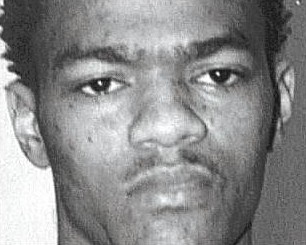
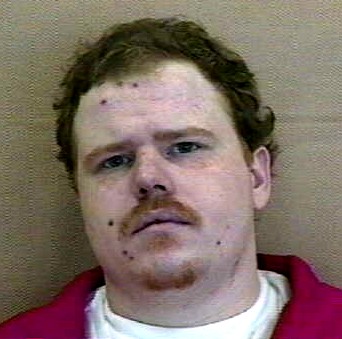
Lance Chandler
Murderer Brian Kevin Rosenfeld
Murderer · USA · 1985
Brian Kevin Rosenfeld Brian Kevin Rosenfeld was sentenced to three concurrent l…
23 victims
Brian Kevin Rosenfeld
Murderer · USA · 1985
Brian Kevin Rosenfeld Brian Kevin Rosenfeld was sentenced to three concurrent l…
23 victims
 Russell Ellwood
Murderer · USA · 1991
Russell Ellwood was a former taxi driver. Authorities suspected him of killing…
20 victims
Russell Ellwood
Murderer · USA · 1991
Russell Ellwood was a former taxi driver. Authorities suspected him of killing…
20 victims
 Robert Martines Perez
Murderer · USA · 1994
Name: Robert Martines Perez · Other name used in proceedings: Robert Martinez P…
15 victims
Robert Martines Perez
Murderer · USA · 1994
Name: Robert Martines Perez · Other name used in proceedings: Robert Martinez P…
15 victims
 Billy Frank Vickers
Murderer · USA · 1993
Billy Frank Vickers Vickers was executed by lethal injection in Texas on Januar…
14 victims
Billy Frank Vickers
Murderer · USA · 1993
Billy Frank Vickers Vickers was executed by lethal injection in Texas on Januar…
14 victims
 Patricia Jennings
Murderer · USA · 1989
Patricia Jennings beat her 80-year-old husband, William Henry Jennings, to deat…
1 victim
Patricia Jennings
Murderer · USA · 1989
Patricia Jennings beat her 80-year-old husband, William Henry Jennings, to deat…
1 victim
 Brian Steckel
Murderer · USA · 1994
Brian Steckel was a convicted murderer who was executed in Delaware. · Septembe…
1 victim
Brian Steckel
Murderer · USA · 1994
Brian Steckel was a convicted murderer who was executed in Delaware. · Septembe…
1 victim
 Mary Beth Harshbarger
Homicide · Canada · 2006
Mary Beth Harshbarger (born February 19, 1965) was an American woman who rose t…
1 victim
Mary Beth Harshbarger
Homicide · Canada · 2006
Mary Beth Harshbarger (born February 19, 1965) was an American woman who rose t…
1 victim
- Gender
- male
- Country
- USA
- Location
- Halifax County, Virginia, USA
- Date of birth
- 1973
- Age at first offence
- 20
- Characteristics
- robbery, drugs, drug addict
- Victim profile
- William "Billy" Dix, 33 ( convenient store clerk )
- Method of murder
- Shooting
- Date(s) of murder
- February 7, 1993
- Years active
- 1993
- Date of arrest
- —
- Status
-
Executed
Executed by lethal injection in Virginia on August 20, 1998
Case record: Lance Chandler
Timeline
- February 7, 1993 — Lance Chandler, Geral-dine Fernandez, Dwight Wyatt, and George Boyd discussed robbing a local convenience store called Mother Hubbard's, and the group carried out the robbery in which Chandler shot and killed William Dix.
- February 3, 1993 — Lance Antonio Chandler stood trial from the February 3, 1993 murder of convenience store clerk William Dix.
- April 11, 1994 — Lance Antonio Chandler entered death row.
- May 20, 1998 — The United States Court of Appeals for the Fourth Circuit decided Lance Antonio Chandler, Jr. v. Fred W. Greene, Warden, Mecklenburg Correctional Center, and affirmed the conviction.
- August 20, 1998 — Lance Chandler was executed by lethal injection in Virginia.
Background
Lance Antonio Chandler was convicted of capital murder and related offenses in Virginia state court for the shooting and killing of William Howard Dix during the robbery of a convenience store in Halifax County, Virginia, on February 7, 1993. On the jury’s recommendation, the court sentenced him to death.
At the time of the murder and trial, Chandler was nineteen. Chandler had previously given a fully-loaded revolver to his half-brother, Henry Chappell, to hide for him.
Chandler’s girl-friend was Bernice Murphy.
The offence
During the evening of February 7, 1993, Lance Chandler, Geral-dine Fernandez, Dwight Wyatt, and George Boyd discussed robbing a local convenience store called Mother Hubbard’s. Chandler told the three others that the store clerk, William Dix, was "a little bit slow" and would not give them any trouble. Chandler also said that they could get a gun from his half-brother, Henry Chappell.
The four conspirators, together with Bernice Murphy, drove to Chappell’s house in South Boston, Virginia, and obtained the gun from Chappell. Wyatt inspected the gun and saw that it was loaded, and Chandler also checked the gun. As the group drove to Mother Hubbard’s convenience store, Wyatt handed Chandler the gun. When the group arrived at Mother Hubbard’s, Chandler, Wyatt, and Boyd went into the store. Boyd and Wyatt headed to the back of the store to steal beer, while Chandler approached Dix and demanded money.
When Dix did not respond, Chandler pointed the gun at Dix, closed his eyes, and pulled the trigger as he said "boom." The gun did not fire, and Chandler pulled the trigger a second time, shooting Dix in the face. The bullet passed through Dix’s mouth into his neck, bruising his spinal cord and paralyzing the muscles that controlled his breathing. Dix later died.
Chandler, Wyatt, and Boyd then ran from the store carrying a case of beer.
While Chandler was testifying in his own defense, he recalled that he had consumed almost twelve beers as well as used marijuana and cocaine earlier in the evening and that he was still "high" when he went into Mother Hubbard’s. Chandler stated that he did not have "the slightest idea" why he pulled the trigger and insisted that he did not intend to shoot Dix or to kill him.
Chandler admitted that he shot Dix but maintained that the killing was not premeditated and that he never intended to kill Dix. Chandler claimed that he believed the gun would fire no live bullets as expected, and he explained that when he received the gun, he looked inside its cylinder and saw what he thought were three empty shell casings and one live bullet. Chandler stated that he thought he could pull the trigger at least four times before the gun would fire a live round and that he did not expect the gun to fire when he pulled the trigger the second time. Chandler also admitted that the gun had been fully-loaded when he gave it to Chappell five days earlier. Chandler testified that he did not have "the slightest idea" why he pulled the trigger while pointing the gun at Dix and insisted that he did not intend to shoot or kill Dix.
Investigation and questioning
When the five individuals were later questioned by Halifax County authorities, Chandler admitted to shooting Dix.
A Halifax County grand jury indicted Chandler on one count of capital murder, one count of robbery, one count of conspiracy to commit robbery, and two counts of using a firearm during the commission of a felony.
Trial
Chandler was tried before a jury in Virginia state court. During jury selection, Chandler’s attorney objected to the prosecutor’s use of three out of five peremptory challenges to remove three black jurors from the jury. The trial judge found that the prosecutor’s explanation for striking the three black jurors was "race neutral" and overruled Chandler’s objection.
Several of Chandler’s companions on the date of the murder testified at trial for the prosecution. Wyatt testified that, after the three men left the store, Chandler remarked that the money did not belong to Dix. Fernandez and Murphy testified that, when they were in the car driving away from the crime scene, Chandler said, "the man was protecting money that wasn’t his," and "why didn’t that man open the register?"
Fernandez also testified that Chandler said that he had always wanted to know what it was like to kill a man and that he was going to put a hole in the shell casing and wear it around his neck as a souvenir.
Chandler testified in his own defense. He admitted that he shot Dix and maintained that the killing was not premeditated and that he never intended to kill Dix. He claimed that he was under the influence of drugs and alcohol when he shot Dix and that he did not believe the gun would fire live bullets.
Chandler’s jury found him guilty on all counts.
Sentencing
The court commenced the penalty phase of the trial before the same jury. During the penalty phase, the Commonwealth sought the death penalty based on both Chandler’s future dangerousness and the vileness of his crime.
The prosecution introduced evidence of Chandler’s prior criminal record, which included:
- a conviction for disorderly conduct at age fourteen,
- a conviction for breaking and entering at age sixteen,
- and a conviction for assault and battery at age eighteen.
When Chandler was nineteen, he was convicted of disorderly conduct, public drunkenness, cursing and abusing a police officer, and failing to appear in court.
He also was convicted of robbery and use of a firearm during the commission of a felony in connection with a holdup of a UPS delivery driver less than six months before he murdered Dix.
The prosecution also presented evidence that Chandler had dropped out of school in the 9th grade, had little record of employment, and had no active involvement in any religion.
Fernandez testified again, repeating her previous testimony that, following the murder, she twice heard Chandler state that he planned to wear the empty shell around his neck as a souvenir.
She further testified that Chandler had warned her and the others on the Monday after the murder that if they went to the police, they would not "live to see Court date."
Chandler chose not to present any evidence or call any witnesses during the penalty phase. Chandler chose to waive closing argument.
During closing arguments, the Commonwealth attorney stated:
"He supports himself because he is a predator. He is a predator who is following the law of the jungle. He will look upon some creature, some fellow human being that is weak, disabled, passive and he victimizes them. Is he depraved? Absolutely. Is he inhuman? Absolutely. That is just beyond the bounds of decent society. This man has degenerated into a predator and a trophy hunter."
At Chandler’s request, his attorney did not make a final argument.
Appeals
Chandler appealed on several issues, mainly focusing on his sixth amendment right to effective counsel. Chandler claimed that his attorney should have questioned Chandler’s competence because Chandler attempted suicide and allegedly suffered hallucinations while in pretrial detention. The record indicated that he was found competent for trial, and his attorney never questioned his judgement despite his depressed state.
Chandler also appealed directly on the Commonwealth’s closing remarks, stating that they prejudiced the jury toward the death penalty. The appellate court upheld the trial court’s decision to let the remarks stand. The court found that:
"The evidence presented at trial certainly supported the argument that Chandler was a 'predator' and a 'trophy hunter.'"
Even assuming that the prosecutor’s comments were improper, the appellate court found that no reasonable probability exists that the outcome of the penalty phase would have been different if the statements had been excluded.
Chandler entered death row on April 11, 1994 and was executed on August 20, 1998.
In Lance Antonio Chandler, Jr. v. Fred W. Greene, Warden, Mecklenburg Correctional Center (No. 97-27), the United States Court of Appeals for the Fourth Circuit considered Chandler’s claims that:
- the state prosecutor peremptorily struck three black jurors in violation of Batson v. Kentucky, 476 U.S. 79 (1986), and
- the district court erred in denying his claim for ineffective assistance of counsel during the sentencing phase of his trial.
On May 20, 1998, the United States Court of Appeals for the Fourth Circuit decided the case and affirmed.
Outcome and execution
The U.S. Supreme Court denied Chandler’s final appeal 7-2. Gov. Jim Gilmore rejected Chandler’s plea for clemency.
On August 20, 1998, clemency proceedings took place in Virginia, and Warden David Garraghty asked whether Lance Chandler wanted to make a final statement. Chandler looked up, shook his head, and said, "No, sir."
Lance Chandler was executed by lethal injection in Virginia on August 20, 1998.
Other details
Chandler began his criminal record at age 14 when he was convicted of disorderly conduct. Over the next 5 years, he was convicted of offenses ranging from robbery and use of a firearm to breaking and entering, assault and battery, public drunkenness and cursing and abusing a police officer.
Chandler was convicted of killing William "Billy" Dix, 33, on February 7, 1993, while robbing a small store near South Boston.
Spotted an error, or have more information about this case?