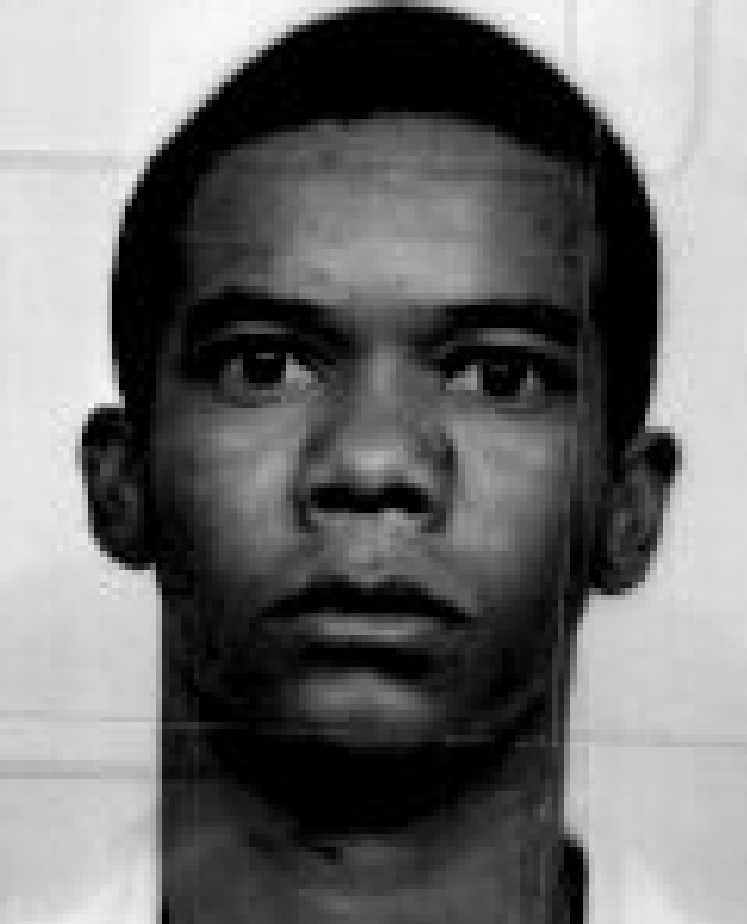
Tony Chambers
Murderer Brian Kevin Rosenfeld
Murderer · USA · 1985
Brian Kevin Rosenfeld Brian Kevin Rosenfeld was sentenced to three concurrent l…
23 victims
Brian Kevin Rosenfeld
Murderer · USA · 1985
Brian Kevin Rosenfeld Brian Kevin Rosenfeld was sentenced to three concurrent l…
23 victims
 Yahweh ben Yahweh
Murderer · USA · 1980
Yahweh ben Yahweh was born and legally named Hulon Mitchell Jr. (October 27, 19…
23 victims
Yahweh ben Yahweh
Murderer · USA · 1980
Yahweh ben Yahweh was born and legally named Hulon Mitchell Jr. (October 27, 19…
23 victims
 Russell Ellwood
Murderer · USA · 1991
Russell Ellwood was a former taxi driver. Authorities suspected him of killing…
20 victims
Russell Ellwood
Murderer · USA · 1991
Russell Ellwood was a former taxi driver. Authorities suspected him of killing…
20 victims
 Robert Martines Perez
Murderer · USA · 1994
Name: Robert Martines Perez · Other name used in proceedings: Robert Martinez P…
15 victims
Robert Martines Perez
Murderer · USA · 1994
Name: Robert Martines Perez · Other name used in proceedings: Robert Martinez P…
15 victims
 Christine Billis
Murderer · USA · 2009
Christine Billis drove the family car into a towering pine tree in Charleston,…
1 victim
Christine Billis
Murderer · USA · 2009
Christine Billis drove the family car into a towering pine tree in Charleston,…
1 victim
 Alfred Gaynor
Serial killer · USA · 1995
Alfred Gaynor was a serial killer from western Massachusetts who was convicted…
9 victims
Alfred Gaynor
Serial killer · USA · 1995
Alfred Gaynor was a serial killer from western Massachusetts who was convicted…
9 victims
 Jeremy McLaughlin
Homicide - Murderer · New Zealand · 1995
Jeremy George Edward McLaughlin (35) — defendant · Jade Bayliss (13) — victim;…
2 victims
Jeremy McLaughlin
Homicide - Murderer · New Zealand · 1995
Jeremy George Edward McLaughlin (35) — defendant · Jade Bayliss (13) — victim;…
2 victims
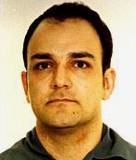 Gerald Stano
Serial killer · USA · 1969
Gerald Eugene Stano (September 12, 1951 – March 23, 1998) was executed by elect…
41 victims
Gerald Stano
Serial killer · USA · 1969
Gerald Eugene Stano (September 12, 1951 – March 23, 1998) was executed by elect…
41 victims
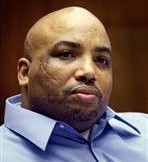 Chester Turner
Serial killer · USA · 1987
Chester Dewayne Turner was born November 5, 1966 in Warren, Arkansas. He became…
13 victims
Chester Turner
Serial killer · USA · 1987
Chester Dewayne Turner was born November 5, 1966 in Warren, Arkansas. He became…
13 victims
- Gender
- male
- Country
- USA
- Location
- Smith County, Texas, USA
- Date of birth
- December 20, 1967
- Age at first offence
- 23
- Characteristics
- rape, torture
- Victim profile
- Carenthia Marie Bailey (female, 11)
- Method of murder
- Strangulation
- Date(s) of murder
- November 19, 1990
- Years active
- 1990
- Date of arrest
- 2 days after
- Status
-
Executed
Executed by lethal injection in Texas on November 15, 2000
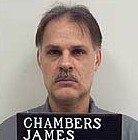
Case record: Tony Neyshea Chambers
People
- Tony Neyshea Chambers — defendant; convicted and sentenced to death by the State of Texas; executed by lethal injection in Texas on November 15, 2000.
- Carenthia Marie Bailey — victim; an 11-year-old girl who disappeared after attending a middle school basketball game and whose body was found two days later in a wooded area near the middle school gym.
- Juanita Benson — Chambers’ girlfriend; testified at trial about fights and alleged conduct after she broke up with Chambers.
- Bryan Brooks — identified by Chambers as “Duck”; later interviewed and gave a written statement claiming he was not around the middle school on the day of the murder; testified at trial consistent with his statement to police that he had been elsewhere during the crime.
- William Pannell — intermediary named by Chambers in a statement about scalpel handling.
- Officer Alexander — interrogation officer referenced in habeas arguments.
- Dr. Gonzalez — State’s medical expert who examined Bailey’s body and testified at trial.
- Gary L. Johnson — Director, Texas Department of Criminal Justice, Institutional Division (respondent in the Fifth Circuit case).
- W. Eugene Davis — Circuit Judge (author of the Fifth Circuit opinion).
- Higginbotham, Davis and Benavides — Circuit Judges.
- John Cornyn — Texas Attorney General in the media advisory.
- Friday, November 10, 2000 — date of the media advisory entry in the record (not a person).
- Johnny Paul Penry — another inmate whose execution timing was mentioned in related reporting.
Timeline
- October 27, 1993 — Texas Court of Criminal Appeals affirmed Chambers’ conviction.
- December 8, 1993 — Texas Court of Criminal Appeals denied rehearing.
- May 16, 1994 — U.S. Supreme Court denied certiorari review.
- May 16, 1995 — Chambers filed an application for a federal writ of habeas corpus (noted as “In 1995” in the Fifth Circuit narrative).
- March 18, 1998 — Court of Criminal Appeals denied Chambers’ application for writ of state habeas corpus.
- June 29, 1999 — District court adopted the magistrate’s report and recommendation and denied habeas relief.
- August 10, 1999 — District court denied permission to appeal.
- November 1998 — Chambers filed a second federal habeas petition (as referenced in the magistrate report description).
- June 20, 2000 — Fifth Circuit Court of Appeals denied permission to appeal.
- July 24, 2000 — Court of Appeals denied rehearing.
- October 24, 2000 — Chambers filed a petition for writ of certiorari in the United States Supreme Court, which was pending.
- November 15, 2000 — Tony Chambers was executed by lethal injection in Texas; he was pronounced dead at 6:18 p.m. after the lethal dose began.
- November 15, 2000 — The record notes the execution time as “Wednesday night” and includes the execution pronunciation details.
Background
Tony Neyshea Chambers was convicted of capital murder and sentenced to death by the State of Texas for the November 1990 rape and murder of 11-year-old Carenthia Marie Bailey in Tyler, Texas.
Chambers had no prior prison record, but had a history of arrests for public intoxication, burglary, and assault. Chambers also had been previously arrested for public intoxication, evading detention, traffic tickets, burglary and assault/retaliation.
The offence
In 1990, Chambers attended a middle school basketball game. Several witnesses saw Chambers leave with an eleven-year-old girl, Carenthia Bailey. When Bailey did not return home, two witnesses reported last seeing her with Chambers.
Later that evening, when the witnesses inquired about Bailey, Chambers responded that he had “got the little bitch” and ran away. The witnesses attempted to catch him, but he eluded capture.
Chambers called the police and told them that unknown persons were trying to harm him. When police arrived, Chambers denied even knowing Bailey.
Police discovered Bailey’s body the following day in a wooded area near the middle school gym. Her body had evidence of a sexual assault, and an autopsy uncovered abdominal wounds and evidence of sexual assault prior to death. The record also states that Bailey was raped and strangled and that there were “twenty or more puncture wounds” in her abdomen. The record further states that prosecutors said the stomach markings were carved using a scalpel and protractor, and that there were some 20 etchings carved into her stomach.
Investigation
After Bailey’s disappearance, Chambers made multiple statements to police and gave an extensive videotaped confession after police advised him of his Miranda rights. He also signed a written statement acknowledging Miranda warnings and admitting to leaving the basketball game with Bailey, having sex with her in the woods near the gym, and choking her for about three minutes.
In a later more complete statement, Chambers admitted to:
- choking Bailey during intercourse,
- tying her to a tree with her shoe laces,
- choking her while tied,
- untying her, and
- puncturing her stomach with a scalpel and protractor.
This confession contained details, such as the cut design left on Bailey’s abdomen, that were not publicly known. After the second written statement, Chambers took police officers to the location where he disposed of the scalpel and protractor, and detectives with Chambers’ help recovered both items. Possibly due to recent rain, police found no fingerprints or blood on these weapons.
The record states that Chambers partially recanted his confession and said it was made while he was frightened and nervous. He asserted that he did not believe he had killed Bailey and claimed that an acquaintance known as “Duck,” later identified as Bryan Brooks, had been watching Chambers and Bailey have sex. Chambers stated that Brooks later passed a scalpel to Chambers through an intermediary, William Pannell, for Chambers to throw away. Chambers later theorized that Brooks had actually killed Bailey.
Soon thereafter, a jailer overheard Chambers tell another inmate:
“you know that little girl that was killed; that was me.”
When police told Chambers that Bailey’s body had been found, Chambers replied:
“Oh no. Oh, my. I didn’t mean to hurt her.”
After learning he was wanted for questioning, Chambers left a telephone message with an officer at the police station stating he “did not want to get in trouble if this girl came up hurt.” Chambers later told the officer heading the investigation that he had only briefly spoken with Bailey on his way out of the basketball game. Chambers repeated this story in a later telephone conversation and in an informal meeting with the officer at a restaurant.
The Fifth Circuit narrative also records:
- The police discovered Bailey’s body while Chambers was being voluntarily questioned at the local police station.
- When confronted with the discovery, Chambers became emotional and stated his remorse for killing Bailey.
- After Chambers gave at least two statements that did not mention anyone else in the woods with him and Bailey, he came up with a different version contradicting witness accounts concerning Brooks’ whereabouts.
Arrest
The Fifth Circuit opinion states that Chambers was being questioned at the local police station when police discovered Bailey’s body. The state habeas findings include that Chambers was not under arrest when he gave his first statement to police.
Trial
At his 1991 trial, Chambers’ numerous statements were presented to the jury. The record states that the State’s medical examiner and numerous other witnesses testified supporting Chambers’ original murder confessions.
Chambers’ friend, Bryan Brooks, testified at trial consistent with his statement to police that he had been elsewhere during the crime. The testimony was corroborated by other witnesses.
Sentencing
Chambers was convicted and sentenced to death for the November 1990 rape and murder of 11-year-old Carenthia Bailey in Tyler, Texas.
A media advisory described that Chambers was scheduled to be executed after 6 p.m. on Wednesday, November 15. The media advisory also stated that Texas Attorney General John Cornyn offered information on Tony Chambers who was scheduled to be executed.
Appeals
The record includes a timeline of appellate steps:
- May 16, 1994 — U.S.
- May 6, 1999 — A federal magistrate judge issued a report and recommended that Chambers’ petition be denied, based on a second federal habeas petition Chambers filed in November 1998.
- October 24, 2000 — Chambers filed a petition for writ of certiorari in the United States Supreme Court, pending.
Fifth Circuit decision (June 20, 2000; denial of COA)
The Fifth Circuit case record states that Chambers (“Tony Neyshea Chambers”) was convicted of capital murder and sentenced to death by the State of Texas. The opinion states that Chambers was seeking a Certificate of Appealability (COA) and that the court denied issuance of a COA.
The opinion also records the procedural history of habeas:
- In 1995, Chambers filed an application for a federal writ of habeas corpus, but it was dismissed without prejudice for him to exhaust available state remedies.
- After his state habeas petition was denied in 1998, Chambers again filed a petition for federal habeas relief.
- The district court denied Chambers’ petition following a magistrate judge’s recommendation and later denied Chambers’ application for a Certificate of Appealability.
Issues raised in appeals
The record states that Chambers challenged the district court’s denial of a claim that the State knowingly used his materially false or involuntary confessions to obtain a conviction in violation of his due process rights.
The Fifth Circuit opinion states that Chambers bore the burden to establish that:
- the evidence was false,
- the false testimony was material, and
- the prosecution offered the testimony knowing it to be false, citing Giglio v. United States and Schlang v. Heard.
The Fifth Circuit opinion describes that the trial court had entered findings that Chambers’ confessions were knowingly and voluntarily made after a lengthy pretrial suppression hearing. It also states that the Texas Court of Criminal Appeals gave a detailed explanation on direct appeal and that the state habeas trial court entered detailed findings rejecting the same arguments.
The Fifth Circuit opinion describes that Chambers proffered affidavits of two forensic pathologists critical of Dr. Gonzalez. It states that the state habeas court was entitled to find that the affidavits were insufficient to cast enough doubt on the confessions to show they were materially untrue, and that the federal district court correctly held that the state courts’ rejections did not involve an unreasonable application of clearly established federal law or an unreasonable determination of facts.
Outcome
Tony Chambers was executed by lethal injection in Texas on November 15, 2000.
The record states that Chambers expressed love to his family and his friends present. Two quotations from the record are:
“Mom, I just want y'all to know that I love you,”
“No matter what in life, I want you to stay strong.”
The record also includes:
“Dad, I want you to stay strong.”
The record states that he coughed six times, sputtered once, then breathed a long sigh after the drugs were being administered, and that he was pronounced dead at 6:18 p.m., six minutes after the drugs began flowing into his arms.
Aftermath
The record includes reporting that Tony Chambers was executed and described his execution as the 37th inmate to be put to death in Texas that year, tying the record number of executions carried out by the state in 1997. It also mentions that the execution of Johnny Paul Penry was set for that night and includes details about Penry’s case and sentence.
Other details
Prior relationship testimony: Juanita Benson
Juanita Benson testified at trial that while she and Chambers lived together, she frequently called police due to fights. Benson testified that after she broke up with Chambers, he would come by and throw rocks at her house, pulled the phone cord out of the wall and set a bottle on fire and threw it into a window in her house. Benson also said that Chambers threatened to shoot her in front of police if they came to arrest him.
Additional details from the Fifth Circuit opinion
The Fifth Circuit opinion contains these state habeas findings of fact and conclusions of law relevant to allegations about confessions:
Findings of fact (as reproduced in the opinion):
- [ Chambers ] was not under arrest when he gave his first statement to police.
- [ Chambers 's] confessions given after his arrest were freely, intelligently, knowingly, and voluntarily given.
- [ Chambers 's] confessions after he was given his Miranda and statutory warning were (sic) not tainted by any prior statement and were freely, intelligently, knowingly, and voluntarily given.
- There is no credible evidence that the legally obtained confessions were obtained by a police "penchant" for illegal confessions.
- There is no credible evidence that the police interrogation induced a false confession.
- The confessions['] admissibility was considered and found to be voluntarily given on direct appeal.
Conclusions of law (as reproduced in the opinion):
- The police interrogation techniques did not render [ Chambers 's] voluntary statement involuntary.
- [ Chambers ]'s confessions were freely, intelligently, knowingly, and voluntarily made by [ Chambers 's] after a knowing, intelligent, and voluntary waiver of his rights.
- [ Chambers ]'s confessions were legally obtained after a free, knowing, intelligent, and voluntary waiver of [ Chambers ]'s rights.
- The police activity in prior cases was not a cause-in-fact of any of [ Chambers ]'s confessions.
Evidence and weapons handling
The record states that detectives, with Chambers’ help, recovered both the scalpel and protractor from the location where he disposed of them. It also states that police found no fingerprints or blood on these weapons.
Witness observations around disappearance
The record states that:
- Several witnesses saw Chambers leave the basketball game with Carenthia Bailey.
- Two witnesses reported last seeing Bailey with Chambers.
- Four people who attended the basketball game saw Chambers with Bailey the night she disappeared.
- Two witnesses saw Chambers after Bailey’s disappearance and that he told them he had killed her.
- When two witnesses confronted Chambers after Bailey’s disappearance, Chambers responded with a vulgarity about her and fled.
Quotation about vulgarity
The record includes the quotation “got the little bitch” from Chambers when the witnesses inquired about Bailey’s whereabouts. The record does not provide additional verbatim wording for the vulgarity beyond that quoted phrase.
Spotted an error, or have more information about this case?