
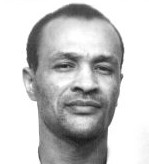
Jack Wade Clark
Murderer Brian Kevin Rosenfeld
Murderer · USA · 1985
Brian Kevin Rosenfeld Brian Kevin Rosenfeld was sentenced to three concurrent l…
23 victims
Brian Kevin Rosenfeld
Murderer · USA · 1985
Brian Kevin Rosenfeld Brian Kevin Rosenfeld was sentenced to three concurrent l…
23 victims
 Yahweh ben Yahweh
Murderer · USA · 1980
Yahweh ben Yahweh was born and legally named Hulon Mitchell Jr. (October 27, 19…
23 victims
Yahweh ben Yahweh
Murderer · USA · 1980
Yahweh ben Yahweh was born and legally named Hulon Mitchell Jr. (October 27, 19…
23 victims
 Russell Ellwood
Murderer · USA · 1991
Russell Ellwood was a former taxi driver. Authorities suspected him of killing…
20 victims
Russell Ellwood
Murderer · USA · 1991
Russell Ellwood was a former taxi driver. Authorities suspected him of killing…
20 victims
 Robert Martines Perez
Murderer · USA · 1994
Name: Robert Martines Perez · Other name used in proceedings: Robert Martinez P…
15 victims
Robert Martines Perez
Murderer · USA · 1994
Name: Robert Martines Perez · Other name used in proceedings: Robert Martinez P…
15 victims
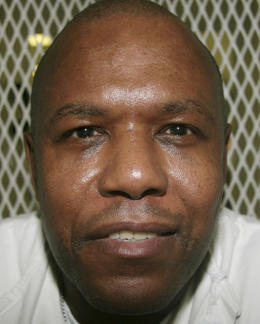 Larry Wayne Wooten
Murderer · USA · 1996
Defendant: Larry Wayne Wooten Status: Executed by lethal injection in Texas on…
2 victims
Larry Wayne Wooten
Murderer · USA · 1996
Defendant: Larry Wayne Wooten Status: Executed by lethal injection in Texas on…
2 victims
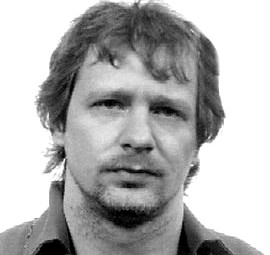 James Games
Murderer · USA · 1983
April 5, 1984 — Games was sentenced to death. · 06-15-99 — On remand, Marion Co…
1 victim
James Games
Murderer · USA · 1983
April 5, 1984 — Games was sentenced to death. · 06-15-99 — On remand, Marion Co…
1 victim
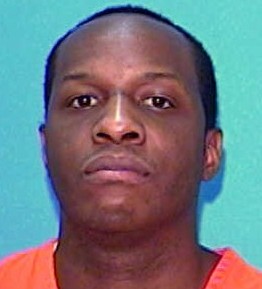 Labrant Dennis
Murderer · USA · 1996
Labrant Dennis was sentenced to death on February 26, 1999. · 04/13/96 — Earl L…
2 victims
Labrant Dennis
Murderer · USA · 1996
Labrant Dennis was sentenced to death on February 26, 1999. · 04/13/96 — Earl L…
2 victims
 Angelina Napolitano
Murderer · Canada · 1911
Angelina Napolitano (also spelled Angelina Neapolitano) was an immigrant to Can…
1 victim
Angelina Napolitano
Murderer · Canada · 1911
Angelina Napolitano (also spelled Angelina Neapolitano) was an immigrant to Can…
1 victim
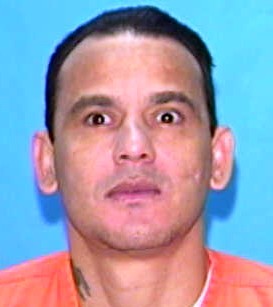 Norberto Pietri
Murderer · USA · 1988
Norberto Pietri was at Lantana Community Correctional Work Release Center await…
1 victim
Norberto Pietri
Murderer · USA · 1988
Norberto Pietri was at Lantana Community Correctional Work Release Center await…
1 victim
- Gender
- male
- Country
- USA
- Location
- Lubbock County, Texas, USA
- Date of birth
- J uly 29, 1963
- Age at first offence
- 26
- Characteristics
- rape
- Victim profile
- Melisa Ann Garcia (female, 23)
- Method of murder
- St abbing with knife
- Date(s) of murder
- October 15, 1989
- Years active
- 1989
- Date of arrest
- October 1989
- Status
-
Executed
Executed by lethal injection in Texas on January 9, 2001
Case record: Jack Wade Clark
Background
Jack Wade Clark was a Texas death row inmate whose petition for habeas corpus relief and request for a Certificate of Appealability were both denied by the federal district court below, and whose later request for a COA was denied by the United States Court of Appeals for the Fifth Circuit.
Clark was convicted and sentenced to death for the October 1989 rape and murder of Melisa Ann Garcia in Lubbock, Texas.
Clark’s confession was admitted at trial.
The offence
In the early morning hours of October 15, 1989, Clark observed Melisa Ann Garcia making a telephone call at a public telephone. He approached her, asked her for a light for his cigarette, walked around the corner to wait for her to finish her call, and then stabbed her in the shoulder as she completed her call.
Clark then forced Garcia into her own car, drove it away, and subsequently sexually assaulted her. Garcia remained in a semi-conscious state while she was being raped. After sexually assaulting her, Clark stabbed Garcia in the heart.
After the assault and stabbing, Clark drove Garcia’s car and parked it near his house, cleaned the knife, and hid it in the attic.
At trial, the jury returned answers in the affirmative to two special issues in the applicable version of article 37.071 of the Texas Code of Criminal Procedure. Clark’s conviction was for capital murder in the course of committing or attempting to commit sexual assault.
Investigation
Clark’s confession described the events leading to the attack and included details about the stabbing, driving the car away, and later disposing of the knife.
A high school honor roll student testified at trial. The witness was incarcerated with Clark while he was in the Lubbock County Jail, and Clark had confided in the witness regarding his involvement in the murder. The witness testified that Clark described how he asked the victim for a lighter, stabbed her, forced her into the car, drove her somewhere, and “screwed her through her mouth, herass, and her pussy.” The witness also testified that Clark explained he stabbed her again so she could not identify him and that he ground the knife down so it could not be identified as the murder weapon.
There was no evidence that the witness received any benefit for coming forward with Clark’s jailhouse confession some six weeks after the witness was released from jail.
The state produced evidence about Clark’s desertion from the Navy and the Army; assault and attempted rape of a relative; hostile and threatening behavior toward Children’s Protective Services workers; neglect and abuse and lack of appropriate supervision of his children; threatening behavior toward a landlord and neighborhood boy; intimidating and threatening and assaultive behavior toward his neighbors; faking mental illness and suicidal thoughts in jail; possession of “shanks” in jail; intimidation of guards; and fighting with inmates.
Arrest
Clark led police to Garcia’s body and confessed. He told police he had spotted the body in some tall weeds off a highway while making a U-turn. Based on his description of the scene, police immediately suspected him. He was arrested a few weeks later, following a brief highway police chase, and confessed.
Clark later insisted from death row that his signed confession was insincere and claimed innocence.
In an interview last week referenced in the narrative, Clark said: “I know I didn’t do that,” and “I know for a fact I didn’t rape that girl. Never happened.”
Trial
Clark pleaded not guilty and was tried before a jury on the charge of capital murder in the course of committing or attempting to commit sexual assault.
Sentencing
On February 15, 1991, the jury returned a guilty verdict. On February 21, 1991, during the sentencing phase, the same jury returned answers in the affirmative to the two special issues in the applicable version of article 37.071 of the Texas Code of Criminal Procedure. The trial court imposed upon Clark the sentence of death.
Appeals
Clark’s conviction and sentence were automatically appealed to the Texas Court of Criminal Appeals. On March 9, 1994, that court affirmed Clark’s conviction and sentence. See Clark v. State, 881 S.W.2d 682 (Tex. Crim. App. 1994) (en banc).
On February 21, 1995, the Supreme Court denied Clark’s petition for writ of certiorari. See Clark v. Texas, 115 S. Ct. 1114 (1995).
Outcome
Timeline
- October 15, 1989 — Clark saw Melisa Ann Garcia making a telephone call at a public telephone, stabbed her in the shoulder, forced her into her car, sexually assaulted her while she was passing in and out of consciousness, and stabbed her in the heart.
- February 15, 1991 — The jury returned a guilty verdict.
- February 21, 1991 — The jury returned answers in the affirmative to two special issues, and the trial court sentenced Clark to death.
- March 9, 1994 — The Texas Court of Criminal Appeals affirmed Clark’s conviction and sentence.
- February 21, 1995 — The Supreme Court denied Clark’s petition for writ of certiorari.
- June 10, 1998 — The Texas Court of Criminal Appeals adopted findings of fact and conclusions of law and denied Clark’s application for state habeas corpus relief.
- August 25, 1998 — The district court granted the motion for summary judgment and dismissed Clark’s federal habeas petition with prejudice.
- September 25, 1998 — The district court denied Clark’s request for a COA on the issues raised.
- January 28, 2000 — The Fifth Circuit issued its decision in Case No. 98-11113 denying Clark’s request for a COA.
- January 9, 2001 — Clark was executed by lethal injection in Texas.
Aftermath
The narrative described Clark’s execution as being carried out on Tuesday, January 9, 2001, in Huntsville, Texas. Clark was executed by lethal injection. He was pronounced dead at 6:27 p.m., nine minutes after the lethal drugs started flowing.
In a brief final statement while strapped to the death chamber gurney, Clark expressed remorse and prayed and addressed Garcia’s family. Clark said: “I would like to say to the family that I am sorry and I do ask their forgiveness,” and then closed with the words “peace and goodness.” He also said: “If we confess our sins, He is just and true to forgive us of our sins and cleanse us from all unrighteousness.”
Gov. Rick Perry cleared the way for the execution when he rejected Clark’s request for clemency.
The narrative also stated that Garcia’s death was not the first murder tragedy for her family. Her 69-year-old grandmother, Elizabeth Alvarado, was beaten to death during a robbery at her home a year before Garcia was killed. The man convicted of that killing, Adolph Gil Hernandez, was set for execution next month. Both Clark and Hernandez were executed in 2001.
Other details
Victim
Melisa Ann Garcia was a 23-year-old Lubbock County woman.
Police later suspected Clark based on his description of the scene where he said he spotted the body in tall weeds off a highway while making a U-turn.
Medical and forensic evidence at trial
A pathologist confirmed both of the stab wounds and injuries indicative of sexual assault, including traumatized external genitalia, swelling of the vaginal area, and various cuts and bruises. The pathologist also testified that a laceration on the remainder of the hymen was present. The pathologist further testified that the decedent’s anus was dilated, indicating post mortem distention.
Evidence also included testimony that the knife later retrieved from Clark showed evidence of recent grinding.
Confession and trial testimony
Clark’s confession was used as evidence admitted at trial. The Fifth Circuit decision also recounted that Clark’s written confession was admitted at trial and described the attack as observed and carried out by Clark, including details about the victim’s passing in and out of consciousness, the stabbing in the heart, cleaning the knife, and hiding it in the attic.
Federal habeas proceedings and COA denial
In the Fifth Circuit, Clark sought a COA. The Fifth Circuit described the procedural posture as involving a petition for habeas corpus relief and a request for a COA from the denial thereof by the federal district court. The Fifth Circuit denied the request for a COA, concluding that Clark had failed to make a substantial showing of the denial of a constitutional right with respect to the issues raised.
The Fifth Circuit described that Clark’s federal habeas petition was governed by the Antiterrorism and Effective Death Penalty Act (AEDPA), and that the court applied AEDPA standards to deny the COA request.
The Fifth Circuit stated that Clark did not allege a factual dispute that, if resolved in Clark’s favor, would entitle him to relief on his habeas claims regarding the state’s testifying pathologist Dr. Erdmann and allegations about the pathologist’s conduct in other cases.
The Fifth Circuit also stated that Clark’s discovery requests were treated as an impermissible fishing expedition regarding claims about a juror’s failure to disclose the extent of her relationship with the prosecutor.
The Fifth Circuit recounted that the venire member was identified as Sondra Kay Jones, and that the evidence established a strictly professional working relationship with the district attorney.
Court and party names (as presented)
The Fifth Circuit case identified:
- Jack Wade Clark, Petitioner-Appellant
- Gary L. Johnson, Director, Texas Department of Criminal Justice, Institutional Division, Respondent-Appellee The Fifth Circuit panel included Chief Judge KING and Circuit Judges JOLLY and DeMOSS. The case was an appeal from the United States District Court for the Northern District of Texas.
Spotted an error, or have more information about this case?