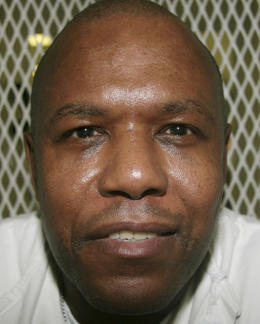
Larry Wayne Wooten
Murderer Russell Ellwood
Murderer · USA · 1991
Russell Ellwood was a former taxi driver. Authorities suspected him of killing…
20 victims
Russell Ellwood
Murderer · USA · 1991
Russell Ellwood was a former taxi driver. Authorities suspected him of killing…
20 victims
 Robert Martines Perez
Murderer · USA · 1994
Name: Robert Martines Perez · Other name used in proceedings: Robert Martinez P…
15 victims
Robert Martines Perez
Murderer · USA · 1994
Name: Robert Martines Perez · Other name used in proceedings: Robert Martinez P…
15 victims
 Billy Frank Vickers
Murderer · USA · 1993
Billy Frank Vickers Vickers was executed by lethal injection in Texas on Januar…
14 victims
Billy Frank Vickers
Murderer · USA · 1993
Billy Frank Vickers Vickers was executed by lethal injection in Texas on Januar…
14 victims
 Pascal Payet
Murderer · France · 1997
Pascal Payet was born 7 July 1963. He was a French criminal. Payet spent his ch…
1 victim
Pascal Payet
Murderer · France · 1997
Pascal Payet was born 7 July 1963. He was a French criminal. Payet spent his ch…
1 victim
 James Michael Isom
Murderer · USA
James Michael Isom was an Oregon death row inmate. He died in prison in 1997. I…
1 victim
James Michael Isom
Murderer · USA
James Michael Isom was an Oregon death row inmate. He died in prison in 1997. I…
1 victim
 Amy Archer-Gilligan
Serial killer · USA · 1908
Amy Archer-Gilligan (1868–1962) was a serial killer in Windsor and Connecticut…
5 victims
Amy Archer-Gilligan
Serial killer · USA · 1908
Amy Archer-Gilligan (1868–1962) was a serial killer in Windsor and Connecticut…
5 victims
 Douglas Crabbe
Mass murderer · Australia · 1983
Douglas John Edwin Crabbe (b. 1948) was sentenced to five consecutive terms of…
5 victims
Douglas Crabbe
Mass murderer · Australia · 1983
Douglas John Edwin Crabbe (b. 1948) was sentenced to five consecutive terms of…
5 victims
 Bryan Hower
Murderer · USA · 2010
Bryan Hower was charged in the death of his wife, Bonnie Hower. Bryan Hower’s d…
1 victim
Bryan Hower
Murderer · USA · 2010
Bryan Hower was charged in the death of his wife, Bonnie Hower. Bryan Hower’s d…
1 victim
- Gender
- male
- Country
- USA
- Location
- Lamar County, Texas, USA
- Date of birth
- December 10, 1958
- Age at first offence
- 38
- Characteristics
- drugs
- Victim profile
- Grady Alexander, 80 and his wife Bessie, 86
- Method of murder
- St abbing with knife
- Date(s) of murder
- September 3, 1996
- Years active
- 1996
- Date of arrest
- —
- Status
-
Executed
Executed by lethal injection in Texas on October 21, 2010
Case information
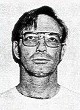
Defendant: Larry Wayne Wooten Status: Executed by lethal injection in Texas on October 21, 2010
Timeline
- September 3, 1996 — Grady Alexander, 80, and his wife Bessie Alexander, 86, were found dead in their home; both had been stabbed several times and their throats had been cut, and both had been hit over the head (Grady with an iron skillet; Bessie with the butt of a gun).
- 07/29/97 — Wooten was indicted for capital murder in Lamar County.
- 05/05/98 — The jury found Wooten guilty of capital murder.
- 05/12/98 — After a separate penalty hearing, Wooten was sentenced to death.
- 11/08/99 — Wooten filed an application for state writ of habeas corpus.
- 01/09/02 — The Texas Court of Criminal Appeals affirmed Wooten’s verdict and sentence.
- 04/03/02 — Texas Court of Criminal Appeals denied habeas relief in an unpublished order.
- 10/14/02 — The Texas Supreme Court denied Wooten’s petition for certiorari review.
- 10/02/03 — Wooten filed second application for state writ of habeas corpus, alleging retardation.
- 01/21/04 — Texas Court of Criminal Appeals remanded Atkins claim back to trial court.
- 04/12/06 — Wooten’s Atkins claim was denied.
- 04/12/06 — Wooten filed his federal habeas corpus petition in a U.S. district court.
- 10/18/07 — The district court denied relief.
- 11/07/07 — Wooten appealed to the United States Court of Appeals for the Fifth Circuit.
- 03/02/10 — The Fifth Circuit affirmed the federal district court’s denial of habeas relief.
- 06/28/10 — The trial court signed the order setting Wooten’s execution date for October 21, 2010.
- 07/12/10 — Wooten filed a petition for certiorari review in the United States Supreme Court.
- 10/04/10 — The Supreme Court denied Wooten’s petition for certiorari review.
- October 21, 2010 — Wooten was executed by lethal injection in Texas.
Background
Grady Alexander and his wife Bessie Alexander lived a quiet life and depended on others for help at home and on errands. Wooten was among those people who helped the Alexanders manage their day-to-day life. During trial testimony, evidence established that Wooten knew the Alexanders and had been invited into their home. At one time, Wooten had been married to their niece, Ruby Black, who explained that Wooten would do odd jobs for the Alexanders.
The offence
On September 3, 1996, Grady Alexander (80) and Bessie Alexander (86) were found dead in their home.
- They each had been stabbed several times.
- Their throats had been cut.
- Grady had been hit over the head with an iron skillet.
- Bessie had been hit in the head with the butt of a gun.
- Both Grady and Bessie had defensive wounds.
Investigation
A pair of Wooten’s pants were found covered with blood from Grady Alexander.
DNA evidence, including blood found on the Alexanders’ kitchen floor and matched to Wooten, helped convict him. Police recovered Wooten’s overalls stained with Grady Alexander’s blood after testimony about what Wooten was wearing after the murders.
Trial
Evidence and testimony
The state presented evidence that Wooten knew the Alexanders and had been invited into their home. Trial testimony included that Ruby Black said Wooten had been married to her at one time and that Wooten did odd jobs for the Alexanders.
Ruby Black testified about the Alexanders having cash in their home and about Wooten’s cocaine use. She told the jury that the Alexanders always had a large sum of cash at home. She also testified that Wooten would sometimes spend his entire paycheck on cocaine and that she had loaned him money that he turned around and spent on cocaine. Ruby told the jury that she stopped loaning Wooten money and encouraged the Alexanders not to loan him any more money.
The state also presented testimony from a woman that Wooten went on a cocaine binge with her on the Sunday night after the murders. She testified that when she encountered Wooten, he was wearing blue-striped overalls and that he took a “wad of money” out of the front pocket of those overalls. She testified that there was blood on the overalls and that Wooten had blood on his hands and fingernails.
Penalty phase evidence
Wooten’s first conviction occurred in 1982 when he pled guilty to a burglary of a habitation with intent to rape a seventy-three-year-old woman in her Paris, TX home. Police found Wooten in the elderly woman’s bed, asleep and naked. His driver’s license was found in his wallet, allowing the police to identify him. For this crime, Wooten was placed on seven years probation.
On December 2, 1984, Wooten was arrested after fleeing from police, having tried to break into the same elderly woman’s home. An officer found that Wooten had a martial arts knife. A search revealed that the telephone line had been cut; a window screen had been cut up and pulled off; and the window behind it had been broken. The back door had been pulled off its hinges. While being booked into jail, Wooten threatened to kill the arresting officers when he was released. Wooten pled guilty and was sentenced to ten years probation.
Wooten’s probation was revoked in 1991 when he pleaded guilty to robbery; he was sentenced to 10 years in prison.
The state also offered evidence that Wooten could be violent in his relationships with women.
In the penalty phase, the state presented testimony from a forensic psychiatrist who said the Alexander murders were particularly disturbing because of Wooten’s wholesale failure to express remorse, the “overkill,” and the fact that Wooten knew his victims. The psychiatrist also found Wooten’s history of “impulsive criminality” to be disturbing and that Wooten “hasn’t mellowed out with age.” The psychiatrist concluded that, based on Wooten’s chronic substance abuse problems and his lack of apparent desire to stop using cocaine, Wooten would indeed be a future danger to society, both in prison and in the free world.
Appeals
Direct review and post-conviction proceedings
- Wooten’s case and subsequent habeas petition worked their way through the state court.
- Wooten filed an application for state writ of habeas corpus on 11/08/99.
- Wooten filed a second application for state writ of habeas corpus on 10/02/03, alleging retardation.
Federal habeas corpus and Fifth Circuit
Wooten filed his federal habeas corpus petition on 04/12/06 in a U.S. district court.
The Fifth Circuit’s decision was Wooten v. Thaler, 598 F.3d 215 (5th Cir. 2010).
The Fifth Circuit described the due process issue as stemming from the prosecution’s “unintended delay in producing the full weight” of its DNA evidence, which Wooten argued led him to reject a plea offer and to prepare his defense based on an apparent unreliability of the DNA evidence.
The opinion described that, after a preliminary DNA report to defense counsel in May 1997 and further accounting in January 1998, defense experts believed the prosecution’s DNA evidence unreliable. The opinion described that Wooten rejected a plea deal after that belief, with the plea deal offering a life sentence if he pled guilty or leaving him eligible for the death penalty if he did not.
The opinion further described that once jury selection was under way, additional data emerged from the DNA laboratory that the laboratory had unintentionally failed to turn over all available DNA evidence, and that the late-coming data made the DNA evidence significantly more reliable than initially apparent. The opinion described that defense counsel moved for a continuance, the trial court denied the motion, jury selection ended, and trial began; later the district court granted a twelve-day continuance to permit a full analysis by defense experts; and the jury found Wooten guilty and sentenced him to death.
The Fifth Circuit held that Wooten was not deprived of his due process rights by the unintended delay in producing the full weight of the DNA evidence, and it affirmed the district court’s denial of Wooten’s habeas petition.
Sentencing
Wooten was indicted for capital murder in Lamar County on 07/29/97. The jury found Wooten guilty of capital murder on 05/05/98. After a separate penalty hearing, Wooten was sentenced to death on 05/12/98. On 01/09/02, the Texas Court of Criminal Appeals affirmed Wooten’s verdict and sentence.
Outcome
Execution and final statement
Wooten’s execution occurred on October 21, 2010. He was executed by lethal injection in Texas.
Wooten’s last words were:
“Warden, warden, warden? Where is the warden at? I have nothing to say so you can send me home to my heavenly father.”
Wooten was pronounced dead at 6:21 pm. Another account described his brief final statement as:
“I don't have nothing to say. You can go ahead and send me home to my heavenly father,”
He requested a last meal of 10 fried chicken legs, 10 chicken wings, mashed potatoes, greens, rice pudding, tea (very sweet) and banana pudding.
No witnesses were present for the victims’ family. Wooten’s two sisters and three friends witnessed the execution, and another account described Wooten’s two sisters crying and praying during the execution.
Between 10 to 15 anti-death penalty protesters stood about a block away outside the prison where the execution chamber was housed, with one woman using a bullhorn to say, “The state of Texas has committed another murder.”
Clemency and Supreme Court
Texas Attorney General Greg Abbott scheduled the execution after 6 p.m. on October 21, 2010.
The Texas Board of Pardons and Paroles rejected a plea to commute Wooten’s sentence to life in prison on Tuesday (as described in the account). The U.S. Supreme Court denied Wooten’s petition for certiorari review on 10/04/10.
Other details
Victims and injuries
The Alexanders were beaten with a cast-iron skillet and a pistol, stabbed, and had their throats slit and heads almost severed. Both victims also had defensive wounds.
Motive and cash
Prosecutors said Wooten robbed the couple, taking their savings of $500 so he could buy cocaine. Another account described the motive as to rob the couple of less than $600 in cash.
Prior conduct and violence
A former Lamar County district attorney, Kerye Ashmore, called Wooten a “scary guy” with a history of violence, including a prior conviction for assaulting an elderly woman after breaking into her home. Ashmore also said Wooten was a person of interest in the murder of another elderly woman in Paris who was killed a couple of weeks before the Alexanders.
Ashmore said:
“If you are going to have a death penalty, this is the kind of people you want to have the death penalty for,”
Mental impairment claim
In prior appeals, Wooten had claimed he should not be executed because he is mentally retarded. Tests put his IQ between 77 and 84, and the accounts stated that an IQ of 70 is considered the threshold for mental impairment.
Address and correspondence materials
A “SMILE 13.07.2004” message included the following biographical statements attributed to Wooten:
“Hallo, how are you doing on this wonderful day?
My name is Mr. Larry W. Wooten.
My age is 45 and birthday is December 10, 1958.
I am a black man my height is 5 feet 5 inch tall.
I am on death row.
I have been on the row for 6 years.
I would like to find a pen pal.
Would like to write to women colour do not matter.
I do not have family. Help me in here.
I hope I could find someone to talk to.
I don’t want to write to a woman that is already writing to someone on death row.
I am a down to earth person, open minded, love to love and would would love to love a under woman.
I am a Christian.
Thank you Larry W. Wooten #999269
Wooten v. Thaler , 598 F.3d 215 (5th Cir. 2010). (Habeas)
Background: Following affirmance of his capital murder conviction and imposition of a death sentence, and the denial of his petition for state habeas relief, 2006 WL 950381, state inmate petitioned in federal court for writ of habeas corpus.
…”
The same entry included additional text beginning “August, 2004” describing being confined within the “halls of death” and mentioning compassion, love and friendship, and requesting correspondence:
“Once they are, they’ll understand why and how day after day and year after year I open my eyes in a steal and concrete world and smile. Something that may appear so simple is what has kept me going while facing great adversity. And it’s what I would love to share with the world. I would greatly love if you, whoever you are, would allow us to share this small but great aspect of life. This experience would be cherishable for the both of us… do you agree? If so, take a moment to write me and allow us the opportunity of our lifetime… Thank you and be blessed! Mr. Larry W. Wooten #999269”
Spotted an error, or have more information about this case?