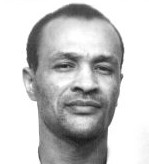
Herman Clark
Murderer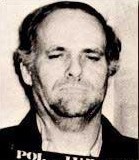 Ervil LeBaron
Murderer · USA · 1972
Ervil Morrell LeBaron (1925 to August 16, 1981) was the leader of a polygamous…
35 victims
Ervil LeBaron
Murderer · USA · 1972
Ervil Morrell LeBaron (1925 to August 16, 1981) was the leader of a polygamous…
35 victims
 Brian Kevin Rosenfeld
Murderer · USA · 1985
Brian Kevin Rosenfeld Brian Kevin Rosenfeld was sentenced to three concurrent l…
23 victims
Brian Kevin Rosenfeld
Murderer · USA · 1985
Brian Kevin Rosenfeld Brian Kevin Rosenfeld was sentenced to three concurrent l…
23 victims
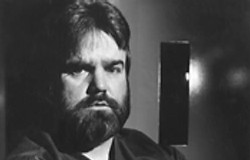 Marvin Gray
Murderer · USA · 1975
Marvin Gray was convicted killer who claimed responsibility for 23 slayings and…
23 victims
Marvin Gray
Murderer · USA · 1975
Marvin Gray was convicted killer who claimed responsibility for 23 slayings and…
23 victims
 Yahweh ben Yahweh
Murderer · USA · 1980
Yahweh ben Yahweh was born and legally named Hulon Mitchell Jr. (October 27, 19…
23 victims
Yahweh ben Yahweh
Murderer · USA · 1980
Yahweh ben Yahweh was born and legally named Hulon Mitchell Jr. (October 27, 19…
23 victims
 Russell Ellwood
Murderer · USA · 1991
Russell Ellwood was a former taxi driver. Authorities suspected him of killing…
20 victims
Russell Ellwood
Murderer · USA · 1991
Russell Ellwood was a former taxi driver. Authorities suspected him of killing…
20 victims
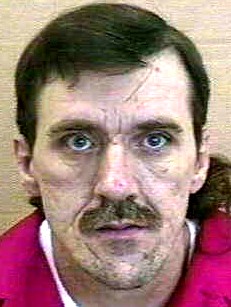 John Hardy Rose
Murderer · USA · 1991
John Hardy Rose was convicted of capital murder for the murder of Patricia Stew…
1 victim
John Hardy Rose
Murderer · USA · 1991
John Hardy Rose was convicted of capital murder for the murder of Patricia Stew…
1 victim
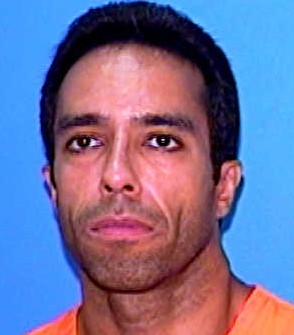 Daniel Lugo
Murderer · USA · 1995
Daniel Lugo DC# M16321 DOB: 04/06/63 Eleventh Judicial Circuit, Dade County, Ca…
2 victims
Daniel Lugo
Murderer · USA · 1995
Daniel Lugo DC# M16321 DOB: 04/06/63 Eleventh Judicial Circuit, Dade County, Ca…
2 victims
 Sinedu Tadesse
Murderer · USA · 1995
Sinedu Tadesse (1974 - May 28, 1995) was a junior at Harvard University when sh…
1 victim
Sinedu Tadesse
Murderer · USA · 1995
Sinedu Tadesse (1974 - May 28, 1995) was a junior at Harvard University when sh…
1 victim
 Brandy Holmes
Murderer · USA · 2003
Brandy Aileen Holmes was convicted of first-degree murder and sentenced to deat…
1 victim
Brandy Holmes
Murderer · USA · 2003
Brandy Aileen Holmes was convicted of first-degree murder and sentenced to deat…
1 victim
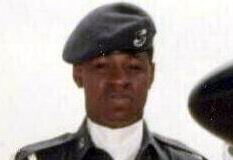 Dwight Loving
Murderer · USA · 1988
Dwight J. Loving was a private at Fort Hood, Texas at the time of the murders.…
2 victims
Dwight Loving
Murderer · USA · 1988
Dwight J. Loving was a private at Fort Hood, Texas at the time of the murders.…
2 victims
- Gender
- male
- Country
- USA
- Location
- Harris County, Texas, USA
- Date of birth
- J uly 26, 1946
- Age at first offence
- 35
- Characteristics
- serial rapist, rape
- Victim profile
- Joseph Edward McClain, 36 (bartender)
- Method of murder
- Shooting
- Date(s) of murder
- April 4, 1981
- Years active
- 1981
- Date of arrest
- —
- Status
-
Executed
Executed by lethal injection in Texas on December 6, 1994
Case record: Herman Clark
Background
Herman Robert Charles Clark Jr. was convicted in connection with a capital murder case involving an armed home invasion and attempted rape.
Clark was born in Childress and was raised in Fort Worth. He competed two years of college. At the time of his arrest, he was working in a Houston plastics products company.
Clark had a criminal history that included burglaries and robberies, and he was on parole for those other offenses when he shot Joseph McClain. At the time of his arrest, Clark was wanted for the rape of 33 women. After his arrest, Clark confessed to the police that he had actually raped and attacked more than 100 women.
The offence
At approximately 3:00 a.m. on April 4, 1981, Clark, armed with a gun, forcibly entered the Houston apartment of Joseph Edward McClain. McClain and his girlfriend were asleep in one bedroom while the girlfriend's son slept in another.
After a brief reconnaissance of the dwelling, Clark awakened the three occupants and robbed them at gunpoint. Clark confined McClain and the child in a bathroom. He brought the woman into the child's bedroom and prepared to rape her.
Clark inadvertently left the gun within the woman's reach as he searched the kitchen for matches to light a marihuana cigarette. She grabbed the gun and cried out for help. Clark rushed back to the son's bedroom as McClain emerged from the bathroom.
In the ensuing struggle, Clark shot McClain and shot the woman. McClain died. The woman was wounded in the arm but survived and later assisted police in the identification of Clark.
Clark pleaded not guilty to a grand jury indictment charging capital murder in the course of committing and attempting to commit robbery, burglary, and aggravated rape. A jury found him guilty.
During the penalty phase, the state introduced evidence that Clark, both before and after killing McClain, had committed three other burglaries involving rape and sodomy of female victims.
Clark took the stand against his attorneys' advice and admitted to those offenses and to "60 to 70 incidents, probably upward to 100" others. He attributed these incidents to mental illness, including post-traumatic stress disorder resulting from prior incarceration. He also testified that, during childhood, he suffered sexual assaults at his father's hands and said he had to "hit the streets" to support his family after his parents' divorce.
Clark also made a confession after police apprehended him and against the advice of his attorneys. He admitted a preconceived plan to burglarize the McClain apartment and rape any female he might encounter there. He disclaimed any intent to kill, asserting that he intended only to wound McClain to facilitate escape.
Investigation
After police apprehended Clark, he made a full confession against the advice of his attorneys. In that confession, he admitted a preconceived plan to burglarize the McClain apartment and rape any female he might encounter there, and he asserted he intended only to wound McClain to facilitate escape.
Trial
Clark was tried on a grand jury indictment charging capital murder in the course of committing and attempting to commit robbery, burglary, and aggravated rape.
A jury found Clark guilty.
During the penalty phase, the trial court required the jury to answer special issues under Tex.Code Crim.Proc. art. 37.071(b), including:
- whether the conduct of the defendant that caused the death of the deceased was committed deliberately and with the reasonable expectation that the death of the deceased or another would result;
- whether there is a probability that the defendant would commit criminal acts of violence that would constitute a continuing threat to society; and
- whether the conduct of the defendant in killing the deceased was unreasonable in response to the provocation, if any, by the deceased.
The jury answered affirmatively the special issues set forth in Tex.Code Crim.Proc. art. 37.071(b), requiring the trial court to impose a sentence of death by lethal injection.
Clark was on death row for 13 years before he was put to death by lethal injection on December 6, 1994.
Sentencing
The jury answered affirmatively the special issues under Tex.Code Crim.Proc. art. 37.071(b), and the trial court imposed a sentence of death by lethal injection.
During the penalty phase, the state introduced evidence of three other burglaries involving rape and sodomy of female victims committed by Clark both before and after killing McClain.
Appeals
Direct appeal
Clark claimed that the Texas capital sentencing scheme unconstitutionally failed to require jury consideration of all mitigating evidence, an argument later recognized as a Penry claim, and he asserted 11 other points of error.
The Texas Court of Criminal Appeals affirmed the conviction and sentence.
The Supreme Court denied Clark's petition for certiorari.
Federal habeas proceedings and Strickland issues
After rejection of an initial state habeas corpus petition, Clark filed simultaneous state and federal applications for postconviction relief. Both petitions alleged ineffective assistance of counsel in five respects:
- failure to conduct a proper investigation of his background and mental health;
- presentation at the penalty phase of unfairly inflammatory testimony and closing argument regarding other crimes he committed amounting to victim impact statements;
- improper dismissal for cause of prospective jurors due to their views on the death penalty;
- underrepresentation of blacks and Hispanics in the venire violating the sixth amendment's fair cross-section requirement; and
- vagueness in the Texas capital sentencing statute, and unconstitutionality of the statute as applied to him.
Clark's federal petition further alleged:
- a Batson violation at trial; and
- insanity precluding his execution.
The district court dismissed Clark's federal petition without prejudice for failure to exhaust state remedies. The Texas Court of Criminal Appeals later adopted trial-court findings of fact and conclusions of law rejecting Clark's claims.
Clark then filed the instant petition under 28 U.S.C. Sec. 2254, restating the claims asserted in his first federal application and adding an ineffective assistance of counsel claim arising from his trial attorney's failure to challenge racially-motivated use of peremptory strikes.
The district court concluded that because Clark had presented evidence at the penalty phase with mitigating force beyond the scope of the Texas special issues, Penry required vacatur of his death sentence, but denied relief without an evidentiary hearing on the 14 other grounds asserted in his petition.
Both parties appealed. The United States Court of Appeals for the Fifth Circuit addressed a Penry claim and ineffective assistance of counsel claims.
Penry claim analysis
The Fifth Circuit described Penry v. Lynaugh as holding that a death sentence was unconstitutional because the jury could not give mitigating effect to Penry's mental retardation and history of child abuse without a supplemental jury instruction.
The court noted that Clark contended his jury was unable to give mitigating effect to the sexual abuse he suffered as a young child.
The court compared Clark's evidence to evidence in Motley v. Collins, where the court found the jury was able to give mitigating effect to evidence of child abuse when it indicated the possibility of rehabilitation and held the claim was barred by Teague.
The Fifth Circuit concluded that Clark's evidence similarly pointed to the possibility of rehabilitation. The court further described that Clark expressed confidence that treatment would alleviate his psychological "torments."
The Fifth Circuit concluded that the district court erred in granting habeas relief on the Penry claim and held that it did not grant relief under the limited proposition that a jury must be able to consider all mitigating evidence.
Ineffective assistance of counsel analysis
The Fifth Circuit addressed ineffective assistance of counsel under Strickland v. Washington, requiring deficient performance and prejudice.
The Fifth Circuit stated that the district court need not hold an evidentiary hearing to resolve ineffective assistance claims where the petitioner failed to allege facts that would admit of relief or where the state court record sufficed.
It further described a presumption of correctness for state court fact-findings under 28 U.S.C. Sec. 2254(d) and the standard for overcoming that presumption.
The Fifth Circuit concluded that there was no error in rejecting Clark's ineffective assistance claims without an evidentiary hearing.
It addressed specific ineffective assistance allegations:
Failure to investigate mental health: the state court found Clark's attorneys did not request additional psychiatric evaluation because an examination by Dr. James Hunter at Rusk State Hospital appeared thorough, counsel had no reason to believe another psychiatrist would reach a different conclusion, and Dr. Hunter's evaluation aligned with counsel's observations; the court also found Clark specifically requested that counsel refrain from involving his family. The Fifth Circuit concluded that Clark failed to show inadequacy in those fact-findings and concluded the trial attorneys did not perform deficiently in failing to seek additional medical opinions or in failing to interview family members regarding sanity.
Voir dire: Clark asserted failure to inquire on voir dire into racial bias of venire members constituted ineffective assistance. The Fifth Circuit doubted whether counsel's failure amounted to deficient performance, but concluded Clark failed to allege prejudice—that racial bias tainted the petit jury actually impaneled or that there was a reasonable probability of a different result.
Absence of cohesive strategy: the Texas state courts found trial counsel pursued a strategy challenging voluntariness of confessions and consent to search, or alternatively establishing absence of intent to kill. The state courts also found that if the jury convicted Clark of capital murder, counsel planned to establish in the penalty phase that the killing was in response to provocation by eliciting a "no" answer to the third special issue. The Fifth Circuit concluded there was no defect shown in those findings, and it held the strategy was not deficient given the inculpatory nature of Clark's confessions and the strong presumption of counsel's adequacy.
Closing argument at penalty phase: the Fifth Circuit rejected the claim that defense counsel's closing arguments invited the jury to answer the first two special issues affirmatively, concluding counsel's arguments were consistent with the defense trial strategy.
Failure to object to peremptory strikes: the Fifth Circuit held Clark's trial took place in 1982, when Swain v. Alabama governed such claims rather than Batson, and because Clark did not allege discriminatory use of peremptory strikes in prior cases by Harris County prosecuting authorities, he failed to allege prejudice flowing from counsel's failure to raise a Swain objection. It further held that because Batson effected a clear break with preexisting precedent, failure to urge its standards in a pre-1986 case did not fall short of reasonable professional assistance.
Failure to cross-examine witnesses and to object to admission of extraneous offenses at penalty phase: the prosecutor called some of Clark's victims to testify about other robberies and rapes. The Fifth Circuit noted that defense counsel conducted only minimal cross-examination but that Clark admitted to committing the offenses, eliminating prejudice from the alleged deficiency. It also noted counsel objected to extraneous offense testimony when the first witness was called and that the objection was overruled. The Fifth Circuit concluded that the objection would have been meritless because unadjudicated extraneous offenses were generally admissible at the penalty phase of a capital murder trial, and it held that failure to raise meritless objections was not ineffective lawyering.
Outcome of the Fifth Circuit appeal
The Fifth Circuit affirmed in part, reversed in part, and remanded with instructions to deny the writ of habeas corpus. The judgment of the district court was affirmed in part, reversed in part, and remanded with instructions to deny the petition for a writ of habeas corpus.
Outcome
Clark was executed by lethal injection on December 6, 1994 in Texas.
Other details
Clark's final statement included the following:
"I told the daughter not to come. Discontinue; be quiet, please. Specifically, I want to say that the bad evil man I was when I came to death row 13 years ago is no more – by the power of God; Jesus Christ; God Almighty; Holy Spirit, he has transformed me as a new creature of Christ. I know that I am a Christ child and that my Lord will welcome me into His arms. Jesus Christ is the Lord of Lords and the King of Kings. I love all of you, those I can and can’t see. With the love of Christ, my love for you is secure and I love you purely and wholeheartedly in the name of the Almighty God. Herman Clark Jr."
Clark was 48 years old when he was executed.
The case also included United States Court of Appeals for the Fifth Circuit proceedings with docket number No. 91-2026, including the date April 14, 1994. The opinion included a description that the State of Texas appealed a grant of habeas corpus relief vacating the death sentence due to a violation of Penry v. Lynaugh, and that Clark cross-appealed challenging the denial of postconviction relief on 14 other grounds.
Spotted an error, or have more information about this case?