James B. Clark Jr.
Murderer Brian Kevin Rosenfeld
Murderer · USA · 1985
Brian Kevin Rosenfeld Brian Kevin Rosenfeld was sentenced to three concurrent l…
23 victims
Brian Kevin Rosenfeld
Murderer · USA · 1985
Brian Kevin Rosenfeld Brian Kevin Rosenfeld was sentenced to three concurrent l…
23 victims
 Russell Ellwood
Murderer · USA · 1991
Russell Ellwood was a former taxi driver. Authorities suspected him of killing…
20 victims
Russell Ellwood
Murderer · USA · 1991
Russell Ellwood was a former taxi driver. Authorities suspected him of killing…
20 victims
 Robert Martines Perez
Murderer · USA · 1994
Name: Robert Martines Perez · Other name used in proceedings: Robert Martinez P…
15 victims
Robert Martines Perez
Murderer · USA · 1994
Name: Robert Martines Perez · Other name used in proceedings: Robert Martinez P…
15 victims
 Billy Frank Vickers
Murderer · USA · 1993
Billy Frank Vickers Vickers was executed by lethal injection in Texas on Januar…
14 victims
Billy Frank Vickers
Murderer · USA · 1993
Billy Frank Vickers Vickers was executed by lethal injection in Texas on Januar…
14 victims
 Elena Kiejliches
Murderer · USA · 2000
Defendant: Elena Kiejliches (Russian émigré) · Victim: Borys Kiejliches (also d…
1 victim
Elena Kiejliches
Murderer · USA · 2000
Defendant: Elena Kiejliches (Russian émigré) · Victim: Borys Kiejliches (also d…
1 victim
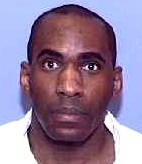 Kerry Dimart Allen
Murderer · USA · 2000
Kerry Dimart Allen was convicted of capital murder and sentenced to death. He a…
1 victim
Kerry Dimart Allen
Murderer · USA · 2000
Kerry Dimart Allen was convicted of capital murder and sentenced to death. He a…
1 victim
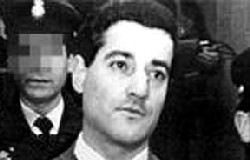 José Antonio Rodríguez Vega
Serial killer · Spain · 1987
José Antonio Rodríguez Vega was a Spanish serial killer nicknamed El Mataviejas…
16 victims
José Antonio Rodríguez Vega
Serial killer · Spain · 1987
José Antonio Rodríguez Vega was a Spanish serial killer nicknamed El Mataviejas…
16 victims
 Wade Frankum
Mass murderer · Australia · 1991
Wade Frankum Committed suicide by shooting himself the same day; in 1991 Wade F…
7 victims
Wade Frankum
Mass murderer · Australia · 1991
Wade Frankum Committed suicide by shooting himself the same day; in 1991 Wade F…
7 victims
- Gender
- male
- Country
- USA
- Location
- New Castle County, Delaware, USA
- Date of birth
- February 8, 1957
- Age at first offence
- 37
- Characteristics
- parricide, to collect insurance money
- Victim profile
- James B. Clark Sr., 72, and Elizabeth Clark, 71 (his adoptive parents)
- Method of murder
- Shooting
- Date(s) of murder
- May 22, 1994
- Years active
- 1994
- Date of arrest
- Several days later
- Status
-
Executed
Executed by lethal injection on April 19, 1996
Case record: James B. Clark Jr.
Timeline
- February 8, 1957 — James B. Clark Jr. was born.
- Age four months — Clark was adopted by James and Elizabeth Clark Sr.
- 1965 — Clark entered a resident psychiatric treatment program in Maryland after attacking a child and cutting his face severely enough to require hospitalization.
- 1968 — Clark returned home but was unable to maintain acceptable behavior.
- December 1969 — Clark was admitted to the Governor Bacon Health Center.
- July 1971 — Clark was returned to his adoptive parents.
- September 1971 — Clark returned to public school.
- March 5, 1973 — At age 16, Clark abducted a three-year-old girl from her backyard.
- September 16, 1977 — Clark was sentenced to 30 years in prison.
- 1977 — Clark pled guilty to assault third degree after attacking a correctional officer.
- April 22, 1994 — Clark was released from prison.
- May 22, 1994 — Clark killed his adoptive parents, James and Elizabeth.
- approximately 9:30 p.m. (May 22, 1994) — Clark called the police and reported the homicides.
- June 13, 1994 — Clark was charged with two counts each of first degree murder, possession of a deadly weapon during the commission of a felony, and possession of a deadly weapon by a person prohibited.
- June 23, 1994 — Clark wrote a letter to the prosecutor.
- September 8, 1994 — The Superior Court held a hearing to determine whether Clark was competent to enter pleas of guilty to all charges.
- September 9, 1994 — Clark entered guilty pleas to all counts of the indictment.
- December 5 through December 15, 1994 — The Superior Court conducted a non-jury penalty hearing.
- January 5, 1995 — The Superior Court issued an opinion sentencing Clark to death.
- January 11, 1995 — The Supreme Court of Delaware docketed an automatic appeal and issued a stay of execution.
- January 24, 1995 — Clark’s plenary appeal was consolidated with the automatic appeal.
- April 21, 1995 — The Superior Court conducted an evidentiary hearing on Clark’s waiver of his appellate rights.
- May 3, 1995 — Clark’s direct appeal was dismissed.
- September 29, 1995 — The Superior Court issued supplemental findings after remand.
- February 29, 1986 — Supreme Court of Delaware case reference: Clark v. State (this appellate reference appears in the provided material).
- April 19, 1996 — Clark was executed by lethal injection.
Background
James B. Clark Jr. was born February 8, 1957. He was a resident of the State of Delaware. He was adopted by Elizabeth and James B. Clark Sr. The identity of his birth parents was unknown.
By the time Clark was two years old, he developed a pattern of pushing, slapping and striking other children frequently. He was expelled from two pre-kindergarten programs due to his behavior and began receiving psychotherapy and medication at age five. In 1965, after Clark attacked a child and cut his face severely enough to require hospitalization, he entered a resident psychiatric treatment program in Maryland, where he remained for three years.
Clark returned home in 1968 but was unable to maintain acceptable behavior. In December 1969, after being expelled from school again, he was admitted to the Governor Bacon Health Center and received residential treatment for the next one and one-half years. He was returned to his adoptive parents in July 1971. The Governor Bacon Health Center described Clark as “moderately improved” following a diagnosis of passive aggressive personality disorder and schizoid personality.
Clark returned to public school in September 1971 and completed the eighth grade despite poor grades and serious behavior problems.
On March 5, 1973, at the age of 16, Clark abducted a three-year-old girl from her backyard. He brought the child to a nearby woods where he beat and choked her. Clark was found guilty of kidnapping and assault with intent to commit murder, but that conviction was reversed (Clark v. State, Del.Supr., 344 A.2d 231 (1975)). After remand, Clark entered a Robinson plea to abduction of a child under twelve years of age and assault with intent to commit murder.
On September 16, 1977, Clark was sentenced to 30 years in prison, with credit given for four and one-half years previously served. Clark remained in prison until April 22, 1994.
During his imprisonment, Clark’s mental and emotional disorders continued to define his existence. In 1977, Clark pled guilty to assault third degree after attacking a correctional officer. His prison record included fights against other inmates, assaults upon correctional officers, threats made against correctional officers, possession of contraband, and disobeying orders. The record described the prison record as “replete with fights against other inmates, assaults upon correctional officers, threats made against correctional officers, possession of contraband, disobeying orders, etc.” State v. Clark, Del.Super., Cr.A. Nos. IN94-06-0543-0548, Barron, J. (January 5, 1995) (Findings After Penalty Hearing at 35-36).
Clark was written up more than 100 times for various rule infractions, including multiple suicide attempts. The material stated that Clark earned very few good time credit days and failed to take advantage of rehabilitative programs while incarcerated.
When Clark was released from prison on April 22, 1994, he returned to his adoptive parents’ home. He had no job skills and no drivers license. A correctional counselor stated that Clark was generally unprepared to return to society. James and Elizabeth were apprehensive about Clark’s return; they were both in their 70s and their past familial relationship with Clark had been less than successful. Nonetheless, James and Elizabeth took Clark in and tried to be supportive.
The offence
Clark confessed and pled guilty to the unprovoked, premeditated murder of his adoptive parents, James B. Clark Sr. and Elizabeth C. Clark.
The murders took place on May 22, 1994. The material stated that James and Elizabeth were both in their 70s at the time of the killings. The material also provided that James was 72 and Elizabeth was 71 based on their drivers licenses.
Clark shot his father, James B. Clark Sr., twice in the head and twice in the chest as James sat in a chair in their home. Clark then went upstairs and shot his mother, Elizabeth Clark, in the head as she lay in bed. The material described the deaths of James and Elizabeth occurring in the early afternoon on Sunday, May 22, 1994.
Clark called the police and reported the homicides at approximately 9:30 that evening. When police arrived, they found James in the garage and Elizabeth on her bed in the master bedroom. Clark was bleeding from the top of his head and was taken to the hospital for treatment.
In interviews at the hospital, Clark said he came home at about 7:30 p.m. and discovered James’ body in the garage. Clark claimed he was knocked unconscious while bending over his father’s body. After regaining consciousness, Clark said he washed blood from his face, then found his mother’s body in the bedroom and called the police.
The material stated that several days later, after police gathered significant additional evidence, Clark was arrested. After being given Miranda warnings on the way to the police station, Clark confessed. He stated that he shot his parents following an argument over Clark’s beer drinking.
Clark explained that he planted evidence to make it look like the murders were precipitated by a burglary. Clark maintained that the murders were not planned.
In a letter Clark wrote to the prosecutor on June 23, 1994, Clark provided a third version of events. In that letter, Clark wrote that he planned the murders and carried them out without any provocation. Clark wrote that James and Elizabeth were both asleep when they were killed. Clark wrote that he used two guns and different brands of ammunition, so that it would look like there had been two killers. Clark also brought hair dressing from prison to plant as evidence. Clark wrote that he committed the murders out of greed.
The Superior Court reached no conclusion as to Clark’s motivation. The material stated that, based upon medical and ballistic evidence, the Superior Court concluded that Clark’s last statement was the most accurate description of how the crimes were committed.
Investigation
Police found James in the garage and Elizabeth on her bed in the master bedroom. Clark was bleeding from the top of his head and was taken to the hospital for treatment after police arrived.
After police had gathered significant additional evidence, Clark was arrested several days later. After Miranda warnings, Clark confessed during transport to the police station. The confession included that Clark shot his parents following an argument over Clark’s beer drinking, and that he planted evidence to make it look like the murders were precipitated by a burglary.
Arrest
Clark was arrested several days after police gathered significant additional evidence.
Trial
Charges
On June 13, 1994, Clark was charged with two counts each of first degree murder, possession of a deadly weapon during the commission of a felony, and possession of a deadly weapon by a person prohibited.
Competency hearing and guilty pleas
On September 8, 1994, the Superior Court held a hearing to determine whether Clark was competent to enter pleas of guilty to all charges. Two psychiatrists testified—one called by the defense and one by the prosecution—that Clark was competent; the Superior Court so concluded based upon the undisputed evidence.
On the following day, Clark entered guilty pleas to all counts of the indictment.
Penalty hearing
The Superior Court conducted a non-jury penalty hearing from December 5 through December 15, 1994.
In an opinion issued on January 5, 1995, the Superior Court analyzed aggravating and mitigating circumstances. The material stated that the Superior Court concluded that three statutory aggravating circumstances had been proven beyond a reasonable doubt and that the aggravating circumstances heavily outweighed the mitigating circumstances. The Superior Court therefore sentenced Clark to death.
Sentencing
Clark received a death sentence following the non-jury penalty hearing.
The Superior Court concluded that three statutory aggravating circumstances had been proven beyond a reasonable doubt:
- Clark was previously convicted of a felony involving the use of, or threat of, force or violence upon another person.
- Clark’s conduct resulted in the deaths of two persons where the deaths were a probable consequence of Clark’s conduct.
- Both victims were over the age of 62 years.
The material stated that there was no dispute as to the existence of the three statutory aggravating circumstances. The material stated that Clark’s 1977 plea agreement established beyond a reasonable doubt that Clark was convicted of a felony involving the use of violence upon another person—assault with the intent to commit murder. The material also stated that Clark’s conduct resulted in the death of two persons because he pled guilty to first degree murder in connection with the shooting deaths of James and Elizabeth. The material further stated that the State established the victims’ ages via their drivers licenses: James was 72 and Elizabeth was 71 at the time of the murders.
Appeals
The Supreme Court of Delaware addressed the death sentence imposed on Clark by the Superior Court and affirmed it.
Procedural history and appellate waiver
The material stated that Clark had not pursued a direct appeal due to an expressed desire to be executed. However, an automatic appeal was docketed pursuant to 11 Del.C. § 4209(g). Clark’s counsel argued that the sentence should be set aside on three grounds: (i) the Superior Court failed to give appropriate consideration to Clark’s early release from prison; (ii) the Superior Court placed undue emphasis on a crime Clark committed 21 years prior to the murders; and (iii) Clark’s sentence was not proportional to sentences imposed for similar crimes.
The material described the following procedural steps:
- On January 11, 1995, the Supreme Court of Delaware docketed an automatic appeal and issued a stay of execution.
- Shortly thereafter, Clark filed a plenary appeal consolidated with the automatic appeal by order dated January 24, 1995.
- Two months later, Clark requested that his direct appeal be dismissed.
- Clark’s counsel filed a motion to remand for an evidentiary hearing to determine whether Clark’s waiver of his appellate rights was knowing and intelligent.
- The motion was granted and the Superior Court conducted an evidentiary hearing on April 21, 1995.
After the evidentiary hearing, the Superior Court made findings adopted and approved by the Supreme Court of Delaware:
- Clark unequivocally stated his desire to abandon his direct appeal.
- At the hearing, Clark appeared mentally alert and responsive; his demeanor matched findings of two psychiatrists, Dr. Stephen Mechanick and Dr. David Raskin, who testified that Clark was competent to enter guilty pleas as of September 8, 1994; there was no evidence calling Clark’s competence into question; and Clark was not under the influence of drugs, medication or alcohol at the April 21, 1995 hearing.
- Clark was fully aware of the consequences of abandoning his direct appeal, including that waiving direct appeal would significantly reduce chances for postconviction relief or other collateral attack on his guilty pleas, penalty hearing or sentence, and that it would make his execution more likely and more likely to take place on an earlier date.
- Clark was not acting under duress, threats from anyone, or improper influence of any kind; his decision to abandon his direct appeal was wholly voluntary.
- Clark’s decision was a deliberate, knowing, intelligent and voluntary waiver of his right to a direct appeal.
By order dated May 3, 1995, Clark’s direct appeal was dismissed.
Supreme Court of Delaware analysis (affirmation)
The material described independent review of the death sentence under 11 Del.C. § 4209(g)(2).
It stated that the Supreme Court concluded that the Superior Court’s decision was affirmed and that the sentence was neither arbitrary nor capricious.
Issue 1: early release from prison
In April 1994, when Clark was released from prison, the material stated that Clark had served 21 years of a 32-year sentence. The material stated that evidence at the penalty hearing indicated Clark did not use those years productively and was ill-equipped to return to society.
The material stated that the Superior Court referenced Clark’s early release and criticized Department of Correction practices with respect to good time credits in a footnote but did not expressly address the weight given to early release as a mitigating or aggravating factor. The Supreme Court remanded to clarify.
After remand, the Superior Court explained that it did not consider Clark’s early release as an aggravating or mitigating factor. The material included the Superior Court’s trial court questioning of relevance, quoting:
“the fortuitous release of James B. Clark, Jr., from prison bears neither on the circumstances or details of the commission of the offense nor on his character and propensities.”
State v. Clark, Del.Super., Cr.A. No. IN94-06-0543-0548, Barron, J. (September 29, 1995) (Supplemental Findings After Remand at p. 7).
The material stated that the Superior Court nevertheless concluded that even if Clark’s early release were considered a mitigating factor, the sentence would remain the same because aggravating factors would still clearly outweigh mitigating circumstances. It quoted:
“would still clearly outweigh the mitigating circumstances by a preponderance of the evidence.”
Id. at p. 9.
The Supreme Court stated it could not agree that the Department of Correction shared blame for Clark’s conduct and that Clark was in full control of his faculties when he planned and carried out the murders. The Supreme Court agreed, however, that early release was a factor that should be considered in sentencing.
The Supreme Court stated that even after considering early release as a mitigating factor, aggravating factors far outweighed mitigating factors. It stated that Clark committed “execution-style murders” only one month after leaving prison. It stated that the victims were Clark’s elderly adoptive parents, the only people who attempted to nurture and support Clark, and that the brutality of the murders and the defenselessness of the victims was compounded by Clark’s prior vicious attack on a three-year-old child. The Supreme Court stated that the Superior Court determined those aggravating factors far outweighed mitigating factors including Clark’s mental disorders, his cooperation with police, his remorse, and his early release. The Supreme Court stated that it found this decision neither arbitrary nor capricious.
Issue 2: weight given to earlier crime and “double counting”
The material stated that the Superior Court considered Clark’s 1973 assault on the three-year-old child as both a statutory and non-statutory aggravating factor. Counsel did not challenge the statutory aggravating factor use of the assault conviction but argued that the circumstances should not have been “double counted” by being given separate weight as a non-statutory aggravating circumstance.
The material stated that the Supreme Court concluded that the facts did not raise the “double counting” issue addressed in Ferguson v. State, Del.Supr., 642 A.2d 772, 781-783 (1994). It explained that in Ferguson a majority held that it was not plain error to permit the jury to weigh robbery and pecuniary gain as separate aggravating circumstances, and that the conceptual validity was acknowledged in a concurring opinion but the concurring justices felt there should not have been “double counting” in that case because the circumstances were redundant.
The material stated this case was distinguishable:
- There was no jury in Clark’s penalty hearing, eliminating the danger the jury may have been confused.
- There was no double counting because there were two different aspects of Clark’s prior crime: the felony involving violence established one statutory aggravating factor, and the circumstances of that crime bore on character and propensities for non-statutory weighing.
The Supreme Court stated that the Superior Court properly considered both aspects and that the “double counting” argument was without merit.
Issue 3: proportionality review
The material stated that proportionality review involved analyzing the “universe” of first degree murder cases that went to penalty hearings where the sentence became final. The Supreme Court stated it considered cases governed by the 1991 amendment to the death penalty statute as directly applicable and most persuasive.
The material stated the Supreme Court noted the difficulty of definitive comparison and cited:
- Pennell v. State, Del.Supr., 604 A.2d 1368, 1376 (1992);
- “Sentencing decisions involve ‘difficult and uniquely human judgments that defy codification and that buil[d] discretion, equity and flexibility into a legal system.’” Wright v. State, Del.Supr., 633 A.2d 329, 342-343 (1993) quoting McCleskey v. Kemp, 481 U.S. 279, 311, 107 S.Ct. 1756, 1777, 95 L.Ed.2d 262 (1987).
It stated that Clark’s crimes bore similarities to other death penalty cases, including:
- Multiple murders frequently resulting in a death sentence, citing Weeks v. State, Lawrie v. State, Red Dog v. State, and Pennell v. State.
- Unprovoked, cold-blooded murders of helpless victims, citing Weeks v. State, Shelton v. State, Lawrie v. State, and Wright v. State.
- Elderly victims, citing Shelton v. State, Outten and Shelton v. State, and Sullivan v. State.
The material stated Clark’s counsel argued that the death sentence was not proportional compared to one other case involving a child who murdered his parents—State v. Cohen, Del.Super., 634 A.2d 380 (1993)—and compared to other murder cases where the defendant suffered from a mental infirmity—Sanders v. State, Del.Supr., 585 A.2d 117 (1990) and State v. Shields, Del.Super., 593 A.2d 986 (1990).
The Supreme Court stated it disagreed, explaining that in Cohen the defendant pled guilty but mentally ill and did not share Clark’s long history of violent criminal behavior. The Supreme Court also stated Sanders and Shields preceded the 1991 amendment to the death penalty statute and had limited value for proportionality analysis.
The Supreme Court stated that although Clark suffered from mental disorders, none of those infirmities affected his ability to distinguish right from wrong or his ability to control his behavior. It stated that Clark planned the killings apparently even before he left prison, that his elderly adoptive parents were resting in their own home when he shot each one in the head, and that the attack was unprovoked followed years of violent behavior in prison and a similar heinous assault on a small child.
After careful review, the Supreme Court stated it was satisfied that the case was substantially similar for proportionality purposes to other post-1991 death penalty cases with multiple killings, elderly victims, and premeditation. It concluded that the death sentence was warranted and not disproportional.
Holding
After reviewing the entire record and issues raised by Clark’s counsel, the Supreme Court affirmed the judgment sentencing Clark to death for the murders of James B. Clark, Sr. and Elizabeth C. Clark. It stated that the matter was remanded to Superior Court for further proceedings and that an order staying execution would terminate upon issuance of the mandate.
Outcome
James B. Clark Jr. was executed by lethal injection on April 19, 1996.
Just before he was executed, Clark yelled to his lawyer, Jerome Capone:
“Hey, Jerry, hey listen, my soul is free, man. I'm in no more pain, you know. Thanks for everything, all right?”
Other details
The material referenced that the deaths prompted public outrage and proposed legislation to curtail unwarranted early release, including eliminating unearned “good time.”
A 1977 letter written by Elizabeth Clark to Clark’s attorney in a previous matter included this statement:
“His first year with us was our happiest time. The rest was downhill all the way.”
Appellant's Appendix, A-66.
The material also referenced that Clark was said to have been expelled from two preschools and to have severely beaten a second-grade classmate, followed by a long period of psychological counseling and special schools. It stated that Clark abducted a 3-year-old girl in 1973, choked and tried to strangle her, and left her for dead, and that for that attack he served 21 years of a 30-year sentence before being released in April 1994.
The material stated that Clark had been jailed for violating probation before the murders and that he confessed within a month, pleaded guilty, and refused to appeal his sentence.

Spotted an error, or have more information about this case?