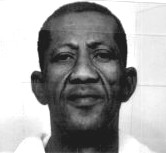
Clydell Coleman
Murderer Brian Kevin Rosenfeld
Murderer · USA · 1985
Brian Kevin Rosenfeld Brian Kevin Rosenfeld was sentenced to three concurrent l…
23 victims
Brian Kevin Rosenfeld
Murderer · USA · 1985
Brian Kevin Rosenfeld Brian Kevin Rosenfeld was sentenced to three concurrent l…
23 victims
 Yahweh ben Yahweh
Murderer · USA · 1980
Yahweh ben Yahweh was born and legally named Hulon Mitchell Jr. (October 27, 19…
23 victims
Yahweh ben Yahweh
Murderer · USA · 1980
Yahweh ben Yahweh was born and legally named Hulon Mitchell Jr. (October 27, 19…
23 victims
 Russell Ellwood
Murderer · USA · 1991
Russell Ellwood was a former taxi driver. Authorities suspected him of killing…
20 victims
Russell Ellwood
Murderer · USA · 1991
Russell Ellwood was a former taxi driver. Authorities suspected him of killing…
20 victims
 Robert Martines Perez
Murderer · USA · 1994
Name: Robert Martines Perez · Other name used in proceedings: Robert Martinez P…
15 victims
Robert Martines Perez
Murderer · USA · 1994
Name: Robert Martines Perez · Other name used in proceedings: Robert Martinez P…
15 victims
 Michael Griffith
Murderer · USA · 1994
Name: Michael Griffith · Status: Executed by lethal injection in Texas on June…
1 victim
Michael Griffith
Murderer · USA · 1994
Name: Michael Griffith · Status: Executed by lethal injection in Texas on June…
1 victim
 Nicole Abusharif
Murderer · USA · 2007
Nicole M. Abusharif was an American woman convicted in the murder of Rebecca Kl…
1 victim
Nicole Abusharif
Murderer · USA · 2007
Nicole M. Abusharif was an American woman convicted in the murder of Rebecca Kl…
1 victim
 Fred Robinson
Murderer · USA · 1987
Fred Robinson and Susan Hill lived together for a number of years. Beginning in…
1 victim
Fred Robinson
Murderer · USA · 1987
Fred Robinson and Susan Hill lived together for a number of years. Beginning in…
1 victim
 Denis Lortie
Murderer · Canada · 1984
Denis Lortie was a Canadian army corporal in the Royal 22 e Régiment of the Can…
3 victims
Denis Lortie
Murderer · Canada · 1984
Denis Lortie was a Canadian army corporal in the Royal 22 e Régiment of the Can…
3 victims
 Billy Don Alverson
Murderer · USA · 1995
Billy Don Alverson was executed by lethal injection in Oklahoma on January 6, 2…
1 victim
Billy Don Alverson
Murderer · USA · 1995
Billy Don Alverson was executed by lethal injection in Oklahoma on January 6, 2…
1 victim
 Benjamin Ng
Mass murderer · USA · 1983
Benjamin Ng participated in the killings at the Wah Mee gambling club in Seattl…
3 victims
Benjamin Ng
Mass murderer · USA · 1983
Benjamin Ng participated in the killings at the Wah Mee gambling club in Seattl…
3 victims
- Gender
- male
- Country
- USA
- Location
- McLennan County, Texas, USA
- Date of birth
- October 1, 1936
- Age at first offence
- 53
- Characteristics
- drugs, burglary, rape
- Victim profile
- Leetisha Joe (female, 88)
- Method of murder
- Strangulation with one of her own stockings
- Date(s) of murder
- February 24, 1989
- Years active
- 1989
- Date of arrest
- —
- Status
-
Executed
Executed by lethal injection on May 5, 1999; clemency petition denied; declined to make a last statement
Case overview
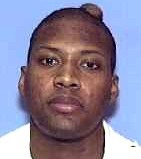
Clydell Coleman was tried and convicted for the murder of Leetisha Joe. Coleman was executed at the age of 62 on May 5, 1999.
Timeline
- Feb 24, 1989 — Coleman and his girlfriend Yolanda Phillips entered Leetisha Joe’s home in Waco and attacked her, resulting in her death.
- October 1989 — Coleman was placed on death row.
- May 5, 1999 — Coleman was executed by lethal injection in Texas; he declined to make a last statement.
- 6:30 p.m. — Coleman was pronounced dead, 8 minutes after the flow of lethal drugs into his hands began.
- in between — An executioner started the flow of lethal drugs into Coleman’s hands.
- after the injection was started — Coleman nodded toward his spiritual advisor through a window, glanced toward 5 members of his victim’s family in an adjacent witness room, closed his eyes tightly, took 2 quick breaths, and stopped moving.
The offence
Leetisha Joe, an 87-year-old (also described as 88-year-old) woman, lived at her Waco home. Coleman and his girlfriend Yolanda Phillips entered the house through a back door. They had been smoking crack cocaine an hour before Coleman decided to burglarize Joe’s house.
When they unexpectedly found Ms. Joe at home, Coleman covered her head with a blanket and hit her repeatedly with a hammer. Phillips ripped a stocking off her leg and choked her with it; Coleman then strangled her with one of her own stockings. Coleman left Joe’s body in the bathtub. Coleman and Phillips ransacked the home for about an hour and stole items to sell so they could buy more drugs.
They took the woman’s television, a clock radio, sheets, a cooler, fan and ladder.
A witness at Coleman’s trial said Coleman had bragged of robbing the same woman of $4,000 less than a year earlier and that he talked of planning to rob her again once she had a chance to rebuild her savings.
Investigation
Phillips’ fingerprints were found at the home, including on a jewelry box in Joe’s home. Phillips was arrested and implicated Coleman. She told authorities that they were high on cocaine and needed to steal items to sell so they could support their drug habits.
McLennan County District Attorney John Segrest said Coleman's crime was made for the death penalty, saying:
"All murders are uncalled for, but there are certain murders that really meet the description," he said. "To take advantage of an old person and then take her property and kill her is an unbelievable act of gratuitous violence."
Arrest and pre-trial matters
Phillips pleaded guilty to burglary charges.
Coleman pleaded guilty to the murder charge, was tried, convicted, and sentenced to death.
Trial
Phillips testified against Coleman in court. She said they were high on crack cocaine when they broke into Joe’s house looking for things to steal to buy more drugs. Trial testimony showed Coleman and Phillips entered the house through a back door and that Coleman covered the elderly woman’s head with a blanket, beat her head in with a hammer, and then strangled her with her own stocking.
Phillips’ plea was part of an arrangement in exchange for her testimony. Prosecutor Ralph Strother dismissed the capital murder charge, and Phillips received a 30-year prison sentence.
Coleman’s defence attorney Walter Reaves said he always believed that Coleman’s accomplice had something more to do with the murder than she admitted. Reeves said:
"Coleman was primarily responsible for the murder, but Phillips had a major part too,"
Strother did not believe Coleman was as innocent as he made himself out to be. Strother said:
"Coleman murdered the woman who fed and took care of him since he was a small child. Coleman looked her in the face as he killed her. Coleman murdering someone was just a matter of time. It was going to happen eventually,"
Sentencing
Coleman was sentenced to death. He received an automatic appeal of his death sentence with the Court of Criminal Appeals. His appeals then went to state court and to the Supreme Court twice.
Coleman’s death sentence was carried out on May 5, 1999.
Appeals
Coleman received an automatic appeal of his death sentence with the Court of Criminal Appeals. His appeals then went to the state court, and to the Supreme Court twice, but to no avail.
Outcome
Clydell Coleman was executed by lethal injection in Texas on May 5, 1999. Coleman was pronounced dead at 6:30 p.m., 8 minutes after an executioner started the flow of lethal drugs into his hands.
Coleman declined to make a last statement while strapped to the death chamber gurney. As the injection was started, Coleman nodded toward his spiritual advisor and glanced toward 5 members of his victim’s family in an adjacent witness room. He closed his eyes tightly and took 2 quick breaths before he stopped moving.
Clemency petition: Coleman’s clemency petition was mentioned, and the clemency petition was denied.
Aftermath
Coleman’s victim’s family responded to the execution. Ms. Joe’s son, 73-year-old Arthur Joe of Dallas, told the Waco Tribune-Herald that he thought the more than 9 years Coleman spent on death row awaiting execution was appropriate. Arthur Joe said:
"I wouldn't have wanted it to be the next day," he said of the punishment. "I wanted extensive time for him to suffer for what he did to my mother."
Coleman was described as the oldest man executed in Texas and the oldest person executed in Texas since the state resumed carrying out the death penalty in 1982. He was also described as the 2nd convicted killer put to death in the state in as many days and the 12th this year.
People
- Clydell Coleman — offender; convicted for the murder of Leetisha Joe; executed on May 5, 1999 at age 62; declined to make a last statement.
- Leetisha Joe — victim; described as 87-year-old and also as 88-year-old; killed at her Waco home.
- Yolanda Phillips — Coleman’s girlfriend and accomplice; pleaded guilty to burglary charges; received a 30-year prison sentence; testified against Coleman; described as 40 years old.
- Walter Reaves — defence attorney for Coleman.
- Ralph Strother — prosecutor who dismissed the capital murder charge against Phillips.
- John Segrest — McLennan County District Attorney.
- Johnny Long — fellow inmate whose letters to Phillips were described as written while Coleman and Phillips were in jail.
Other details
Coleman grew up in a house across the street.
Phillips’ criminal record included at least 15 convictions, including 9 for prostitution. Phillips could be paroled in 2004.
Coleman was said to have worked as a janitor.
Coleman was linked to the crime by fingerprint evidence left by Phillips on a jewelry box in Joe’s home.
Coleman had letters written to Phillips by Johnny Long while they were in jail to convince her to marry him. Long convinced Coleman to do this so Phillips could not testify against Coleman in court because of the law that does not allow spouses to testify against each other.
Coleman was described as a career criminal all his life. His criminal history included:
- 1954 — served prison time; given 5 years for a McLennan County burglary; paroled after 19 months.
- about 1956 (2 years later) — convicted in Dallas of another burglary; served 28 months of a 5-year sentence.
- 1966 — back in prison again for burglary in Dallas; released after serving 3 years of a 6-year sentence.
- July 1974 — got 15 years for a McLennan County burglary; paroled 6 years later.
He was also accused, but not tried, for a burglary similar to the Joe case involving an 88-year-old woman robbed after a blanket was thrown over her head.
Coleman was described as having been primarily a non-violent thief before the murder and as having been a model prisoner who functioned better in a structured society like prison.
Spotted an error, or have more information about this case?