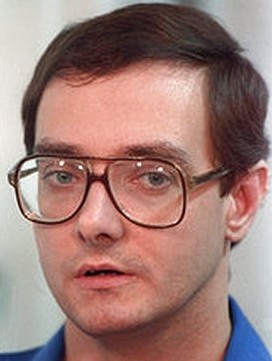
Roger Keith Coleman
Murderer Ervil LeBaron
Murderer · USA · 1972
Ervil Morrell LeBaron (1925 to August 16, 1981) was the leader of a polygamous…
35 victims
Ervil LeBaron
Murderer · USA · 1972
Ervil Morrell LeBaron (1925 to August 16, 1981) was the leader of a polygamous…
35 victims
 Brian Kevin Rosenfeld
Murderer · USA · 1985
Brian Kevin Rosenfeld Brian Kevin Rosenfeld was sentenced to three concurrent l…
23 victims
Brian Kevin Rosenfeld
Murderer · USA · 1985
Brian Kevin Rosenfeld Brian Kevin Rosenfeld was sentenced to three concurrent l…
23 victims
 Marvin Gray
Murderer · USA · 1975
Marvin Gray was convicted killer who claimed responsibility for 23 slayings and…
23 victims
Marvin Gray
Murderer · USA · 1975
Marvin Gray was convicted killer who claimed responsibility for 23 slayings and…
23 victims
 Yahweh ben Yahweh
Murderer · USA · 1980
Yahweh ben Yahweh was born and legally named Hulon Mitchell Jr. (October 27, 19…
23 victims
Yahweh ben Yahweh
Murderer · USA · 1980
Yahweh ben Yahweh was born and legally named Hulon Mitchell Jr. (October 27, 19…
23 victims
 Russell Ellwood
Murderer · USA · 1991
Russell Ellwood was a former taxi driver. Authorities suspected him of killing…
20 victims
Russell Ellwood
Murderer · USA · 1991
Russell Ellwood was a former taxi driver. Authorities suspected him of killing…
20 victims
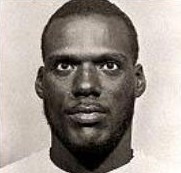 Harrison Graham
Serial killer · USA · 1986
Harrison Graham was a 28-year-old mentally retarded drug abuser who lived in a…
7 victims
Harrison Graham
Serial killer · USA · 1986
Harrison Graham was a 28-year-old mentally retarded drug abuser who lived in a…
7 victims
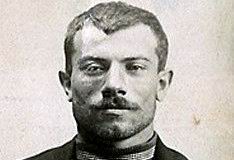 Luigi Lucheni
Murderer · Switzerland · 1898
Luigi Lucheni (April 22, 1873 – October 19, 1910) was an Italian anarchist. Lui…
1 victim
Luigi Lucheni
Murderer · Switzerland · 1898
Luigi Lucheni (April 22, 1873 – October 19, 1910) was an Italian anarchist. Lui…
1 victim
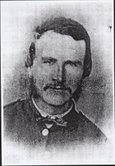 Sam Poo
Murderer · Australia · 1865
Sam Poo was a Chinese bushranger in Australia who was active in the Coonabarabr…
1 victim
Sam Poo
Murderer · Australia · 1865
Sam Poo was a Chinese bushranger in Australia who was active in the Coonabarabr…
1 victim
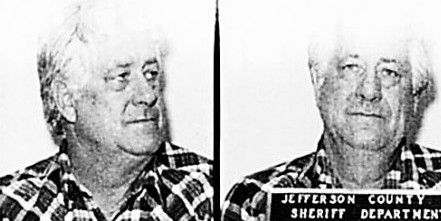 Thomas McCormick
Murderer? · USA · 1975
Thomas McCormick recruited homeless men from a Denver church mission to work on…
8 victims
Thomas McCormick
Murderer? · USA · 1975
Thomas McCormick recruited homeless men from a Denver church mission to work on…
8 victims
- Gender
- male
- Country
- USA
- Location
- Buchanan County, Virginia, USA
- Date of birth
- November 1, 1958
- Age at first offence
- 23
- Characteristics
- rape
- Victim profile
- Wanda Fay McCoy ( his 19-year-old sister-in-law )
- Method of murder
- St abbing with knife
- Date(s) of murder
- March 10, 1981
- Years active
- 1981
- Date of arrest
- April 13, 1981
- Status
-
Executed
Executed by electrocution in Virginia on May 20, 1992
Name and identifiers
Roger Keith Coleman
Background
Roger Keith Coleman was born on Nov. 1, 1958. When he was 22 years old, he was arrested for the rape and murder of Wanda Fay McCoy. He lived in Grundy, Va.
Coleman worked in a mine.
He was married at the time of the crime to victim’s sister.
Coleman had a prior conviction for attempted rape in 1977. The state’s case against Coleman in that case was based on victim’s identification of Coleman's picture in high school yearbook. High school superintendent, who knew Coleman personally, reported having been talking with Coleman elsewhere at time of attack.
Coleman maintained his innocence consistently.
At his execution, Mr. Coleman stated: "An innocent man is going to be murdered tonight. When my innocence is proven, I hope Americans will realize the injustice of the death penalty as all other civilized countries have."
The offence
Wanda McCoy was attacked in, or just outside, her home on March 10, 1981. She was then raped and murdered. There was little sign of a struggle, and it was assumed she had allowed her attacker to come into the house.
The autopsy report recorded wounds to her chest and throat with a knife.
The Commonwealth alleged that Coleman was allegedly admitted to victim’s home, where he allegedly attacked her, raped her, sodomized her, and cut her throat, thus causing her death.
A fingerprint was found on the front screen door and a pry mark on the front door molding, and bloodstains were found inside the house.
The victim had broken fingernails, cuts on the hands, and a dark, dusty substance on her body.
Dr. Thomas D. McDonald made a superficial examination of Wanda, confirmed that she was dead, but did not move her pending the arrival of a State Police special investigating unit. He determined that the cause of death was the “slashing wound to the throat.”
Dr. David W. Oxley performed an autopsy on March 12. Dr. Oxley testified that death was caused by a "slash wound" of the throat with cutting of the "right carotid artery, jugular vein and larynx." He also found two stab wounds in the chest. One wound measuring 1 1/4 inch by 1/16 inch, with a depth of 4 inches, penetrated the heart and lung and Dr. Oxley concluded it had been inflicted after death. The other wound measuring 1 3/4 inch by 1/16 inch, with a depth of 4 inches, penetrated the liver, and Dr. Oxley was of opinion that this wound was inflicted after death or close to the time of death. Dr. Oxley described the neck wound as a single cut, two to three inches in depth without "hesitation marks," leading from the right side of the neck to the left and downward.
Two foreign hairs were found in the victim's genital area.
The prosecution alleged that there was no forced entry into the house, and it also claimed there was little sign of a struggle. The defense did not introduce evidence of defensive wounds including cuts, broken fingernails, and a bruise on her upper arm.
The defense claimed that there was indeed evidence of forced entry (the pry mark on the door).
Coleman’s defense maintained that DNA tests of the semen found on the victim’s body implicated more than one person, and that a second person may have participated.
Another man later stated that he had killed Wanda McCoy. This man had a history of violence and rape.
The prosecution presented evidence given by a jailhouse informant who alleged Coleman had confessed to him. The informant was released from jail soon after testifying.
Investigation
Police were frustrated at the lack of evidence tying Coleman to the crime.
Limited forensic testing was done.
An autopsy took place and autopsy findings included wounds to the throat and chest.
The investigation collected biological material including spermatozoa collected from the vagina of the victim.
Arrest
Coleman was arrested in Virginia on April 13, following statements on March 11 and 12 and further developments.
His arrest followed his reporting to work that night and leaving when his shift was dismissed.
Trial
Charges and statutory framework
Coleman was tried by a jury under indictments charging him with the rape of Wanda Faye Thompson McCoy and with the willful, deliberate, and premeditated killing of the same victim during the commission of rape.
The capital murder charge was capital murder as defined in Code § 18.2-31(e).
Virginia death sentences required findings by jury that defendant’s likely future commission of violent acts constituted a threat to society, OR that murder in question was "outrageously or wantonly vile, horrible or inhuman, in that it involved torture, depravity of mind or aggravated battery to the victim."
Venue and jury
The defense sought a change of venue, and the Buchannon County Courthouse denied a change of venue.
The trial was in Buchanan County, VA. The trial judge was Buchanan County circuit judge Nicholas Persin.
Trial by jury took place.
Eyewitness testimony was not presented. There were no witnesses.
There was no accomplice testimony, and no accomplice was found or named.
Evidence presented
Forensic testimony included two hairs recovered from the victim's body that were said to be "unlikely" to have come from anyone but Mr. Coleman. Semen samples recovered from the victim's body were of same blood type as Mr. Coleman.
Blood on Mr. Coleman's pants was of same type as victim.
Blood and semen samples were not subjected to all available tests; subsequent DNA analysis supported original matchups, while dispute continued over further testing of remaining samples with newly improved DNA analysis, with the state opposing further tests.
Soil on Ms. McCoy's hands, sleeves, legs was never compared to soil around house.
Fingerprint on front door was apparently never analyzed.
Wounds in victim's chest were said to have been made by Coleman's pocketknife, and other experts challenged state's analysis of wounds as insufficient to establish link.
Statements made during investigation
Over Coleman's objection, the trial court admitted statements made by Coleman on March 11 and 12 to Jack E. Davidson, Special Agent with the Virginia State Police.
Davidson testified there were several suspects, including Coleman, whose activities police were "exploring at that particular time."
The interview began at 12:32 p.m. Davidson said Coleman was not under arrest and was free to go at any time, and Davidson did not give Miranda warnings because the suspect was "not in an accusatory status" but was "in an investigative status." The officer was unable to record the interview because of malfunction of the equipment, but he made notes of Coleman's statement.
Coleman’s statement was exculpatory and purported to account in detail for his time on the night of the killing. Coleman said he left his home at 8:30 p.m., left the Speedy Market at 9:05 p.m., went to other listed places at specified times before and after finding that his shift at the mine had been terminated, and arrived at 10:50 p.m. at the bathhouse in town where he took a shower and changed his clothes before returning home.
When Davidson asked Coleman for the clothes he wore that night, Coleman turned over to him a plastic bag of clothing and a knife.
Subsequently, Coleman relinquished another knife to Davidson.
Coleman was arrested on April 13.
On March 13, Davidson testified that he met Coleman "at his in-laws' residence" and asked if he would consent to a search for body fluids and hair. Davidson said Coleman agreed and, after being informed of his constitutional right to insist upon a search warrant, signed a consent authorizing a warrantless search of his body. The consent permitted removal of any property "or body fluids."
Coleman also consented to have samples of body hair taken.
Coleman agreed to supply samples of his blood, head hairs, pubic hairs, and saliva.
Forensic testing at trial
Elmer Gist, Jr. testified that he made an analysis of items delivered to him.
Gist testified that two apparently foreign hairs found in Wanda’s pubic area were, in fact, not those of the victim but were consistent with pubic hair samples taken from Coleman.
Gist concluded that these two hairs came either from Coleman or, by a possible but unlikely coincidence, from some other person of the same race whose hair had the same color, diameter, general configuration, and microscopic characteristics.
Gist testified that Coleman was a secretor, one whose "blood type factor" is present "in semen, saliva or other body fluids," and that 80% to 85% of the population were secretors.
Gist determined that Coleman had Type B blood, a rare type possessed by only 10% of the population. Wanda's blood was Type O, possessed by 40% to 45% of the population; her husband’s was Type A.
From Gist’s examination of the vaginal specimen taken from the victim’s body, he found spermatozoa deposited by a secretor with Type B blood.
He also determined that a bloodstain on Coleman's blue jeans was made by Type O human blood.
Gist found blood on one of Coleman's knives but not in sufficient quantity to determine whether it was human or animal blood.
Charles Crabtree testified that Coleman came into his store on March 10 about 8:00 p.m. and stayed about ten minutes.
Jailhouse informant testimony
Roger L. Matney, a convicted felon awaiting sentencing, testified that when he had been incarcerated in the same cell block with Coleman, Coleman described for him the killing and rape of the victim.
Matney testified that Coleman drew on a newspaper a diagram of the McCoy house and said he and another man were in the house. After the victim's husband called her about 9:00 p.m., Matney testified Coleman’s companion cut her and she began to scream.
Matney believed Coleman said the other man was "Danny Ray." Matney testified that Coleman told him the two men took the victim to the bedroom and both raped her.
Matney testified that the knife "was supposed" to have been hidden under Black Watch Bridge.
Matney testified Coleman began to say something about a paper towel when the conversation ended, and other evidence showed that a paper towel was found near the victim ’s body.
Defendant testimony denied involvement in the crime and denied having "confessed" to Roger Matney.
Trial witnesses and defense
The defense presented evidence of whereabouts and alibis.
Coleman had a documented list of his whereabouts and alibi witnesses who gave affidavits.
A witness testified that Coleman was seen at the Speedy Market about 8:00 p.m. and that he spoke for 10 or 15 minutes.
Other witnesses testified he was seen at Breeding's Store and later followed Stiltner to the mine, got his stuff, and left between 9:30 and 9:45.
A second-shift foreman testified that he saw Coleman about 10:00 p.m. when Coleman came to the mine for boots and hat, and that the witness did not think Coleman's jeans were wet.
Another witness met Coleman near the mouth of Looney's Creek about 10:10 and talked with him for 10 to 15 minutes and parted company about 10:25 to 10:30.
VanDyke clocked in at his mine across the creek at 10:41.
Gary Owens saw Coleman alone in his truck near Gary Scott Stiltner trailer between 10:00 and 11:00.
Coleman's wife, Patricia, testified that between 8:00 and 8:30 on March 10 her husband left for work from his grandmother's house. She did not recall when he came home but said he had returned early because he had been "laid off."
Garnett M. Coleman testified Coleman was her grandson, that she and her husband had adopted him when he was 14, and that he had lived with them nearly all his life. She testified Coleman left to go to work on March 10 about 8:30 and returned about 11:05. She said she "got mixed up" when she first told one of the investigating officers that Coleman came home at 11:30.
Coleman testified in his own defense. He described events at Boyd's Trailer Park on March 6, saying he and David Keller got off work about 6:30 or 7:00 a.m., went to the trailer of Keller's brother, Tom, and spent the day drinking. Coleman said several of them went to the Stiltner trailer and listened to tapes, including one Coleman brought from his truck, and that after 30 to 45 minutes he departed forgetting to take his tape.
Coleman’s account of March 10 followed the earlier statement he had given to Davidson. He testified that he left home at 8:30, drove to the Speedy Market, got a box, talked to Crabtree and Kermit Stiltner, and left about 9:05. He drove to the mouth of Looney's Creek, arriving at 9:10, but that transportation to the mines had already left.
He drove to Breeding's Store, where the man trip was stopped, and where Johnny Stiltner told him his shift had been laid off. Coleman said he then drove back toward Grundy, arriving about 9:45 or 9:50, and that he talked to Perkins, Stiltner, and David Keller.
Leaving the mine site about 10:00, he met VanDyke on the road. At the mouth of Looney's Creek they talked for 15 or 20 minutes. Coleman said he looked at his watch for exact time only at 8:30 when he left home and at 9:05 when he left the Speedy Market, and that other times were estimated.
He testified he drove to Boyd's Trailer Park to see Tom Keller and when he discovered the lights were out at Keller's trailer he went to the Stiltner trailer and retrieved the tape. Coleman said that it was then about 10:40 to 10:45. He drove to the bathhouse in Grundy, arrived about 10:50, showered, left about 11:00, and was at home about 11:05. He testified his pants probably got wet when he threw his work clothes on the floor of the shower.
He testified that he acknowledged that on March 11 he told Davidson that he probably got his pants wet at the mines, and conceded he passed the McCoys' residence but denied stopping there or murdering or raping Wanda McCoy.
On cross-examination, Coleman acknowledged he knew Bradley McCoy worked the second shift.
When asked how Type O blood got on his blue jeans, he replied that the cat at his house might have scratched someone there, or that someone at the mine the night before might have been cut.
He was shown a picture depicting blood on the victim's right leg and asked about left leg blood; an objection was overruled, and Coleman answered in the negative.
Coleman testified that blood found on one of his knives was from squirrels he had killed in September or October.
Coleman said it seemed officers came for three or four days in a row for three or four days sometimes and that he was willing to talk with them, and said he was trying to clear himself so police would find who did it.
Patricia Coleman denied awareness that a cat had scratched someone in such a fashion as to cause blood to get on her husband's blue jeans.
Randall Jackson denied having told Coleman's uncle about a paper towel found at the scene of the crimes.
Trial outcome
The jury convicted Coleman of rape and capital murder.
The jury fixed his punishment for rape at confinement in the penitentiary for life.
In the capital murder proceeding, the jury fixed Coleman's sentence at death.
On April 23, 1982, the trial court imposed the death sentence and entered judgment on the jury verdict in the rape case.
The trial court denied a motion to set aside the verdict after the jury found him guilty.
Sentencing
At sentencing, the Commonwealth introduced testimony from Brenda Rife, 36, about an attempted rape committed by Coleman on April 7, 1977.
Brenda Rife testified Coleman was admitted to the house when he asked for a drink of water, then pulled a gun, forced her to tape her daughter’s hands and feet and place her in a child’s rocking chair, then walked her upstairs to the bedroom, where he ordered her to undress. When she refused, she described struggling and scratching, and recalled him running away as neighbors rescued. She described that the entire episode lasted approximately ten minutes and that Coleman "never really raised his voice," which she described as "[v]ery cold." She recalled: "It was just like, do it or die."
The Commonwealth introduced a certified copy of Coleman's conviction for attempted rape of Brenda Rife, and for that crime he had been sentenced to serve three years in the State penitentiary by order entered July 29, 1977, by the Circuit Court of Buchanan County.
The defense called two ministers as witnesses.
Thomas F. Bradley, a jail chaplain, testified he visited Coleman six days a week during three months prior to trial while Coleman was incarcerated in jail in Bristol. Bradley testified that his communications with Coleman were privileged. Coleman declined to waive the privilege and asserted that he did not want to appear to be "using the Lord" in any way. Bradley testified he believed Coleman was sincere in his religious convictions.
Michael Trent, minister of Little Prater Church of Christ, testified he had known Coleman since he was about nine years old and that Coleman came to know him personally after Coleman was incarcerated. Trent testified Coleman decided to be baptized about a month after he was first confined and, at his request, Trent baptized him in jail. Trent testified Coleman pursued Bible study in jail and he believed Coleman was sincere.
Coleman testified again. He testified: "[i]t's up to the Lord now, anyway." He stated after the jury found him guilty it made no difference whether the penalty was death or life imprisonment, and that it was "up to the Lord now, anyway."
Appeals
State habeas and procedural default
Coleman’s initial appeal to the Virginia Supreme Court was dismissed.
Coleman’s state habeas petition was ruled to have been filed one day late.
Coleman’s motion to correct the date from September 4 to September 9 was denied; the court stated "final judgment was entered on September 4, 1986."
Coleman’s notice of appeal was filed on October 7, 1986, which was 33 days after the circuit court entered its judgment, and the appeal was dismissed.
The U.S. Supreme Court supported the state’s position that the missed deadline precluded federal review of habeas claims.
The U.S. Supreme Court case identified included Coleman v. Thompson (89-7662), 501 U.S. 722 (1991). The Fourth Circuit affirmed the district court denial of habeas relief and discussed procedural default based on the missed notice-of-appeal deadline under Virginia Supreme Court Rule 5:9(a).
Federal habeas
Coleman petitioned in the United States District Court for the Western District of Virginia for a writ of habeas corpus. The court concluded claims were procedurally defaulted. The district court addressed claims and found them without merit in the alternative.
The United States Court of Appeals for the Fourth Circuit affirmed.
The Supreme Court of the United States agreed, and federal review was barred by procedural default.
Disagreements and asserted issues
Coleman’s federal petition asserted multiple federal constitutional claims, including claims that an issue involving a juror named George Marrs, reasonably effective assistance of counsel, juror exclusions because of opposition to imposition of the death penalty, prosecution failure to disclose exculpatory evidence, prosecutorial closing argument, and constitutional inadequacy of jury instructions at the penalty stage.
The federal courts found procedural default applied because the notice of appeal from state habeas denial was untimely.
Coleman raised disagreements about deadlines and issues of the interpretation of when an order was “entered,” and assigned cause based on counsel’s error in failing to file a timely notice of appeal.
The court concluded counsel’s error occurred in state habeas proceedings, and that there was no constitutional right to counsel in that posture, so ineffective assistance could not constitute cause.
Clemency and execution
Before Coleman’s scheduled execution, Governor Douglas Wilder agreed to grant clemency if Coleman passed a polygraph test.
Coleman took and failed a polygraph test administered by the State shortly before his execution.
A statement attributed to Governor Wilder said: "If he had passed...it could have affected what the ultimate result would have been".
Coleman was executed by electrocution in Virginia on May 20, 1992.
As Coleman was strapped into the electric chair, he made a final declaration: "An innocent man is going to be murdered tonight," he said. "When my innocence is proven, I hope America will realize the injustice of the death penalty as all other civilized countries have."
Post-execution DNA testing and further proceedings
In 2000, media organizations and newspapers petitioned a Virginia judge to permit new DNA testing in the Coleman case.
The Virginia Attorney General opposed the request. Virginia courts denied the request.
A judge Keary R. Williams rejected requests by a New Jersey charity, the Richmond Times-Dispatch, and several other newspapers to retest DNA evidence.
Judge Keary R. Williams wrote: "The court finds that to order re-testing of the Coleman DNA at this stage would have no bearing on the fairness of the death penalty as it is now administered or on the public confidence of the criminal justice system,".
Williams also wrote: "further testing would would provide no benefit in this case where the defendant was convicted, given the opportunity [to] prove his innocence following conviction in every manner possible at the time, pursued every post-trial remedy available to him, and most importantly, where the sentence was carried out nine years ago."
The requests included The Washington Post, The Boston Globe, The Virginian-Pilot, The Richmond Times-Dispatch, and Centurion Ministries.
Virginia courts concluded the newspapers lacked legal standing and that VFOIA did not provide a right to re-test biological material.
In January 2006, Governor Mark Warner ordered DNA evidence to be retested.
Warner ordered DNA evidence to be retested, and the evidence was sent to the Centre for Forensic Science in Toronto. That laboratory determined a 1 in 19 million chance that the DNA belonged to someone other than Coleman.
On January 12, 2006, Warner’s office announced that the test results confirmed Coleman's guilt.
Other named people and roles (as supported by the record)
- Wanda McCoy (victim)
- Bradley D. McCoy (husband of Wanda)
- Max McCoy, known as Hezzie (father of Bradley)
- Patricia Coleman (Coleman’s wife; testimony in trial)
- Randall Jackson (Chief of Police for the Town of Grundy)
- Sergeant Steven D. Coleman (Buchanan County Sheriff’s Department)
- Chief of Police for the Town of Grundy, Randall S. Jackson
- Dr. Thomas D. McDonald (medical examiner)
- Dr. David W. Oxley (autopsy)
- Elmer Gist, Jr. (forensic serologist)
- Elmer T. Miller (forensic scientist for defense)
- Jack E.
- Roger L. Matney (jailhouse informant; convicted felon)
- James McCloskey (executive director of Centurion Ministries)
- Jim McCloskey (Centurion Ministries founder)
- Judge Nicholas Persin (trial judge)
- Judge Keary R. Williams (judge rejecting DNA retest petitions)
- Justice Donald W. Lemons (Virginia Supreme Court opinion by)
- Timothy Jordan and Steven Are (prosecutors listed with spelling as in source)
- Commonwealth’s Attorney Michael G. "Mickey" McGlothlin, assisted by Tom Scott, private practitioner
- Terry Jordan and Steven Are (Trial Attorney listed in record)
- Chief Justice William H. Rehnquist (referenced in record in discussion of procedural-default limits)
- Mark L. Earley (spokesman for Virginia Attorney General)
- Pamela A. Rumpz (Assistant Attorney General)
- John A. Farrell (Globe reporter)
- Paul F. Enzinna (Washington lawyer representing Centurion Ministries)
- Ferrara (head of state Division of Forensic Science)
- Edward T. Blake (DNA expert)
- Douglas Wilder (Governor; clemency decision involving polygraph)
- Mark Warner (Governor; ordered DNA retesting in January 2006)
- Pope John Paul II (opposed execution as stated in summary material)
Timeline
- March 10, 1981 — Wanda McCoy was attacked in, or just outside, her home; she was raped and murdered.
- March 11, 1982 — Coleman was interviewed by Jack E. Davidson at 12:32 p.m. in Davidson’s car; Miranda warnings were not given.
- March 12, 1982 — Dr. David W. Oxley performed an autopsy.
- April 13 — Coleman was arrested.
- March 18, 1982 — The jury found Coleman guilty of capital murder.
- April 23, 1982 — The trial court imposed the death sentence after considering the probation officer's report and entered judgment on the jury verdict in the rape case.
- September 4, 1986 — The Circuit Court of Buchanan County entered final judgment denying habeas corpus.
- October 7, 1986 — Coleman filed a notice of appeal, described as filed after the 30-day period.
- January 31, 1990 — The Fourth Circuit decided Coleman v. Thompson appeal.
- 1991 — Coleman v. Thompson was decided by the U.S. Supreme Court (89-7662), 501 U.S. 722 (1991).
- May 20, 1992 — Coleman was executed by electrocution in Virginia.
- June 2, 2001 — Judge Keary R. Williams rejected requests to retest DNA evidence.
- July 26, 2000 — Dr. Blake informed the trial court by letter that a more sophisticated testing procedure was available.
- January 5, 2006 — Governor Mark Warner ordered DNA evidence to be retested.
- January 12, 2006 — Warner’s office announced that test results confirmed Coleman's guilt.
Evidence disputes and contested points described in the record
- The record described disputes over further testing of remaining samples with newly improved DNA analysis, with the state opposing further tests.
- Soil on the victim’s hands, sleeves, and legs was never compared to soil around the house.
- A fingerprint on the front screen door was apparently never analyzed.
- Experts challenged the state’s analysis that wounds in the victim’s chest were made by Coleman’s pocketknife as insufficient to establish a link.
- Soil and physical-evidence comparisons were described as contradicting the prosecution’s theory that the victim willingly allowed her murderer to enter inside by a person known to her.
- The defense denied involvement and denied any confession to Matney.
Legal citations and case identifiers appearing in the record
- Coleman v. Thompson (89-7662), 501 U.S. 722 (1991)
- Coleman v. Commonwealth, 307 S.E.2d 864 (Va. 1983)
- Coleman v. Commonwealth, 226 Va. 31, 307 S.E.2d 864 (1983)
- Coleman v. Thompson, 895 F.2d 139 (4th Cir. 1990)
- Coleman v. Thompson, 504 U.S. 188 (1992)
- The Globe Newspaper Company, d/b/a The Boston Globe v. Commonwealth of Virginia, Record No. 012682
- The Washington Post, et al. v. 012683
- Amnesty International Cruel and Incredible: The Case of Roger Coleman (book referenced in record)
Other details
A section of the record described pretrial and community reactions, including a gas station next door to the courthouse erecting an 8' x 4' lighted sign: "It's time for a new hangin' tree in Grundy."
The record also included assertions that his defense lawyers were court-appointed and inexperienced in murder trials involving blood or hair analysis.
The record included discussion that a file of DNA results was allegedly missing after being placed in the McCoy murder file after execution.
A polygraph exam was described as being administered on the morning of the execution, and a claim that the polygraph procedure was conducted under conditions that impeded observation was included in narrative material.
The record referenced that Governor Mark Warner announced in January 2006 that re-examined DNA evidence conclusively proved Coleman's guilt.
Spotted an error, or have more information about this case?