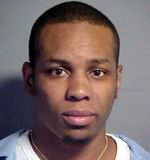
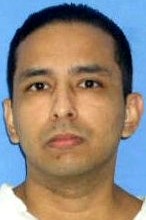
Billy Don Alverson
Murderer Brian Kevin Rosenfeld
Murderer · USA · 1985
Brian Kevin Rosenfeld Brian Kevin Rosenfeld was sentenced to three concurrent l…
23 victims
Brian Kevin Rosenfeld
Murderer · USA · 1985
Brian Kevin Rosenfeld Brian Kevin Rosenfeld was sentenced to three concurrent l…
23 victims
 Russell Ellwood
Murderer · USA · 1991
Russell Ellwood was a former taxi driver. Authorities suspected him of killing…
20 victims
Russell Ellwood
Murderer · USA · 1991
Russell Ellwood was a former taxi driver. Authorities suspected him of killing…
20 victims
 Robert Martines Perez
Murderer · USA · 1994
Name: Robert Martines Perez · Other name used in proceedings: Robert Martinez P…
15 victims
Robert Martines Perez
Murderer · USA · 1994
Name: Robert Martines Perez · Other name used in proceedings: Robert Martinez P…
15 victims
 Billy Frank Vickers
Murderer · USA · 1993
Billy Frank Vickers Vickers was executed by lethal injection in Texas on Januar…
14 victims
Billy Frank Vickers
Murderer · USA · 1993
Billy Frank Vickers Vickers was executed by lethal injection in Texas on Januar…
14 victims
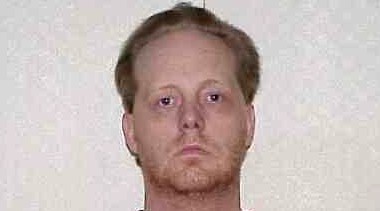 Donald Herb Johnson
Murderer · USA · 1989
Donald Herb Johnson was sentenced to death on October 1, 1997. Donald Herb John…
1 victim
Donald Herb Johnson
Murderer · USA · 1989
Donald Herb Johnson was sentenced to death on October 1, 1997. Donald Herb John…
1 victim
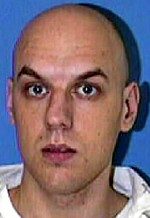 Robert Alan Shields
Murderer · USA · 1994
Robert Alan Shields Jr. was convicted of capital murder and sentenced to death…
1 victim
Robert Alan Shields
Murderer · USA · 1994
Robert Alan Shields Jr. was convicted of capital murder and sentenced to death…
1 victim
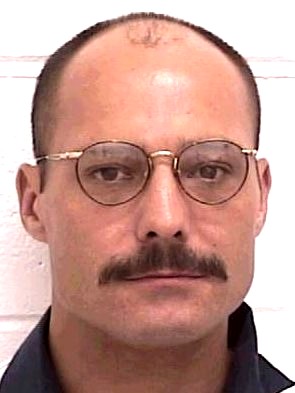 Stephen Anthony Mobley
Murderer · USA · 1991
Stephen Anthony Mobley · Sex: Male · Race: White · Age: 39 at execution · Date…
1 victim
Stephen Anthony Mobley
Murderer · USA · 1991
Stephen Anthony Mobley · Sex: Male · Race: White · Age: 39 at execution · Date…
1 victim
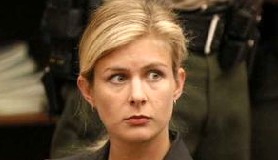 Kristin Rossum
Murderer · USA · 2000
Defendant: Kristin Rossum Also identified as: Kristin Margrethe Rossum Date of…
1 victim
Kristin Rossum
Murderer · USA · 2000
Defendant: Kristin Rossum Also identified as: Kristin Margrethe Rossum Date of…
1 victim
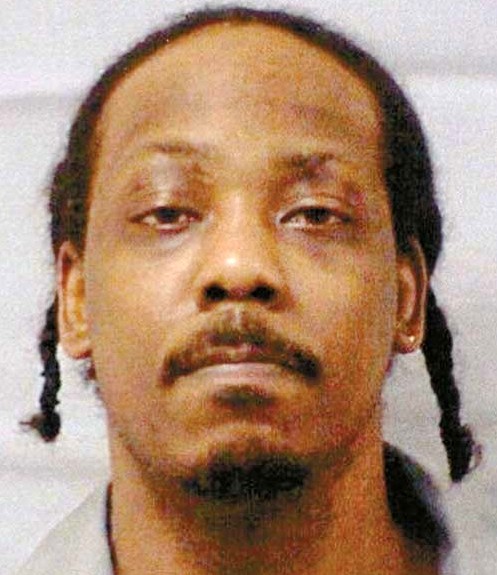 Donald Jones
Murderer · USA · 1993
Defendant: Donald Jones · Victim: Dorothy Knuckles · 1993 03/06 — Donald Jones…
1 victim
Donald Jones
Murderer · USA · 1993
Defendant: Donald Jones · Victim: Dorothy Knuckles · 1993 03/06 — Donald Jones…
1 victim
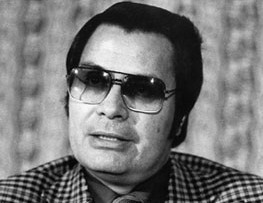 Jim Jones
Murderer · Guyana · 1978
James Warren "Jim" Jones (May 13, 1931 – November 18, 1978) was the American fo…
900 victims
Jim Jones
Murderer · Guyana · 1978
James Warren "Jim" Jones (May 13, 1931 – November 18, 1978) was the American fo…
900 victims
- Gender
- male
- Country
- USA
- Location
- Tulsa County, Oklahoma, USA
- Date of birth
- February 8, 1971
- Age at first offence
- 24
- Characteristics
- robbery
- Victim profile
- Richard Kevin Yost, 30 (convenience store clerk)
- Method of murder
- Beating with a baseball bat
- Date(s) of murder
- February 26, 1995
- Years active
- 1995
- Date of arrest
- Same day
- Status
-
Executed
Executed by lethal injection in Oklahoma on January 6, 2011
Case record: Billy Don Alverson
Billy Don Alverson was executed by lethal injection in Oklahoma on January 6, 2011.
Background
Billy Don Alverson was an Oklahoma death row inmate.
At the time of execution, Billy Don Alverson was 39 years old.
The offence
Alverson was convicted of murdering convenience store clerk Richard Yost.
Richard Yost was a 30-year-old night manager of a convenience store in Tulsa. His body was found bound and beaten on the blood-soaked floor of the store’s cooler.
The killing was carried out after Richard Yost had been tied and handcuffed during a robbery. Alverson and other participants beat Yost to death with a baseball bat.
The record included that two safes containing over $30,000.00 were stolen, as well as all the money from the cash register and the store’s surveillance videotape.
Investigation
Police surveillance videotape from the store was used in the case. Detective Makinson identified all four defendants on the tape as it was being played and discussed a shift change and what could be heard on the tape as the beating took place.
Part of a broken set of handcuffs was found near Yost’s right hip.
A medical examiner found a pin from these handcuffs embedded in Yost’s skull during the autopsy.
Arrest
All four defendants were arrested later that same day wearing new tennis shoes and carrying wads of cash.
The stolen drop safe and the store surveillance videotape, as well as other damaging evidence, were found in a search of Alverson’s home.
The baseball bat, the victim’s bloody QuickTrip jacket, the other cuff from the set of broken handcuffs, and Wilson’s Nike jacket matching the surveillance tape were taken from Wilson’s home.
Trial
Charges
Alverson was charged conjointly with three codefendants with:
- first degree malice murder and, in the alternative, first degree felony murder (Count I) in violation of 21 O.S.1991, § 701.7(A) & (B)
- robbery with a dangerous weapon (Count II) in violation of 21 O.S.1991, § 801
The State filed a bill of particulars alleging three aggravating circumstances.
Court and jury
A jury trial was held before the Honorable E.R. “Ned” Turnbull, District Judge.
The codefendants were Michael Lee Wilson, Darwin Demond Brown and Richard Harjo.
Alverson and co-defendant Harjo were tried conjointly, but with separate juries deciding their fate.
Verdicts
The jury found Alverson guilty of first degree murder and robbery with a dangerous weapon.
After the punishment stage, the jury found the existence of two aggravating circumstances:
- that the murder was especially heinous, atrocious or cruel
- that the murder was committed for the purpose of avoiding or preventing a lawful arrest or prosecution
The jury rejected the continuing threat aggravator.
Sentencing
After the punishment stage:
- Alverson’s jury fixed punishment at death for the first degree murder conviction
- the jury fixed life imprisonment for the robbery conviction
The trial judge sentenced Alverson in accordance with the jury’s verdict.
Appeals
Direct appeal (Oklahoma Court of Criminal Appeals)
The Oklahoma Court of Criminal Appeals affirmed the convictions and sentences on direct appeal.
The Court’s decision addressed multiple propositions of error and concluded that Alverson did not obtain relief.
Key issues discussed included:
- Use of dual jury procedure in codefendant cases
- Claims about investigative detention and suppression of confession
- Admission of explanatory testimony regarding events depicted on surveillance videotape
- Admission of DNA evidence and chain of custody
- Jury instructions regarding second degree felony murder
- Ineffective assistance of counsel claims, including failure to investigate alleged head injuries received as a child
- Admission of photographs depicting the victim and his wounds, including a finding that Exhibit No. 115 was improperly admitted but that the error was harmless
- Prosecutorial misconduct claims
- Challenges to sufficiency of evidence supporting the especially heinous, atrocious or cruel aggravator and the aggravator narrowing process
- Challenges to the constitutionality of the death penalty scheme as applied to Alverson
- Anti-sympathy instruction and mitigation instruction issues
- Admission of victim impact evidence
- Vagueness/overbreadth challenge to the “avoid lawful arrest or prosecution” aggravator
- Cumulative error and double jeopardy issues
Double jeopardy analysis (as addressed on appeal)
The Court addressed a double jeopardy issue arising from the jury’s findings on Count I under both malice murder and felony murder theories.
The Court held that where the jury finds a defendant guilty of murder in the first degree under both principles of malice murder and felony murder, it would construe the conviction as one of first degree malice murder, eliminating double jeopardy concerns because the Judgment and Sentence stated conviction as one count of Murder in the First Degree.
The Court concluded there was no reason to reverse the robbery conviction and stated that the convictions on both counts stood.
Mandatory sentence review
The Court conducted mandatory sentence review and found that it could not say the death sentence was imposed because the jury was improperly influenced by passion, prejudice, or any other arbitrary factor.
The Court found both the law and the evidence supported the aggravating circumstances and concluded the sentence was factually substantiated and appropriate.
The Court affirmed the Judgments and Sentences for:
- first degree malice murder
- robbery with a dangerous weapon
United States Supreme Court
Alverson filed a petition for writ of certiorari with the United States Supreme Court, which was denied on January 10, 2000.
Aftermath
Execution details
Alverson was pronounced dead at 6:10 p.m. local time.
For the second consecutive time, one of the drugs Oklahoma used to carry out the execution was pentobarbital. Pentobarbital was substituted for another drug that was in short supply.
Attorneys had objected to pentobarbital.
Massie, a Department of Corrections spokesman, said the execution “went exactly as the experts said it would” and that there were no complications.
Last words
Alverson’s last words were: "First, I would like to say to the Yost family, I'm sorry, forgive me. To my own family, I'm all right. God is good. Don't you cry."
In another account of the last statement, Alverson said: "First, to the Yost family, I would like to say I'm sorry. Forgive me," "And to my own family, I'm all right. God is good. Don't you cry. Uh-uh. Don't do it. I'm all right."
He told each of his family members witnessing the execution that he loved them and made a kissing motion toward them.
Last meal
Alverson’s last meal was a large pepperoni and Italian sausage pizza and a large Dr. Pepper.
Victims’ statements
Yost’s widow, Angela Houser-Yost, released a statement after the execution. Her statement included:
"Understanding, this execution will not bring Richard back nor will it give me the closure that I am looking for. To be honest I do not know if I will ever have true closure," "There are no winners tonight, each of us from both sides of the family have lost. It is a loss that no one will understand unless they have be(en) in the same situation. I want to give my condole(nce)s to the Alverson family. In saying that I also hope the media will leave you alone w(h)ere you can grieve in peace."
Clemency and witnesses
The Oklahoma Pardon and Parole Board voted 3-2 on Dec. 15 to deny clemency for Alverson.
The trial judge said he was troubled by the sentence and that Alverson was the least culpable of the four defendants. The judge, Ned Turnbull, said that Alverson was the only one who had shown remorse and was a follower, not a leader.
Tulsa County District Attorney Tim Harris, Tulsa Police Chief Chuck Jordan and Tulsa County Undersheriff Brian Edwards witnessed the execution.
Other details
Co-defendants and other sentences referenced
One codefendant, Darwin Demond Brown, was executed in 2009.
Another codefendant, Michael L. Wilson, was appealing a death sentence.
Richard J. Harjo was serving a life sentence without parole.
At sentencing, Harjo was the only codefendant to receive life without the possibility of parole.
Prior commitments
Alverson had two prior commitments referenced as:
- 91-1325 TULS Amended To Unauthorized Use Motor Vehicle 12/20/1991 2 Years
- 91-4001 TULS Knowingly Concealing Stolen Property 12/20/1991 2 Years
- 91-4001 TULS False Personation 12/20/1991 2 Years
Case citations and procedural history referenced
Alverson v. State, 983 P.2d 498 (Okla.Crim. App. 1999) (direct appeal) was referenced.
Alverson also appealed denial of a federal habeas corpus petition in:
- Alverson v. Workman, No. 09-5000, decided February 16, 2010 by the United States Court of Appeals, Tenth Circuit, where the court affirmed the judgment of the district court.
Jurisdiction and counsel (federal habeas)
In Alverson v. Workman, the petitioner-appellant was Billy D. Alverson and the respondent-appellee was Randall G. Workman, Warden, Oklahoma State Penitentiary.
The panel was composed of Circuit Judges KELLY, BRISCOE, and TYMKOVICH.
Pharmacy and drug substitution narrative included in the case
Oklahoma ran out of the anaesthesia drug sodium thiopental in early 2010 and replaced it with pentobarbital, which is used for animal euthanasia.
Spotted an error, or have more information about this case?