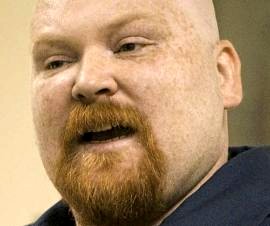
Richard Cooey
Murderer Brian Kevin Rosenfeld
Murderer · USA · 1985
Brian Kevin Rosenfeld Brian Kevin Rosenfeld was sentenced to three concurrent l…
23 victims
Brian Kevin Rosenfeld
Murderer · USA · 1985
Brian Kevin Rosenfeld Brian Kevin Rosenfeld was sentenced to three concurrent l…
23 victims
 Yahweh ben Yahweh
Murderer · USA · 1980
Yahweh ben Yahweh was born and legally named Hulon Mitchell Jr. (October 27, 19…
23 victims
Yahweh ben Yahweh
Murderer · USA · 1980
Yahweh ben Yahweh was born and legally named Hulon Mitchell Jr. (October 27, 19…
23 victims
 Russell Ellwood
Murderer · USA · 1991
Russell Ellwood was a former taxi driver. Authorities suspected him of killing…
20 victims
Russell Ellwood
Murderer · USA · 1991
Russell Ellwood was a former taxi driver. Authorities suspected him of killing…
20 victims
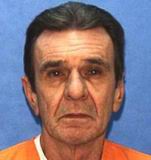 Robert Brian Waterhouse
Murderer · USA · 1966
Robert Brian Waterhouse was convicted of the first-degree murder of Deborah Kam…
2 victims
Robert Brian Waterhouse
Murderer · USA · 1966
Robert Brian Waterhouse was convicted of the first-degree murder of Deborah Kam…
2 victims
 John S. Williams
Murderer · USA · 1910
John S. Williams was convicted of murder and sentenced to life imprisonment on…
18 victims
John S. Williams
Murderer · USA · 1910
John S. Williams was convicted of murder and sentenced to life imprisonment on…
18 victims
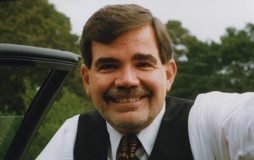 Michael Nicholaou
Murderer · USA · 2005
Michael Nicholaou (56) was Aileen Nicholaou’s husband. · Aileen Nicholaou (47)…
2 victims
Michael Nicholaou
Murderer · USA · 2005
Michael Nicholaou (56) was Aileen Nicholaou’s husband. · Aileen Nicholaou (47)…
2 victims
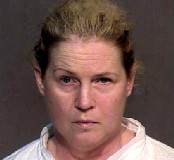 Carol Hatley
Murderer · USA · 2012
Carol Hatley was sentenced to 22 years in prison for the murder of her mother,…
1 victim
Carol Hatley
Murderer · USA · 2012
Carol Hatley was sentenced to 22 years in prison for the murder of her mother,…
1 victim
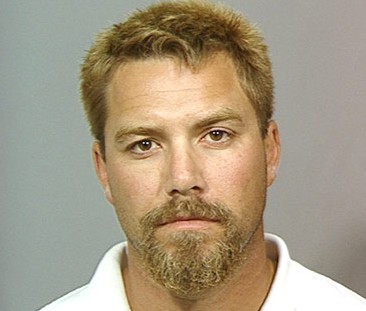 Scott Lee Peterson
Murderer · USA · 2002
Scott Lee Peterson (born 24 October 1972 in San Diego, California) was a former…
1 victim
Scott Lee Peterson
Murderer · USA · 2002
Scott Lee Peterson (born 24 October 1972 in San Diego, California) was a former…
1 victim
- Gender
- male
- Country
- USA
- Location
- Summit County, Ohio, USA
- Date of birth
- J une 9, 1967
- Age at first offence
- 19
- Characteristics
- rape, robbery, torture, kidnapping, drugs, alcohol
- Victim profile
- Dawn McCreery, 20, and Wendy Offredo, 21 (University students)
- Method of murder
- Strangulation with shoelace
- Date(s) of murder
- September 1, 1986
- Years active
- 1986
- Date of arrest
- —
- Status
-
Executed
Executed by lethal injection in Ohio on October 14, 2008
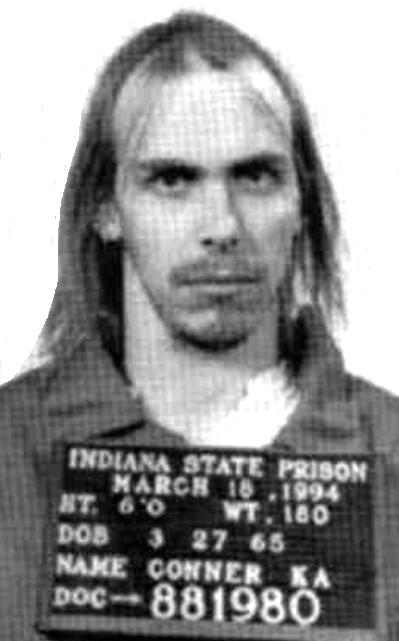
Case record: Richard Cooey
Status / outcome
Richard Cooey was executed by lethal injection in Ohio on October 14, 2008.
Background
Dawn McCreery, 20, and Wendy Offredo, 21, were University of Akron sorority sisters. They left their jobs as waitresses when Clint Dickens, 17, threw a chunk of concrete off an I-77 overpass, striking the windshield of the car that Ms. Offredo was driving. Richard Cooey was 19 and was on leave from the U.S. Army. Cooey was hanging out with a longtime friend, Kenny Horonetz, and Dickens. The three got into a car and offered the two women help. The five drove to a shopping mall, and Ms. Offredo used a pay phone to call her mother.
A federal habeas corpus account described that on the night of August 31, 1986, Cooey, on leave from the army, and two of his friends, Clint Dickens and Kenneth Horonetz, threw a large chunk of concrete over the side of a bridge just as Wendy Offredo and Dawn McCreery were passing below along Interstate 77 in Akron, Ohio. The concrete hit Wendy's car, forcing her to pull over. After the men went down and offered a ride so the women could call for help, the men drove them to a nearby mall to use a telephone and then took the women to a field where they were raped, beaten, and murdered by Cooey and Dickens. The men also stole Wendy's jewelry. The bodies were found on September 1. The Summit County Coroner concluded that Wendy and Dawn died of multiple blows to the head, with Wendy receiving at least three blows and Dawn at least eleven, with strangulation also contributing to Wendy's death. The coroner concluded that both women had oral and vaginal intercourse before death.
The offence
Cooey and the others drove to a wooded area in nearby Norton. Cooey pulled a knife on the women when they realized they were not being driven back to their car. Horonetz demanded to be let out of the car after Cooey told him to tie Ms. McCreery's hands.
The victims were driven to a wooded area, where Dickens and Cooey raped the two girls. Dickens then suggested the women should be killed because they knew his name. Dickens grabbed Ms. Offredo in a chokehold, and Cooey used a shoelace to strangle her as Dickens strangled Ms. McCreery with his other shoelace. Cooey beat both women with a club. The prosecution account described more detail about the sequence: after the rape, the victims got back in the car while Cooey and Dickens remained outside and talked. Dickens stated that the victims would have to be killed because they knew his name. The scheme included strangulation or club beating resulting in death or near death, followed by beating and choked to ensure death. The trial facts described that the pair stripped the bodies of all jewelry and placed it in the purses, dragged the bodies off the road and into some weeds, and brushed the car tracks off the road with branches before leaving. The trial facts also described that after Cooey learned the police had discovered the bodies, he, Dickens, Horonetz and Terry Grant went back to where the purses had been thrown, recovered them, and took them to Cooey's home where they were burned. A few days following the murders, an informant called Akron detectives that Cooey was trying to sell jewelry belonging to the victims.
Cooey made a statement on the night of the offence that included:
"I'm game if you're game," Cooey said as Dickens suggested they rob the two women.
In later trial facts, Cooey called out Dickens' name during the offence:
"Hey Clint, put on the Bad Company tape," he said.
The separate trial facts account described that after the concrete attack, the women accepted a ride to a nearby shopping center to call for assistance; while Wendy was talking to her mother, Dickens saw money in her purse and suggested robbing the women. The group then left the mall. When Cooey was not returning to the site of the “accident,” the women asked where he was going. Cooey pulled out a knife and ordered them to "shut up." He then gave the knife to Dickens, who held it on the women. Dawn gave up her purse. The women asked their assailants not to hurt them. Cooey told one of his friends to tie Dawn’s hands, whereupon the man demanded to be let out of the car, and Cooey let him out. The victims were driven to an isolated wooded area and were forced to exit the car. The account described multiple rape events in sequence and then a decision to kill the women after Dickens grabbed a billy club, began hitting a tree, and the men decided the girls had to die. Cooey grabbed Offredo in a choke hold, strangling her until she was unconscious, then tied her feet with a red bandana. Dickens clubbed McCreery with the billy club when she attempted to escape. Cooey tied a shoestring around Offredo’s neck, and Dickens tied another around McCreery’s. The account further described that both victims were beaten in the head with the billy club and McCreery was stabbed in the neck. It stated that the pair placed jewelry in the purses and moved the bodies into weeds, then washed the blood off the car, clothing, and themselves at a nearby carwash, and discarded the purses.
Investigation / police actions
After the discovery of the bodies, the police applied for search warrants for Cooey's residence and automobile. The warrant was authorized by a judge of the municipal court. Upon execution of the warrant, police seized items from Cooey's home and automobile.
In the direct appeal facts account, a few days following the murders, an informant called the detective bureau telling police that Cooey was trying to sell jewelry belonging to the victims and named the street Cooey lived on. Police set up surveillance around Cooey's house while warrants were obtained: one to search and one to arrest Cooey. Cooey attempted to leave the house and he was arrested. Items were removed from his person and from his grandmother’s automobile. The house was searched and various items were removed.
In the direct appeal facts account, at the police station, Cooey gave several statements to the police. A motion to suppress these statements was made and denied.
Arrest
Cooey was arrested after he attempted to leave the house during surveillance by police.
Trial
Cooey was indicted on September 8, 1986. He entered a not guilty plea.
Cooey waived his right to a trial by jury and was tried by a three-judge panel according to Ohio Rev.Code §§ 2945.05 and 2945.06. The panel found Cooey guilty of all counts and specifications.
The trial panel conducted a mitigation hearing on December 5, 1986. The panel returned a unanimous verdict finding beyond a reasonable doubt that the aggravating circumstances outweighed the mitigating factors and recommended the death penalty. The two aggravated murders under § 2903.01(A) were merged into the two convictions under § 2903.01(B). Cooey was sentenced to death for each murder and to imprisonment for the seven other felonies.
The direct appeal appellate decision described the convictions and sentencing structure: Cooey was found guilty of two counts each of aggravated murder under R.C. 2903.01(A) and R.C. 2903.01(B), with three aggravating specifications to each count [R.C. 2929.04(A)(3), (5), and (7)]. He was also found guilty of two counts of kidnapping, two counts of rape, two counts of aggravated robbery, and one count of felonious assault. After a penalty hearing, the trial panel found that aggravating circumstances outweighed mitigating factors. The trial panel sentenced Cooey to death for the aggravated murders and to imprisonment for the other seven felonies.
The appellate decision also described a change in trial process for verdict and judgment: Cooey waived his right to a trial by jury, and a panel of judges was assigned to try him. Cooey was found guilty by the panel of judges and sentenced to death.
The status record listed: AGG MURDER WITH SPECIFICATIONS (2 COUNTS), KIDNAPPING (2 COUNTS), RAPE (4 COUNTS), AGG ROBBERY (2 COUNTS), and FELONIOUS ASSAULT.
Charges described in federal habeas overview
The federal habeas overview described that Cooey was indicted with two counts of aggravated murder in violation of Ohio Rev.Code §§ 2903.01(A) and 2903.01(B), including three specifications of aggravating circumstances in violation of Ohio Rev.Code §§ 2929.04(A)(3), 2929.04(A)(5), and 2929.04(A)(7). He was also charged with two counts of kidnapping with the purpose of engaging in nonconsensual sexual activity in violation of Ohio Revised Code § 2907.02(A), two counts of aggravated robbery in violation of Ohio Revised Code § 2911.01(A)(1) and § 2911.01(A)(2), and one count of felonious assault in violation of Ohio Rev.Code § 2903.11(A)(2) for dropping the chunk of concrete on Wendy's car.
Sentencing
Cooey was sentenced to death for each murder. In addition to death sentences, the trial panel sentenced him to imprisonment for other felonies.
The direct appeal appellate opinion included the trial panel’s independent review and weighing statements, including that Cooey intentionally and brutally kidnapped, raped and robbed the two victims over a period of three hours, then killed the two victims by beating, choking and strangling them in order to escape detection. It stated that aggravating circumstances outweighed mitigating factors beyond a reasonable doubt and that sentence of death was appropriate.
The direct appeal opinion described the aggravating circumstances and the mitigating factors considered at the penalty phase. It listed the following aggravating circumstances related to both victims:
- Course of conduct involving the purposeful killing or attempt to kill two or more persons.
- Committed while committing kidnapping, robbery, and rape, with principal offender and prior calculation and design.
- Committed for the purpose of escaping detection, apprehension, trial or punishment for other crimes. The direct appeal opinion also described a discussion about duplicative aggravating circumstances and resentencing, but it concluded that resentencing was not required.
It described mitigating evidence presented at the penalty phase: a clinical psychologist, Cooey's mother, and Cooey himself. The opinion described the psychologist’s testimony about I.Q. and mental disorder, physical abuse beginning at an early age, chronic alcohol and drug dependency, and a mental disorder likely affecting judgment and behavioral control. It also described cross-examination testimony that the mental disorder did not prevent Cooey from appreciating criminality and conforming conduct to the requirements of law. It described Cooey’s mother’s testimony about physical abuse beginning at age three and that after the parents divorced, Cooey divided time among family members from age eleven to eighteen. It described that Cooey’s mother testified that his father abused alcohol and drugs and introduced him to drugs around age fifteen.
The direct appeal opinion described Cooey’s unsworn oral statement at the sentencing hearing, but did not reproduce its full content. It stated that the unsworn oral statement corroborated his mother's testimony, and it described that Cooey increasingly used drugs from the sixth grade on; that at the time of the crime he was home on a thirty-one day leave from the army and spent two thousand dollars buying alcohol and drugs to have a good time during that period; that after the crime he was in a daze and did not realize what happened; and that he confessed to police because he did not feel too good about committing the crimes. It stated that the state presented no witnesses in mitigation.
Appeals
The direct appeal appellate decision described Cooey’s assignments of error and the court’s rulings on several issues. It included:
- denial of a motion to suppress statements obtained by police, after finding Cooey’s taped statements were knowingly and voluntarily made, including that he repeatedly waived Miranda rights.
- denial of a motion to suppress evidence seized under search warrants, including that the affidavit provided sufficient probable cause and that items seized fell within the warrant authorization or exceptions such as incidental seizure and plain view.
- denial of a motion for change of venue, finding no clear showing of abuse of discretion and that pre-trial publicity did not make a fair trial improbable.
- denial of a claim that the state had to elect between prior calculation or design and felony murder theories.
- denial of a claim regarding exclusion of Dr. Siddall testimony about diminished capacity at the guilt phase, reasoning that mental capacity was treated as a formal mitigating factor rather than a defense to be presented during the guilt phase.
- denial of a claim regarding dissemination and consideration of victim impact statements, concluding that the trial panel corrected admission error and did not consider the statements in mitigation.
- denial of a claim that verdicts were against the manifest weight of evidence, concluding substantial evidence supported prior calculation and design.
- denial of challenges to sentencing, including independent review and proportionality.
The federal habeas overview included a procedural history:
- Cooey was convicted and sentenced to death after a mitigation hearing.
- The Ohio Court of Appeals upheld the conviction and sentence on December 23, 1987.
- The Ohio Supreme Court affirmed on October 11, 1989.
- The United States Supreme Court denied certiorari on April 1, 1991.
- Cooey sought state post-conviction relief; the Summit County Common Pleas Court denied on July 31, 1992.
- The Ohio Court of Appeals addressed some ineffective assistance claims but found many barred by res judicata.
- The Ohio Supreme Court declined jurisdiction over the post-conviction appeal.
- On November 3, 1994, Cooey filed an application to reopen the direct appeal; the Ohio Court of Appeals denied on January 16, 1995; the Ohio Supreme Court affirmed; and a motion for reconsideration was denied.
- Cooey filed a federal habeas petition in October 1996.
- On September 4, 1997, the district court denied the writ.
- An order on October 12, 2000 applied the AEDPA and treated Cooey’s brief as an application for a certificate of appealability.
- The matter was argued on January 30, 2002.
The federal habeas decision concluded that Cooey was not entitled to habeas relief, and it described that it found no basis for relief on reweighing of aggravating circumstances and mitigating factors and on ineffective assistance of counsel.
Other details
Identity and custody details
Richard Wade Cooey II was listed with DOB: 06/09/67, gender male, race White, inmate number OSP #A194-16, and County of Conviction: Summit County. The record listed institution: Southern Ohio Correctional Facility. The record listed the date of offense as September 1, 1986 and date of admission as 12/10/86.
Final words
Cooey’s final statement included the following quotation, as reproduced in multiple accounts:
"You [expletive] have not paid attention to anything I've had to say for the past 22 years. Why would you pay attention to anything I have to say now?"
A quoted version in another account also included:
"You (expletive) haven't paid any attention to anything I've said in the last 22 1/2 years, why would anyone pay any attention to anything I've had to say now?"
Another account also included:
"You . . . haven't paid any attention to what I've had to say over the past 22½ years, why are you going to pay attention to what I have to say now?"
Witnesses and prison process described in accounts
Accounts described that Offredo’s family chose not to attend the execution, but Mary Ann Hackenberg and Robert McCreery Sr., the victim’s parents, were witnesses, along with other relatives. One account described that Cooey was calm and quiet and that technicians inserted intravenous needles into both arms. It described that he called out for his attorney, Greg Meyers, when the first needle missed and had to be reinserted. It described that he was fitted with shunts in each arm to transfer lethal drugs into his system. It described that he was dead by 10:28 a.m.
One account described the lethal drug sequence as sodium pentothal inducing deep sleep, pancuronium bromide stopping breathing, and potassium chloride stopping the heart.
Food and cell details described
One account listed his final meal as: a T-bone steak with A1 sauce, french fries and onion rings, four eggs over easy, hash browns, buttered toast, bear claw pastries, a pint of Rocky Road ice cream and Mountain Dew.
Another account described that Cooey paced for much of the night, slept for less than 90 minutes, turned down breakfast, and that the prison waived its nonsmoking policy allowing him to smoke in his Death House cell. Another account described that he finished his last meal around midnight, appeared sleepless, paced his cell, and showered before visiting with his attorneys.
Clemency and legal status around execution
A clemency report was referenced in the case summary. The narrative described that Cooey’s attorneys arrived at the prison on the morning of the execution, but an Ohio Public Defender’s Office spokeswoman said he appeared out of appeal options.
One account described an interim legal step: a federal judge postponed the execution scheduled for July 24, 2003 and appointed Gregory Meyers to take over the case after an appeals court dismissed Cooey’s prior attorneys. It described that the federal judge said that the integrity of the federal courts would be impugned if the state executed Cooey the next day, and it described that the government said it would appeal to the 6th Circuit.
Names of victims, relatives, and other persons mentioned
Dawn McCreery and Wendy Offredo were the victims. Their families included Mary Ann Hackenberg, Robert McCreery Sr., Rob McCreery, and other relatives listed as witnesses in accounts: her brother and three cousins were described as witnesses in one account, and another account described additional sorority sisters including Katherine Miracle, Melissa Wilkinson and Tammy Brown.
Other named persons included:
- Clint Dickens, juvenile co-defendant and accomplice who raped and strangled the victims.
- Kenny Horonetz, Cooey’s longtime friend.
- Terry Grant, who went back with Cooey, Dickens, and Horonetz after police discovered the bodies.
- Greg Meyers, public defender attorney.
- Andrea Carson, prison spokeswoman.
- Warden Phillip Kerns or Phillip Collins (names varied across accounts) approached Cooey and read the state’s death warrant.
- Mary Ann Hackenberg and Robert McCreery Sr. as witnesses.
- Prosecutor Sheri Bevan Walsh or Sherri Bevan Walsh (spelling varied across accounts) as Summit County prosecutor.
- Eric Allen, identified as one of Cooey’s lawyers in an execution-related account.
- Larry Greene, identified as a spokesman for the Southern Ohio Correctional Facility.
- Mark Gribben, identified as a spokesman for the state attorney general’s office.
- Gov. Bob Taft, who denied clemency in one account.
- Warden Phillip Kerns (in one account) or Phillip Collins (in another account).
- Sister Alice Gerdeman, president of Ohioans to Stop Executions, who prayed with about 30 people.
- Dana Cole, who identified himself as Cooey's lawyer and friend and to whom Cooey's cremated remains will be given (described in one account).
Monetary and incident details
The group had $37. Cooey’s final accounts described that on Sept. 1, 1986, the bodies were found and that Cooey had been within 12 hours of being executed in 2003 before a judge granted a stay. The offence was associated with throwing a 35-pound chunk of concrete onto the women’s car from an I-77 overpass, disabling it by striking the windshield.
Spotted an error, or have more information about this case?