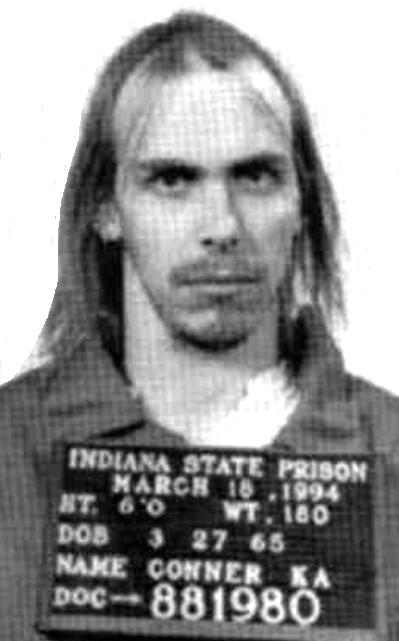
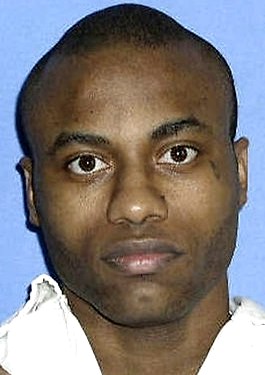
Kevin Aaron Conner
Murderer Brian Kevin Rosenfeld
Murderer · USA · 1985
Brian Kevin Rosenfeld Brian Kevin Rosenfeld was sentenced to three concurrent l…
23 victims
Brian Kevin Rosenfeld
Murderer · USA · 1985
Brian Kevin Rosenfeld Brian Kevin Rosenfeld was sentenced to three concurrent l…
23 victims
 Yahweh ben Yahweh
Murderer · USA · 1980
Yahweh ben Yahweh was born and legally named Hulon Mitchell Jr. (October 27, 19…
23 victims
Yahweh ben Yahweh
Murderer · USA · 1980
Yahweh ben Yahweh was born and legally named Hulon Mitchell Jr. (October 27, 19…
23 victims
 Russell Ellwood
Murderer · USA · 1991
Russell Ellwood was a former taxi driver. Authorities suspected him of killing…
20 victims
Russell Ellwood
Murderer · USA · 1991
Russell Ellwood was a former taxi driver. Authorities suspected him of killing…
20 victims
 Robert Martines Perez
Murderer · USA · 1994
Name: Robert Martines Perez · Other name used in proceedings: Robert Martinez P…
15 victims
Robert Martines Perez
Murderer · USA · 1994
Name: Robert Martines Perez · Other name used in proceedings: Robert Martinez P…
15 victims
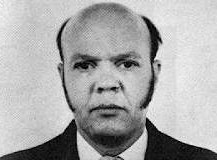 David Carpenter
Serial killer · USA · 1979
David Carpenter (born May 6, 1930), also known as the Trailside Killer, was an…
11 victims
David Carpenter
Serial killer · USA · 1979
David Carpenter (born May 6, 1930), also known as the Trailside Killer, was an…
11 victims
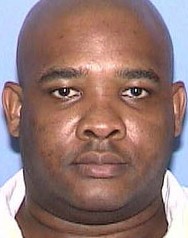 Shannon Charles Thomas
Murderer · USA · 1993
Shannon Charles Thomas was executed by lethal injection in Texas on November 16…
3 victims
Shannon Charles Thomas
Murderer · USA · 1993
Shannon Charles Thomas was executed by lethal injection in Texas on November 16…
3 victims
 One L. Goh
Mass murderer · USA · 2012
One L. Goh was 43 years old at the time of the Oikos University shooting. He wa…
7 victims
One L. Goh
Mass murderer · USA · 2012
One L. Goh was 43 years old at the time of the Oikos University shooting. He wa…
7 victims
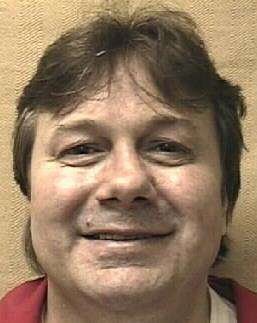 Ronald Wayne Frye
Murderer · USA · 1993
Ronald Wayne Frye was convicted on November 15, 1993 of first-degree murder and…
1 victim
Ronald Wayne Frye
Murderer · USA · 1993
Ronald Wayne Frye was convicted on November 15, 1993 of first-degree murder and…
1 victim
 Donnie Allen Hulett
Murderer · USA · 2002
Donnie Allen “D.J.” Hulett was convicted murderer who was sentenced to death on…
2 victims
Donnie Allen Hulett
Murderer · USA · 2002
Donnie Allen “D.J.” Hulett was convicted murderer who was sentenced to death on…
2 victims
 Ronald Straight
Murderer · USA · 1976
Ronald Straight was executed by electrocution in Florida on May 20, 1986. · Jul…
1 victim
Ronald Straight
Murderer · USA · 1976
Ronald Straight was executed by electrocution in Florida on May 20, 1986. · Jul…
1 victim
- Gender
- male
- Country
- USA
- Location
- Indiana, USA
- Date of birth
- March 27, 1965
- Age at first offence
- 23
- Characteristics
- —
- Victim profile
- Steve Wentland , 19; Tony Moore , 24; Bruce Voge , 19 (acquaintances of Conner) / Jerry Thompson , 41 (inmate)
- Method of murder
- Stabbing with knife (Wentland); shooting with shotgun (Moore and Voge) / Stabbing with knife ( Thompson)
- Date(s) of murder
- January 26, 1988 / October 27, 2002
- Years active
- 1988–2002
- Date of arrest
- —
- Status
-
Executed
Executed by lethal injection in Indiana on July 27, 2005
Case details
Kevin Aaron Conner was convicted by jury in the Marion Superior Court, Criminal Division, John W. Tranberg, J., of three counts of murder and was sentenced to death for two of the three murders.
Timeline
January 26, 1988 — Conner, Tony Moore, Bruce Voge, and Steve Wentland were drinking in Tony Moore's house; during a drive in Wentland's automobile an argument began, Moore stabbed Wentland with Conner's knife, Conner pursued Wentland on foot, and Conner stabbed and beat Wentland, killing him; Conner and Moore drove from the scene and went to City Enterprises, Conner's place of employment, where an argument led Conner to obtain his sawed-off shotgun and shoot and kill Moore; Conner then returned to Tony Moore's house and shot and killed Bruce Voge while Voge was lying on the couch in the living room; after the killings Conner enlisted the help of various friends to dispose of Moore's body, abandon Wentland's automobile, and leave town. October 3, 1988 — Conner’s trial by jury began in Marion County Superior Court. October 7, 1988 — Conner was convicted by the jury of each of the murders with which he had been charged; the jury recommended death for the killings. October 9, 1988 — The penalty phase hearing commenced. October 9, 1988 — The penalty phase hearing concluded with the jury recommending death. November 3, 1988 — Conner was sentenced to death for the murders of Voge and Moore and to a term of 60 years for the murder of Wentland. January 30, 1988 — Conner was apprehended in Texas and returned to Indiana to face murder charges in the Marion County Superior Court in Indianapolis. March 14, 1991 — The record included that Thompson was convicted in the March 14, 1991, shooting deaths of Melvin Hillis and Robert Beeler. October 24, 1991 — Conner v. State, 580 N.E.2d 214 (Ind. October 24, 1991) (Direct Appeal). May 25, 1999 — Conner v. State, 711 N.E.2d 1238 (Ind. May 25, 1999) (Appeal of PCR denial). October 27, 2002 — Conner admitted stabbing to death inmate Jerry Thompson, 41, during a recreation break at the prison. January 15, 2003 — Conner v. Anderson, 259 F.Supp.2d 741 (S.D. Ind. January 15, 2003) (Habeas). July 27, 2005 — Conner was executed by lethal injection in Indiana.
The offence
During the early morning hours of January 26, 1988, Conner, Tony Moore, Bruce Voge, and Steve Wentland were drinking in Tony Moore's house. Bruce Voge remained at the house while Conner, Moore, and Wentland went for a drive in Wentland's automobile. Wentland drove with Moore in the passenger seat and Conner in the back. During the drive, an argument began which resulted in Moore striking Wentland with Conner's knife, causing Wentland to abandon the car and run. Conner, armed with the knife, pursued Wentland on foot while Moore took over the driving of the car and ran Wentland down. While Wentland was down, Conner struck him several times with his fists and stabbed him multiple times with the knife, killing him.
Conner and Moore drove from the scene and went to City Enterprises, Conner's place of employment. There, they woke up Conner's employer and were allowed access to the warehouse area. They began arguing about what had occurred and what future course of action to take and, during the argument, Conner, who had obtained possession of his sawed-off shotgun, shot and killed Moore. The shotgun blasts awakened Conner's employer who confronted Conner as he left the warehouse area. Conner told his employer that he "had to off Tony."
Conner left the warehouse and returned to Tony Moore's house where he shot and killed Bruce Voge while Voge was lying on the couch in the living room.
Following these three killings, Conner enlisted the help of various friends to dispose of Moore's body, abandon Wentland's automobile, and leave town. Conner was apprehended in Texas and returned to Indiana to face charges of murder.
While in prison, Conner admitted stabbing to death inmate Jerry Thompson, 41, during a recreation break at the prison on October 27, 2002. Thompson was convicted in the March 14, 1991, shooting deaths of Melvin Hillis and Robert Beeler.
Investigation and arrest
Trial
Conner was convicted by a Marion Superior Court jury of three counts of murder.
The Supreme Court of Indiana set out alleged errors Conner raised prior to, during, and subsequent to the trial, including:
- Denying individual sequestered jury voir dire.
- Deleting three questions from Conner's tendered jury questionnaire.
- Denying Conner's motion to dismiss the death penalty count and sentencing Conner to death.
- Admitting Conner's confession.
- Denying Conner's motion for severance.
- Admitting evidence of Conner's prior threats and acts of violence directed toward one victim.
- Admitting evidence of Conner's earlier possession of weapons.
- Admitting evidence of Conner's nicknames.
- Instructing the jury of their advisory role in sentencing.
- Denying Conner's motion for continuance of the sentencing hearing.
- Ruling that the evidence was sufficient to support the convictions.
- Ruling that the evidence was sufficient to support the imposition of the death penalty.
- Ordering Conner committed to the Department of Corrections between sentencing and the court's ruling on the motion to correct errors.
- Permitting the State to file an amended information.
- Denying funds to Conner for a polygraph examination.
The Supreme Court of Indiana affirmed Conner’s convictions and sentence. The court stated that it held that the trial court could deny the request for individualized, sequestered voir dire and could delete three questions from Conner's tendered jury questionnaire; that the death penalty statute was not unconstitutional for various reasons asserted; that evidence of Conner's prior threats and acts of violence directed toward one victim, and of Conner's earlier possession of weapons, was properly admitted; and that the convictions were supported by evidence, and the trial court properly considered both aggravating and mitigating circumstances and imposed death penalty in accordance with statute.
The Supreme Court of Indiana further stated:
"For all of the reasons set forth above, we hereby affirm Conner's convictions for murder and the trial court's sentencing of Conner to be executed."
Conner was sentenced to death for two of the three murders, and the trial court also sentenced him to 60 years' imprisonment for the remaining murder.
Sentencing
At a sentencing hearing held on November 3, 1988, Conner was sentenced to death for the murders of Voge and Moore and to a term of 60 years for the murder of Wentland.
Appeals
Direct appeal
Conner v. State, 580 N.E.2d 214 (Ind. October 24, 1991) (Direct Appeal). The Supreme Court held that:
- the trial court could deny Conner's request for individualized, sequestered voir dire and could delete three questions from his tendered jury questionnaire,
- the death penalty statute was not unconstitutional for various reasons asserted,
- evidence of Conner's prior threats and acts of violence directed toward one victim, and of Conner's earlier possession of weapons, was properly admitted,
- and the convictions were supported by evidence, with the trial court properly considering both aggravating and mitigating circumstances and imposing death penalty in accordance with the statute.
The Supreme Court affirmed.
Post-conviction relief appeal (PCR denial)
Conner v. State, 711 N.E.2d 1238 (Ind. Following final affirmance of the convictions and sentences, Conner sought post-conviction relief. The Marion Superior Court, James K. Coachys, Special Judge, denied the petition, and Conner appealed.
The Supreme Court held that:
- evidence established that no improper communication occurred between the jury and bailiff during deliberations in the underlying prosecution,
- a report prepared by a state psychologist had been available to Conner through the exercise of reasonable diligence prior to trial,
- the jury was clearly instructed to acquit in presence of reasonable doubt,
- post-conviction evidence established that Conner's confession had been voluntary, reliable, and not product of coercion or misconduct,
- trial counsel was not ineffective,
- appellate counsel was not ineffective,
- post-conviction evidence was insufficient to support a claim of entitlement to a presumption of ineffective assistance,
- mental health evaluations ordered and funded by the trial court were adequate,
- challenges to constitutionality of Indiana's death penalty system did not allege fundamental error,
- and accumulation of errors did not constitute fundamental error.
The Supreme Court affirmed the denial of the post-conviction petition.
Federal habeas corpus
Conner v. Anderson, 259 F.Supp.2d 741 (S.D. Ind. January 15, 2003) (Habeas). The District Court denied Conner’s federal habeas petition. The District Court held that:
- counsels' performance at the guilt phase did not fall below the objective standard of reasonableness,
- counsels' performance at the penalty phase did not fall below the objective standard of reasonableness,
- even if counsels' performance was deficient, Conner was not prejudiced,
- Conner failed to identify issues which were clearly stronger than those raised by appellate counsel,
- Conner’s confession was voluntary,
- Conner failed to show he was prejudiced by procedural default of a claim that jury instructions were erroneous,
- Conner’s challenge to jury instructions did not demonstrate his actual innocence,
- Indiana's death penalty statute satisfied constitutional requirements for guiding jury discretion in weighing aggravating and mitigating factors,
- Conner’s other challenges to constitutionality of the statute were procedurally defaulted,
- and the State did not suppress evidence in violation of Brady.
The petition was denied.
Conner v. McBride, 375 F.3d 643 (7th Cir. 2004) (Habeas). The Court of Appeals held that:
- a finding that Conner’s confession was voluntary was reasonable,
- a finding that no ex parte jury communication occurred during deliberations was reasonable,
- and a finding that counsel's investigation did not fall below prevailing professional standards was reasonable.
The Court of Appeals affirmed the District Court’s denial.
Other details
Conner was described as a former Southside Indianapolis man and had the nickname "Iceman" for his cold demeanor.
The record included that during a telephone interview from prison, Conner, 40, said: "I'm not going to beg and grovel anyone for my life," and "I got here when I was 22. I've got no desire to grow old in prison."
The record included that Conner admitted stabbing to death inmate Jerry Thompson, 41, during a recreation break at the prison on Oct. 27, 2002.
The record included that Conner asked friends to sell souvenir T-shirts depicting an ice block and a bloody knife, and that he wanted to use the proceeds to bribe the judge.
A police detective who investigated the murders, Edmund Stamm, said:
"He was proud of what he did," and "He showed no remorse."
Sharon Wentland grieved over the death of her son Steven and said: "I feel that we have suffered the loss of a son. I let go of it at that point," and also: "The punishment for his crime is not in my hands. It's in the hands of the judicial system."
Dianna Bevers said:
"It seems like to me prison hasn't helped him." and "He's been on Death Row for 18 years. He's still not remorseful." She said: "Death, Bevers said, is the only suitable punishment." She said: "In one night, four young men's lives were totally gone," and "He has destroyed numerous lives. There's just been so much heartache."
Debbie Noll said she felt:
"pretty sickened, and desperately helpless, that my brother's going to be murdered at the hands of the state," and she supported Conner's decision not to ask for clemency, saying: "I felt pretty sickened, and desperately helpless, that my brother's going to be murdered at the hands of the state," and also that she did not want him to endure jail any longer.
The record included that Conner’s sister described him as "the joker who made her stomach hurt with laughter, the creative boy who loved to write stories and draw pictures," and that she received a package from Conner containing a picture of Bugs Bunny and Yosemite Sam he had drawn in ink for her daughter.
Conner’s lawyers wrestled with whether to comply with Conner's refusal to ask for clemency. Defense lawyer Linda Wagoner said:
"Kevin is very bright, very articulate," and "and he has been extremely consistent with the reasons why he doesn't want the clemency."
The record included that on the day after a judge sentenced Conner to die, he jumped a wall and escaped from the Marion County Jail, ran for about three minutes, and was recaptured.
The record included that in 1994, Conner and four others on Death Row used hacksaw blades, makeshift knives and a grappling hook in an attempt to escape from prison; Conner and three others made it to the base of the outside wall before being spotted and captured.
Conner said:
"If it's built by man, it's capable to be gotten out of."
The record included that Conner claimed to have killed a fellow Death Row inmate in 2002.
Conner refused to talk to The Star about the stabbing, but Wagoner said Conner admitted he killed Thompson and gave a statement last week to lawyers defending another inmate linked to the crime.
Conner said:
"Despite his past, Conner said he has no regrets." and: "He's not one who dwells on the past." He said: "I'm not trying to sound cold or inhumane; that's always been me," and: "What's done is done." He said: "Death, Conner said, is a more humane alternative to life devoid of meaning in prison." He also said: "I'm not bugging about it," and: "What is there to be afraid of? It's an inevitable fact of reality that at some point you have to die."
Outcome
Conner was executed by lethal injection in Indiana on July 27, 2005.

Spotted an error, or have more information about this case?