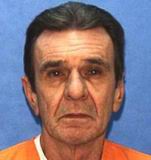
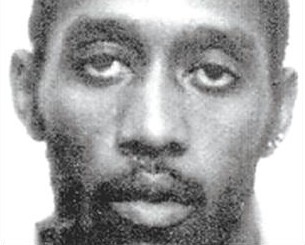
Robert Brian Waterhouse
Murderer Ervil LeBaron
Murderer · USA · 1972
Ervil Morrell LeBaron (1925 to August 16, 1981) was the leader of a polygamous…
35 victims
Ervil LeBaron
Murderer · USA · 1972
Ervil Morrell LeBaron (1925 to August 16, 1981) was the leader of a polygamous…
35 victims
 Marvin Gray
Murderer · USA · 1975
Marvin Gray was convicted killer who claimed responsibility for 23 slayings and…
23 victims
Marvin Gray
Murderer · USA · 1975
Marvin Gray was convicted killer who claimed responsibility for 23 slayings and…
23 victims
 Charles Manson
Murderer · USA · 1969
Charles Milles Manson (born November 12, 1934) was an American criminal and mus…
9 victims
Charles Manson
Murderer · USA · 1969
Charles Milles Manson (born November 12, 1934) was an American criminal and mus…
9 victims
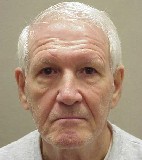 Robert Reldan
Murderer · USA · 1974
Name: Robert Reldan Robert Reldan was sentenced to life in prison on two counts…
8 victims
Robert Reldan
Murderer · USA · 1974
Name: Robert Reldan Robert Reldan was sentenced to life in prison on two counts…
8 victims
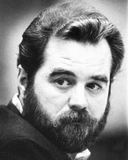 Dennis Duane Webb
Murderer · USA · 1973
Defendant: Dennis Duane Webb · Victims: John Rainwater and Lori Rainwater · Cou…
7 victims
Dennis Duane Webb
Murderer · USA · 1973
Defendant: Dennis Duane Webb · Victims: John Rainwater and Lori Rainwater · Cou…
7 victims
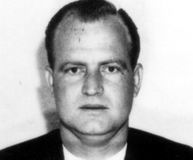 Gary Gene Tison
Murderer · USA · 1967
Gary Gene Tison was serving life sentences at the Arizona state prison. He had…
7 victims
Gary Gene Tison
Murderer · USA · 1967
Gary Gene Tison was serving life sentences at the Arizona state prison. He had…
7 victims
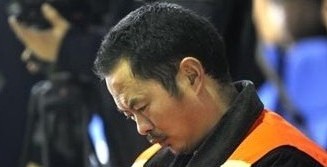 Xiong Zhenlin
Spree killer · China · 2009
Xiong Zhenlin was a Chinese junk dealer and the owner of a junkyard in Suizhou,…
8 victims
Xiong Zhenlin
Spree killer · China · 2009
Xiong Zhenlin was a Chinese junk dealer and the owner of a junkyard in Suizhou,…
8 victims
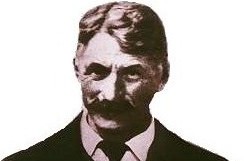 Simone Pianetti
Mass murderer · Italy · 1914
Simone Pianetti was an Italian mass murderer born in 1858. He was born in Camer…
7 victims
Simone Pianetti
Mass murderer · Italy · 1914
Simone Pianetti was an Italian mass murderer born in 1858. He was born in Camer…
7 victims
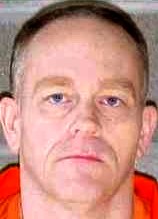 Steven Craig James
Murderer · USA · 1981
Steven Craig James was sentenced to death on November 23, 1982. Juan Maya picke…
1 victim
Steven Craig James
Murderer · USA · 1981
Steven Craig James was sentenced to death on November 23, 1982. Juan Maya picke…
1 victim
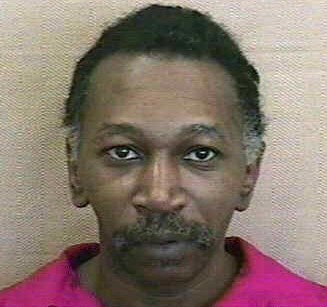 Wendell Flowers
Murderer · USA · 1981
1981 — Wendell Flowers was serving a life sentence for the murder of 81-year-ol…
2 victims
Wendell Flowers
Murderer · USA · 1981
1981 — Wendell Flowers was serving a life sentence for the murder of 81-year-ol…
2 victims
 Zheng Yongshan
Murderer · Japan · 2006
Zheng Yongshan (鄭 永善, born 1972) also went by the name of Mie Taniguchi (谷口 充恵)…
2 victims
Zheng Yongshan
Murderer · Japan · 2006
Zheng Yongshan (鄭 永善, born 1972) also went by the name of Mie Taniguchi (谷口 充恵)…
2 victims
 Michael Woodmansee
Homicide · USA · 1975
Michael Woodmansee was a sixteen-year-old junior at South Kingstown High School…
1 victim
Michael Woodmansee
Homicide · USA · 1975
Michael Woodmansee was a sixteen-year-old junior at South Kingstown High School…
1 victim
- Gender
- male
- Country
- USA
- Location
- New York/Florida, USA
- Date of birth
- December 16, 1946
- Age at first offence
- 20
- Characteristics
- rape, drug addict, alcohol
- Victim profile
- Ella Carter, 77 / Deborah Kammerer, 29
- Method of murder
- ??? / Drowning
- Date(s) of murder
- 1966 / 1980
- Years active
- 1966–1980
- Date of arrest
- January 9, 1980
- Status
-
Executed
Executed by lethal injection in Florida on February 15, 2012
Case information
Robert Brian Waterhouse was convicted of the first-degree murder of Deborah Kammerer in Florida.
Waterhouse was identified as having DC# 075376 and a date of birth of 12/16/46. The case was in the Sixth Judicial Circuit, Pinellas County, Case #80-192.
Sentencing judge: The Honorable Robert Beach. Resentencing judge: The Honorable Robert Beach.
Trial attorneys: Paul Scherer & John Thor White – Assistant Public Defenders. Resentencing attorney: Larry Hoffman, Esq. Direct appeal attorney: Philip J. Padovano, Esq. Direct appeal / resentencing attorneys: Steven Bright, Esq. & Clive Stafford Smith, Esq. Collateral appeals attorney: Robert Norgard, Esq. – Private
Date of offence: 01/02/80. Date of sentence: 09/03/80. Date of resentence: 04/11/90.
Timeline
- 01/02/80 — Date of offence.
- 01/03/80 — St. Petersburg police responded to a call that the nude body of an unidentified woman had been found in the mud flats of Tampa Bay.
- 01/07/80 — Police asked Waterhouse to go to the police station voluntarily for questioning.
- 01/08/80 — Waterhouse’s car was searched.
- 01/09/80 — Waterhouse was arrested for the murder of Deborah Kammerer.
- 09/03/80 — Upon advisory sentencing, the jury by a 12 to 0 majority voted for the death penalty; Waterhouse was sentenced to death.
- 10/08/80 — Waterhouse filed his direct appeal in the Florida Supreme Court.
- 02/17/83 — The Florida Supreme Court affirmed Waterhouse’s conviction and sentence of death.
- 11/07/83 — The United States Supreme Court denied Waterhouse’s petition for writ of certiorari.
- 02/11/88 — The Florida Supreme Court granted Waterhouse’s petition for writ of habeas corpus and remanded for a new penalty phase consistent with Lockett and Hitchcock.
- 03/21/90 — Upon advisory sentencing, a new jury voted 12 to 0 for the imposition of the death penalty.
- 04/11/90 — Waterhouse was resentenced to death.
- 04/18/91 — The Florida Supreme Court denied Waterhouse’s habeas corpus petition and motion for extraordinary relief.
- 05/31/01 — The Florida Supreme Court affirmed the denial of Waterhouse’s 3.850 motion.
- 11/21/02 — The Florida Supreme Court denied Waterhouse’s petition for writ of habeas corpus.
- 09/30/03 — Waterhouse filed a 3.853 motion for DNA testing in the State Circuit Court.
- 10/03/88 — The United States Supreme Court denied the State’s petition for writ of certiorari after remand.
- 07/06/05 — The court denied Waterhouse’s motion for postconviction DNA testing.
- 11/13/04 — A petition seeking review of the non-final order in the 3.853 proceedings was dismissed without prejudice.
- 08/10/05 — Waterhouse filed a 3.853 appeal in the Florida Supreme Court.
- 01/04/12 — The Governor signed a death warrant for Waterhouse with the execution scheduled for February 15, 2012.
- 01/09/12 — Leglio Sotolongo signed an affidavit.
- 01/13/12 — The postconviction court held a rule 3.851 case management conference on Waterhouse’s successive motion.
- 01/17/12 — The postconviction court held an evidentiary hearing.
- 01/20/12 — The postconviction court entered an order denying relief on Waterhouse’s second claim.
- 01/23/12 — The State filed a notice of cross-appeal.
- 02/15/12 — Waterhouse was executed by lethal injection in Florida.
- 02/08/12 — The Florida Supreme Court opinion date in the successive postconviction appeal (No. SC12–107).
Background
Waterhouse was convicted in 1980 of first-degree murder and sentenced to death for the murder of Deborah Kammerer.
At the time of the Kammerer murder, Waterhouse was on lifetime parole from a prior case in New York. The prior case involved Waterhouse’s conviction and life sentence after he pled guilty to second-degree murder following a burglary.
Waterhouse visited with his wife Fran for two hours on the morning of his execution. He married Fran while he was behind bars.
The offence
Deborah Kammerer was found dead in the tidal flats of Tampa Bay.
Condition and findings at discovery
On the morning of January 3, 1980, St. Petersburg police responded to a call that the nude body of an unidentified woman had been found face down in the mud flats at low tide on the shore of Tampa Bay.
The body had severe lacerations on the head and bruises around the throat. The body had lacerations of the rectum, and hemorrhaging indicated the victim was alive and that defense wounds indicated she was conscious at the time these lacerations and bruises were inflicted.
The cause of death was determined to have been drowning. There was evidence that the body had been dragged from a grassy area on the shore into the water at high tide.
Several items of clothing were gathered from along the shore at the scene. The body was completely unclothed when discovered.
A blood-soaked tampon had been stuffed in the victim’s mouth. The wounds were such that they were probably made with a hard instrument such as a steel tire changing tool.
The medical examiner determined that acid phosphotase in the victim’s rectum suggested the presence of semen, and that the lacerations in the rectum were consistent with battering by insertion of a large object. The medical examiner also determined that at the time of the murder the victim was having her menstrual period.
The body showed evidence of thirty lacerations and thirty-six bruises.
Investigation
Police initially could not identify the victim and announced the situation to the public.
An anonymous telephone call provided appellant’s automobile tag number and advised police to investigate it.
Police learned the identity of the victim from two of her neighbors: Yohan Wenz and Carol Byers.
Kyoe Ginn, a bartender at the ABC Lounge, testified that he saw Kammerer talking to Robert Waterhouse and that Waterhouse and Kammerer left the lounge together around 1:00 a.m.
Police questioned Waterhouse on January 7, 1980. Waterhouse said he did not know a girl named Debbie and stated he went to the ABC lounge on January 2 but did not leave with a woman.
Waterhouse was allowed to leave, but his car was impounded pursuant to a search warrant. Investigators searched his car on January 8, 1980.
Forensic evidence linking Waterhouse
The search revealed bloodstains in the car. A luminol test showed more blood had been wiped up.
The blood found in the car was consistent with the victim’s blood type and inconsistent with Waterhouse’s blood type.
Investigators also found strands of hair similar in characteristics to samples taken from Kammerer.
Fibers were found in the car that matched fibers from the Kammerer’s coat and pants.
A forensic blood analyst testified regarding blood stain direction and velocity and concluded that the blood in the car was deposited in the course of a violent attack.
A forensic hair analyst testified that hairs found in Waterhouse’s car were consistent with known hair samples from the victim.
A forensic fiber analyst testified that fibers found in debris adhering to the victim’s coat were similar to fibers from the fabric of the seat cover in Waterhouse’s car, and that fibers in the car had characteristics matching fibers from the victim’s coat and pants.
Interview statements
Detectives asked Waterhouse about the case. Hitchcox asked him: “We were right the other night, weren't we, when we talked to you about being involved in this case?” Waterhouse responded: “Might.”
Shown a picture of Deborah Kammerer, Waterhouse admitted that he did in fact know her.
During the January 9 afternoon interview, Detective Murry testified that Waterhouse became emotionally upset, said repeatedly that his life was over and that he was going to the electric chair, and stated that he wanted to talk to his interviewers as people rather than as police officers.
Waterhouse told detectives he had personal problems with alcohol, sex, and violence. He also stated that when he drank a lot, it was like something snapped and that he found himself doing things he knew were terrible and bad and that he could not control his behavior.
Waterhouse further told the officers that when he wanted to engage in sexual activity with a woman and learned that she was having her menstrual period, he became frustrated and angry, and that this was what had happened the previous Wednesday night.
During another interrogation on January 10, Waterhouse again indicated he experienced a problem involving sexual activity and stated that he had had a lot to drink on Wednesday night.
Waterhouse was employed as a plaster and drywall worker. His foreman testified at trial that on the morning of January 3, Waterhouse arrived at work asking for the day off, appeared to have a hangover and said he was feeling rough, and had scratches on his face.
The foreman testified that Waterhouse told him he liked anal intercourse and liked being with women who allowed themselves to be hit and slapped.
Arrest
Waterhouse was arrested on January 9, 1980 for the murder of Deborah Kammerer.
Detectives Murry and Hitchcox arrested him.
Trial
Charges and verdict
Waterhouse was indicted with:
- Count I: First-Degree Murder
The jury found Waterhouse guilty of First-Degree Murder.
Sentencing recommendation and death sentence
Upon advisory sentencing, the jury recommended death by a 12 to 0 majority for the murder of Deborah Kammerer.
The trial court sentenced Waterhouse to death on September 3, 1980.
Sentencing
Direct appeal and habeas relief affecting penalty phase
Waterhouse was sentenced to death and the jury recommended a sentence of death.
On direct appeal, the Florida Supreme Court affirmed the conviction and sentence of death, and also affirmed the denial of Waterhouse’s initial rule 3.850 motion.
The Florida Supreme Court later granted Waterhouse’s petition for writ of habeas corpus and vacated his death sentence because the trial court failed to instruct the jury to consider evidence of nonstatutory mitigating circumstances in violation of Hitchcock v. Dugger and Lockett v. Ohio.
Resentencing
On resentencing, a unanimous jury again recommended death by a 12 to 0 majority.
The trial court resentenced Waterhouse to death on April 11, 1990.
Appeals and postconviction proceedings
Direct appeal claims
Waterhouse filed a direct appeal in the Florida Supreme Court in October 1980.
Waterhouse claimed the trial court erred when it denied his motion to suppress statements made on January 7, 1980, arguing they resulted from an illegal arrest, despite evidence that he went to the police station voluntarily. He also argued admission of statements made on January 9, 1980 and January 10, 1980 was inadmissible after he requested an attorney, and that officers violated his Fifth Amendment right by questioning him after he invoked the right to consult an attorney.
He argued the trial court erred by admitting irrelevant testimony of a jailhouse cellmate and in its consideration and application of mitigating circumstances.
The Florida Supreme Court found no merit and affirmed the conviction and sentence of death on February 17, 1983.
Waterhouse filed a petition for writ of certiorari in the United States Supreme Court on July 29, 1983; it was denied on November 7, 1983.
Second death warrant and stays / postconviction motions
Governor Bob Graham signed a death warrant on February 22, 1985 and set the execution date for 03/19/85.
Waterhouse filed an application for stay of execution in the state circuit court on 03/15/85, and the stay was granted pending resolution of his 3.850 motion.
The State filed a motion to vacate the stay of execution; that was denied on 03/18/85.
Waterhouse filed his 3.850 motion on 04/22/85; it was denied on 07/09/86. He appealed that denial in the Florida Supreme Court on 10/31/86.
In a consolidated opinion with a petition for writ of habeas corpus filed on 04/30/87, the Florida Supreme Court affirmed denial of the 3.850 motion but granted habeas relief on 02/11/88, remanding for a new penalty phase consistent with Lockett and Hitchcock.
The State filed a petition for writ of certiorari in the United States Supreme Court, denied on 10/03/88.
1990 resentencing direct appeal
Waterhouse filed a direct appeal in the Florida Supreme Court on 06/08/90.
He argued he was denied the right to counsel because his lawyer refused to make a closing argument at the resentencing hearing. The Florida Supreme Court stated that Waterhouse was not denied the right to counsel, but “rejected the choice of a closing argument by counsel confined to the appropriate issues.”
Waterhouse also claimed the trial court erred in refusing to answer two questions raised by the jury and in allowing the State to introduce evidence regarding his prior Second-Degree Murder conviction in New York.
He contended the trial court erred in applying the “committed for the purpose of avoiding arrest” and “cold, calculated, and premeditated” aggravating factors.
The Florida Supreme Court agreed with some of Waterhouse’s claims, but held that eliminating those two aggravating factors did not change the outcome; other aggravators and the lack of evidence in mitigation still would result in a sentence of death.
The Florida Supreme Court affirmed the sentence of death on 02/20/92.
Waterhouse filed a petition for writ of habeas corpus and a motion for extraordinary relief in the Florida Supreme Court after his direct appeal was filed but before its disposition. The habeas and motion were denied on 04/18/91.
A petition for writ of certiorari in the United States Supreme Court was denied on 11/02/92.
Further collateral review
Waterhouse filed a 3.850 motion in state circuit court again; after its denial, he filed a 3.850 appeal in the Florida Supreme Court. The Florida Supreme Court affirmed denial on 05/31/01.
Waterhouse filed another petition for writ of habeas corpus in the Florida Supreme Court; it was denied on 11/21/02.
DNA testing motions
Waterhouse filed a 3.853 motion for DNA testing on 09/30/03.
On 07/06/05, the court issued an order denying Waterhouse’s motion for postconviction DNA testing.
The State filed a petition seeking review of a non-final order in the 3.853 proceedings on 06/03/04; it was dismissed without prejudice on 11/13/04.
Waterhouse filed a 3.853 appeal in the Florida Supreme Court on 08/10/05; that appeal was noted as pending.
Successive rule 3.851 motion (post-2012 warrant)
On January 4, 2012, the Governor signed a death warrant for Waterhouse with execution scheduled for February 15, 2012.
Waterhouse sought postconviction relief in the circuit court presenting two claims and sought a stay of execution.
Claim 1: destruction of evidence / DNA testing
Waterhouse asserted that execution should be constitutionally barred where a person under sentence of death who consistently maintained innocence and in good faith filed a motion for postconviction DNA testing to establish innocence was precluded from obtaining testing due to destruction of evidence through negligence of a government agency in violation of state law.
Waterhouse contended that, in the context of a prior rule 3.853 motion, it was determined that the Office of the Clerk of the Sixth Judicial Circuit of Florida had destroyed “all evidence in this case” in violation of section 43.195, Florida Statutes (1987).
Waterhouse argued the issue was a question of first impression and that he sought recognition of a fundamental constitutional right for the first time.
Claim 2: nondisclosure of a witness and false testimony allegations (Sotolongo affidavit)
Waterhouse asserted he was denied adversarial testing during his capital trial due to the failure of the State to disclose a material witness under Brady v. Maryland and the presentation of false testimony under Giglio v. United States, in light of the affidavit of Leglio Sotolongo dated January 9, 2012.
Sotolongo was described as a doorman at the ABC lounge in St. Petersburg who was at the lounge on the night of the murder.
Waterhouse alleged that Sotolongo could not remember if he was working that night, but that Sotolongo remembered the night because Waterhouse repaid money borrowed from Sotolongo.
Sotolongo stated that Waterhouse arrived at approximately 7–8 p.m. and that after the murder Sotolongo informed police he saw Waterhouse leave with two men.
Sotolongo stated: “I cannot be precise regarding the time, but it was before closing time, which was 2:00 A .M.”
Sotolongo stated that from his position at the center bar, bartender and State witness Kyoe Ginn would not have been able to see the exit door to the lounge.
Sotolongo averred that although he informed Detective Gary Hitchcox that he saw Waterhouse leave the lounge with two men, the police report stated Sotolongo did not “remember when Mr. Waterhouse left the lounge.” Sotolongo stated that this portion of the report “is false.”
Sotolongo stated that after his interview with Hitchcox, Sotolongo and Leon Vasquez encountered the detective at Murphy’s Bar, and the affidavit included the following statement:
Detective Hitchcox came up to us and got into our faces. The Detective accused us of trying to protect a murderer. The situation was such that there was almost a physical altercation, but there wasn't, and we left the bar.
Waterhouse attached affidavits of guilt-phase defense counsel stating they relied on Detective Hitchcox’s report being accurate and truthful, and that no one from the defense team contacted or spoke with Mr. Sotolongo prior to trial.
The affidavits stated that had they been aware of Sotolongo’s statement, they would have presented him as a witness for impeaching Ms. Ginn and corroborating other defense testimony, including Leon Vasquez.
Waterhouse argued Sotolongo’s testimony would have impeached Ginn’s testimony and corroborated defense witness Leon Vasquez, who testified he saw Waterhouse leave the lounge with two men.
Waterhouse argued that permitting Ginn to testify falsely constituted a Giglio violation.
During closing statements at the evidentiary hearing stage, counsel for Waterhouse abandoned the Giglio claim.
Evidentiary hearing (January 17, 2012)
The evidentiary hearing was held on January 17, 2012.
Waterhouse advised the court by telephone that he chose to waive his personal appearance.
The testimony of Leglio Sotolongo was presented by Waterhouse. Detective Gary Hitchcox was presented as a witness by the State.
The parties stipulated that trial counsel would have testified consistent with affidavits filed with the court, and trial counsel did not testify.
Sotolongo testimony
Sotolongo testified that in 1980 he was moonlighting as a doorman at the ABC lounge in St. Petersburg.
He testified that he did not dispute that Hitchcox showed him a photo of the victim if Hitchcox testified to that fact.
Sotolongo testified that he believed he was working at the ABC lounge on the night of the murder.
When shown Hitchcox’s report stating Sotolongo was at the bar but not working that night, Sotolongo testified, “If I said it to [Hitchcox] way back then, then that recollection, if true, is probably more accurate than not.”
Sotolongo stated in his affidavit he remembered the night of January 2, 1980 because Waterhouse repaid money borrowed from Sotolongo, but in the evidentiary hearing Sotolongo testified that Waterhouse may have repaid him the previous night.
Sotolongo testified that he was certain he saw Waterhouse leave the ABC lounge with two males, but he could not specify the time.
During cross-examination, Sotolongo testified he did not know exactly what time he left, that he remembered him leaving towards the end of the shift, and that he was certain he was there from start to finish as a doorman. He stated his memory was better thirty-two years earlier than it was at the time of the hearing.
Sotolongo testified that bartender Kyoe Ginn would not have been able to see the exit where Sotolongo observed Waterhouse leave.
Sotolongo acknowledged that there was a second exit and that it was possible Ginn could see that other exit. He conceded that if he was checking identifications at the exit referenced in the affidavit, he would not have been able to see what was happening in the lounge.
Sotolongo stated he knew bouncer Leon Vasquez and that Vasquez testified during trial he saw Waterhouse leave the lounge with two men.
When asked why he did not seek out the defense attorneys during Waterhouse’s trial, Sotolongo replied: “I thought things would evolve the way they're supposed to. Since I gave my statement to the detective, I thought that my testimony probably wasn't needed, and that's why I wasn't called to testify.”
Sotolongo admitted his memory was better earlier and that events were a long time ago.
Hitchcox testimony
Detective Gary Hitchcox admitted he did not have an independent recollection of the interview and testified to what was provided in his 1980 report.
Hitchcox testified that according to the report, Sotolongo told him that he was at the ABC lounge on the night of the murder from 10:00 p.m. until 1:00 a.m.
Hitchcox denied that during the interview Sotolongo stated he saw Waterhouse leave the bar with two men, and testified that Sotolongo’s affidavit was false.
Hitchcox testified that if Sotolongo had informed him of seeing Waterhouse leave with two men, he would have “[a]bsolutely” included it in his report.
Hitchcox testified that the notes he took during the interview no longer existed.
When asked if he would have omitted information about Sotolongo observing Waterhouse leaving with two men, Hitchcox replied:
[T]wo men leaving with the suspect would be very important. We would want to pursue that. I would—that would be something that I would get excited about as an investigator. [Sotolongo] told me he didn't see [Waterhouse] leave, and there was nothing said about leaving with two men. That would have been in the report.
Hitchcox testified he did not recall interviewing Leon Vasquez and, when confronted with his 1980 trial testimony, stated:
[T]he only thing that I can tell you about that is I testified to interviewing Vasquez. I would think that there would be a police report indicating that I interviewed him with the same type of setup: Me interviewing, where it happened, when I talked to him, what he said. And I don't have that. ․ So my testimony at that trial had to be from my knowledge back what, 32 years ago, of some type of documentation which would be maybe a police report, another report, a deposition, something to reflect my memory, or perhaps just from memory.
On redirect, Hitchcox testified he would have been privy to any reports that other detectives compiled about Vasquez.
Postconviction court decision (January 20, 2012)
On January 20, 2012, the postconviction court denied relief on Waterhouse’s second claim.
Due diligence findings
The postconviction court found Waterhouse satisfied the first prong for newly discovered evidence.
The court concluded Sotolongo’s testimony was unknown to Waterhouse, counsel, and the circuit court at the time of trial, and could not have been discovered by due diligence.
The postconviction court relied on Mungin, emphasizing that defense counsel did not have to allocate limited pre-trial resources to investigate a witness reported by police to have said something contrary to what the witness later claimed.
Likelihood of acquittal on retrial (reliability and prejudice)
The court held Waterhouse failed to establish the second prong for relief.
It concluded Sotolongo’s testimony would not probably produce an acquittal on retrial and would not give rise to reasonable doubt as to Waterhouse’s culpability.
The postconviction court described significant evidence supporting guilt and also addressed additional facts from the trial record, including:
- Waterhouse told police that nobody had used his vehicle for at least two weeks prior to the murder.
- In the January 9, 1980 interview, Waterhouse stated: “nothing will bring her back.”
- On January 10, 1980 Waterhouse discussed problems with alcohol and violence, stating: “this problem would just come over him very quickly, like flipping a switch.”
- Waterhouse told police that on the night of the murder he consumed eight or nine beers before arriving at the ABC lounge and four or five white russians while at the lounge, and asked: “why do you think I quit drinking since Wednesday night?”
- At trial, bartender Kyoe Ginn testified that after the night of the murder, Waterhouse only drank orange juice at the ABC lounge and left prior to closing.
- During the January 10 interview, Waterhouse admitted he knew the victim for at least six months and they had engaged in sexual intercourse on approximately three occasions.
- Robert Van Vuren testified that Waterhouse arrived at work on January 3 with scratches on his face and that Waterhouse appeared to be wearing makeup on January 7, 1980 to cover scratches, and Van Vuren had previously seen a tire tool in Waterhouse’s vehicle.
- Inmate Kenneth Young testified that while Young’s trial was pending, Waterhouse held a shank to another inmate’s throat and ordered everyone else out; Young testified that Waterhouse left and stated, “I wonder how he'd like a Coke bottle up his ass like I gave her.”
- The medical examiner testified that the victim’s rectum damage was consistent with a foreign object such as a Coke bottle; police found a Coke bottle inside Waterhouse’s vehicle.
- When Waterhouse learned Van Vuren would be called to testify about scratches, Waterhouse told inmate Kenneth Young that Van Vuren was incorrect and stated he was so scratched he did not go to work at all that day.
- Kenneth Norwood testified that on January 3 he saw Waterhouse washing his car and cleaning the vehicle interior.
- The postconviction court concluded Sotolongo’s testimony was not reliable due to the passage of time and weaker memory, and that it was cumulative to Leon Vasquez’s testimony, leaving open the time frame for Waterhouse’s possible return.
Regarding Sotolongo’s testimony, the postconviction court found it not reliable because of long passage of time and weaker memory compared with earlier statements, and further noted it was cumulative.
Brady claim findings
The postconviction court held the Brady claim failed.
It found Sotolongo’s testimony would have impeached bartender Ginn and corroborated bouncer Vasquez, satisfying the first prong of Brady, but concluded the evidence was not suppressed and thus failed the second prong.
The court found Waterhouse failed to establish the police report was in fact falsified, and further held that even if suppression had been shown, Waterhouse failed to show prejudice under the third Brady prong because of other uncontroverted evidence including Waterhouse’s incriminating statements and physical and circumstantial evidence.
The postconviction court reasoned:
- the description of Sotolongo’s interview by Hitchcox was more reliable since it was reduced to writing at the time of the 1980 interview,
- passage of time and Sotolongo’s weak recollection affected reliability.
Florida Supreme Court decision (successive appeal)
The Florida Supreme Court affirmed the postconviction court’s orders and denied Waterhouse’s request for a stay of execution.
Destruction of evidence claim
The Florida Supreme Court agreed with the postconviction court that the destruction of evidence claim was improperly pled in the successive motion and also procedurally barred, successive, and untimely.
The court agreed that Waterhouse had been aware of destruction of evidence since at least October 15, 2003.
The court also stated that Waterhouse was seeking recognition of a fundamental right for the first time rather than an existing fundamental right, and the claim therefore did not satisfy rule 3.851 requirements.
Newly discovered evidence / Sotolongo affidavit
The Florida Supreme Court held the due diligence prong was satisfied, relying on the case law discussed including Mungin, Huggins, and the principle that collateral counsel should not be held to a higher standard.
The court found:
- a witness swore in an affidavit that he had spoken with police, but the police report information was inaccurate or false,
- Waterhouse’s counsel swore they relied on the report and did not contact the witness because the report indicated no pertinent information.
The Florida Supreme Court rejected the State’s cross-appeal challenging timeliness.
On the second prong, the Florida Supreme Court affirmed denial because Sotolongo’s testimony was not reliable and was not of a nature that it would probably produce an acquittal on retrial.
The Florida Supreme Court accepted the postconviction court’s credibility findings and pointed to the equivocal nature of Sotolongo’s testimony and the passage of time.
The court further reasoned that even if Sotolongo’s testimony were accepted, it would not undermine the overall evidence timeline because Vasquez already presented the departure with two men and returned to the vicinity, and Ginn observed Waterhouse inside with the victim before they departed together.
Brady claim
The Florida Supreme Court held Waterhouse failed to establish a Brady violation.
It held that because the postconviction court found Hitchcox’s testimony about the interview more reliable and because the report was not found false, the State had not suppressed impeaching evidence.
The court also explained that even if suppressed impeaching evidence had been assumed, prejudice was not shown because of incriminating statements and other evidence, and because Sotolongo’s testimony could be reconciled with other testimony.
Execution and outcome
The Florida Supreme Court denied Waterhouse’s request for a stay of execution and affirmed denial of postconviction relief.
Waterhouse was executed by lethal injection in Florida on February 15, 2012.
He was pronounced dead at 8:22 p.m., 11 minutes after the execution began.
Waterhouse was on death row for more than 31 years at the time of his execution, longer than any inmate previously executed in Florida.
Waterhouse had told others: “You are about to witness the execution of a wrongly convicted and innocent man,” and he blamed his conviction on corrupt prosecutors, a prejudiced judge and a rubber-stamp appellate system.
Waterhouse stated: “The state broke its own law in destroying DNA evidence in my case so I could not prove my innocence. To my wife and family, I want to say I love you all and that's it.”
Outside the prison, more than 40 people protested the execution.
Roman Catholic priest Father Phil Egitto of Daytona Beach brought more than half the group by bus and said: “Violence begets violence. This is basically premeditated murder,” and “Killing is wrong.”
Signs included statements: “Murder is a sign. The death penalty is legal murder” and “We remember the victims but not with more killing” and “Though shalt not kill.”
Death penalty supporters included Jo Ellen Isbell, 49, and her fiancé, Jay Golding, 41. Isbell said: “I read a lot about him and I just wanted to support (Kammerer),” and “My heart breaks for the family and I am very much for what's happening.”
Waterhouse’s last meal consisted of:
- two pork chop cutlets,
- two eggs sunny side up,
- two pieces of toast,
- a slice of cherry pie,
- a pint of butter pecan ice cream,
- a pint of orange juice,
- a pint of milk.
Waterhouse declined to meet with a minister or spiritual adviser.
Other details
Waterhouse admitted having sex with Kammerer but denied killing her.
A bartender had seen Kammerer and Waterhouse leave a St. Petersburg bar together.
Police arrested Waterhouse a week after Kammerer’s body was found.
Waterhouse was described as a plasterer and drywall installer.
The Florida Supreme Court opinion reflected that waterhouse’s execution was the fourth execution in the United States that year and referenced the United States Supreme Court’s 1972 action that required states to revamp their death penalty statutes and methods.
Prior New York case
In 1966, Waterhouse was indicted in New York on charges of first-degree murder and burglary for breaking into a home and killing 77-year-old Ella Carter.
Waterhouse pled guilty to second-degree murder and was sentenced to life imprisonment.
He was on lifetime parole at the time of the Kammerer murder.
Defense arguments and witness timeline details in the postconviction decision
The Florida Supreme Court discussed the testimony of Kyoe Ginn, Leon Vasquez, and the new testimony proposed by Sotolongo, including the approximate times and that there were multiple entrances to the lounge.
The court considered that Vasquez observed Waterhouse leave the lounge with two men at about 11:50 p.m. and return to the parking lot around 12:30 a.m., and that Ginn observed Waterhouse inside drinking with the victim before they departed together at about 1:00 a.m.
The Florida Supreme Court concluded that even if Sotolongo had told Detective Hitchcox that he saw Waterhouse leave with two men on January 2, 1980, it would add nothing to the testimony already presented at trial, because Vasquez already provided the more precise timeline.
Attorneys and claims in the successive appeal
Waterhouse appealed denial of his successive motion for postconviction relief filed under Florida Rule of Criminal Procedure 3.851.
Robert A. Norgard and Andrea M. Norgard represented Waterhouse.
Pamela Jo Bondi, Attorney General, and Candance M. Sabella, Bureau Chief, and Stephen D. Ake, Assistant Attorneys General, represented the State.
The Florida Supreme Court stated it had jurisdiction under art. V, § 3(b)(1), Fla. Const.
The court issued an opinion affirming the circuit court’s orders and denying the stay. The mandate was ordered to issue immediately and a rehearing motion would not be entertained.
CANADY, C.J., concurred in result with respect to affirmance of trial court’s denial, but dissented with respect to the decision on the State’s cross-appeal. QUINCE, J., recused.
No motion for rehearing would be entertained by the court.
Spotted an error, or have more information about this case?