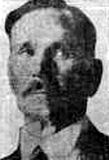
John S. Williams
Murderer Edward Adams
Murderer · USA · 1920
Edward J. "Eddie" Adams was born in 1887 on a farm in Hutchinson, Kansas as W.J…
7 victims
Edward Adams
Murderer · USA · 1920
Edward J. "Eddie" Adams was born in 1887 on a farm in Hutchinson, Kansas as W.J…
7 victims
 Floyd Allen
Murderer · USA · 1912
Floyd Allen (July 5, 1856 – March 28, 1913) was an American landowner and patri…
5 victims
Floyd Allen
Murderer · USA · 1912
Floyd Allen (July 5, 1856 – March 28, 1913) was an American landowner and patri…
5 victims
 Carl Otto Wanderer
Murderer · USA · 1920
Carl Otto Wanderer (1887–1921) was described as a murderer known for what becam…
2 victims
Carl Otto Wanderer
Murderer · USA · 1920
Carl Otto Wanderer (1887–1921) was described as a murderer known for what becam…
2 victims
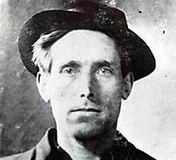 Joe Hill
Murderer · USA · 1914
Joe Hill was a Swedish-American labor activist, songwriter, and member of the I…
2 victims
Joe Hill
Murderer · USA · 1914
Joe Hill was a Swedish-American labor activist, songwriter, and member of the I…
2 victims
 Susan Barber
Murderer · United Kingdom · 1981
Susan Barber married Michael Barber in 1970. Susan was 17 years old and had a d…
1 victim
Susan Barber
Murderer · United Kingdom · 1981
Susan Barber married Michael Barber in 1970. Susan was 17 years old and had a d…
1 victim
 Monique Robinson
Murderer · USA · 2011
Monique Robinson was a Phoenixville teenager and former Phoenixville Area High…
1 victim
Monique Robinson
Murderer · USA · 2011
Monique Robinson was a Phoenixville teenager and former Phoenixville Area High…
1 victim
 Bobby Wayne Woods
Murderer · USA · 1997
Defendant: Bobby Wayne Woods · Execution: Bobby Wayne Woods was executed by let…
1 victim
Bobby Wayne Woods
Murderer · USA · 1997
Defendant: Bobby Wayne Woods · Execution: Bobby Wayne Woods was executed by let…
1 victim
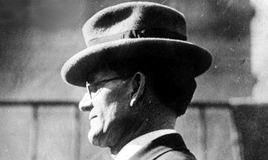 William Hale
Murderer · USA · 1921
Name: William Hale · Known as: the so-called "King of the Osage Hills" · Occupa…
24 victims
William Hale
Murderer · USA · 1921
Name: William Hale · Known as: the so-called "King of the Osage Hills" · Occupa…
24 victims
 Charles Andrew Williams
Homicide · USA · 2001
Charles Andrew “Andy” Williams was born on February 8, 1986, in Frederick, Mary…
2 victims
Charles Andrew Williams
Homicide · USA · 2001
Charles Andrew “Andy” Williams was born on February 8, 1986, in Frederick, Mary…
2 victims
- Gender
- male
- Country
- USA
- Location
- Jasper County, Georgia, USA
- Date of birth
- 1863
- Age at first offence
- 47
- Characteristics
- domestic violence, murder-for-hire, hate crime
- Victim profile
- Black men
- Method of murder
- ???
- Date(s) of murder
- 1910 - 1921
- Years active
- 1910–1921
- Date of arrest
- —
- Status
-
Died in custody
Killed in prison on January 26, 1932
Overview
John S. Williams was convicted of murder and sentenced to life imprisonment on two counts. He was killed in prison on January 26, 1932.
People involved
- John S. Williams — defendant.
- Clyde Manning — defendant and main witness against Williams in Williams’s trial.
Defence attorneys
- Greene F. Johnson — defence attorney for Williams.
- W. H. Key — defence attorney for Williams.
- C. C. King — defence attorney for Williams.
- E. Marvin Underwood — defence attorney for Manning.
- A. D. Meadows — defence attorney for Manning.
Prosecuting attorneys
- A. M. Brand — prosecuting attorney.
- William M. Howard — prosecuting attorney.
- Graham Wright — prosecuting attorney.
Judge
- John B. Hutcheson — judge.
Timeline
- April 5–9, 1921 — Williams was tried.
- May 30–31, 1921 — Manning was tried.
- 1927 — Manning died in prison of tuberculosis.
- January 26, 1932 — Williams was killed in prison.
The offence
Williams and Manning were charged with murder. They were indicted in Newton County for three counts of murder, with trials held separately. They also went to trial for one murder at a time so that, if found innocent on one charge, they could then be tried on another.
The motive was described as: “Enslaved blacks, killing those who fled or "caused trouble"”.
Investigation
In November 1920, a peon named Gus Chapman escaped from the Williams farm and made his way to the Atlanta offices of the Bureau of Investigation (as the FBI was then called).
While investigating other federal matters in the area, two federal agents visited the Williams plantation on February 18, 1921. The agents interviewed the black farmhands and Williams. They caught one black, Clyde Manning, in a lie about an earlier escape attempt by Chapman. The agents left only vaguely suspicious and not very eager to pursue the matter further.
Williams heard rumours that some local farmers might soon be charged with peonage, and he concluded that the agents’ visit meant that he was a target. He therefore decided to “get rid of the evidence.”
Background (as described in the case narrative)
John S. Williams was identified as a 54-year-old father of 12 who was the owner of a 2,000-acre plantation in Jasper County, Georgia, about 40 miles southeast of Atlanta. The narrative described Williams as using peons to run his farm with three adult sons, with harsh conditions including beatings and whippings. It described that before 1921 there were at least four, and possibly as many as 10, killings of peons for offences including trying to escape from the plantation and for failing to roll wire up a hill as the family liked.
The narrative described that, on the morning of February 19, Williams walked out to Manning’s shanty and told him:
“Clyde, it won't do for those boys to get up yonder and swear against us. They will ruin us. You have got to get rid of all the stockade niggers.”
Clyde Manning was described as 26 years old and the Williams’s farm boss. It stated that Manning came to the Williams farm with his family at about age 13 or 14 after his father was ambushed and murdered by unknown assailants. It further described Manning’s lack of education and illiteracy and that Manning knew protesting would put his family’s lives at stake. The narrative stated that Manning had no idea where he could escape to or where to turn for help, and that he believed the local police would be of no assistance and he had virtually no knowledge beyond Jasper County. It also stated that when two peons escaped and had gone beyond Jasper County before being captured and returned, Manning referred to them as having “been out of the United States.”
Arrest / charging
Williams and Manning were indicted in Newton County for three counts of murder. Williams and Manning were tried separately.
Trial
Williams trial
Williams’s trial began on April 5, 1921 (with trial dates listed as April 5–9, 1921). Williams’s attorneys protested that they did not have enough time to prepare an adequate defense, but their objections were overruled. Because of the unusual circumstances of the case, the state provided two lawyers to assist the local prosecutor.
Manning was the main witness against Williams. Williams claimed that he knew nothing about the killings and that Manning was a dangerous character.
The defence tried to imply that the charges were a conspiracy by Governor Dorsey, the Bureau of Investigation, and wealthy urban liberals from Atlanta to stir up blacks in Jasper County.
The narrative described that Williams was not concerned about his fate, noting that the jury was all white and that Williams did not believe they would convict a white man on the word of a black.
After several hours of deliberation, the jury returned a verdict of “guilty.” It later became known that the jurors were quick to agree on Williams’s guilt and spent most of their time deciding whether he should hang.
On the jury’s recommendation, Williams was sent to prison for life. Williams was sentenced to life imprisonment on one count in 1921.
Manning trial
Manning’s trial began on May 30, 1921 (with trial dates listed as May 30–31, 1921). The proceeding was described as unusual for a southern trial of a black in the 1920s because a serious attempt was made by Manning’s lawyers to prove he was innocent.
The state called Manning, who had previously testified against Williams, and relied on his testimony in Williams’s trial. The state called him a “mean Negro” who committed the murders to avoid prosecution for peonage.
The defence countered that Manning feared for his and his family’s lives and was forced to commit the murders by Williams.
As in Williams’s trial, the jury was all white. The entire proceeding lasted only two days, and it took the jury a mere 40 minutes to find Manning guilty.
The jury recommended life imprisonment instead of death, and Manning was sentenced to life imprisonment on a second count in 1922.
Sentencing
- John S. Williams — sentenced to life imprisonment on one count in 1921; sentenced to life imprisonment on second count in 1922.
- Clyde Manning — sentenced to life imprisonment (life imprisonment was recommended by the jury; Manning died in prison later).
Outcome
- Verdict (Williams): guilty.
- Verdict (Manning): guilty.
- Manning’s outcome: Manning died in prison of tuberculosis in 1927.
- Williams’s outcome: Williams was killed in prison on January 26, 1932.
Aftermath / significance (as described in the narrative)
The narrative described the legal and political context of emancipation and peonage, including that Congress outlawed peonage in 1867 and that violators were subject to a $10,000 fine and 10 years imprisonment, while enforcement was described as inconsistent. It further described that the Williams trial drew national attention and that, during the 1920s, encouraged by Williams’s conviction, prosecutors tried peonage cases in Georgia and the rest of the South.

Spotted an error, or have more information about this case?