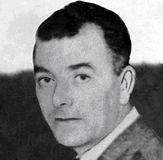
Kenneth Barlow
Murderer Harry Maurice Roberts
Murderer · United Kingdom · 1966
Name: Harry Maurice Roberts Birth year: 1936 Birthplace: Kennington, London, En…
3 victims
Harry Maurice Roberts
Murderer · United Kingdom · 1966
Name: Harry Maurice Roberts Birth year: 1936 Birthplace: Kennington, London, En…
3 victims
 Albert Goozee
Murderer · United Kingdom · 1956
Albert William Goozee was a British murderer and paedophile. His crimes inspire…
2 victims
Albert Goozee
Murderer · United Kingdom · 1956
Albert William Goozee was a British murderer and paedophile. His crimes inspire…
2 victims
 Alfred Charles Whiteway
Murderer · United Kingdom · 1953
Alfred Charles Whiteway was a serial rapist. Both girls had very deep stab woun…
2 victims
Alfred Charles Whiteway
Murderer · United Kingdom · 1953
Alfred Charles Whiteway was a serial rapist. Both girls had very deep stab woun…
2 victims
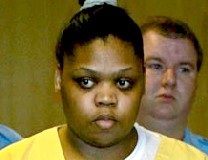 Tiffany Hall
Murderer · USA · 2006
Tiffany Hall was 24 when she was charged in September 2006. She later entered a…
5 victims
Tiffany Hall
Murderer · USA · 2006
Tiffany Hall was 24 when she was charged in September 2006. She later entered a…
5 victims
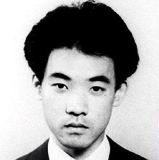 Yasuaki Uwabe
Mass murderer · Japan · 1999
Yasuaki Uwabe (Japanese: 上部康明) was born in Shimonoseki, Yamaguchi. After gradua…
5 victims
Yasuaki Uwabe
Mass murderer · Japan · 1999
Yasuaki Uwabe (Japanese: 上部康明) was born in Shimonoseki, Yamaguchi. After gradua…
5 victims
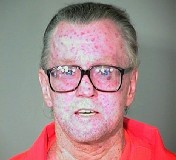 Clarence David Hill
Murderer? · USA · 1989
Clarence David Hill lived in a small motor home on Dale Edmundson's property in…
1 victim
Clarence David Hill
Murderer? · USA · 1989
Clarence David Hill lived in a small motor home on Dale Edmundson's property in…
1 victim
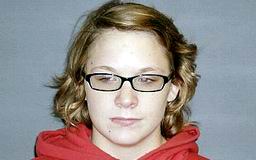 Rebecca Blackmore
Homicide · USA · 2011
Rebecca Jo Blackmore was 16 years old when her infant daughter died in 2011. Sh…
1 victim
Rebecca Blackmore
Homicide · USA · 2011
Rebecca Jo Blackmore was 16 years old when her infant daughter died in 2011. Sh…
1 victim
- Gender
- male
- Country
- United Kingdom
- Location
- Bradford, West Yorkshire, England, United Kingdom
- Date of birth
- 1919
- Age at first offence
- 38
- Characteristics
- poisoner, parricide
- Victim profile
- His second wife, Elizabeth Barlow, 30, pregnant
- Method of murder
- Poisoning (insulin) - Drowning
- Date(s) of murder
- May 3, 1957
- Years active
- 1957
- Date of arrest
- —
- Status
-
Released
Sentenced to life in prison in 1958; released in 1984
Case overview
Kenneth Barlow was a 38-year-old male nurse who was convicted of the murder of his second wife, Elizabeth Barlow.
On 3 May 1957, a doctor was called to the Bradford home where Kenneth Barlow lived. When the doctor arrived, Elizabeth Barlow was dead. Kenneth Barlow told the doctor that he had found his wife drowned in the bath.
Elizabeth Barlow had been two months pregnant. She had previously complained of feeling unwell, had vomited in bed, and decided to take a bath to clean herself up. Kenneth Barlow said he had dozed off and, when he awoke, he found Elizabeth Barlow with her head under the water. He said he tried to revive her but was unsuccessful.
The doctor could find no signs of violence on the corpse. The doctor noticed that Elizabeth Barlow’s pupils were widely dilated, which did not fit with Kenneth Barlow’s drowning account. A post-mortem was ordered.
Timeline
- 3 May 1957 — A doctor was called to the Barlow house in Thornbury Crescent, Bradford; Elizabeth Barlow was found dead in the bath, and Kenneth Barlow said he had found her with her head under the water.
- 1958 — Kenneth Barlow was sentenced to life imprisonment.
- 1984 — Kenneth Barlow was released on licence.
Background
Kenneth Barlow was employed as a nurse and often gave injections, including insulin, to patients in hospitals in north of England.
Kenneth Barlow’s second wife, Elizabeth Barlow, was pregnant. The household context included that neither Kenneth Barlow nor Elizabeth Barlow wanted the baby.
The offence
Kenneth Barlow told the doctor and police that he had found Elizabeth Barlow drowned in the bathtub after she had vomited in bed and gone to take a bath. He said he had dozed off, awoke to find her head under the water, pulled the plug, and tried artificial respiration to no avail.
The account was inconsistent with observations at the scene. The doctor observed pupils that were widely dilated. The police were suspicious because both Kenneth Barlow’s pyjamas and the bathroom showed no signs of wetness that would have been expected if he had genuinely tried to resuscitate his wife.
Investigation
Police were notified and listened to Kenneth Barlow’s account. They searched the house and found hypodermic syringes. The syringes were not exactly odd in the house of a nurse, but they led to further suspicion.
A post-mortem did not initially reveal anything amiss. The dilated pupils suggested drugs, and the investigation continued. The search continued until two small puncture marks were found on one of Elizabeth Barlow’s buttocks.
Tests were taken at the puncture sites and confirmed the doctors’ suspicions. Elizabeth Barlow had been injected with insulin.
Arrest and charges
A witness told the court about Kenneth Barlow boasting that insulin could be used to commit the perfect murder and that it “cannot be traced”.
Kenneth Barlow was arrested and charged.
At trial, it was stated that Kenneth Barlow had admitted injecting his wife to procure an abortion but could not explain the presence of insulin as Elizabeth Barlow was not a diabetic.
Trial
Much of the evidence presented at the trial consisted of forensic evidence.
The prosecution case included the puncture marks on Elizabeth Barlow’s buttocks, the dilated pupils, and the presence of insulin confirmed by analysis of tissue samples taken from the injection sites.
The trial material described that Kenneth Barlow had been trying to induce an abortion by injecting Elizabeth Barlow with ergometrine. It was stated that he switched from ergometrine injections to insulin, and that insulin made Elizabeth Barlow “stuporous and complaisant”. The narrative at trial described that she sweated abundantly and vomited, became comatose in the tub, made no effort to save herself as she slid under the water, and then her lungs filled with water.
Kenneth Barlow was found guilty of non-capital murder and sentenced to life imprisonment.
The jury verdict was described as: “murder: It was Britain’s —perhaps the world’s—first case of murder in which the aid of insulin was proved.”
The sentencing remarks included a quote from “the bewigged Mr. Justice Diplock”:
"But for a high degree of detective ability, [it] would not have been found out. Those responsible for the scientific research ... are to be very highly congratulated for [their] skill and patience."
Sentencing
Kenneth Barlow was sentenced to life imprisonment in 1958.
Appeals
No appeals were described.
Outcome
Kenneth Barlow was found guilty and sentenced to life imprisonment. He was released on licence in 1984 after serving 26 years.
It remained unclear why Kenneth Barlow killed his wife; it was stated that they would “never know why he killed his wife”.
The case narrative stated that Kenneth Barlow maintained his innocence.
Other details
The case materials referenced forensic research involving animal testing:
- 1,220 mice, 150 rats and 24 guinea pigs were used to help determine the evidence.
- The described investigation found four injection marks in Elizabeth Barlow’s buttocks (two on each side).
- The narrative described that “84 units of insulin” were found in her buttocks at the time of death, and “240 units may have been injected”.
The property location included:
- Thornbury Crescent, Bradford.
Quotes attributed to Kenneth Barlow included:
''You could commit a perfect murder with insulin. It cannot be traced."
Spotted an error, or have more information about this case?