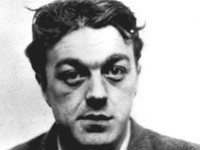
Harry Maurice Roberts
Murderer David McGreavy
Murderer · United Kingdom · 1973
David McGreavy was born in 1950 or 1951. He was an English convicted murderer w…
3 victims
David McGreavy
Murderer · United Kingdom · 1973
David McGreavy was born in 1950 or 1951. He was an English convicted murderer w…
3 victims
 Ronald Jebson
Murderer · United Kingdom · 1970
Ronald Jebson (born 1939) was a convicted pedophile who was also known as Ronal…
3 victims
Ronald Jebson
Murderer · United Kingdom · 1970
Ronald Jebson (born 1939) was a convicted pedophile who was also known as Ronal…
3 victims
 Albert Goozee
Murderer · United Kingdom · 1956
Albert William Goozee was a British murderer and paedophile. His crimes inspire…
2 victims
Albert Goozee
Murderer · United Kingdom · 1956
Albert William Goozee was a British murderer and paedophile. His crimes inspire…
2 victims
 Robert Brice Morrow
Murderer · USA · 1996
April 3, 1996 — Lisa Allison left her parents’ home to take her father’s car to…
1 victim
Robert Brice Morrow
Murderer · USA · 1996
April 3, 1996 — Lisa Allison left her parents’ home to take her father’s car to…
1 victim
 Roger Dale Vaughn
Murderer · USA · 1991
Roger Dale Vaughn was convicted of capital murder in Texas and was executed by…
1 victim
Roger Dale Vaughn
Murderer · USA · 1991
Roger Dale Vaughn was convicted of capital murder in Texas and was executed by…
1 victim
 Donna Yaklich
Murderer · USA · 1985
Donna Yaklich was married to Dennis Yaklich, a Pueblo Colorado narcotics detect…
1 victim
Donna Yaklich
Murderer · USA · 1985
Donna Yaklich was married to Dennis Yaklich, a Pueblo Colorado narcotics detect…
1 victim
 James Belknap
Mass murderer · USA · 2012
James Roy Belknap was a Nicholas County man who killed four people. He pleaded…
4 victims
James Belknap
Mass murderer · USA · 2012
James Roy Belknap was a Nicholas County man who killed four people. He pleaded…
4 victims
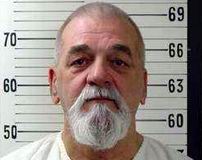 Leonard J. Young
Murderer · USA · 1999
Leonard J. Young met a woman during the 1990 Christmas holidays. The two became…
2 victims
Leonard J. Young
Murderer · USA · 1999
Leonard J. Young met a woman during the 1990 Christmas holidays. The two became…
2 victims
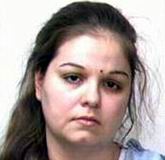 Monique Berkley
Murderer · USA · 2005
Monique Berkley was a Clayton, North Carolina woman at the center of a fatal lo…
1 victim
Monique Berkley
Murderer · USA · 2005
Monique Berkley was a Clayton, North Carolina woman at the center of a fatal lo…
1 victim
- Gender
- male
- Country
- United Kingdom
- Location
- London, England, United Kingdom
- Date of birth
- 1936
- Age at first offence
- 30
- Characteristics
- to avoid arrest
- Victim profile
- Police Constable Geoffrey Roger Fox, 41, Detective Sergeant Christopher Tippett Head, 30, and Temporary Detective Constable David Bertram Wombwell, 25
- Method of murder
- Shooting
- Date(s) of murder
- August 12, 1966
- Years active
- 1966
- Date of arrest
- November 15, 1966
- Status
-
Life imprisonment
Sentenced to life in prison on December 12, 1966; conviction status includes failure of an appeal in the House of Lords in 2005 over the use of secret evidence to keep him in jail; parole was denied in 2006 and a further judicial review was sought after a failed parole bid; he remains imprisoned
Case information
Name: Harry Maurice Roberts Birth year: 1936 Birthplace: Kennington, London, England
Timeline
- 12 August 1966 — Three police officers were killed in Braybrook Street, East Acton (also described as Shepherd's Bush), London, after an unmarked “Q” car stopped a van.
- 14 August — Witney cracked and admitted what had happened, naming accomplices.
- 14 November 1966 — The trial of Witney and Duddy began at the Old Bailey, but was adjourned so the men could be tried together after Roberts’s capture.
- 12 December 1966 — The three men were convicted of murder and sentenced to life imprisonment; the judge recommended that they serve at least thirty years before becoming eligible for parole.
- 15 November 1966 — Roberts was finally apprehended while sleeping in a barn at Blount's Farm near Bishop's Stortford.
- February 1981 — John Duddy died in Parkhurst Prison.
- 1991 — Witney was released on licence.
- 1996 — The 30-year tariff set by the court expired.
- 1999 — Home Secretary Jack Straw accepted a Parole Board recommendation to move Roberts to an open prison; Roberts was transferred to Sudbury Prison in Derbyshire.
- October 2001 — Roberts was moved back to a closed prison after allegations of smuggling drugs and contraband into prison.
- 2004 — Lawyers acting for Roberts lodged an appeal in the House of Lords over a ruling intended to keep him incarcerated until his death; Roberts lost the appeal.
- 2005 — Roberts made an appeal over the use of secret evidence to keep him in jail and it failed in the House of Lords.
- September 2006 — Roberts, described as a 70-year-old, applied for a judicial review over delays by the parole board in reaching a decision to free him by the end of the year.
- December 2006 — Roberts was turned down for parole.
- 29 June 2007 — Roberts was given leave to seek a High Court judicial review over his failed parole bid, and a judge said his case “was of great public interest.”
- 20 April 2009 — A report said Harry Roberts allegedly telephoned Joan Cartwright almost every day for four years from prison after suspecting she had given evidence blocking his parole attempt.
Background
Harry Maurice Roberts was born in 1936 in Kennington, London, England.
Roberts was described as a career criminal with convictions for attempted store-breaking, larceny and robbery with violence. He served as a soldier during the Malayan Emergency.
Roberts was a former soldier and he teamed up with John Edward “Jack” Witney and John Duddy in armed robberies. In his statements about his past, he said he was a sergeant in Malaya and described ambushes in the jungle and shooting first.
Roberts was brought up by his mother, Dorothy, and helped her act as a fence selling goods on the black market from the family’s café in north London, including tea and sugar and sometimes ration books. He ended up in borstal.
After the murders, he hid out and avoided police capture using his military experience and training.
The offence
The incident was described as the Massacre of Braybrook Street, also known as the Shepherd's Bush Murders, involving the murder of three police officers in London in 1966.
On 12 August 1966, the crew of an unmarked Metropolitan Police Triumph 2000 Q-car “Q” car Foxtrot One One patrolled in East Acton (the incident was always reported by the media as occurring in Shepherd's Bush). The car turned into Braybrook Street, a residential road on the Old Oak Council Estate bordering Wormwood Scrubs and Wormwood Scrubs Prison.
Detective Sergeant Christopher Tippett Head, aged 30, and Temporary Detective Constable David Bertram Wombwell, aged 25, were both members of F Division Criminal Investigation Department (CID) based at Shepherd’s Bush police station. Their driver was Police Constable Geoffrey Roger Fox, aged 41, a beat constable who had served for many years in F Division and frequently acted as a Q-car driver.
All three officers were in plain clothes. The officers spotted a battered blue Standard Vanguard estate van parked in the street with three men sitting inside it. The van had no tax disc (legally required for driving in Britain).
It was possible that PC Fox recognized the van’s driver, Jack Witney, as a known criminal.
DS Head and DC Wombwell got out and walked over to the van to question the occupants about the lack of a tax disc. Witney replied he had not yet obtained his MOT certificate required before a tax disc could be issued. DS Head asked for Witney’s driving licence and insurance certificate; noticing the insurance certificate had expired at midday, he told DC Wombwell to write down Witney’s details and walked around to the other side of the van.
While Witney protested and pleaded to be given a break, Harry Roberts produced a Luger pistol and shot DC Wombwell through the left eye, killing him instantly. Roberts then shot a second policeman while one of his accomplices shot dead the third policeman.
DS Head ran back towards the police car, but Roberts ran after him and missed him with the next shot before shooting him in the head.
John Duddy, the back seat passenger, also got out and grabbed a .38 Colt from the bag next to him, which also contained a third gun. Duddy ran over to the Q-car and shot PC Fox three times through the window as PC Fox tried to reverse towards him and Roberts, who also fired several shots.
As Fox died, his foot jerked down on the accelerator; the car lurched forward over the prone body of DS Head, who was already dying of his wounds. The killings resulted in the deaths of all three Metropolitan Police officers from the gunshot wounds.
The perpetrators were identified as Roberts, Witney, and Duddy, and they were looking for a car to steal and use in a robbery.
Investigation
Roberts, Witney and Duddy returned to the van and Witney drove away rapidly. A passerby suspicious of a car driving so fast near the prison wrote down the registration number PGT 726.
Witney, the van’s owner, was arrested at his home six hours after the killings.
Following a tip-off, the van was discovered the next day in a lock-up garage rented by Witney under a railway arch in Vauxhall. It contained some spent .38 cartridges and equipment for stealing cars.
Initially Witney pretended he had sold the van for £15 to an unknown man in a pub earlier in the day. Witney later cracked on 14 August, admitted what had happened, and named his accomplices.
Duddy fled to Glasgow but was arrested on 16 August using information obtained from his brother.
Roberts hid out in Nathan’s Wood near Bishop’s Stortford in Hertfordshire, and later hid out in Epping Forest. A £1,000 reward was offered for information leading to his arrest.
Roberts was described as Britain’s most wanted man and was finally apprehended on 15 November after ninety days on the run. He was captured while sleeping in a barn at Blount’s Farm near Bishop’s Stortford, after hiding in the adjacent Matham’s Wood.
At the time there were lots of false sightings, but local people who saw him decided he could not possibly be Roberts, and consequently he evaded capture for several months.
Arrest
Roberts was apprehended while sleeping in a barn at Blount's Farm near Bishop's Stortford after hiding in the adjacent Matham's Wood.
Trial
The trial of Witney and Duddy began at the Old Bailey on 14 November but was almost immediately adjourned after Roberts’s capture so the three men could be tried together.
Roberts pleaded guilty to the murders of DS Head and DC Wombwell, but not that of PC Fox. The other two denied all charges.
Only Witney testified in his defence, and he said that he and Duddy were terrified of Roberts.
On 12 December 1966, after a trial lasting only six days, the three men were convicted of murder and possession of firearms and sentenced to life imprisonment.
The judge, Mr Justice Glyn-Jones, recommended that they serve at least thirty years before becoming eligible for parole. He commented that the killings were “the most heinous crime to have been committed in this country for a generation or more”.
After the killings, the England football team was described as basking in World Cup glory and Harold Wilson had been re-elected prime minister.
Sentencing
On 12 December 1966, Roberts, Witney and Duddy were convicted of murder and possession of firearms and were sentenced to life imprisonment.
Mr Justice Glyn-Jones recommended that they serve at least thirty years before becoming eligible for parole.
Appeals
Roberts made an appeal over the use of secret evidence to keep him in jail. The appeal failed in the House of Lords in 2005.
In 2004, lawyers acting for Roberts lodged an appeal in the House of Lords over a ruling intended to keep him incarcerated until his death. Their complaint was that the evidence in the ruling had been kept secret from them and that it was designed to combat terrorism only but had embroiled Roberts in its regulations. Roberts lost the appeal.
In September 2006, Roberts, described as a 70-year-old, applied for a judicial review over apparent delays by the parole board in reaching a decision to free him by the end of the year.
In December 2006, Roberts was turned down for parole.
On 29 June 2007, Roberts was given leave to seek a High Court judicial review over his failed parole bid, with a judge saying his case, “was of great public interest.”
Roberts and his legal team had agreed for the parole evidence process involving a special advocate, and were still awaiting a date.
David Blunkett argued that only the Parole Board should be given sensitive material containing allegations against Roberts.
An attempt to have the special advocate ruling overturned by the Court of Appeal had failed, and Roberts’s last chance was described as trying to have the case heard by the House of Lords in the new year.
Outcome
Roberts remained imprisoned.
Roberts’s appeal and parole history included failure of a House of Lords appeal in 2005, denial of parole in December 2006, and leave granted for a High Court judicial review on 29 June 2007.
He was described as being held at Channings Wood Prison in Devon.
Aftermath
The killings caused outrage in Britain. There were calls for the recently abolished death penalty to be reintroduced, and increasing numbers of police officers were trained to use firearms.
The Metropolitan Police Firearms Wing, now CO19, was established later the same year.
Six hundred officers lined the route of the three victims’ funeral procession in Shepherd’s Bush, and a memorial service in Westminster Abbey was attended by Prime Minister Harold Wilson, Leader of the Opposition Edward Heath, and many other dignitaries, as well as thousands of police officers from all over the country. More than one thousand members of the public stood in mourning outside the Abbey.
Holiday camp owner Billy Butlin donated £250,000 to a new Police Dependants’ Trust, and it had soon raised more than £1 million.
John Duddy died in Parkhurst Prison in February 1981.
Witney was released in 1991, causing some controversy because he had not served the full thirty years recommended by the judge. He was later murdered in 1999 at home in Bristol and was found bludgeoned with a hammer by his flatmate, described as a heroin addict.
Roberts was described as still being in prison.
In 1999, Home Secretary Jack Straw accepted a Parole Board recommendation to move Roberts to an open prison and Roberts was transferred to Sudbury Prison in Derbyshire.
Roberts was allowed to work unsupervised at an animal sanctuary some thirty miles from the prison but sometimes failed to turn up; he was reported to have travelled to London and had been spotted by two off-duty police officers in the company of known criminals.
Roberts was given five days’ home leave for his 65th birthday, and celebrated at a bar in Sheffield with Kate Kray, widow of gangster Ronnie Kray.
In October 2001, he was moved back to a closed prison after accusations of smuggling drugs and contraband into prison.
Roberts admitted to at least 22 escape attempts since 1966.
It was stated that his name had never appeared on frequently published lists of prisoners on a whole life tariff, and it was expected that he would die in jail.
Roberts was described as currently being held in medium-security Channings Wood Prison, Devon.
Roberts’s crime made him a hero in some anarchist circles, and it was said that anarchists and football fans chanted his name to antagonise the police.
The chant included: “Harry Roberts is our friend, is our friend, is our friend. Harry Roberts is our friend, he kills coppers” (to the tune of London Bridge is falling down). It was said to have originated with groups of young people outside of Shepherd’s Bush police station after Roberts had been arrested.
Other lyrics included: “Harry Roberts, Harry Roberts, Roberts Roberts, Harry Harry” in parody of the Hare Krishna mantra “Hare Rama, Hare Rama, Rama Rama, Hare Hare”.
The character of Billy Porter in He Kills Coppers by Jake Arnott was described as based on Harry Roberts.
Roberts was quoted describing a novel and his self-perception, including:
“I don't want to be Harry Roberts the cop killer. The media talk as if the shootings were yesterday: this keeps alive that image of me as a 30-year-old cop killer. I'm not that person any more. The Home Secretary is just responding to the media hype about me. When does punishment becomes vengeance? I feel my treatment has turned into institutionalised vengeance.”
Roberts was also quoted about “rubbish” and discarding the book:
“rubbish”, and which he said he discarded after reading a few chapters.
Roberts was quoted about his acceptance of gun use:
“I accept if you carry a gun that you know that at some time you will have to use it.”
Roberts was quoted about responding automatically and a gun jam:
“It was all over in 30 seconds,” recalls Roberts. “Jack [Witney] said, 'Let him have it,' and I just reacted automatically. I went on to autopilot.”
Roberts was quoted discussing fairness:
“The principles of fairness and justice should be applied equally in a democratic society, however heinous the crime or the criminal.”
Roberts was quoted about the informer and alleged fear of him killing an informer:
“People have said that they have to keep the identity of the informer a secret in case I kill him. That's nonsense. I'm not going to go and kill anybody, I'm an old-age pensioner - and what would be the point anyway?”
Other details
People involved
- Harry Maurice Roberts (Roberts): pleaded guilty to the murders of DS Head and DC Wombwell, but not PC Fox.
- John Edward “Jack” Witney (Witney) (born 1930): described as a known petty criminal with ten convictions for theft; lived with his wife in a basement flat in Fernhead Road, Paddington; arrested at his home six hours after the killings.
- John Duddy (born 1929): described as originally from Glasgow in Scotland; a long-distance lorry driver; had been in trouble for theft several times when he was younger, but had been going straight since 1948; started to drink heavily and had met Roberts and Witney in a club.
Judge’s comment
The judge, Mr Justice Glyn-Jones, commented:
“the most heinous crime to have been committed in this country for a generation or more”.
Additional allegations and witness protection report (2009)
A report in April 2009 said Roberts allegedly telephoned Joan Cartwright, 65, almost every day for four years after suspecting she had given evidence which blocked his attempt to gain parole.
The report said that Cartwright and her son, James, raised concerns about Roberts in 2001 while he was working at the sanctuary on day release from an open prison, and that they had feared for their lives as Roberts made increasing demands.
The report attributed the following statements to Cartwright:
“By the time the police had got to the end of the drive, Harry was on the phone spitting blood and spelling out what was going to happen to whoever was responsible,” she told the Mail on Sunday. “He was going to have them torn limb from limb.”
The report also quoted a spokeswoman for the Ministry of Justice:
“Protecting the public is paramount. All allegations of inappropriate behaviour by prisoners in open conditions are investigated and if credible will lead to the prisoner being returned to a closed prison.”
The report included political comments:
- Dominic Grieve said: “If Roberts was able to intimidate her from his cell that is a serious situation and it requires an immediate answer from Jack Straw as to what happened and why.”
- David Howarth said: “Questions need to be asked about why this family received such poor protection from the police against these threats and why these activities didn't result in prosecutions, not just of Harry Roberts but of anybody who might have helped him. "This is not just a breach of prison security but a failure to protect witnesses.”
Funeral and memorial details
The report included details that six hundred officers lined the route of the funeral procession, and that a memorial service in Westminster Abbey was attended by Harold Wilson, Edward Heath, and many other dignitaries, plus thousands of police officers.
Police dependants trust donation
Billy Butlin donated £250,000 to a new Police Dependants’ Trust, which raised more than £1 million.
Named quotes related to the sanctuaries and escapes
Roberts was quoted describing the difficulty of escape due to an informer:
“We cut through part of the fence, but there wasn't time to finish the job, so we planned to go back the next night. What we didn't know was that there was an informer in the team who grassed us up before I could escape.”
Roberts was quoted about his last attempted escape in 1976 and later staying out of trouble:
“I decided that the best way to get out was to stay clean and do my time.”
Roberts was quoted about his reasoning for not being caught:
“I was only caught because I was stupid. I had been trying to break open a safe at a * * factory and was late getting back to my camp. I had to cross a main road and had a blue holdall with me - no one in the country had a bag like that.”
Roberts was quoted about his autopilot response:
“Jack [Witney] said, 'Let him have it,' and I just reacted automatically. I went on to autopilot.”
Spotted an error, or have more information about this case?