
Joseph Martin Barnes
Murderer Brian Kevin Rosenfeld
Murderer · USA · 1985
Brian Kevin Rosenfeld Brian Kevin Rosenfeld was sentenced to three concurrent l…
23 victims
Brian Kevin Rosenfeld
Murderer · USA · 1985
Brian Kevin Rosenfeld Brian Kevin Rosenfeld was sentenced to three concurrent l…
23 victims
 Russell Ellwood
Murderer · USA · 1991
Russell Ellwood was a former taxi driver. Authorities suspected him of killing…
20 victims
Russell Ellwood
Murderer · USA · 1991
Russell Ellwood was a former taxi driver. Authorities suspected him of killing…
20 victims
 Robert Martines Perez
Murderer · USA · 1994
Name: Robert Martines Perez · Other name used in proceedings: Robert Martinez P…
15 victims
Robert Martines Perez
Murderer · USA · 1994
Name: Robert Martines Perez · Other name used in proceedings: Robert Martinez P…
15 victims
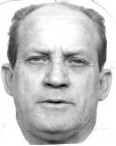 Billy Frank Vickers
Murderer · USA · 1993
Billy Frank Vickers Vickers was executed by lethal injection in Texas on Januar…
14 victims
Billy Frank Vickers
Murderer · USA · 1993
Billy Frank Vickers Vickers was executed by lethal injection in Texas on Januar…
14 victims
 Magdelena Luczak
Murderer · United Kingdom · 2012
Magdelena Luczak was the mother of Daniel Pelka. She lived with her partner, Ma…
1 victim
Magdelena Luczak
Murderer · United Kingdom · 2012
Magdelena Luczak was the mother of Daniel Pelka. She lived with her partner, Ma…
1 victim
 Jeffrey MacDonald
Murderer · USA · 1970
Jeffrey Robert MacDonald (M.D.; born on October 12, 1943) was a former member o…
3 victims
Jeffrey MacDonald
Murderer · USA · 1970
Jeffrey Robert MacDonald (M.D.; born on October 12, 1943) was a former member o…
3 victims
 Clara Schwartz
Murderer · USA · 2001
Clara Schwartz was convicted of first-degree murder and sentenced to serve 48 y…
1 victim
Clara Schwartz
Murderer · USA · 2001
Clara Schwartz was convicted of first-degree murder and sentenced to serve 48 y…
1 victim
 William Richard Bradford
Murderer · USA · 1984
William Richard “Bill” Bradford (1948–2008) was an American murderer incarcerat…
2 victims
William Richard Bradford
Murderer · USA · 1984
William Richard “Bill” Bradford (1948–2008) was an American murderer incarcerat…
2 victims
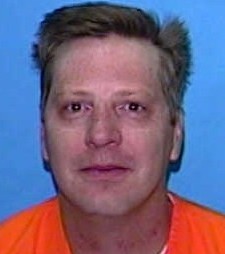 John Richard Marek
Murderer · USA · 1983
Name: John Richard Marek · DC Number: #094417 · Race: WHITE · Sex: MALE · Hair…
1 victim
John Richard Marek
Murderer · USA · 1983
Name: John Richard Marek · DC Number: #094417 · Race: WHITE · Sex: MALE · Hair…
1 victim
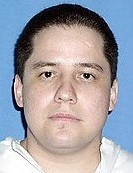 Timothy Titsworth
Murderer · USA · 1993
Timothy Titsworth was executed by lethal injection in Texas on June 6, 2006. ·…
1 victim
Timothy Titsworth
Murderer · USA · 1993
Timothy Titsworth was executed by lethal injection in Texas on June 6, 2006. ·…
1 victim
- Gender
- male
- Country
- USA
- Location
- Newton County, Georgia, USA
- Date of birth
- 1969
- Age at first offence
- 23
- Characteristics
- armed robbery, robbery
- Victim profile
- Prestiss Lamar Wells, 57
- Method of murder
- Shooting
- Date(s) of murder
- February 13, 1992
- Years active
- 1992
- Date of arrest
- —
- Status
-
Sentenced to death
Sentenced to death on June 22, 1993; death sentence reversed and remanded for a new sentencing trial
Timeline
- February 12, 1992 — Brown bought a shotgun and Barnes bought a Davis Industries .380 pistol at a pawn shop.
- February 13, 1992 — Wells went with Barnes and Brown in Brown's pickup truck; Wells had $5,800 in cash. A physical altercation erupted on a dirt road, Barnes shot Wells, and Wells was killed. Barnes took the cash from Wells' body.
- June 1, 1992 — The state announced its intention to seek the death penalty.
- June 9, 1992 — Barnes was indicted by the Newton County Grand Jury for malice murder, felony murder (2 counts), and armed robbery.
- June 1993 — Barnes was tried before a jury; he was convicted on all counts.
- June 22, 1993 — Barnes was sentenced to death for the murder; the trial court also imposed a consecutive life sentence for the armed robbery.
- July 13, 1993 — Barnes filed a motion for new trial.
- December 7, 1993 — Barnes filed an amended motion for new trial.
- July 31, 1996 — Barnes' amended motion for new trial was denied.
- August 29, 1996 — The notice of appeal was filed with this Court.
- September 17, 1997 — The case was docketed on appeal.
- March 2, 1998 — The appeal was decided.
- April 2, 1998 — Reconsideration was denied.
Background
Joseph Martin Barnes was sentenced to death in Newton County in June 1993 for the robbery and shooting death of Prestiss Lamar Wells, 57, on Feb. 13, 1992. BARNES v. THE STATE. S97P2069. (269 Ga. 345) (496 SE2d 674) (1998) SEARS, Justice. Murder. Newton Superior Court. Before Judge Sorrells.
Barnes was 22 years old at the time of the killing. Barnes was convicted of malice murder, felony murder, and armed robbery. The jury recommended a death sentence for the murder, finding as a statutory aggravating circumstance that the murder was committed during the commission of an armed robbery.
Barnes claimed self-defense.
The offence
Wells was a 57-year-old man named Prentiss Wells. Wells was described as “elderly” and “mentally slow,” and others testified that he was slightly disabled due to a previous stroke.
Wells bought a flea market stall several months before his death and often purchased used items he intended to later sell. He frequently carried a large amount of cash. Barnes and his co-defendant, Tim Brown, met Wells about a month before his death and assisted him with errands on several occasions. Barnes and Brown noticed the cash Wells often carried and they talked about robbing him.
On February 12, 1992, Brown bought a shotgun and Barnes bought a Davis Industries .380 pistol. The next day, Wells went with Barnes and Brown in Brown's pickup truck. Barnes and Brown moved a piano for Wells and later took him to look at an old truck that he was thinking about buying.
Wells had $5,800 in cash on him, which Barnes and Brown saw “hanging out of his pocket.” While driving on a dirt road, Barnes sat in the middle of the front seat and told Wells, who was sitting to Barnes' right, that he wanted his money. Wells resisted, and a physical altercation erupted. Brown stopped the truck. Wells exited and continued fighting with Barnes.
Barnes testified that he was mostly warding off Wells' blows and only hitting back to make Wells stop. The medical examiner testified, however, that Wells had 12 impact blows on the left side of his head and face, several centered around a star or diamond shaped laceration possibly caused by a ring or a gun barrel. One laceration penetrated all the way through the scalp to Wells' skull. Barnes testified that he was right handed and wore a ring on his right hand that was sharp.
Barnes conceded that after the fight he was not bleeding, had no visible injuries, and had cleaned Wells' blood off of the passenger window of Brown's truck.
Barnes testified that during the fight Wells reached into his pocket and Barnes, fearing Wells had a gun, grabbed his gun—already loaded and ready to fire—and shot Wells. The medical examiner testified that Wells was shot twice in the left side of the torso. Crime scene analysis showed Wells turned and staggered about 40 feet before collapsing face down.
The medical examiner further testified that a third, fatal shot was a contact shot: Barnes had run up behind Wells, either when he was staggering or when he was lying face down, and pressed the barrel of the gun against the back of his head as he fired. It was not disputed that Wells was unarmed.
Barnes took the cash from Wells' body and returned to the pickup truck. Barnes told Brown that they were “both involved in this.” Brown later testified that he had not seen the shots fired because he had “froze up.”
The two men drove to Brown's trailer, picked up Brown's wife, Tonya, and fled to North Carolina. Before they left Georgia, they stopped at a Red Lobster for dinner and at a pawn shop where Barnes bought a Bersa .380 pistol. They paid for the dinner and the gun with the cash Barnes had taken from Wells.
Tonya Brown rented an apartment in North Carolina and the two men stayed there for almost a week until the police arrived and arrested Tim Brown. The murder weapon—the Davis Industries .380 licensed to Barnes—was found in Brown's truck.
The police arrested Barnes in Young Harris, Georgia, where he had gone to visit a relative. He had the Bersa .380 pistol loaded and ready to fire in his coat pocket. In an interview with police, Barnes volunteered that he had shot Wells in self-defense.
At trial, Barnes stated there was no specific plan to rob Wells, the money having been taken as an afterthought, but he conceded that they had talked about robbing him before the day of the killing. Brown pled guilty to felony murder and testified for the state at Barnes' trial.
Investigation
The crime scene evidence included that Wells turned and staggered about 40 feet before collapsing face down. The medical examiner testified about the impact blows and the three shots, including the contact shot.
Charles Roper, a state witness, was the state's chief investigator on the Barnes case and was also the prosecutor who had signed the indictment. During cross-examination, Roper testified about “how a spent shell casing ejects from a semi-automatic pistol.”
Arrest
The police arrested Tim Brown after arriving in North Carolina following the men staying there for almost a week. The police later arrested Barnes in Young Harris, Georgia, where he had gone to visit a relative.
Trial
Barnes was tried before a jury in June 1993 in Newton Superior Court before Judge Sorrells.
Claims and evidentiary matters
Barnes argued self-defense. He also disputed aspects of pretrial publicity, venue, suppression issues, judicial impartiality, jury selection, and multiple trial rulings.
Barnes claimed the trial court erred by not transferring venue due to prejudicial pretrial publicity. Barnes argued that Newton County had a population of 41,080 and that eight articles in three separate local newspapers were published about the murder and upcoming trial. Barnes focused on an article in the Covington News a week before trial in which the DA said the Barnes trial was a “serious case,” that the DA's office was seeking the death penalty, and that the co-defendant had pled guilty and would testify. The DA also said Barnes was the “triggerman,” and the article mentioned previously reported details about the crime, including that the victim was a former minister. The appellate court found the publicity was not extensive and not inflammatory or inaccurate, and it found no actual juror bias shown by the voir dire responses. The trial court did not err in denying Barnes' motion for a change of venue.
Barnes claimed the trial court erroneously denied his motion to suppress $600 in cash and a cartridge box seized from the bedroom he had been using in Tonya Brown's apartment. The cartridge box and cash were not introduced into evidence at trial, so this argument was moot.
Barnes claimed the state was unable to produce Tonya Brown's “consent to search” form and sought suppression of items seized pursuant to her consent. Those items were not introduced into evidence at trial, so the argument was moot. The gun seized from Brown's pickup truck was introduced at trial, and Barnes had no reasonable expectation of privacy in his accomplice's truck and therefore lacked standing to challenge the search.
Barnes claimed Judge Sorrells was biased against him and the rest of the Barnes family. Barnes brought a motion to recuse Judge Sorrells. A recusal hearing was held, and the judge presiding over that hearing determined that the evidence would not cause a reasonable person to question the impartiality of Judge Sorrells. The appellate court found no error.
Barnes argued Batson v. Kentucky error based on the state's use of seven of its ten peremptory strikes to remove African-Americans from the jury. The appellate court found valid race-neutral reasons were given for the strikes and affirmed the trial court’s Batson ruling, noting factors such as hesitation about imposing the death penalty, prior prosecution or family criminal records, and other specified reasons for individual juror strikes.
Barnes complained that the trial court failed to excuse for cause six prospective jurors due to pretrial publicity. The appellate court found none of the six jurors had fixed opinions about Barnes' guilt or any other issue.
Barnes claimed two prospective jurors—a corrections officer who was a former deputy and a fireman married to a police officer—should have been excused for cause due to ties to law enforcement. The appellate court found neither juror was a sworn law officer with arrest power and there was no error.
Barnes contended the trial court erred by allowing a juror who stated she could never vote to impose a death sentence. The appellate court found the juror was properly struck for cause.
Barnes argued the trial court improperly restricted voir dire by limiting his ability to ask follow-up questions about the death penalty, favorite television shows, credibility of police officers, effects of pretrial publicity, and the victim's status as a former minister. The appellate court found no error, citing discretion in the scope of voir dire and noting exclusions of questions not directly dealing with the case.
Barnes argued the trial court moved too quickly, curtailing relevant voir dire and leaving defense counsel with inadequate time to plan peremptory strikes and prepare for his change of venue motion. The appellate court found the contention unsupported by the record.
Barnes asserted that the state improperly commented on his pre-arrest silence in violation of Mallory v. State. The prosecutor cross-examined Barnes about why he had not sought help after Barnes allegedly killed Wells in self-defense, and the state argued this omission in closing. The appellate court held the trial court erred by allowing cross-examination about failure to talk to police before arrest, but found the error harmless due to the evidence presented, including that Barnes fired the fatal shot point-blank into the back of the unarmed victim's head during the course of an armed robbery, and then fled and hid in another state.
Barnes also argued prosecutorial error regarding a suppressed Miranda admission. Barnes claimed the state improperly commented on an admission suppressed due to Miranda violations, and complained that the two police officers improperly testified about the suppressed admission. The appellate court rejected the argument, describing three statements: a first statement blurted before questioning—“Tim didn't have anything to do with shooting the old man, I did.” A second statement occurred after Miranda rights were read, and a third, tape-recorded statement was ruled inadmissible due to Miranda. The record showed neither the prosecutor nor the two police witnesses referred to the inadmissible third statement.
Barnes argued exclusion of evidence about a prior violent act by the victim. He claimed Tim Brown would have testified that the victim threatened a third party with a gun after accompanying the victim to a trailer park. Barnes failed to notify the state before trial as required by Chandler v. State, and he also did not make an offer of proof about Brown’s expected testimony.
Tim Brown’s plea and sentencing comparisons
On direct examination, Tim Brown stated his current address was a Georgia prison. The state elicited that Brown pled guilty to felony murder for the killing of the victim and had been sentenced to life. Barnes argued admission of Brown’s guilty plea was prejudicial and amounted to endorsing a guilty verdict for Barnes; he also complained that the state used Brown’s life sentence in the penalty phase to argue the jury should compare the sentences.
At trial, the trial court denied Barnes' motion in limine to keep out evidence of Brown's plea and sentence. Under OCGA 24-3-52, a non-testifying co-indictee's guilty plea is inadmissible, but OCGA 24-3-52 was held inapplicable where the accomplice took the stand and was subject to cross-examination. The appellate court found the plea could be used for a limited evidentiary purpose such as reflecting on witness credibility. The appellate court also held there was no error in absence of a request for a limiting instruction, explaining that when evidence is admitted for one purpose it is not error for the court to fail to instruct the jury to limit its consideration absent a request. The appellate court noted it was troubled by the state's use of the co-defendant's life sentence in penalty phase argument but did not decide whether it amounted to reversible error due to reversal of the death sentence.
Closing arguments and demonstrations
In the guilt/innocence phase, defense counsel stated: “[I]f Tim Brown had turned himself in he would never, if he had come and told the police, he would never have been charged with anything.” The trial court sustained the objection because the defense was arguing facts not in evidence.
The defense continued: “You've heard all the evidence. If you were sitting on the jury would you find Tim Brown guilty of murder? No.” The state objected again; the trial court told defense not to argue Tim Brown's guilt because “that case is over with, it's not being tried and it's not the same.” The appellate court found no error, concluding the argument was not a permissible inference from evidence and noting Barnes agreed with the trial court’s statement that Brown's case was over and not the same as Barnes’ case.
During the cross-examination of Barnes, the state had Barnes step down and demonstrate his version of the fight, continuing to question him as he reenacted the struggle and shooting. After the defense counsel objected—stating the issue was “unnecessary” because Barnes had already testified—Barnes argued on appeal that the reenactment was unduly prejudicial. The appellate court rejected the claim because the grounds were limited to those raised before the trial court.
Witness sequestration and expert testimony
The trial court allowed a state witness to remain in the courtroom after sequestration was invoked. Charles Roper, the prosecutor who signed the indictment, remained to testify, consistent with an exception to the sequestration rule for the prosecutor who signed the indictment.
Barnes objected that Roper was not qualified as an expert to explain how a spent shell casing ejects from a semi-automatic pistol. The trial court allowed Roper to testify after foundation: Roper had been with the Newton County Sheriff's Department for twelve years, carried a semi-automatic pistol for four or five years, and fired his pistol four times a year; the pistol operates on basically the same principle as the murder weapon. The appellate court found no abuse of discretion.
Jury instructions and victim impact evidence
Barnes complained about the trial court's charge on self-defense and mutual combat, but because Barnes specifically requested the charge in writing, the appellate court treated any error as invited and not grounds for reversal.
Barnes complained the trial court's charge on implied malice improperly shifted the burden of proof. The trial court instructed the jury that “malice may be implied where no considerable provocation appears and where all the circumstances of the killing show an abandoned and malignant heart.” The appellate court found the instruction was not reversible error.
Barnes complained of victim-impact evidence. The appellate court addressed the victim's son identifying the victim from a photograph taken when the victim was alive and testifying about his father's status as a former preacher and stroke victim. Barnes’ only objection to the photograph was that he had not seen it before trial. The court found the photograph had been in the state's file a week before trial and Barnes declined to object to its admission when tendered. The court found no reversible error. Barnes failed to object to the victim’s son's testimony, so the argument was waived.
The appellate court found no record support for prosecutorial misconduct.
Barnes did not object to portions of the state's opening statement or closing argument in the guilt/innocence phase. The appellate court applied the procedural default rule and found no error sufficient to overcome it.
Other evidentiary matters
The admission of evidence regarding two guns other than the murder weapon was not error. The shotgun Brown bought at the same time as the purchase of the murder weapon and the Bersa .380 pistol bought by Barnes the day of the murder with the proceeds of the robbery were relevant and admissible.
The trial court admitted 17 photographs depicting the victim's body. The appellate court found them relevant to show the nature and location of wounds on his head, face and torso, the location and position of the body, and the body’s relation to other crime scene evidence such as blood drops and shell casings. Barnes did not object at trial, so the argument was not preserved for appeal.
Barnes claimed the trial court committed error by refusing to permit several items of evidence in the sentencing phase. The trial court excluded a love poem Barnes had written for his wife, stating that the poem was not relevant to Barnes' character because “everybody loves their wife.”
The trial court also excluded many photographs on relevance grounds: photos of Barnes as a child and photos of his family when he was growing up were excluded because they would be “staged photos of apparent innocence.” The trial court ruled only photographs of Barnes that were less than five years old would be admissible and excluded photographs of Barnes' one-year-old child, his two stepchildren, and his young handicapped nephew. The trial court maintained it would only permit evidence “neutral to the engenderment of staged emotion” and which did not “innately engender sympathy.”
Barnes argued the childhood photos would illustrate a defense theme that his life unraveled due to the divorce of his parents when he was 13, and he wanted to show the jury the impact of a death sentence on his children, especially his daughter and his nephew. The children were not in the courtroom, so photographs were the only opportunity for the jury to see them. The state argued the evidence was irrelevant to Barnes’ character, record, and the circumstances of the offense and was properly excluded. The state also argued that 11 family members and friends testified about everything depicted in the photographs, rendering any possible error harmless.
The appellate court held that the excluded mitigation evidence was relevant and concluded the trial court erred in excluding mitigation evidence in the sentencing phase. It reversed the death sentence and remanded for a new sentencing trial.
Because the appellate court reversed the death sentence for that reason, it did not address Barnes’ remaining sentencing-phase enumerations of error.
Sentencing
Barnes was sentenced to death on June 22, 1993. The jury recommended a death sentence for the murder and found as a statutory aggravating circumstance that the murder was committed during the commission of an armed robbery. The trial court also imposed a consecutive life sentence for the armed robbery.
The death sentence was reversed and remanded for a new sentencing trial. The appellate court concluded that the trial court improperly restricted the scope of mitigating evidence presented to the jury in the sentencing phase.
Appeals
The appellate court affirmed Barnes’ convictions. It reversed the death sentence and remanded for a new sentencing trial due to erroneous restrictions on mitigating evidence in the sentencing phase.
The appellate court held that other claimed errors in the trial did not warrant reversal of the convictions.
Outcome
Barnes’ convictions were affirmed, but his death sentence was reversed and remanded for a new sentencing trial.
Other details
Notes 1 stated that the crimes occurred on February 13, 1992, and Barnes was indicted by the Newton County Grand Jury on June 9, 1992, for malice murder, felony murder (2 counts), and armed robbery. The state announced its intention to seek the death penalty on June 1, 1992. Barnes was tried before a jury in June 1993, convicted on all counts, and sentenced to death for the murder on June 22, 1993.
The note stated that Barnes filed a motion for new trial on July 13, 1993, and an amended motion for new trial on December 7, 1993. The amended motion was denied on July 31, 1996. The notice of appeal was filed with this Court on August 29, 1996, and the case was docketed on September 17, 1997. The appeal was decided on March 2, 1998, and reconsideration was denied April 2, 1998.
Alan A. Cook, District Attorney; W. Kendall Wynne, Jr., Assistant District Attorney; Thurbert E. Baker, Attorney General; Susan V. Boleyn, Senior Assistant Attorney General; and Beth Attaway, Assistant Attorney General, represented the appellee. James E. Millsaps and Horace J. Johnson, Jr., represented the appellant.
Barnes had written a love poem to his wife, and the trial court excluded it from mitigation.
The court repeatedly described the statutory and constitutional standards it used to assess whether restrictions on mitigating evidence were permissible, including that the sentencer must not be precluded from considering as mitigating factors any aspect of a defendant's character or record and any of the circumstances of the offense that the defendant proffers as a basis for a sentence less than death.

Spotted an error, or have more information about this case?