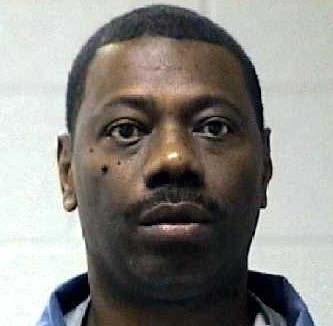
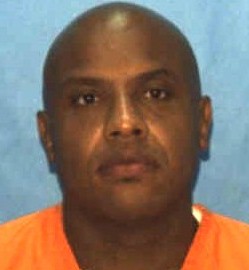
Timothy Carl Dawson
Murderer Russell Ellwood
Murderer · USA · 1991
Russell Ellwood was a former taxi driver. Authorities suspected him of killing…
20 victims
Russell Ellwood
Murderer · USA · 1991
Russell Ellwood was a former taxi driver. Authorities suspected him of killing…
20 victims
 Robert Martines Perez
Murderer · USA · 1994
Name: Robert Martines Perez · Other name used in proceedings: Robert Martinez P…
15 victims
Robert Martines Perez
Murderer · USA · 1994
Name: Robert Martines Perez · Other name used in proceedings: Robert Martinez P…
15 victims
 Billy Frank Vickers
Murderer · USA · 1993
Billy Frank Vickers Vickers was executed by lethal injection in Texas on Januar…
14 victims
Billy Frank Vickers
Murderer · USA · 1993
Billy Frank Vickers Vickers was executed by lethal injection in Texas on Januar…
14 victims
 Monica McCarrick
Murderer · USA · 2010
Monica McCarrick was a 29-year-old mother. Her twin daughters were Tori and Lil…
2 victims
Monica McCarrick
Murderer · USA · 2010
Monica McCarrick was a 29-year-old mother. Her twin daughters were Tori and Lil…
2 victims
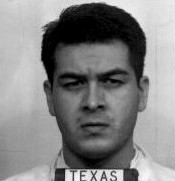 Johnny Joe Martinez
Murderer · USA · 1993
Johnny Joe Martinez was convicted of capital murder for the robbery and murder…
1 victim
Johnny Joe Martinez
Murderer · USA · 1993
Johnny Joe Martinez was convicted of capital murder for the robbery and murder…
1 victim
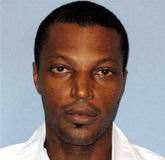 Eddie Duvall Powell
Murderer · USA · 1995
Defendant: Eddie Duvall Powell III · Gender: Male · DOB: 08/23/1969 · Prison st…
1 victim
Eddie Duvall Powell
Murderer · USA · 1995
Defendant: Eddie Duvall Powell III · Gender: Male · DOB: 08/23/1969 · Prison st…
1 victim
 Mischa Ebner
Murderer · Switzerland · 2002
Mischa Ebner was a Swiss man who was accused of stabbing two young women near B…
1 victim
Mischa Ebner
Murderer · Switzerland · 2002
Mischa Ebner was a Swiss man who was accused of stabbing two young women near B…
1 victim
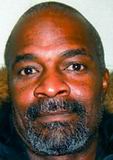 Robert W. White
Murderer · USA · 1978
Robert W. White Jr. was 50 years old and formerly lived in Easton. He lived in…
1 victim
Robert W. White
Murderer · USA · 1978
Robert W. White Jr. was 50 years old and formerly lived in Easton. He lived in…
1 victim
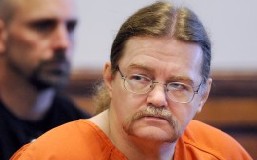 Ronald Allen Smith
Murderer · USA · 1982
Ronald Allen Smith (born September 7, 1957) was a Canadian man. He was sentence…
2 victims
Ronald Allen Smith
Murderer · USA · 1982
Ronald Allen Smith (born September 7, 1957) was a Canadian man. He was sentence…
2 victims
- Gender
- male
- Country
- USA
- Location
- Fulton County, Georgia, USA
- Date of birth
- 1960
- Age at first offence
- 38
- Characteristics
- armed robbery
- Victim profile
- Ronald Gutkowski, 51; Phillip Dover, 31, and Gerrold Shropshire, 50 / LaDarius Hawkins, 19
- Method of murder
- Shooting
- Date(s) of murder
- October 15/18, 1998
- Years active
- 1998
- Date of arrest
- —
- Status
-
Life imprisonment
Sentenced to life imprisonment without parole on November 13, 2002
Case record
Timothy Carl Dawson was sentenced to life imprisonment without parole on November 13, 2002.
Timeline
- October 18, 1998 — City and police officials later said three tourists were slain execution-style at the Atlanta Hilton & Towers hotel; the jury convicted Dawson of murdering Ronald Gutkowski, 51, of Leesburg, Fla., and Phillip Dover, 31, of Gainesville, Ga., during a robbery.
- Three days earlier (relative to October 18, 1998) — LaDarius Hawkins, 19, of College Park, was shot in a College Park Days Inn during another robbery; the jury convicted Dawson of killing Hawkins.
- October 1998 — The Atlanta Hilton housekeeper found the bodies in the 24th-floor room after the deaths.
- October 15, 1998 (context for trial timing) — Testimony began in the case.
- October 5, 2001 — The Georgia Supreme Court struck down the electric chair and approved lethal injection, described as a minimally intrusive procedure that did not produce the mutilation generated by electrocution, in Dawson v. State, No. S01A1041 (Sup. Ct. Ga. Oct. 5, 2001).
- November 20, 2001 — A Fulton judge refused to schedule a hearing on a challenge to lethal injection during Dawson’s case.
- March 18 (trial scheduled context) — Dawson’s trial was scheduled to begin on March 18.
- October 1998 (relative context for arrest) — Dawson was arrested outside Memphis, Tenn., two weeks after the Hilton killings.
- 1998 (arrest context) — Authorities said fingerprints revealed Dawson’s identity after he gave the name Harry Lee Johnson in a traffic stop near Memphis, Tenn.
- November 3, 1998 — Police said Dawson had been linked to a fifth killing in suburban Atlanta, matching bullet marks to the Decatur, Ga., shooting of Raycell Herman Mason on Oct. 5.
- November 6, 2002 — A Fulton County jury found Dawson guilty on all counts in the murder of four men in 1998.
- November 15, 2002 — A Fulton County jury sentenced Dawson to life imprisonment without parole.
Background
Dawson was convicted of murdering four men in 1998. District Attorney Paul Howard argued that the deeds were the kind for which the death penalty was created, and he said: "In this case, the only appropriate decision would be death," in relation to the sentencing decision.
Dawson claimed that he was set up by a gang of drug dealers and that evidence was planted by gangsters, including an account that the gun was used without Dawson’s knowledge and that his client had been given a gift of Atlanta Falcons tickets that had belonged to the Hilton hotel victims.
The offence
The jury convicted Dawson of execution-style killings involving three men at the Atlanta Hilton & Towers and another man at a College Park inn.
Hilton & Towers killings (three men)
City and police officials said that the Hilton killings involved execution-style slayings, with evidence later described as matching a .45-caliber handgun. The jury convicted Dawson of murdering:
- Ronald Gutkowski, 51, of Leesburg, Fla.
- Phillip Dover, 31, of Gainesville, Ga.
- Gerrold Shropshire, 50, of Altamonte Springs, Fla. All three men were described as having been shot in the head. Gutkowski and Dover lay face down, side-by-side, and were shot in the back of the head with hands clasped above them. Shropshire’s head rested on Dover; his knees were bent and he had been shot behind his left ear as if he had been kneeling or trying to rise once the shooting started.
A maid at the Atlanta Hilton found the three men’s bodies, dressed only in underwear, in their blood-splattered 24th-floor room.
College Park inn killing (one man)
The jury also convicted Dawson of murdering LaDarius Hawkins, 19, of College Park, who was shot during a robbery at a College Park Days Inn a few days earlier than Oct. 18, 1998. Hawkins was shot in the head. Police described him as being found in a hotel room he rented by the week.
Police later stated that the motive for the killings appeared to be robbery. Atlanta police spokesman John Quigley said: "We've got a robber that kills people,'' and added: "He was deliberate. He knew he was going to do it, how he was going to do it. But what he didn't know was who he was going to do it to.'' Quigley also said that Hawkins and his killer had "some sort of relationship'' and that the gunman may have stayed at the hotel recently.
Investigation
City and police officials first suggested the drug trade motivated the execution-style killings. Later they ruled out drugs but suggested that men who worked at trucking companies were the target of a professional killer—or that the men died after a fling with a prostitute went sour. The police speculation was never proved, and family members said it made the situation worse.
The ballistic tests tied Dawson’s .45-caliber handgun to all four killings. DNA tests showed blood found on the gun came from the four victims. Law officers found drivers licenses, credit cards and other property belonging to victims in the trunk of Dawson’s car when they pulled him over in Memphis in 1998.
At the time of a later report about the investigation, police said marks on bullets recovered from the four hotel killings matched those used to kill Raycell Herman Mason, a 44-year-old Decatur, Ga., man at his home on Oct. 5. Police Capt. C.R. Maddox said Raycell Herman Mason was shot execution-style during an apparent robbery and that: "Like the other men, Raycell Herman Mason, was shot execution-style during an apparent robbery.'' Police said each was shot in the head.
Dawson was expected to arrive in Atlanta with police after being linked to the Decatur killing, and fingerprints revealed Dawson’s identity after he had given the name Harry Lee Johnson in a traffic stop about 3 a.m. Saturday near Memphis, Tenn. Police said his car contained a small amount of cocaine and marijuana, a 45-caliber handgun similar to those used in the shootings, and property from several victims.
Georgia’s state crime lab was to determine whether the gun was used to kill Gerrold Shropshire, Ronald Gutkowski, Phillip Dover, and Ladaris Hawkins.
Police said they were continuing to comb through records of other crime scenes for possible connections to Dawson.
Arrest
Dawson was arrested outside Memphis, Tenn., two weeks after the killings described at the Hilton and the Days Inn.
Police said that in a traffic stop near Memphis, Tenn., Dawson had given the name Harry Lee Johnson. Police said his car contained cocaine and marijuana, a 45-caliber handgun similar to those used in the shootings, and property from several victims.
Authorities found drivers licenses, credit cards and other property belonging to the victims in the trunk of Dawson’s car when they pulled him over in Memphis.
Trial
Superior Court Judge Wendy Shoob ordered jurors to return Thursday to begin hearing evidence in the penalty phase of the trial after the jury’s conviction.
A Fulton County jury found Dawson guilty on all counts in the murder of four men in 1998. The jury deliberated 19 hours and had announced Monday it might be deadlocked before the guilty verdict was returned.
Jury deadlock during penalty phase
A jury deciding the death penalty case may have been deadlocked. After seven hours of deliberation, Fulton County jurors sent a note to Judge Wendy Shoob on Monday saying they were unable to decide whether Dawson was guilty of killing three guests at the downtown Atlanta Hilton & Towers and another man at a Days Inn in College Park in October 1998.
Judge Shoob questioned the foreman, who said six jurors had firmly decided Dawson was guilty while the other six had differing opinions. Shoob asked if all jurors were fully participating in deliberations, and the foreman said some jurors were less involved than others. Shoob told jurors to continue deliberating, and the jury was to return Tuesday.
The foreman in the penalty phase was Ron Allen, 42, of Sandy Springs.
Evidence and Dawson’s testimony at sentencing
Jurors favored acquittal until they analyzed Dawson’s lengthy testimony, in which he proclaimed a broad conspiracy and dueled with prosecutor Clint Rucker.
Juror Arglidian McElheney called unbelievable Dawson’s claims that law officers from Memphis to Atlanta and Rucker were seeking to frame him. McElheney said: "Once he testified, that is what made me go against him,'' and also said: "Before that, I was, like. 'Prove it to me.' "
Juror Ralph Anderson said religious faith caused many jurors to balk at sentencing Dawson to death even if they were convinced of his guilt.
Juror Keith Suss said he believed strongly that Dawson should be sentenced to death but finally compromised because he feared otherwise Dawson might get a life sentence with the possibility of parole in 14 years. Suss said: "There are just a lot of people in this country who don't have the stomach for the death penalty, and that just couldn't be overcome,'' attributed to the 56-year-old Buckhead man.
Defense and prosecution positions
Defense counsel included Tom West and Robert Citronberg. West said he expected a death sentence despite Dawson’s testimony that he was innocent, and Citronberg and West looked amazed after the sentencing.
Defense attorney Tom West said: "I think this shows how difficult it is in 2002 for a jury to impose a death sentence," and further defense comments included that the evidence was planted by gangsters and that authorities conspired to arrest and charge Dawson because he was an easy target caught with incriminating evidence.
The District Attorney, Paul Howard, said: "In this case, the only appropriate decision would be death," in the context of seeking death during the sentencing phase.
Sentencing
The Fulton County jury sentenced Dawson to life imprisonment without parole on November 13, 2002. The jury decision to sentence Dawson to life imprisonment without parole stunned prosecutors, investigators and the families of victims because they viewed the evidence of guilt as overwhelming.
Even defense lawyers Tom West and Robert Citronberg were described as looking amazed by the sentencing outcome.
Some relatives of victims left the court in tears.
Statements by family members and attendees
Kymberli Jackson, the 29-year-old daughter of Shropshire, said: "I realize the police have to do their job and check things out, but to have that kind of information coming out in the media prior to confirming it wasn't acceptable to the families," and added that: "It made a bad situation worse."
Clarence Dover, whose son had football tickets to take friends Shropshire and Gutkowski to the Falcons game, said: "What's done is done," and "I wish it had come out differently. When he can commit crimes like that and not get the death penalty, it seems like they won, not u s."
Maple Bronner, whose fiance Gerrold Shropshire was one of three men slain, said: "After two days went by, I got real nervous," and also said: "I was praying we wouldn't have to do this again."
Alice, Gutkowski’s widow, attended the trial as a newlywed. She said: "She said she had justice now that Dawson was convicted after "a long, long four years.""
Tim Stanley, Gutkowski widow Alice’s new husband, said: "He is where we want him to be," and: "That's the main thing. He can't hurt anybody else."
Bronner said death was the penalty Dawson needed to pay and said: "If it was good enough for them," and: "It's good enough for him."
Appeals
The materials included legal proceedings about constitutionality of execution methods and delays to the trial while courts waited for decisions.
Defense lawyers had helped make history in 2001 when they argued before Superior Court Judge Wendy Shoob that she should rule the electric chair unconstitutional. The Georgia Supreme Court upheld the ban on electrocution, and the record indicated Georgia used lethal injection.
In the context of a lethal injection challenge, the case Dawson v. State, No. S01A1041 (Sup. Ct. Ga. Oct. 5, 2001) struck down the electric chair and approved lethal injection as accepted and humane in Shoob’s discussion.
Outcome
A Fulton County jury convicted Timothy Carl Dawson of murdering four men in 1998 and later sentenced him to life imprisonment without parole on November 13, 2002.
Dawson had been convicted of murdering:
- LaDarius Hawkins, 19, of College Park.
The case also included information that Dawson was suspected of killing a fifth man during a robbery in DeKalb County and of robberies at hotels in Marietta and Stockbridge although he was not on trial for those crimes.
Two women testified that he had brutally raped them, as referenced in the case summary.
Aftermath
Family members viewed the life-without-parole sentence as contrary to prosecutors’ and their expectations after the convictions.
Clarence Dover said: "What's done is done," and expressed sadness at the outcome.
Kymberli Jackson said media speculation that was never proved made the situation worse.
Other details
Dawson’s trial timing was affected by court delays described as waiting for the Georgia Supreme Court to decide the constitutionality of the electric chair, delaying the trial by nearly a year, and then further delayed after lead defense lawyer Tom West suffered a long-term hospitalization from illness.
A legal dispute about lethal injection included a refusal by Judge Wendy Shoob to schedule a hearing.
Senior Assistant District Attorney Peggy A. Katz told the judge that a hearing would be expensive and frivolous, and she reminded the judge that the Georgia Supreme Court recently struck down the electric chair in favor of lethal injection, with implicit approval that lethal injection was "an accepted, humane procedure." Judge Shoob said: "The Supreme Court [of Georgia] has been quite clear that lethal injection is the acceptable method of carrying out the death penalty," and added: "The justices could have stayed any of the last three executions, but didn't do so, she said."
Judge Shoob also said: "If the Supreme Court doesn't want to look at a case that is about to experience lethal injection, why look at it in a case where it is years away if at all?" Shoob said West could submit evidence for her to consider, but she denied his request for an evidentiary hearing.
West said that chemicals intended to knock out Jose High did not work, leaving High to cry out and thrash about, and described that prison officials made deep cuts in High’s hand to reach a vein and inserted a catheter in his neck. West stated: "We're not saying it's per se unconstitutional," and: "Carried out properly, lethal injection is probably the most humane method, he said." West asked Shoob for a chance to show that Georgia’s protocols needed adjusting to ensure the procedure did not involve the infliction of needless pain or mutilation.
Katz argued that an inability to find a vein immediately did not mean the execution was botched. Katz said a defendant was not entitled to a "pain-free or instantaneous death," and she argued that cruelty was not inherent in lethal injection and that there was no alternative available. Judge Shoob said she had agreed with West on the electric chair and, regarding lethal injection, stated: "Here you are back, telling me what's wrong with lethal injection." West protested, stating: "West protested that he had never hidden his intent to challenge lethal injection."
The materials also referenced a consolidated second case Moore v. State, No. S01A1210 (Sup. Ct. Ga. Oct. 5, 2001) tied to electric chair constitutionality.
At the time of early investigative reporting, police said Dawson was expected to arrive in Atlanta with police late Monday, and it was unclear whether he would be arraigned or whether authorities would first take the case to a grand jury.
Spotted an error, or have more information about this case?