
Eddie Duvall Powell
Murderer Brian Kevin Rosenfeld
Murderer · USA · 1985
Brian Kevin Rosenfeld Brian Kevin Rosenfeld was sentenced to three concurrent l…
23 victims
Brian Kevin Rosenfeld
Murderer · USA · 1985
Brian Kevin Rosenfeld Brian Kevin Rosenfeld was sentenced to three concurrent l…
23 victims
 Russell Ellwood
Murderer · USA · 1991
Russell Ellwood was a former taxi driver. Authorities suspected him of killing…
20 victims
Russell Ellwood
Murderer · USA · 1991
Russell Ellwood was a former taxi driver. Authorities suspected him of killing…
20 victims
 Robert Martines Perez
Murderer · USA · 1994
Name: Robert Martines Perez · Other name used in proceedings: Robert Martinez P…
15 victims
Robert Martines Perez
Murderer · USA · 1994
Name: Robert Martines Perez · Other name used in proceedings: Robert Martinez P…
15 victims
 Billy Frank Vickers
Murderer · USA · 1993
Billy Frank Vickers Vickers was executed by lethal injection in Texas on Januar…
14 victims
Billy Frank Vickers
Murderer · USA · 1993
Billy Frank Vickers Vickers was executed by lethal injection in Texas on Januar…
14 victims
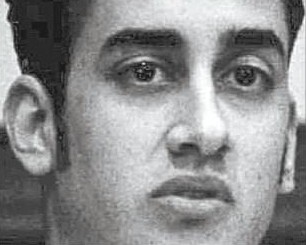 Mario Benjamin Murphy
Murderer · USA · 1991
Mario Benjamin Murphy was a Mexican national. He was scheduled to be executed i…
1 victim
Mario Benjamin Murphy
Murderer · USA · 1991
Mario Benjamin Murphy was a Mexican national. He was scheduled to be executed i…
1 victim
 Dr. Teet Härm
Murderer? · S weden · 1984
The District Court jury returned a guilty verdict, but the High Court overturne…
9 victims
Dr. Teet Härm
Murderer? · S weden · 1984
The District Court jury returned a guilty verdict, but the High Court overturne…
9 victims
 Sulejman Talovic
Mass murderer · USA · 2007
Sulejman Talović Sulejman Talović (October 6, 1988 – February 12, 2007) was a B…
5 victims
Sulejman Talovic
Mass murderer · USA · 2007
Sulejman Talović Sulejman Talović (October 6, 1988 – February 12, 2007) was a B…
5 victims
 Dorsie Lee Johnson
Murderer · USA · 1986
Dorsie Lee Johnson, Jr. was convicted in the death of Jack Huddleston, 53, a co…
1 victim
Dorsie Lee Johnson
Murderer · USA · 1986
Dorsie Lee Johnson, Jr. was convicted in the death of Jack Huddleston, 53, a co…
1 victim
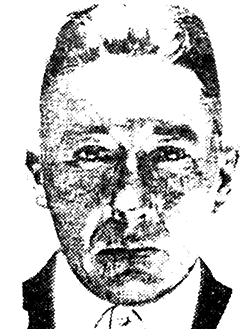 Arnold Sodeman
Serial killer · Australia · 1930
Arnold Karl Sodeman (12 December 1899 – 1 June 1936), also known as the School-…
4 victims
Arnold Sodeman
Serial killer · Australia · 1930
Arnold Karl Sodeman (12 December 1899 – 1 June 1936), also known as the School-…
4 victims
 James Kraig Kahler
Mass murderer · USA · 2009
James Kraig Kahler resided in Columbia, Mo., after moving back to Kansas shortl…
4 victims
James Kraig Kahler
Mass murderer · USA · 2009
James Kraig Kahler resided in Columbia, Mo., after moving back to Kansas shortl…
4 victims
- Gender
- male
- Country
- USA
- Location
- Tuscaloosa County, Alabama, USA
- Date of birth
- August 23, 1969
- Age at first offence
- 26
- Characteristics
- rape
- Victim profile
- Mattie Lee "Polly" Wesson, 70
- Method of murder
- Shooting
- Date(s) of murder
- March 25, 1995
- Years active
- 1995
- Date of arrest
- Same day
- Status
-
Executed
Executed by lethal injection in Alabama on June 16, 2011
Case information
- Defendant: Eddie Duvall Powell III
- Gender: Male
- DOB: 08/23/1969
- Prison status: Executed by lethal injection in Alabama on June 16, 2011
- DOC#: Z647
- County: Tuscaloosa
- Prison: Holman
- Prison received: 08/27/1998
Timeline
- March 25, 1995 — Before sunrise, 70-year-old Mattie Wesson was attacked in her home; she was raped, sodomized and shot to death.
- March 25, 1995 — Powell borrowed Bobby Johnson’s leather jacket and left the Johnson home in the early hours on the day of the murder.
- March 25, 1995 — The victim was shot about 5:25 A.M.; Powell was first seen on videotape at the Shell Oil Station in Alberta City about an hour later at 6:27 A.M.
- March 25, 1995 — Powell asked Jason Long to get rid of the handgun; Jason Long complied and the handgun was never found.
- March 25, 1995 — After police interviews, Powell was advised of his Miranda rights and executed a waiver form stating he understood his rights.
- March 25, 1995 — Powell was arrested for disorderly conduct after using loud and abusive language and profanity in the lobby outside the main homicide office.
- March 26, 1995 — Powell was arrested and charged with murder at 2:05 a.m.
- March 28 — Bush applied for a warrant to compel Powell to submit to the taking of specimens or samples of blood, saliva, and hair.
- 1998 — Powell was assigned to death row in 1998.
- June 16, 1998 — Powell was convicted of capital murder.
- August 27, 1998 — In accordance with the 11-1 jury recommendation, the trial judge sentenced Powell to death.
- 1999 — The first trial ended in a mistrial when the jury could not agree on the punishment.
- December 22, 1999 — The petition for certiorari review was filed in the Supreme Court of Alabama before the effective date of the amendment to Rule 39.
- 1999 — Powell filed a Rule 32 petition for relief from judgment.
- November, 2003 — Powell filed an amended Rule 32 petition.
- December, 2003 — Powell filed a second amended petition through counsel.
- May, 2004 — Powell filed a third amended petition.
- July, 2004 — The state judge denied Powell’s petition and request for evidentiary hearings, found claims time-barred except one, and struck the third amended petition.
- Wednesday (in relation to June 16, 2011 appeals) — One of Powell’s appeals was turned down by the 11th U.S. Circuit Court of Appeals.
- Earlier this week (in relation to June 16, 2011 appeals) — Another appeal was rejected earlier this week by the Alabama Supreme Court.
- June 16, 2011 — Powell was executed by lethal injection at Holman Correctional Facility in Atmore; he was pronounced dead at 6:30 p.m. local time.
Background
Before sunrise on March 25, 1995, Mattie Wesson, 70 years old, was attacked in her home in Holt, Alabama. The attack included rape, sodomy, and she was shot to death. She was an elderly widow. She was attacked in her home as she apparently attempted to escape her attacker.
The offence
Mattie Wesson was “brutally attacked, raped, sodomized and shot to death.” The trial court found that:
- In the early morning hours before sunrise on March 25, 1995, the victim was “brutally attacked, raped, sodomized and shot to death.”
- The victim was an elderly widow and was attacked in her home in Holt, Alabama, as she apparently attempted to escape her attacker.
- Powell and a friend, Bobby Johnson, lived across the street from the victim. Powell borrowed Johnson’s leather jacket and left the Johnson home in the early hours of March 25, 1995.
- The evidence showed Powell had been at the home of the victim contrary to Powell’s statement.
- The victim’s semen and blood were found in and on Powell and the borrowed jacket.
In the trial court’s findings of fact, the victim was “pursued from her home and shot five or six times, resulting in her death,” and the killing was described as “unnecessarily torturous to the victim for an undetermined period of time.”
Victim-related statements and witnesses
- After being shot and assaulted in the bedroom, Mattie Wesson walked across the street to the front yard of her neighbor and before collapsing told her than “a black man had raped and shot her.” Shortly after making this statement, Mattie Wesson died.
- The case included testimony from Ruth Kizziah, a neighbor, about what Mattie Wesson told her.
- The case included testimony from Cora Jennings, a neighbor and mother of Bobby Johnson.
Investigation
Palm prints were lifted from a window:
- Investigators lifted palm prints from the glass of the front living room window where entry was attempted.
- The suspect gained entry through the back bathroom window.
- Fibers were recovered from the brick at the bathroom window seal.
Evidence and locations identified included:
- A “large concentration of blood, hair and fibers” on and about the victim’s bed.
- A matchbook from O’Charley’s was found in the unfinished basement under the victim’s home immediately after the murder. The matchbook appeared to have been there only a short time since it had no dust on it.
- A container of small change was missing from the victim’s purse.
- The victim’s handgun was missing.
Arrest
Powell was arrested for disorderly conduct after using loud and abusive profanity in the lobby outside the main homicide office. The record included testimony from Deputy Taylor Powell that Powell said:
- “You better tell those punk-ass police there ain't no bitches over here.”
- He referred to the police as “motherfuckers.”
Investigator Stan Bush testified that after Powell’s initial interview, Bush told Powell he was free to leave, and Powell left the building.
Trial
Charges and conviction
Powell was convicted on four counts of capital murder:
- Murder committed during the course of a burglary in the first degree (see Ala.Code 1975, § 13A-5-40(a)(4)).
- Murder committed during the course of a robbery in the first degree (see Ala.Code 1975, § 13A-5-40(a)(2)).
- Murder committed during a rape in the first degree (see Ala.Code 1975, § 13A-5-40(a)(3)).
- Murder committed during sodomy in the first degree (see Ala.Code 1975, § 13A-5-40(a)(3)).
In the second trial, the jury recommended the death penalty:
- The jury, by a vote of 11-1, recommended that Powell be sentenced to death.
- The trial court imposed the death sentence recommended by the jury.
Evidence described in the trial court’s findings
The trial court found the following evidence linked Powell to the crimes:
- Powell’s semen was found in the victim’s mouth, rectum, and vagina.
- The victim’s blood was found on Powell’s pants and on Bobby Johnson’s leather jacket, which was worn by Powell on the date.
- Powell’s handprint was found on the window on the front of the victim’s home, where a screen had been cut.
- The victim was shot about 5:25 A.M. on March 25, 1995.
- Powell was first seen on videotape at the Shell Oil Station in Alberta City about an hour later at 6:27 A.M.
- The Shell Oil Station employee testified that Powell paid for wine mostly in nickels and had a lot of change in small coins.
- A container of small change was missing from the victim’s purse for nickel and dime card games.
- Powell appeared at the Shell Oil Station wearing a leather jacket with a wet stain; the victim’s blood was on the jacket worn by Powell on March 25, 1995.
- The jacket belonged to Bobby Johnson.
- Powell wore the bloodstained jacket to Jason Long’s residence on the morning the victim was killed.
- Testimony showed the leather jacket pocket contents included an O’Charley’s matchbook, small change, and jewelry similar to jewelry owned by the victim.
- None of these items belonged to Bobby Johnson, who owned the jacket and stated that no bloodstain was on the jacket when Powell took it.
- Powell had a handgun after he arrived at Jason Long’s residence; Powell asked Jason Long to get rid of the handgun; Jason Long complied; the handgun was never found.
- On the morning of March 25, 1995, Powell had fresh scratches on the back of his neck.
- Lawrence Bunkley testified that Powell told him “something to the effect that he did the bitch, she ran up on him and he shot her.”
Statements and suppression issues addressed on appeal (direct appeal opinion material)
Powell contended that the trial court erred by denying his motion to suppress:
- Powell asserted that he should have been informed of his Miranda rights during his initial interview with Stan Bush.
- Bush testified he read Powell Miranda rights after Powell became evasive and inconsistencies were noticed.
- The appellate discussion concluded that Powell’s interrogation did not become custodial until just before he was advised of his rights.
- The court concluded no error in admitting the videotaped statement.
Powell also argued admission of subsequent audiotaped statements:
- The discussion stated that Miranda warnings did not have to be repeated before successive interrogations after a prior waiver.
- Bush testified about a second audiotaped interview around 4:30 p.m. on March 25, 1995.
- Investigator Greg Burroughs testified to another interview around 2:00 a.m. on March 26, 1995, and that Powell was reminded of his Miranda rights and agreed to speak.
Powell argued his waiver was not voluntary due to intoxication and fatigue:
- Bush testified Powell had been drinking earlier in the day, but Bush stated Powell’s ability to communicate was not impaired and he appeared not to be suffering from mental disease or emotional shock.
- Another officer testified Powell was seen drinking in the parking lot.
- The appellate discussion concluded there was conflicting evidence on intoxication and the trial court did not err in admitting the statements.
Powell argued denial of change of venue:
- The appellate discussion addressed voir dire screening after pretrial publicity and concluded the trial court did not abuse its discretion.
Powell argued admission of the jacket and contents:
- The jacket’s relevance and prejudice were discussed.
- Chain of custody testimony was provided, including that the jacket was transported and tested by forensic scientists and labs.
Powell argued double jeopardy / multiplicity:
- The appellate discussion concluded the charges did not run afoul of the Double Jeopardy Clause.
Powell argued suppression of items seized after disorderly conduct arrest:
- The appellate discussion concluded probable cause existed for disorderly conduct arrest due to loud and abusive language.
Powell argued suppression of DNA and specimen evidence:
- The appellate discussion concluded probable cause supported the order to obtain samples.
Powell argued admission of photographs of scratches on his neck:
- The appellate discussion concluded the order was based on probable cause and the photographs were relevant.
Powell argued mistrial and Batson issues:
- The appellate discussion addressed the jury venire division among courtrooms and found no evidence of systematic exclusion.
- It also addressed Powell’s Batson challenge and concluded Powell failed to establish a prima facie case of discrimination.
Plain error review concluded:
- The appellate discussion stated it found no plain error or defect in the guilt phase or the sentencing phase.
Sentencing
Advisory verdict and sentence imposed
- The jury recommended death by electrocution by a vote of 11-1.
- The trial court entered specific written findings after a separate sentencing hearing.
Aggravating and mitigating circumstances found
Statutory aggravating circumstances found by the trial court:
- “that the murder was committed while Powell was engaged in committing or attempting to commit, or fleeing after committing, or attempting to commit rape, robbery, or kidnapping”
- “that the capital offense was especially heinous, atrocious, or cruel compared to other capital offenses”
The trial court’s statement on “especially heinous, atrocious, or cruel” included:
“The State proved this circumstance beyond a reasonable doubt. The victim was an older woman, who was not in good health. The victim was horribly assaulted about the head with a blunt weapon with several blows hard enough to tear her scalp and render her unconscious. She was brutally raped and sodomized orally and rectally. She was pursued from her home and shot five or six times, resulting in her death. The manner in which the victim was killed was unnecessarily torturous to the victim for an undetermined period of time. This killing of this victim was the epitome of a conscienceless or pitiless homicide.” (C. 666.)
Statutory mitigating circumstance found:
- “the age of the defendant (he was 25 years old) at the time of the crime” (see § 13A-5-51(7), Ala.Code 1975).
Nonstatutory mitigating circumstances found included:
- Powell exhibited signs of mental or emotional problems that went untreated.
- Powell suffered direct or indirect abuse at some time in his life.
- Powell was detrimentally affected by his family's instability during his early and middle years.
- Powell suffered some degree of neglect and deprivation in his early childhood years as the result of family turmoil, instability, and other factors.
- Powell had friends and relatives who loved him and did not want to see him die.
- Powell demonstrated the capacity to love and to care for another human being, including as a young father caring for and demonstrating devotion to his children, described as changing diapers, and bathing and feeding the infants, and searching for employment.
- Powell was suffering from unrelated, yet real stresses, at the time of the crime.
- Powell assisted other inmates while incarcerated.
After weighing aggravating circumstances against statutory and nonstatutory mitigating circumstances, the trial court determined aggravating circumstances outweighed mitigating circumstances and sentenced Powell to death.
Appeals
Direct appeal and state supreme court certiorari
- Powell v. State, 796 So.2d 404 (Ala. 1999) (Direct Appeal) — affirmed.
- Ex parte Powell, 796 So.2d 434 (Ala. 2001) (Direct Appeal) — affirmed.
The direct appeal record included multiple issues, including admissibility of videotaped and audiotaped statements, Miranda waiver voluntariness, change of venue, admission of a bloodstained jacket and chain of custody, double jeopardy/multiplicity, suppression of clothing and specimen evidence following an arrest, admission of photographs of scratches, denial of mistrial and Batson-related rulings, and plain error review.
Federal habeas appeal
- Powell v. Allen, 602 F.3d 1263 (11th Cir. 2010) (Habeas) — affirmed.
The Court of Appeals held among other things:
- The method for selecting grand jury foreperson did not violate Equal Protection Clause.
- Powell’s right to an impartial jury was not violated by juror-selection procedure.
- Equal protection rights were not violated when prosecutor struck two African-Americans from venire.
- Denial of a felony murder instruction claim was not warranted.
- Habeas relief was not warranted on a claim that state presented false DNA evidence.
- Counsel was not ineffective in guilt phase for failing to investigate the scope of Powell’s substance abuse.
- Decision that counsel was not ineffective during penalty phase was not contrary to or unreasonable application of Supreme Court precedent.
Supreme Court / U.S. Supreme Court action
The material stated:
- “Earlier in the evening the U.S. Supreme Court denied Powell's appeals to stop the execution.”
Outcome
On June 16, 2011, Powell was executed by lethal injection in Alabama.
- He was pronounced dead at 6:30 p.m.
- The execution took place at Holman Correctional Facility in Atmore.
- A Reuters account stated this was the fourth execution in Alabama that year and the second since the state switched drugs in the execution cocktail.
Aftermath
Last meal and last words
- Powell did not request a special last meal.
- He ate sandwiches, soda and corn chips from a vending machine (as described in multiple parts of the material).
Powell’s final words included:
“I'd like to say I'm sorry for the pain I have caused everyone who has had to deal with this situation - my family, the victim's family and everyone in this state. I've made peace with myself and God, and hope that everyone can move on from this situation.”
Prison actions and family visits
- Powell’s mother, brother, sister, uncle and friend visited him from 9 a.m. until 4:30 p.m. on the day of execution.
- Officers said Powell wrote letters and described him as talkative and calm.
- The material described Powell as relaxed and talkative and spending some of his time writing letters.
Victim’s family statements
Written statements by Mattie Wesson’s sons included:
- William Wesson, Curtis Wayne Wesson and Jerold O'Neal Wesson issued a written statement saying “justice had been served” with Powell’s execution.
- The statement stated:
“Because of her untimely death, Mrs. Wesson was never able to meet four of her grandchildren and none of her four great-grandchildren.
These children will never be able to hear her sweet voice and her infectious laugh. They will never be able to know about her gentle spirit or her wonderful sense of humor.
She'll never be able to teach them about her loves in life -- fishing, playing cards with friends for nickels and dimes, and cooking.”
The same statement also included condolences to Powell’s family:
“We would like to offer our condolences to the family of Mr. Powell. We truly understand the grief they are experiencing. It is our prayer that Mr. Powell has found forgiveness from our Lord Jesus and that he will spend eternity in Heaven,”
Items and possessions at execution
The material stated Powell’s family was to claim his body after the execution, and that he gave photos to his mother and the rest of his possessions, including a 13-inch black-and-white television. Additional described items left included a Bible, radio, shoes and a thesaurus, and he left the majority of his belongings to fellow inmates.
Additional procedural and advocacy notes
Amnesty International urged Governor Robert Bentley to commute Powell’s death sentence due to lawyers’ arguments that Powell had a mental disability that would render his execution unconstitutional. The material stated that one appeal had been rejected earlier that week by the Alabama Supreme Court, and another appeal was turned down Wednesday by the 11th U.S. Circuit Court of Appeals, relating to a change in a key drug used in the execution cocktail.

Spotted an error, or have more information about this case?