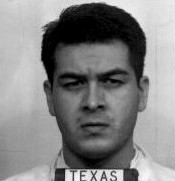
Johnny Joe Martinez
Murderer Brian Kevin Rosenfeld
Murderer · USA · 1985
Brian Kevin Rosenfeld Brian Kevin Rosenfeld was sentenced to three concurrent l…
23 victims
Brian Kevin Rosenfeld
Murderer · USA · 1985
Brian Kevin Rosenfeld Brian Kevin Rosenfeld was sentenced to three concurrent l…
23 victims
 Russell Ellwood
Murderer · USA · 1991
Russell Ellwood was a former taxi driver. Authorities suspected him of killing…
20 victims
Russell Ellwood
Murderer · USA · 1991
Russell Ellwood was a former taxi driver. Authorities suspected him of killing…
20 victims
 Robert Martines Perez
Murderer · USA · 1994
Name: Robert Martines Perez · Other name used in proceedings: Robert Martinez P…
15 victims
Robert Martines Perez
Murderer · USA · 1994
Name: Robert Martines Perez · Other name used in proceedings: Robert Martinez P…
15 victims
 Billy Frank Vickers
Murderer · USA · 1993
Billy Frank Vickers Vickers was executed by lethal injection in Texas on Januar…
14 victims
Billy Frank Vickers
Murderer · USA · 1993
Billy Frank Vickers Vickers was executed by lethal injection in Texas on Januar…
14 victims
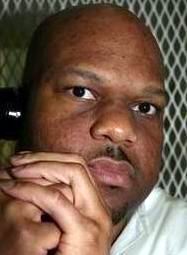 George Alarick Jones
Murderer · USA · 1992
April 13, 1993 — George Alarick Jones and three accomplices went to the Red Bir…
2 victims
George Alarick Jones
Murderer · USA · 1992
April 13, 1993 — George Alarick Jones and three accomplices went to the Red Bir…
2 victims
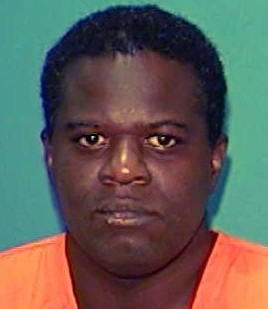 Gregory Capehart
Murderer · USA · 1988
Defendant: Gregory Capehart (born 08/09/67) Sixth Judicial Circuit: Pasco Count…
1 victim
Gregory Capehart
Murderer · USA · 1988
Defendant: Gregory Capehart (born 08/09/67) Sixth Judicial Circuit: Pasco Count…
1 victim
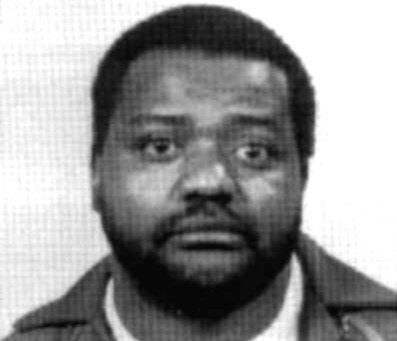 Phillip McCollum
Murderer · USA · 1983
Phillip McCollum was sentenced to death on March 8, 1985. Phillip McCollum rece…
2 victims
Phillip McCollum
Murderer · USA · 1983
Phillip McCollum was sentenced to death on March 8, 1985. Phillip McCollum rece…
2 victims
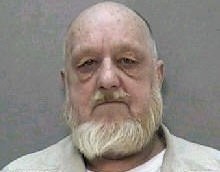 Richard Biegenwald
Serial killer · USA · 1958
Richard Fran Biegenwald (August 24, 1940 – March 10, 2008) was an American seri…
6 victims
Richard Biegenwald
Serial killer · USA · 1958
Richard Fran Biegenwald (August 24, 1940 – March 10, 2008) was an American seri…
6 victims
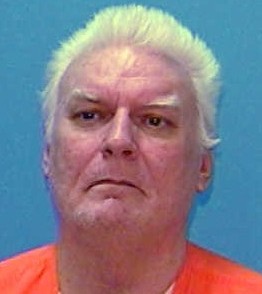 James Delano Winkles
Murderer · USA · 1980
James Delano Winkles also known as Jimmy Delano Hawk was convicted for the murd…
2 victims
James Delano Winkles
Murderer · USA · 1980
James Delano Winkles also known as Jimmy Delano Hawk was convicted for the murd…
2 victims
- Gender
- male
- Country
- USA
- Location
- Nueces County, Texas, USA
- Date of birth
- November 20, 1972
- Age at first offence
- 21
- Characteristics
- robbery
- Victim profile
- Clay Peterson, 20 (convenience store clerk)
- Method of murder
- St abbing with knife
- Date(s) of murder
- July 15, 1993
- Years active
- 1993
- Date of arrest
- Same day (surrenders)
- Status
-
Executed
Executed by lethal injection in Texas on May 22, 2002
Case overview
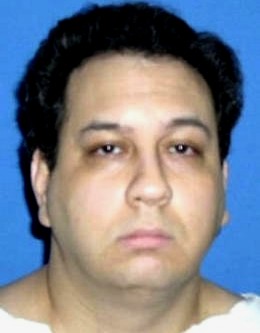
Johnny Joe Martinez was convicted of capital murder for the robbery and murder of convenience store clerk Clay Peterson. He was executed by lethal injection in Texas on May 22, 2002.
Timeline
- July 15, 1993 — Johnny Joe Martinez entered a 7-Eleven convenience store in Corpus Christi, used the store’s restroom, shoplifted several items, later returned to the store, put a pocket knife to Clay Peterson’s throat, demanded money, and fatally stabbed him; Martinez fled on foot after the murder.
- July 15, 1993 — Peterson called 911 and died soon afterward.
- July 15, 1993 — Martinez fled to a nearby motel, called police, admitted to the crime, and waited for police to arrive and was arrested.
- January 24, 1994 — Trial on the merits began.
- January 26, 1994 — The jury returned a verdict of “guilty.”
- January 26, 1994 — Martinez was found guilty of capital murder and sentenced to death after a separate punishment hearing.
- January 27, 1994 — Martinez was sentenced to death for the capital murder of Clay Peterson during a robbery that occurred in Corpus Christi, Texas on July 15, 1993.
- May 22, 1996 — The Texas Court of Criminal Appeals affirmed the conviction and death sentence.
- April 21, 1997 — Martinez petitioned for state habeas relief.
- April 29, 1998 — The Court of Criminal Appeals adopted the state habeas court’s recommendation to deny relief.
- July 23, 1998 — Martinez filed a petition for federal habeas corpus relief in the district court.
- Aug. 24, 1999 — The district court entered final judgment denying federal habeas relief.
- June 22, 2001 — The Fifth Circuit affirmed the district court’s denial of relief.
- Feb. 25, 2002 — The Supreme Court denied Martinez’ petition for writ of certiorari.
- May 1, 2002 — The Court of Criminal Appeals denied Martinez’s successive state writ.
- May 15, 2002 — Martinez filed in the U.S. Supreme Court an application for a stay of execution and another petition for a writ of certiorari.
- May 16, 2002 — A second successive state writ was filed in the Court of Criminal Appeals.
- May 22, 2002 — Martinez was executed by lethal injection in Texas.
- 6:30 p.m., May 22, 2002 — Martinez was pronounced dead.
The offence
Location and circumstances
On July 15, 1993, at approximately 3:20 a.m., Johnny Joe Martinez entered a 7-Eleven convenience store in Corpus Christi, Texas. Clay Peterson, a 20-year-old clerk, was working alone. Martinez used the store’s restroom and shoplifted several items during an initial visit that occurred about 20 minutes before the robbery and murder. Martinez then went back to his car, driven by Paul Wortman, 23, and waited.
Robbery and stabbing
After about 20 minutes, Martinez returned to the store, put a pocket knife to Peterson’s throat, and demanded money. When Peterson complied and surrendered the contents of the store’s cash register—$25.65—Martinez stabbed Peterson multiple times in the neck, back, and shoulders.
The evidence described Peterson as suffering:
- stabbing “about 10 times,” including twice in the neck, in one description,
- stabbing eight times in another description,
- defensive wounds on his hands and scratches to his neck.
Medical evidence described two fatal stab wounds to the neck piercing arteries and causing Peterson to lose a great deal of blood quickly, and a wound to the top of the shoulder that appeared irregular and could have been caused by twisting of the knife or more than one blow to the same area.
Peterson called for an ambulance before dying and called 911. Martinez fled on foot after stabbing Peterson. Wortman, watching from the car, drove away.
Video evidence and intent
A store security camera videotape captured the killing. Martinez testified that he knew he had wounded Peterson but did not know the wounds were fatal. He told the jury that he did not intend to kill Peterson. When asked why he stabbed Peterson, Martinez testified: “I don’t know. That’s a question I will never be able to answer.” He also testified that he did not remember stabbing the deceased as many times as he did.
During a later description of events at trial, Martinez testified that he and Ernest Wortmann (referred to as “Ernest Wortmann” in the Fifth Circuit decision) had been at nightclubs, consumed twelve to thirteen alcoholic drinks, and that while riding toward Corpus Christi they stopped at a 7-Eleven store; the video depicted shoplifting items. Martinez testified that he entered with intent to steal money but intended to use the knife to scare the clerk, and he testified that he joked about robbing the store after discussing it with Wortmann. The Fifth Circuit adopted “Ernest Wortmann” as the proper designation.
Confession and arrest
After committing the crime, Martinez walked to a nearby beach, then fled to a nearby motel. He called police and admitted to the crime. He waited at the motel for police to arrive and was arrested.
At trial, an arresting officer described Martinez as cooperative and concerned about what had happened. In one account, Martinez surrendered without resistance and tried to help officers locate the knife he had thrown away after the murder. In another account, the arresting officer described Martinez as upset and remorseful after he was taken to police.
A police officer was dispatched to the Sandy Shores Hotel after a person called police reporting involvement in the convenience store crime. On arrival, the officer observed Martinez sitting on a couch in the presence of two security guards. The officer testified that Martinez was very calm and quiet and seemed somewhat withdrawn. The officer also testified that Martinez did not appear to have the smell of alcohol on his breath at that time, and an employee and a security guard confirmed this.
During transport, Martinez asked whether the man he stabbed was dead, and later in a police station interview Martinez confessed to killing Clay Peterson. In the Fifth Circuit decision, the officer described Martinez as “upset” and “remorseful” and stated Martinez did smell of alcohol but was not intoxicated. The Fifth Circuit also stated Martinez vomited while in the police car and that at the police station he confessed.
Investigation and evidence
- A store security camera videotape captured the killing and showed Martinez putting a pocket knife to Peterson’s throat and demanding money, and showing shoplifting during an initial visit.
- Peterson called 911 and died soon afterward.
- Police took Martinez into custody and Martinez attempted to help locate the murder weapon after it was thrown away.
Arrest
Martinez was arrested after waiting at a nearby motel for police to arrive following his call to police. Police took him into custody at the motel area/after officers arrived.
Trial
Charges and plea
Martinez was indicted for the capital murder of Clay Peterson on July 15, 1993, in the 347th Judicial District Court of Nueces County, Texas. He pled “not guilty.”
Guilt/innocence phase
Trial on the merits began on January 24, 1994. On January 26, 1994, the jury returned a verdict of “guilty.” In the Fifth Circuit decision, the court stated that based on the evidence including Martinez’s confession and the security camera videotape, Martinez was found guilty of capital murder.
Martinez took the stand at the guilt/innocence phase and described his actions and claimed he did not intend to kill Peterson. He admitted lying about several remarks he made to police and provided conflicting stories at different times about what happened after he exited the store.
Punishment phase and jury special issues
At the punishment stage, the State presented no additional evidence. The defense presented witnesses regarding Martinez’s non-violent character and background.
The jury answered:
- “yes” to the future dangerousness special issue,
- “no” to the mitigation special issue finding that no mitigating circumstance warranted a life sentence.
Consequently, the trial court assessed punishment at death.
Witnesses described in the Fifth Circuit decision included:
- Donna DeLeon (supervised Martinez while he worked with mentally retarded children at a local hospital), who testified Martinez was good with residents and had no violent character,
- Verna D. Rodriguez, a friend, who testified she had never seen Martinez behave violently,
- David Martinez, Martinez’s oldest brother, who testified about family circumstances and that Martinez had been violent only in a single school fight in junior high school, and that their stepfather, Jesus Chavera, was murdered,
- Frances B. Martinez, the woman who helped raise Martinez, who testified he was “a good son,” she was surprised by his arrest, and his past did not indicate violent acts,
- Esequiel Rodriguez, Classification Coordinator and Counselor for the Nueces County Jail, who testified Martinez adapted well to prison life and displayed no serious behavior problems.
In the Fifth Circuit decision, Martinez’s “future dangerousness” answer and mitigation “negative” answer resulted in automatic sentencing to death under the Texas procedure described in the decision.
Sentencing
Martinez was sentenced to death. The record included:
- sentencing after the jury answered the future dangerousness special issue affirmatively and mitigation negatively,
- the trial court automatically sentencing him to death.
Appeals
State appeals
On May 22, 1996, the Texas Court of Criminal Appeals affirmed Martinez’s conviction and death sentence. The Fifth Circuit decision stated the CCA held “a rational jury could have determined beyond a reasonable doubt that appellant would be a continuing threat to society.” Four judges dissented from affirmance of the death penalty, arguing the CCA had found evidence insufficient in cases with more aggravated facts.
Martinez petitioned for state habeas relief on April 21, 1997. The state habeas court recommended relief be denied, and on April 29, 1998, the Court of Criminal Appeals adopted the recommendation.
Martinez filed successive state habeas efforts:
- He filed another successive state writ in the Court of Criminal Appeals on or about April 12, 2002; it was denied on May 1, 2002.
In the Fifth Circuit decision, the state habeas process included the appointment of Nathaniel Rhodes to represent Martinez. Rhodes filed a skeletal preliminary Application for a Writ of Habeas Corpus, then filed an Amended Original Application for Habeas Corpus that raised four claims. Two claims were repetitive of arguments rejected on direct appeal, and the other two asserted record-based jury selection errors without explaining why they could not have been raised on direct appeal.
On April 29, 1998, the CCA denied state habeas relief. A dissenting judge stated the trial record was never quoted, only three cases were cited, and that the merits should not be reached under the circumstances; the dissent stated the matter should be remanded to determine whether the applicant had received effective assistance of counsel.
Rhodes filed a Motion for Reconsideration in the CCA, which the CCA denied on May 20, 1998.
Federal appeals
On July 23, 1998, Martinez filed a petition for federal habeas corpus relief in the district court. On Aug. 24, 1999, the district court denied relief. The Fifth Circuit later affirmed:
- June 22, 2001: The Fifth Circuit affirmed the denial of federal habeas relief.
In the Fifth Circuit decision, the court addressed:
- procedural default of claims regarding ineffective assistance of trial counsel based on failure to present the claim to state courts,
- the argument that state habeas counsel ineffectiveness could constitute cause under Coleman v. Thompson, which the Fifth Circuit held it could not under controlling precedent,
- a claim contesting sufficiency of evidence to support the jury’s future dangerousness finding under the Eighth Amendment, concluding the CCA’s decision was not objectively unreasonable under Jackson,
- due process claims grounded in the alleged failure to provide competent state habeas counsel and alleged entitlement to consistent application of Texas law.
The Supreme Court denied certiorari:
- Feb. 25, 2002.
Martinez filed a successive state writ and then an application for a stay and a petition for certiorari in the U.S. Supreme Court:
- May 15, 2002 — application for stay of execution and another petition for a writ of certiorari,
- May 16, 2002 — second successive state writ in the Court of Criminal Appeals.
Final statement and execution
Board decisions on clemency
A Texas Board of Pardons and Paroles vote rejected commutation and temporary reprieve:
- The Board voted 9-8 to reject life imprisonment and 12-5 against a temporary reprieve. The victim’s mother, Lana Norris, had written asking the Board to commute the killer’s sentence to life, describing it as “a double crime against society” and asserting the execution would be against society.
The Governor’s approval is referenced in the materials as the mechanism by which board-recommended commutations are approved, and it was stated that commutations are rarely granted in a death case.
Final statement
At execution, Martinez made a lengthy final statement critical of his original lawyers. He said: “My trial lawyers -- they are the ones that are killing me,” he said. “I know I'm fixing to die, but not for my mistakes. I'm dying for the mistakes of my lawyers.”
He thanked Lana Norris, who did not attend the execution, for her attempt to save his life: “It meant a lot to me,” he said.
He concluded: “I am fine, I am happy. I will see you on the other side.”
Execution details
Martinez was pronounced dead at 6:30 p.m. He was executed by lethal injection in Texas on May 22, 2002.
Other details
Partner at the scene
Paul Wortman drove away while Martinez committed the stabbing inside the store. In the Fifth Circuit decision, the man accompanying Martinez earlier was discussed as Ernest Wortmann, with a note that there was some discrepancy on the proper given name. The Fifth Circuit adopted “Ernest Wortmann.”
Prior criminal history
The materials stated that Martinez had no prior criminal history.
Witnesses and family background (as described in federal decision)
The Fifth Circuit decision described Martinez’s upbringing and family background through testimony:
- their stepfather, Jesus Chavera, had been murdered,
- Martinez dropped out of school in the 10th grade and joined a job training program but did not finish,
- Martinez grew up in a violent neighborhood marked by poverty and abuse,
- there was a school fight in junior high school.
Victim details
Clay Peterson was the convenience store clerk and was 20 years old in the described timeline. Peterson called for an ambulance and called 911 and died soon afterward. The materials described his mother as Lana Norris and referred to her advocacy regarding commutation.
Prison communications and document content
The provided materials included a letter attributed to Johnny J. Martinez that discussed his appeals and statements about his lawyers, and included a burial-fund request and instructions for donations, including “Mothers address: Mary Lou Chavera c/o Johnny Martinez's Burial Fund 1220 N. 17th., Apt. 58 Kingsville, Texas 78363 U.S.A.”
Spotted an error, or have more information about this case?