
Ronald Allen Smith
Murderer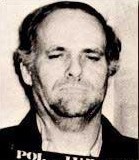 Ervil LeBaron
Murderer · USA · 1972
Ervil Morrell LeBaron (1925 to August 16, 1981) was the leader of a polygamous…
35 victims
Ervil LeBaron
Murderer · USA · 1972
Ervil Morrell LeBaron (1925 to August 16, 1981) was the leader of a polygamous…
35 victims
 Brian Kevin Rosenfeld
Murderer · USA · 1985
Brian Kevin Rosenfeld Brian Kevin Rosenfeld was sentenced to three concurrent l…
23 victims
Brian Kevin Rosenfeld
Murderer · USA · 1985
Brian Kevin Rosenfeld Brian Kevin Rosenfeld was sentenced to three concurrent l…
23 victims
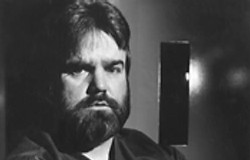 Marvin Gray
Murderer · USA · 1975
Marvin Gray was convicted killer who claimed responsibility for 23 slayings and…
23 victims
Marvin Gray
Murderer · USA · 1975
Marvin Gray was convicted killer who claimed responsibility for 23 slayings and…
23 victims
 Yahweh ben Yahweh
Murderer · USA · 1980
Yahweh ben Yahweh was born and legally named Hulon Mitchell Jr. (October 27, 19…
23 victims
Yahweh ben Yahweh
Murderer · USA · 1980
Yahweh ben Yahweh was born and legally named Hulon Mitchell Jr. (October 27, 19…
23 victims
 Russell Ellwood
Murderer · USA · 1991
Russell Ellwood was a former taxi driver. Authorities suspected him of killing…
20 victims
Russell Ellwood
Murderer · USA · 1991
Russell Ellwood was a former taxi driver. Authorities suspected him of killing…
20 victims
 Kenneth Bartley
Homicide · USA · 2005
Defendant: Kenneth Bartley Jr., 15-year-old student (also referred to as Kennet…
1 victim
Kenneth Bartley
Homicide · USA · 2005
Defendant: Kenneth Bartley Jr., 15-year-old student (also referred to as Kennet…
1 victim
 Lutrische Dancy
Murderer · USA · 2003
Lutrische Dancy was linked to the death of a 51-year-old man. Dancy was charged…
1 victim
Lutrische Dancy
Murderer · USA · 2003
Lutrische Dancy was linked to the death of a 51-year-old man. Dancy was charged…
1 victim
 Brian Keith Baldwin
Murderer · USA · 1977
Brian Keith Baldwin (also known as Brian K. Baldwin) was executed by electrocut…
1 victim
Brian Keith Baldwin
Murderer · USA · 1977
Brian Keith Baldwin (also known as Brian K. Baldwin) was executed by electrocut…
1 victim
 Martha Freeman
Murderer · USA · 2005
Martha Freeman was convicted, together with Rafael DeJesus Rocha-Perez, of firs…
1 victim
Martha Freeman
Murderer · USA · 2005
Martha Freeman was convicted, together with Rafael DeJesus Rocha-Perez, of firs…
1 victim
- Gender
- male
- Country
- USA
- Location
- Glacier County, Montana, USA
- Date of birth
- September 7, 1957
- Age at first offence
- 25
- Characteristics
- hitchhiking, drug addict, alcohol
- Victim profile
- Harvey Mad Man, 23, and Thomas Running Rabbit, 20
- Method of murder
- Shooting with a sawed-off .22 caliber rifle
- Date(s) of murder
- August 4, 1982
- Years active
- 1982
- Date of arrest
- August 27, 1982
- Status
-
Sentenced to death
Sentenced to death on March 21, 1983
Overview
Ronald Allen Smith (born September 7, 1957) was a Canadian man. He was sentenced to death in Montana for murdering two people.
Background
Smith was from Wetaskiwin, Alberta, Canada. He later described his origin as from Red Deer, Alta., and was identified as “the only Canadian on death row in the U.S.” during an interview conducted while he was in prison near Deer Lodge, Mt. In 2011, Smith was identified as one of two prisoners on Montana’s death row, with William Gollehon described as the other prisoner.
Smith was accompanied by two men, Andre Fontaine and Rodney Munro, when they left Alberta, Canada. He and Munro were described as heavy drug users. Smith reportedly had begun using heroin and hallucinogens as a child, and during the summer of 1982 he was consuming 10 to 20 tablets of LSD a day. Smith and Munro had decided they had no future in Canada and would set off for Mexico. The three walked across the U.S. border into Montana and hitchhiked south.
In the proceedings summarized from the United States Court of Appeals for the Ninth Circuit, Smith was described as being 24 years old at the time of the killings.
The offence
On August 4, 1982, Smith kidnapped and killed Harvey Mad Man, Jr. and Thomas Running Rabbit, Jr. at a remote location near U.S. Highway 2, west of the eastern border of Flathead County. The victims were described as cousins, and their ages were given as 23 and 20. They were described as aboriginal men. Smith shot both victims in the head with a sawed-off .22-calibre rifle, and the killings were described as occurring after the victims offered him a ride while hitchhiking.
In East Glacier, Montana on August 4, Smith and two other men stopped in a bar at approximately one o’clock in the afternoon. At the bar, Smith, Munro, and Fontaine drank beer and played pool with other people, including Harvey Mad Man, Jr. and Thomas Running Rabbit, Jr. After about an hour, Smith, Munro, and Fontaine bought more beer to take with them and started walking west along Highway 2, hoping to hitch a ride. Mad Man and Running Rabbit picked them up.
The five men drove until Mad Man and Running Rabbit decided to stop and urinate in some roadside bushes. When they returned to the car, Smith produced a gun and Munro a knife, which they had carried with them from Canada. Smith and Munro walked Mad Man and Running Rabbit back into the bushes intending to steal the car and eliminate witnesses to the theft.
Smith shot Harvey Mad Man in the back of the head at point-blank range. He reloaded the rifle, walked several feet to where Thomas Running Rabbit had fallen to the ground upon being stabbed by Munro, and shot him in the temple at point-blank range. Both men were killed instantly. After the shootings, Smith and Munro returned to the car, drove off, and later stole the victims’ car and proceeded to California.
Fontaine later linked Smith to the killings. The victims’ car was recovered when Fontaine and Munro were arrested for armed robbery in California.
Investigation and arrest
Smith was arrested in Wyoming. Fontaine and Munro were arrested in California for armed robbery.
Trial
Charges and plea
An information was filed charging Smith with two counts of aggravated kidnapping and two counts of deliberate homicide. An arraignment hearing was held on November 1, 1982, at which time Smith entered a plea of “not guilty” to all charges.
On February 24, 1983, Smith entered a change of plea. He admitted shooting both victims in the head. In the account of the United States Court of Appeals for the Ninth Circuit, Smith moved to change his plea to guilty on February 23, 1983, and asked for the death penalty. At the sentencing hearing on March 21, 1983, the court ordered Smith’s execution. In the other account contained in the provided material, at the conclusion of the March 21, 1983 hearing to determine aggravating and mitigating circumstances, the court imposed a sentence of death on March 21, 1983.
Sentence hearing (March 21, 1983)
At the sentencing hearing on March 21, 1983, the court and parties reviewed the presentence report and admitted it after one minor correction.
Smith testified. He stated he had been in prison for eight of the last ten years, and that he had lived by petty theft and selling drugs when not in prison. He testified in detail about the sixteen prior offenses listed in the presentence report. He testified about the facts of the killings, including that Munro was aware of Smith’s intent to kill the victims because Munro intended to steal their car and wished to leave no witnesses.
Smith testified that, in addition to his desire to eliminate the witnesses to the car theft, he had had a “morbid fascination to find out what it would be like to kill somebody.” He testified that he had consumed two or three beers on the night of the crime but that his ability to understand his actions was not impaired. Smith testified that he sought the death penalty because a prolonged period of incarceration would be of no benefit to himself or society and because he foresaw problems with the Indian population at the prison. He testified he felt no remorse for the killings, considered himself a violent person, and felt he could kill again. He testified he had no desire to change his lifestyle. Following extensive questioning, Smith denied being under the influence of drugs, intoxicants or extreme stress and stated that he knew of no mitigating circumstances.
At the March 21, 1983 conclusion of the hearing to determine the existence and nature of any aggravating or mitigating circumstances, the court imposed a sentence of death upon Smith.
Sentencing
Initial death sentence and reconsideration motions
Subsequently, Smith filed a motion to seek reconsideration of the death penalty and a motion for a psychiatric examination. The court held a hearing on these motions on May 3, 1983.
At the May 3, 1983 hearing, Smith testified that his family had induced him to change his mind and seek a lesser penalty than death. He testified that his earlier desire for the death penalty was the product of depression resulting from a long period of solitary confinement in the Flathead County Jail following his arrest. He testified he had designed his earlier testimony to induce the court to sentence him to death, and had concealed a potential mitigating factor—his use of drugs and alcohol.
Smith testified that he and Munro had used three or four hundred “hits” of LSD during the period of time immediately prior to their entry to the United States, ending the day before the murders. He testified that on the day of the crime he had consumed approximately twelve beers.
Psychiatric examination and evaluation
On June 10, 1983, the court granted Smith’s motion for psychiatric evaluation. The court appointed a psychiatrist, Dr. William Stratford, to examine Smith and report to the court as to: (1) whether he could determine which of the versions given by Smith was credible; and (2) what Smith’s mental condition was on August 4, 1982.
Smith requested the court to amend its order deleting the investigative function of Dr. Stratford. The court amended its order and directed Dr. Stratford to assume the truth of Smith’s second version of the facts in performing his examination.
The court held a hearing on Smith’s motion for reconsideration of the sentence on December 1, 1983.
Dr. Stratford testified that he found no evidence that use of drugs or alcohol affected Smith’s capacity to appreciate the criminality of his conduct, conform his conduct to the requirements of law, or form a criminal intent. Dr. Stratford testified that after three or four consecutive days of heavy LSD usage the user develops tolerance, and that large doses have little or no effect. Based on Smith’s history of heavy LSD usage for a period of one month or more prior to the crime, Dr. Stratford concluded that eight or nine doses—or even as many as fifty doses—of LSD would not have affected Smith’s mental state at the time he committed the homicides.
Rodney Munro testified at the December 1, 1983 hearing. Munro stated he was experiencing confusion, flashes of light, and hallucinations after ingesting approximately the same amount of drugs and alcohol as Smith. Munro testified he had stabbed Running Rabbit once before Smith shot him, and that it was possible Running Rabbit was already dead before he was shot.
On December 12, 1983, Smith filed his motion for an additional psychiatric evaluation. The motion was denied.
Findings on aggravating and mitigating circumstances
In reviewing Smith’s motion for reconsideration, the court entered findings of fact and conclusions of law to support its original sentence. The court found that beyond a reasonable doubt the aggravated kidnappings committed by Smith resulted in the death of his victims, satisfying the statutory aggravating circumstance stated in section 46-18-303, MCA.
The court found beyond a reasonable doubt that no mitigating circumstances were present. The court found that Smith’s consumption of alcohol and drugs was voluntary and did not impair or affect his state of mind, his capacity to recognize and appreciate the criminality of his conduct, or his ability to control his actions and conform his conduct to the requirements of law. The court concluded Smith made a conscious and voluntary choice to kill the victims notwithstanding his use of drugs and alcohol, and that intoxication was not a sufficient mitigating circumstance to call for leniency.
Smith appealed the sentence imposed. The judgment and sentence were affirmed by the Supreme Court of Montana.
Further sentencing-related rulings described in the Ninth Circuit account
In the Ninth Circuit account, defense counsel objected to Dr. Stratford’s reporting directly to the court rather than acting as an aid to the defense. The psychiatric examination was held under direction of the court and reported directly to the court, with an examination limited to mental capacity on the day of the killings.
In that account, the trial court filed its order sentencing Smith to death on February 15, 1984, and found aggravating circumstances under Mont. Code Ann. Sec. 46-18-303 and no mitigating circumstances “sufficiently substantial to call for leniency”. The Montana Supreme Court affirmed the sentence in State v. Smith, 217 Mont. 461, 705 P.2d 1087 (1985), with petition for rehearing denied, 217 Mont. 453, 705 P.2d 1110 (1985).
Appeals
Montana Supreme Court (State v. Smith)
The Montana Supreme Court was presented with the case captioned: STATE v. SMITH 705 P.2d 1110 (1985)
STATE of Montana, Plaintiff and Respondent, v. Ronald Allen Smith, Defendant and Appellant.
No. 84-199. Supreme Court of Montana. Submitted June 25, 1985. Decided September 10, 1985. Counsel listed included Gary G. Doran for defendant and appellant; Mike Greely, Atty. Gen., and James Scheier, Asst. Atty. Gen., Helena, Mont.; and Ted O. Lympus, County Atty., Kalispell for plaintiff and respondent.
In that appeal, the Montana Supreme Court described that Smith was convicted of aggravated kidnapping (two counts) and deliberate homicide (two counts) pursuant to pleas of guilty entered in the District Court of Flathead County, Montana. The defendant was sentenced to death, and the judgment and sentence were affirmed by the Montana Supreme Court in State v. Smith (Mont. 1985), 705 P.2d 1087, 42 St.Rep. 463. The court was again asked to reconsider and remand for an additional psychiatric evaluation and rehearing based on Ake v. Oklahoma, which came down after argument.
The Montana Supreme Court concluded that the Ake decision was distinguishable and without precedential merit, and found that Smith was afforded access to a competent psychiatrist. The court found Dr. Stratford was neutral, examined Smith as to sanity at the time of the offenses, and testified on that basis. The Montana Supreme Court concluded that Smith was not entitled to a second psychiatrist’s evaluation.
U.S. Supreme Court filings described
In the Ninth Circuit account, a writ of certiorari was denied by the U.S. Supreme Court in Smith v. Montana, 474 U.S. 1073 (1986). Post-conviction relief in the Montana Supreme Court was also described as having been denied.
In the provided material summarizing later events, November 2001 is described as the time when the United States Supreme Court denied a petition for review. In 2010, the U.S. Supreme Court refused to hear Smith’s final appeal and the case was sent back to the State of Montana for another date for execution.
Federal habeas proceedings and Ninth Circuit decision (1990)
A further appellate proceeding occurred in the United States Court of Appeals for the Ninth Circuit.
Case: Ronald Allen Smith, Petitioner-appellant, v. Jack Mccormick,* Warden, Montana State Prison, et al., Respondents-appellees.
United States Court of Appeals, Ninth Circuit. Argued and Submitted Oct. 3, 1989. Decided Sept. 7, 1990.
The Ninth Circuit described Smith as sentenced to death for the murder of two Native American men in Montana, and described he asserted constitutional violations in the sentencing process.
The Ninth Circuit held:
- In Part II, the court held that Smith was denied due process by failure of the court to appoint a defense psychiatrist to assist him in preparation for his sentencing hearing. The Ninth Circuit reversed the district court and remanded with instructions to grant the writ of habeas corpus unless the State, within a reasonable time, appointed a defense psychiatrist and thereafter conducted a new sentencing hearing in accordance with the procedures in the opinion.
- In Parts III and IV, the court held that the “sufficiently substantial to call for leniency” standard, as applied in Montana, resulted in an unconstitutional failure to consider and give effect to all relevant mitigating evidence, and that the Montana Supreme Court failed to provide a complete reviewable record discussing all relevant mitigating evidence. The Ninth Circuit reversed the district court and remanded with instructions to grant the writ of habeas corpus unless the State resentenced Smith in accordance with the standards in the opinion.
- In Part V, the Ninth Circuit dismissed Smith’s remaining constitutional objections to the Montana death penalty statute.
- In Part VI, the Ninth Circuit held that Smith was entitled to an evidentiary hearing solely on ineffective assistance of counsel. The Ninth Circuit reversed the district court and remanded with instructions to conduct the evidentiary hearing.
A dissenting opinion by FERNANDEZ, Circuit Judge, concurred in Parts V and VI but dissented from Parts II, III and IV, stating respect for the portion of the majority dealing with psychiatric assistance, the application of the Montana death penalty statute, and the related holdings.
Outcome
Smith was sentenced to death on March 21, 1983.
In the later federal matters described, the case was sent back to Montana for another date for execution after the U.S. Supreme Court refused to hear his final appeal in 2010.
A separate federal court decision described as Smith v. Canada involved clemency policy and a Federal Court decision dated March 4, 2009, with an order for the Government of Canada to “take all reasonable steps to support [Smith's] case for clemency before the Governor of Montana and his advisors in accordance with the current government policy.” The government did not appeal the ruling.
Aftermath and later proceedings
Clemency and Canadian government involvement (Smith v. Canada)
The Canadian government was described as having maintained an interest in Smith’s case since 1983, with Canadian consular officials communicating with Smith, with his lawyers, with prison officials, with the Office of the Governor of Montana, with other Montana state officials, and with the U.S. Department of State.
Beginning in 1997, Canadian consular officials requested clemency for Smith on humanitarian grounds. The Governor of Montana apparently showed some sympathy to these requests.
In October/November 2007, Canada announced it would not seek clemency for Smith. The material quotes a policy statement: “that multiple murderers and mass murderers who are convicted in a democracy that adheres to the rule of law cannot necessarily count on a plea for clemency from the Canadian government and patriation back to this country.”
On March 4, 2009, in a Federal Court decision, Mr. Justice Barnes found that the Canadian government did not have a coherent new policy on seeking clemency in death-penalty cases and therefore was required to apply the former policy to Smith’s case. The court did not determine whether there is, generally, a legal duty on the government to help its citizens sentenced to death abroad. Instead it based its decision on procedural fairness, holding the government had a duty to consult fully with Smith and his legal advisors, followed by a fair and objective consideration of applying any new policy to the facts of his case.
The court ordered the Government of Canada to: “take all reasonable steps to support [Smith's] case for clemency before the Governor of Montana and his advisors in accordance with the current government policy.”
The government did not appeal, and on June 19, 2009, Minister of Foreign Affairs Lawrence Cannon said the government was complying with the ruling. On that same day, Cannon explained the policy as follows: “Our government respects the decisions made by sovereign, democratic states. We are determined to ensure that justice is served for Canadians abroad. In that regard, we will continue to study each instance on a case by case basis and, where appropriate, seek clemency for Canadians facing the death penalty abroad.”
Interview and statements
A Canadian news interview described Smith in prison near Deer Lodge, Mt. He told CBC News during an interview with Carolyn Dunn that he believed he might get clemency because lawmakers in the state legislature were voting on whether to end the death penalty.
The interview included these quotations attributed to Smith:
- “I'm figuring here in the next month, I won't have a death sentence anymore,”
- “I realize — just through interactions with my own family — I realize what I've done to the families of the two victims,”
- “So, there's no doubt there's a lot of remorse. I'd give anything to be able go back and change that day. I can't.”
- “It's six-of-one, half-a-dozen of another because in all probability, it means I'll spend the rest of my life sitting in prison,”
- “I'm not real pleased with that thought. So it's a little bit of a relief. But at the same time, I'm stuck here.”
The interview also included a quotation attributed to Thomas Running Rabbit Sr.: “I wouldn't have to think about it every day,” “Every day, I get up, I sit and drink a cup of coffee, and I look at my son's picture and … think about it … It's just like it happened yesterday. There's no change.”
The interview included another quotation attributed to Stockwell Day: “We will not actively pursue bringing back to Canada murderers who have been tried in a democratic country that supports the rule of law,”
It also described legislative developments in Montana as of February and mid-April voting expectations, and described the potential consequence that Smith’s sentence would be reduced to life imprisonment if the death penalty was abolished.
Other details
Dates and administrative details mentioned
- Smith’s arraignment took place on November 1, 1982.
- Smith’s change of plea was described as occurring on February 24, 1983 in one section and on February 23, 1983 in another section within the provided material.
- The hearings for reconsideration of the death sentence occurred on May 3, 1983 and December 1, 1983.
- Dr. Stratford was appointed on June 10, 1983 for psychiatric evaluation.
- Smith’s motion for an additional psychiatric evaluation was filed on December 12, 1983 and denied.
- The trial court in one account filed an order sentencing Smith to die on February 15, 1984.
- The Montana Supreme Court appeal described submission on June 25, 1985 and decision on September 10, 1985.
Court-appointed psychiatrist and related names
Dr. William Stratford was appointed psychiatrist for the psychiatric evaluation.
Dr. Herman Walters was referenced as providing a psychological profile secured for Dr. Stratford’s evaluation.
Other named judges in the Montana Supreme Court decision included Harrison, Justice, and lists of concurring justices including TURNAGE, C.J., and WEBER, MORRISON, SHEEHY, HUNT and GULBRANDSON, JJ.
Custody and location mentions
The prison described in the interview was near Deer Lodge, Mt.
Legal counsel and argument details listed in the Montana decision
Gary G. Doran, argued, Kalispell, for defendant and appellant. Mike Greely, Atty. Gen., James Scheier, argued, Asst. Atty. Gen., Helena, Mont., for plaintiff and respondent. Ted O.
Constitutional and legal doctrine content included in the Ninth Circuit material
The Ninth Circuit discussed Ake v. Oklahoma and procedural issues related to psychiatric assistance at sentencing. The Ninth Circuit also discussed Mont. Code Ann. Sec. 46-18-305 and mitigating circumstances under Mont. Code Ann. Sec. 46-18-304, listing eight mitigating circumstances: (1) The defendant has no significant history of prior criminal activity. (2) The offense was committed while the defendant was under the influence of extreme mental or emotional disturbance. (3) The defendant acted under extreme duress or under the substantial domination of another person. (4) The capacity of the defendant to appreciate the criminality of his conduct or to conform his conduct to the requirements of law was substantially impaired. (5) The victim was a participant in the defendant's conduct or consented to the act. (6) The defendant was an accomplice in an offense committed by another person, and his participation was relatively minor. (7) The defendant, at the time of the commission of the crime, was less than 18 years of age. (8) Any other fact that exists in mitigation of the penalty.
Spotted an error, or have more information about this case?