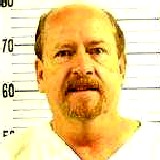
James Dellinger
Murderer Brian Kevin Rosenfeld
Murderer · USA · 1985
Brian Kevin Rosenfeld Brian Kevin Rosenfeld was sentenced to three concurrent l…
23 victims
Brian Kevin Rosenfeld
Murderer · USA · 1985
Brian Kevin Rosenfeld Brian Kevin Rosenfeld was sentenced to three concurrent l…
23 victims
 Russell Ellwood
Murderer · USA · 1991
Russell Ellwood was a former taxi driver. Authorities suspected him of killing…
20 victims
Russell Ellwood
Murderer · USA · 1991
Russell Ellwood was a former taxi driver. Authorities suspected him of killing…
20 victims
 Robert Martines Perez
Murderer · USA · 1994
Name: Robert Martines Perez · Other name used in proceedings: Robert Martinez P…
15 victims
Robert Martines Perez
Murderer · USA · 1994
Name: Robert Martines Perez · Other name used in proceedings: Robert Martinez P…
15 victims
 Billy Frank Vickers
Murderer · USA · 1993
Billy Frank Vickers Vickers was executed by lethal injection in Texas on Januar…
14 victims
Billy Frank Vickers
Murderer · USA · 1993
Billy Frank Vickers Vickers was executed by lethal injection in Texas on Januar…
14 victims
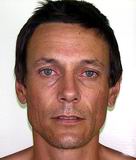 Brett Cowan
Murderer · Australia · 2003
Brett Peter Cowan (born 18 August 1969) was sentenced in the Supreme Court of Q…
1 victim
Brett Cowan
Murderer · Australia · 2003
Brett Peter Cowan (born 18 August 1969) was sentenced in the Supreme Court of Q…
1 victim
 Jennifer Berman
Murderer · USA · 2014
Jennifer Berman was the mother of two teenagers, Alexander Berman and Jacquelin…
2 victims
Jennifer Berman
Murderer · USA · 2014
Jennifer Berman was the mother of two teenagers, Alexander Berman and Jacquelin…
2 victims
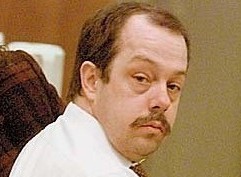 David Mark Hill
Murderer · USA · 1996
Name: David Mark Hill · Pronounced dead: 6:17 p.m. in the state’s death chamber…
3 victims
David Mark Hill
Murderer · USA · 1996
Name: David Mark Hill · Pronounced dead: 6:17 p.m. in the state’s death chamber…
3 victims
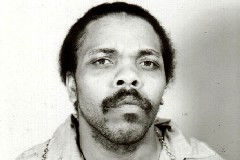 Vincent James
Murderer · USA · 1989
Vincent James instructed Gayle Taylor, an employee, to give him her ring, and s…
1 victim
Vincent James
Murderer · USA · 1989
Vincent James instructed Gayle Taylor, an employee, to give him her ring, and s…
1 victim
- Gender
- male
- Country
- USA
- Location
- Blount/Sevier counties, Tennessee, USA
- Date of birth
- January 24, 1951
- Age at first offence
- 41
- Characteristics
- arson
- Victim profile
- Tommy Griffin, 24, and his sister Connie Branam, 34
- Method of murder
- Shooting
- Date(s) of murder
- February 21/22, 1992
- Years active
- 1992
- Date of arrest
- —
- Status
-
Sentenced to death
Sentenced to life in prison in 1993; sentenced to death on September 3, 1996
Case overview
James A. Dellinger was convicted in the 1992 shooting death of Tommy Griffin. Griffin’s body was found with a shotgun wound at the base of his skull. Shells found at the scene matched fired shells found in Dellinger’s yard.
In a separate prosecution, Dellinger was also convicted and sentenced in Sevier County, and both Dellinger and his co-defendant were later involved in the death of Griffin’s sister, Connie Branam, whose charred body was found in her burned out car.
People
- James A. Dellinger — defendant
- Tommy Griffin — victim (shot; body found)
- Connie Branam — victim (charred body found in burned vehicle)
- Gary Sutton — co-defendant
- Stella Griffin — older sister of both victims
- Cynthia and Kenneth Walker — witnesses who observed a fighting incident in a dark-colored Camaro
- Sharon Davis — witness who observed a shirtless and shoeless man near the Hunt Road exit
- Officer Drew Roberts — officer who found two men next to a pickup truck
- Sergeant Ray Herron — explained public intoxication detention policy to Dellinger
- Alvin Henry — resident of Bluff Heights Road who observed Dellinger’s truck and fire shooting from Griffin’s trailer
- Jennifer Branam — Griffin’s niece; ran to the trailer when she learned it was on fire
- Dellinger’s wife — present at the trailer event and later with the Oldsmobile
- Herman Lewis — relative who observed Dellinger moving an object to his wife’s car
- Jason McDonald — witness who heard two loud gunshots
- Brenda McKeehan — Jason McDonald’s mother; also testified about hearing two loud gunshots
- James and Barbara Gordon — observed a fire in the woods near the Clear Fork area of Sevier County and watched a truck leave the woods
- Terry Lilly Newman — approached Branam, Dellinger, and Sutton; involved in events at Howie’s Hideaway Lounge
- Howie’s Hideaway Lounge — bar where the men spent several hours
- Dr. Eric Ellington — Blount County Medical Examiner’s Office; conducted the autopsy
- Dr. Larry Wolfe — medical doctor and former county coroner; defense expert on time of death
- Dr. Charles Harlan — forensic pathologist; State rebuttal expert on time of death
- Dr. Neal Haskell — board-certified forensic entomologist; post-conviction expert on time of death
- Dr. Stanton Kessler — forensic pathologist; post-conviction expert on time of death
- Dr. William Bass — forensic anthropologist; testified about Griffin’s death at post-conviction hearing
- Dr. Cleland Blake — forensic pathologist; consulted as a potential expert witness
- Jason McDonald and Brenda McKeehan — cited in the legal opinion as witnesses heard gunshots
- Charles Deas — appointed trial counsel
- Eugene Dixon — appointed trial counsel
- Janice M. Holder — delivered the opinion; Chief Justice
- William M. Barker, Cornelia A. Clark, Gary R. Wade, William C. Koch, Jr. — joined the opinion
- Catherine Y. Brockenborough, Donald E. Dawson, Sara Willingham — for the appellant, James A. Dellinger
- Robert E. Cooper — Attorney General & Reporter
- Michael E. Moore — Solicitor General
- Mark E. Davidson, Jennifer L. Smith, Michael L. Flynn, Rocky H. Young — other state counsel
- Wade V. Davies — for amicus curiae, Tennessee Association of Criminal Defense Lawyers
- Patricia Head Moskal, Meir Feder — for amicus curiae, The Innocence Project
- Amicus curiae: Tennessee Association of Criminal Defense Lawyers
- Amicus curiae: The Innocence Project
Timeline
- February 21, 1992 — Dellinger, Sutton, and Griffin spent several hours at Howie’s Hideaway Lounge; later gunshot-related events were observed and Griffin was placed in custody for public intoxication; Henry saw someone enter the passenger side of Dellinger’s truck and later noticed fire shooting from Griffin’s trailer down the road.
- February 22, 1992 — Griffin’s body was discovered lying face-down on a bank at the Blue Hole; autopsy findings were described; Jennifer Branam saw Dellinger leave his trailer, remove an object placed in his wife’s Oldsmobile the night before, and place the object under his trailer.
- February 23, 1992 — Dr. Wolfe and other trial-related evidence used for time-of-death opinions; legal discussion placed relevant time windows between Friday February 21 and this date.
- February 24, 1992 — Griffin’s body was discovered around 3:30 p.m.; Connie Branam’s charred body was discovered in her burned vehicle in the wooded area where the Gordons had observed the fire on February 22.
- February 25, 2008 — the Tennessee Supreme Court granted Dellinger’s application for permission to appeal.
- June 2, 2005 — post-conviction trial court filed “Findings of Fact and Conclusions of Law” denying Dellinger post-conviction relief.
- March 3, 2003 — Dellinger filed his initial petition for post-conviction relief pro se.
- August 11, 2003 — Dellinger filed an amended post-conviction petition.
- October 26-29, 2004 — post-conviction trial hearing conducted.
- January 28, 2005 — post-conviction trial court proceedings included this date for the hearing.
- January 22, 2009 — Janice M. Holder, C.J., delivered the opinion of the court.
- June 3, 2009 — the court ordered Dellinger’s death sentence be carried out on June 3, unless otherwise ordered by the Court or other proper authority.
- September 3, 1996 — Dellinger was sentenced to death.
- 1993 — Dellinger was sentenced to life in prison.
- 1996 — Dellinger and Gary Sutton were convicted of first degree murder of Griffin and sentenced to death.
The offence
Death of Tommy Griffin (first degree premeditated murder)
On the afternoon of February 21, 1992, Dellinger, Sutton, and Griffin spent several hours at Howie’s Hideaway Lounge on Highway 321 in Maryville, Tennessee. The three men drank beer and played pool until approximately 7:00 p.m., when they left the bar in a dark-blue Camaro.
Witnesses testified there was no evidence of hostility among the men while they were in the bar. Around 7:00 p.m., Cynthia and Kenneth Walker were traveling north on Alcoa Highway near the Hunt Road exit. They observed three men who appeared to be fighting in a dark-colored Camaro on the side of the road. Two of the men were standing outside of the car attempting to forcibly remove the third man from the back seat. Kenneth Walker used his portable radio to report the incident to the dispatcher for Rural Metro Blount County Ambulance.
Sharon Davis observed a shirtless and shoeless man stumbling down the side of the road near the Hunt Road exit. When Davis passed the same area about thirty or forty minutes later, she saw two men standing outside of a dark-colored Camaro on the side of the road and they appeared to be looking for something.
Officer Drew Roberts found two men, not Dellinger and Sutton, standing next to a pickup truck on the side of Hunt Road. A shirtless man sitting on the bed of the truck identified himself as Griffin. Griffin told the officer that his friends had put him out of a car. Griffin would not identify his friends or tell the officer what had happened. Officer Roberts arrested Griffin for public intoxication. Griffin was booked at the Blount County jail at 7:40 p.m. Dellinger arrived about forty-five minutes to an hour later to ask about Griffin’s release. Sergeant Ray Herron explained that department policy required a minimum four-hour detention for public intoxication and advised Dellinger to come back at 10:30 or 11:00 p.m.
Dellinger and Sutton were later convicted of the first degree premeditated murder of Tommy Griffin and sentenced to death.
The State’s theory at trial was that Griffin died late on Friday, February 21, 1992, after leaving the jail with Dellinger and Sutton.
Fire at Griffin’s trailer and movements involving a shotgun-like object
Alvin Henry, a resident of Bluff Heights Road where Dellinger and Griffin both lived, saw Dellinger’s white Dodge pickup truck. Henry saw someone enter the passenger side of the truck. The truck drove up the road and pulled into Dellinger’s driveway. Henry then noticed fire shooting from Griffin’s trailer down the road.
Arson investigator Gary Clabo concluded the fire was set intentionally. Jennifer Branam ran to Dellinger’s trailer when she learned it was on fire. As Dellinger’s wife was telling Jennifer that Dellinger was not home, Dellinger and Sutton walked down the hall from the living room. The two men were still wearing their jackets, and their pants were wet up to the knees. Jennifer asked if Griffin was in his burning trailer. Sutton told her that Griffin was in Blount County with a girl. When Jennifer asked the men to accompany her to the trailer, Dellinger responded that they were already in enough trouble.
After returning home, Jennifer looked out the window and saw Dellinger remove an object wrapped in a sheet from his truck and place it into the back of his wife’s Oldsmobile. Jennifer testified that the object resembled a shotgun. Herman Lewis also observed Dellinger moving an object from his truck to his wife’s car shortly after 10:00 p.m. Dellinger and Sutton then left in the Oldsmobile.
At around 11:25 p.m., Dellinger and Sutton returned to the Blount County jail. Dellinger paid a cash bond for Griffin. Officers in the jail lobby overheard one of the defendants tell Griffin that they needed to get him back to Sevier County.
No witnesses testified to seeing Griffin alive or speaking to him after he left the Blount County jail.
Gunshots near the Blue Hole
Jason McDonald and his mother, Brenda McKeehan, testified that they heard two loud gunshots at 11:55 p.m. and that it was very unusual to hear gunshots at that time of night. Both witnesses testified that the gunshots were fired from an area on the Little River in Blount County called the Blue Hole, approximately 500 yards down the hill from their residence. Mr. McDonald was writing in his journal at the time; his entry documenting he had heard the shots from “down the hill” was entered into evidence.
Discovery and forensic findings
On Monday, February 24, around 3:30 p.m., Griffin’s body was discovered lying face-down on a bank at the Blue Hole. He had been shot in the back of the neck at the base of the skull with a shotgun. Two 12-gauge shotgun shell casings and beer cans were found near the body. The shotgun shells were fired from the same gun that fired shells later found in Dellinger’s yard.
Dr. Eric Ellington of the Blount County Medical Examiner’s Office conducted the autopsy. He concluded the cause of death was the destruction of the brain stem from the shotgun wound. Ellington retrieved two metal pellets and two pieces of shotgun wadding from Griffin’s brain. The pellets were consistent with pellets loaded in the 12-gauge “00” buckshot casings found near Griffin’s body.
Death of Connie Branam
After gunshot and fire events described above, investigators also charged Sutton and Dellinger with the death of Griffin’s sister, 34-year-old Connie Branam, in Sevier County. Her charred body was found in her burned out car.
Investigation
After an extensive investigation, Blount County authorities charged Sutton and Dellinger with Griffin’s murder. The Sevier County men were also charged by authorities there with the death of Connie Branam.
Arson investigator Gary Clabo determined that the fire had been set by human hands. Investigators discovered a rifle shell in the burned vehicle that had been fired from the .303 rifle later found in Dellinger’s trailer.
Trial
Convictions and sentencing (trial)
In 1996, Dellinger and Gary Sutton were convicted of first degree murder of Griffin and sentenced to death. The jury convicted Dellinger and Sutton of the first degree premeditated murder of Griffin.
At the sentencing hearing, the jury found the evidence supported the prior violent felony aggravating circumstance, Tenn. Code Ann. 39-13-204(i)(2) (2006 & Supp. 2008), and outweighed any mitigating circumstances beyond a reasonable doubt. The jury sentenced Dellinger and Sutton to death.
Direct appeal
The convictions and sentences were affirmed on direct appeal. The cited direct appeal included: Dellinger, 79 S.W.3d at 462, cert. denied, 537 U.S. 1090, 123 S.Ct. 695, 154 L.Ed.2d 635 (2002).
Trial evidence on time of death
Defense expert (Dr. Larry Wolfe)
Dellinger called Dr. Larry Wolfe, a medical doctor and former county coroner, who opined Griffin was killed between twenty-four and thirty-six hours before his body was found, placing the time of death between 3:30 a.m. and 3:30 p.m. on Sunday, February 23, 1992. Wolfe reviewed photographs and reports from the crime scene, the paramedic report, autopsy photographs and autopsy report, and reported temperatures on the weekend of February 21, 1992. His opinion was based on physical condition of the body including evidence of “rigor mortis; ․ early transitional lividity, which is skin color change; the presence of bright red blood or coagulum; the lack of findings of early decomposition ․; a lack of fluid accumulation within certain tissues of the body, and a lack of softening of the G.I. tract.”
State rebuttal (Dr. Charles Harlan)
The State did not call an expert on time of death in its case-in-chief but called Dr. Charles Harlan on rebuttal. Harlan testified the victim was killed between 11:30 p.m. on Friday, February 21, 1992, and 8:00 a.m. on Saturday, February 22, 1992. Harlan agreed rigor mortis was present when the body was found but stated rigor mortis was consistent with the State’s theory because a body could remain in rigor up to seventy-two hours after death. Harlan disagreed with Wolfe’s conclusion about “lack of finding of early decomposition.” He also testified early transitional lividity, bright red blood, and softening of the G.I. tract were not helpful in determining the time of death in this case.
Sentencing
Dellinger and Sutton were sentenced to death at sentencing hearing as described. The prior violent felony aggravating circumstance referenced Tenn. Code Ann. 39-13-204(i)(2) (2006 & Supp. 2008). The court ordered Dellinger’s death sentence be carried out on June 3, and the opinion stated the sentence of death shall be carried out on June 3, 2009, unless otherwise ordered by this Court or other proper authority.
Dellinger’s sentencing history also included: sentenced to life in prison in 1993; sentenced to death on September 3, 1996.
Appeals
Post-conviction petition
Dellinger filed his initial petition for post-conviction relief from his conviction and sentence pro se on March 3, 2003. He was appointed counsel and filed an amended petition on August 11, 2003.
The post-conviction trial court conducted a hearing on October 26-29, 2004, and on January 28, 2005. The post-conviction trial court denied Dellinger post-conviction relief. The Court of Criminal Appeals affirmed the denial.
The Tennessee Supreme Court granted permission to appeal on February 25, 2008.
Issues addressed by the Tennessee Supreme Court
The Tennessee Supreme Court addressed whether a freestanding claim of actual innocence is cognizable in an initial petition for post-conviction relief under the Tennessee Post-Conviction Procedure Act (Tennessee Code Annotated sections 40-30-101 through-122).
The court held that a claim of actual innocence based on new scientific evidence is cognizable in an initial petition for post-conviction relief. The court reversed the Court of Criminal Appeals’ disposition on that issue but affirmed denial of relief because Dellinger had not met his burden of proof to support such claim.
The Supreme Court also held that the post-conviction trial court applied the correct burden of proof to Dellinger’s ineffective assistance of counsel claims and held that Dellinger was not denied the effective assistance of counsel. The court concurrently amended Tennessee Supreme Court Rule 28 section 8(D)(1) to clarify that petitioner must establish factual grounds by clear and convincing evidence.
Finally, the Supreme Court affirmed the Court of Criminal Appeals’ determinations of remaining issues raised by Dellinger, including that Dellinger was not entitled to relief under Brady v. Maryland; that he was afforded a full and fair hearing of his post-conviction petition; and that none of his constitutional challenges to the death penalty were meritorious.
Outcome in the opinion
The Supreme Court concluded that a freestanding claim of actual innocence based on new scientific evidence is cognizable in an initial petition for post-conviction relief. The Supreme Court affirmed the denial of relief because the petitioner had not met the burden of proof. The Supreme Court affirmed the Court of Criminal Appeals judgment in all other respects.
It taxed costs of the appeal to the State of Tennessee because Dellinger was indigent.
Post-conviction hearing evidence
Experts on actual innocence/new scientific evidence (time of death)
Dellinger presented the testimony of two experts who reviewed photographs and reports from the original trial.
Dr. Neal Haskell (forensic entomology)
Dr. Neal Haskell testified that the apparent lack of evidence of insects and insect eggs on the body indicated the body had been lying in the open less than twenty-four and no more than forty-eight hours when found. Haskell placed the time of death between 3:30 p.m. on Saturday, February 22, 1992, and after sunrise on Monday, February 24, 1992. He evaluated climatological data at the site where the body was found, including reported weekend temperatures and rain on February 23, 1992, and stated he was unable to explain the absence of insect activity. Haskell admitted it was possible others had overlooked insect activity but stated fly eggs are “fairly large” and “observable.”
On cross-examination, Haskell conceded none of the reports he reviewed expressly stated that no insect activity was observed, but he opined that the lack of reference indicated none was present.
Dr. Stanton Kessler (forensic pathology)
Dr. Stanton Kessler testified Griffin died within twelve to twenty-four hours before his body was found, placing time of death between 3:30 p.m. on Sunday, February 23, 1992, and 3:30 a.m. on Monday, February 24, 1992. Kessler based his opinion on evidence of rigor mortis, absence of fixed lividity, lack of evidence of decomposition, presence of undigested food in Griffin’s stomach, changes in the appearance of the wound, and absence of insect activity. Kessler stated that rigor mortis disappears within twenty-four to thirty-six hours after death.
On cross-examination, Kessler stated a white substance on Griffin’s neck and head in one crime scene photograph was grains of unburned gunpowder, not fly eggs, and a small “blackish” image next to Griffin’s body was a fly.
State expert (Dr. William Bass)
The State called Dr. William Bass, the forensic anthropologist who had testified regarding Connie Branam’s death in Dellinger’s Blount County and Sevier County trials.
Bass testified that fixed lividity visible on Griffin’s face was consistent with the State’s theory that Griffin was killed late on Friday, February 21, 1992. Bass reviewed reported weekend temperatures indicating a low of twenty-four degrees on the morning of February 22, 1992, and a high of sixty-nine degrees on February 24, 1992. He opined cool temperatures would delay decay, explaining “partially digested food” in Griffin’s stomach as noted in the autopsy report. He stated the presence of partially digested food indicated the examiner was unable to identify specifically the food in Griffin’s stomach. He stated rigor mortis on February 24 did not contradict the State’s theory because “[r]igor is also controlled by temperature.” He stated a reduction in insect activity was consistent with absence of fly activity in temperatures below fifty degrees, at night, or in the rain. Bass stated the white substance on Griffin’s neck and head was fly eggs, not gunpowder, and a small black image was a fly.
Rebuttal to Bass (Dr. Haskell recalled)
Haskell was recalled. He testified that the white substance identified by Bass as fly eggs was buckshot buffer and that the fly identified by Bass and Kessler was actually a leaf tip overlying another leaf. Haskell also stated reported climatological data did not contradict his finding that obvious insect activity would have been observable had Griffin’s body been lying in the open as long as the State claimed.
Weighing of evidence (actual innocence)
The Supreme Court characterized the evidence as a “battle of the experts” regarding Griffin’s time of death and agreed with the State that Dellinger did not meet his burden of proof. It also referenced that Jason McDonald and Brenda McKeehan testified about hearing two gunshots at 11:55 p.m. on Friday, February 21, 1992, fired from the area where Griffin’s body was discovered, and noted no witnesses testified to seeing or hearing from Griffin after he left the jail and before 3:30 p.m. the next day, the earliest time proposed by Dellinger’s experts.
Ineffective assistance of counsel (post-conviction)
Dellinger asserted ineffective assistance of counsel and presented appointed trial counsel Charles Deas and Eugene Dixon.
Counsel’s preparation and division of responsibilities
Both Deas and Dixon began practicing law in the mid-1970s. Dellinger’s case was their first capital murder case to go to trial, though both had tried non-capital murder cases. They were aware of heightened standards for attorneys representing capital defendants, attended portions of Dellinger’s Sevier County trial, and attended a death penalty seminar. They worked closely with codefendant Sutton’s attorneys.
They allocated responsibility for preparation with Deas taking the “mitigation phase” and Dixon taking the “factual witnesses” during the guilt phase.
Dr. Cleland Blake and the defense time-of-death experts
Dixon testified he consulted with a forensic pathologist, Dr. Cleland Blake, as a potential expert witness regarding the time of Griffin’s death. Blake’s opinions were not helpful to the defense. The State unsuccessfully attempted to call Dr. Blake as an expert witness during its case-in-chief. The trial court did not permit Blake’s testimony because he had been retained previously by the defense.
Deas and Dixon instead obtained expert testimony of Dr. Larry Wolfe to establish Griffin died later than the State theorized. Deas stated: “We knew it was coming. We knew we had it. We were hoping, factually speaking that it would carry the day.”
Notice and rebuttal expert Dr. Harlan
Trial counsel filed a pre-trial motion requesting the State provide names of its rebuttal witnesses. Harlan’s name was not provided as a potential rebuttal witness, and Deas and Dixon were surprised when the State called Dr. Harlan to rebut Wolfe.
On the issue of responding, Dixon testified that he and Deas discussed the unanticipated testimony but decided not to move for a continuance because Wolfe’s testimony had already discredited the State’s theory of the time of death.
Burden of proof in post-conviction proceedings
The Supreme Court discussed the Sixth Amendment right to assistance of counsel, the Strickland v. Washington framework, and how Tennessee Code Annotated section 40-30-110(f) required the petitioner to prove allegations of fact by clear and convincing evidence. It also discussed Tennessee Supreme Court Rule 28 section 8(D)(1), and it concurrently amended Rule 28 section 8(D)(1) to state: “Petitioner shall be required to present petitioner's case and to establish the factual grounds alleged by clear and convincing evidence.”
Outcome
The Tennessee Supreme Court concluded:
- a claim of actual innocence based on new scientific evidence was cognizable in an initial petition for post-conviction relief under the Act, and it reversed the Court of Criminal Appeals’ disposition of that issue;
- the Supreme Court affirmed the denial of post-conviction relief because Dellinger did not meet the burden of proof to support the actual innocence claim;
- it held the post-conviction trial court applied the correct burden of proof for ineffective assistance of counsel claims and that Dellinger was not denied effective assistance of counsel;
- it affirmed the Court of Criminal Appeals on remaining issues, including denial of relief under Brady v. Maryland and rejection of constitutional challenges to the death penalty.
The court ordered that Dellinger’s sentence of death be carried out on June 3, 2009, unless otherwise ordered by the Court or other proper authority.
Aftermath
Stella Griffin, older sister to both victims, attended every trial in Blount County and Sevier County. She stated: “There is so much -- so much that these people have done,” and “It killed my mama.” She said she made a promise to her mother, who died in 1994, that she would go to each trial. She also said Dellinger was a neighbor of both Connie’s and Tommy’s and that they lived on Gibson Hollow Road in Sevier County. She recalled that ten days before the murders, Gary Sutton moved in with Dellinger, and she said: “They found them guilty. I know God had to be with us,” and “He's been with us through all of this.”
Other details
- Witness and investigator sequence included: Griffin was booked at the Blount County jail at 7:40 p.m.; Dellinger arrived about forty-five minutes to an hour later; Sergeant Ray Herron advised him to come back at 10:30 or 11:00 p.m.
- Dellinger and Sutton returned to the jail at around 11:25 p.m., and Dellinger paid cash bond for Griffin.
- Jason McDonald’s journal entry documenting he heard gunshots from “down the hill” was entered into evidence.
- At trial, Dr. Ellington stated he was not qualified to render an opinion on Griffin’s time of death.
Spotted an error, or have more information about this case?