Richard DeLong
Mass murderer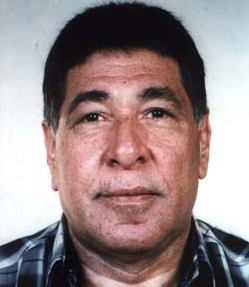 Gameel Al-Batouti
Mass murderer · USA · 1999
Gameel Al-Batouti (also rendered “Gamil ElBatouty” or “El Batouty” in U.S. offi…
216 victims
Gameel Al-Batouti
Mass murderer · USA · 1999
Gameel Al-Batouti (also rendered “Gamil ElBatouty” or “El Batouty” in U.S. offi…
216 victims
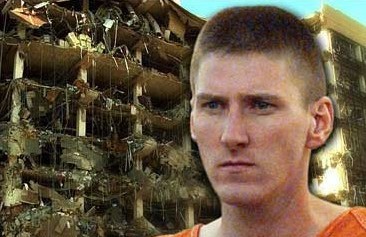 Timothy McVeigh
Mass murderer · USA · 1995
Timothy James McVeigh (April 23, 1968 – June 11, 2001) was a United States Army…
168 victims
Timothy McVeigh
Mass murderer · USA · 1995
Timothy James McVeigh (April 23, 1968 – June 11, 2001) was a United States Army…
168 victims
 Julio Gonzalez
Mass murderer · USA · 1990
Julio Gonzalez was sentenced to 174 twenty-five-year sentences (a total of 4,35…
87 victims
Julio Gonzalez
Mass murderer · USA · 1990
Julio Gonzalez was sentenced to 174 twenty-five-year sentences (a total of 4,35…
87 victims
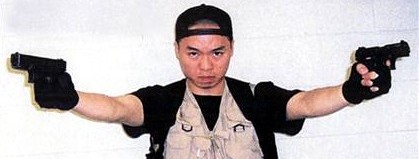 Seung-Hui Cho
Mass murderer · USA · 2007
Seung-Hui Cho was a mass murderer who shot and killed 32 people and wounded man…
32 victims
Seung-Hui Cho
Mass murderer · USA · 2007
Seung-Hui Cho was a mass murderer who shot and killed 32 people and wounded man…
32 victims
 George Jo Hennard
Mass murderer · USA · 1991
George Jo Hennard carried out a mass killing at a Luby’s Cafeteria in Killeen,…
23 victims
George Jo Hennard
Mass murderer · USA · 1991
George Jo Hennard carried out a mass killing at a Luby’s Cafeteria in Killeen,…
23 victims
 Eric Harris
Mass murderer · USA · 1999
Eric Harris committed suicide by gunshot to the roof of the mouth on April 20,…
13 victims
Eric Harris
Mass murderer · USA · 1999
Eric Harris committed suicide by gunshot to the roof of the mouth on April 20,…
13 victims
 Benjamin Ng
Mass murderer · USA · 1983
Benjamin Ng participated in the killings at the Wah Mee gambling club in Seattl…
3 victims
Benjamin Ng
Mass murderer · USA · 1983
Benjamin Ng participated in the killings at the Wah Mee gambling club in Seattl…
3 victims
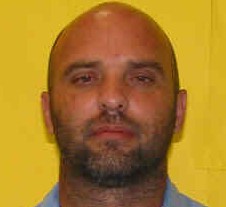 Christian Stephen Fuhr
Murderer · USA · 2001
Christian Stephen Fuhr was sentenced to death on August 27, 2002. · November 28…
2 victims
Christian Stephen Fuhr
Murderer · USA · 2001
Christian Stephen Fuhr was sentenced to death on August 27, 2002. · November 28…
2 victims
- Gender
- male
- Country
- USA
- Location
- Greene County, Missouri, USA
- Date of birth
- ???
- Characteristics
- revenge, drug addict
- Victim profile
- Erin Vanderhoef, 36 (who was just days away from giving birth) and her children Darlene Vanderhoef, 8, Jimmy Vanderhoef, 11, and Chris Franklin, 10
- Method of murder
- Strangulation
- Date(s) of murder
- January 19, 1999
- Years active
- 1999
- Date of arrest
- 6 days after
- Status
-
Life imprisonment
Sentenced to life in prison in July 2001
Parties and roles
- Richard DeLong was a defendant in a mass murder case.
- The case involved five murders: Erin Vanderhoef and her three children, Darlene Vanderhoef, Jimmy Vanderhoef, and Christopher Franklin.
- Harold R. Lingle was another defendant.
- Stacie Y. Leffingwell was DeLong’s live-in girlfriend and was ordered to stand trial.
- Erin Vanderhoef was the mother of Darlene, Jimmy, and Christopher Franklin.
- Renee Allen was a friend of the defendants and the victims and testified about Leffingwell.
Timeline
- January 18, 1999 — DeLong, Leffingwell, and their son, Scooby, lived in the same apartment complex as Lingle and his wife; DeLong and Leffingwell came to DeLong’s apartment and told Lingle they intended to go to Springfield the next day and kill Vanderhoef and her children.
- January 19, 1999 — DeLong drove with Lingle and Leffingwell to Springfield and collectively planned and carried out the killings.
- After the killings (later that day/evening) — DeLong gave Lingle the promised “8 ball” of methamphetamine for participating in the murders, and Lingle used the drugs.
- July 2001 — Richard DeLong was sentenced to life in prison.
- June 15, 2004 — The Southern District Court of Appeals affirmed Lingle’s conviction in the appeal referenced in the materials.
Background
DeLong lived with Leffingwell in an apartment in Joplin, Missouri, and DeLong and Leffingwell’s son, Scooby, lived with them. DeLong and his wife lived in the same apartment complex as Lingle and his wife.
Vanderhoef lived in a house in Springfield, Missouri, with her children. DeLong previously had been romantically involved with Vanderhoef, and Vanderhoef periodically came to Joplin in 1998 seeking to reestablish their prior relationship. When Leffingwell was out of town, Vanderhoef engaged in sexual relations with DeLong on some occasions.
Leffingwell was DeLong’s current girlfriend and was dying from AIDS, according to the court record. Leffingwell was furious with Vanderhoef because Vanderhoef was attempting to replace Leffingwell as Scooby’s mother. The court decision described that DeLong and Leffingwell intended to kill the children because Vanderhoef’s children would be witnesses to the event, and they asked Lingle if he wanted to participate.
Renee Allen testified that Leffingwell was upset because DeLong also was dating Vanderhoef. Allen said “Stacie hated Erin because Erin was the 'other woman'.” Allen said Leffingwell also resented the fact that DeLong had less money for their methamphetamine habit because he was paying Vanderhoef child support. Allen testified that Leffingwell told her that she and DeLong were going to a hospital appointment in Columbia on the day of the mass murder.
Allen testified that when Leffingwell and DeLong returned, Leffingwell was hysterical and told her that she and DeLong had killed Vanderhoef and her children. Allen testified that “She said (Erin Vanderhoef) got what she deserved but that the children did not deserve to die.”
The offence
Victims
On January 19, 1999, Erin Vanderhoef, 36, was strangled in her north Springfield home, along with her children:
- Darlene Vanderhoef, 8
- Jimmy Vanderhoef, 11
- Chris Franklin, 10
The unborn baby of Erin Vanderhoef died as a result of the asphyxiation. Therefore, Hannah was also described in the materials as an unborn child who died, and a total of five victims were murdered.
Acts described
The murders were committed by Harold Lingle, Richard DeLong, and DeLong’s live-in girlfriend, Stacie Leffingwell, and the materials describe collective planning and carrying out of these five murders.
DeLong’s participation included attacking Erin Vanderhoef’s children and Erin Vanderhoef herself using strangulation methods described in the materials. The materials describe that DeLong found it was not easy to strangle Jimmy Vanderhoef with his bare hands, shoved clothes down the boy’s throat to silence him, then strangled the boy with an electrical cord. The materials state that DeLong then murdered the other two children in the same fashion.
When Lingle brought Erin Vanderhoef back to her home after Erin was taken to a grocery store to buy donuts with food stamps, the materials state that the three strangled her with an electrical cord as well, and her full-term preborn baby died as a result.
The materials also state that DeLong kicked Erin in the head so hard that he limped for several days.
Investigation
After DeLong and the others committed the murders, they returned to Joplin. The materials include that Lingle was arraigned on five counts of first-degree murder by Greene County Circuit Judge Max Bacon, and DeLong was indicted by a Greene County grand jury on five counts of first-degree murder.
The materials also describe that DeLong, Lingle, and Leffingwell had collectively planned and carried out these five murders, and that a jury found Lingle guilty on all five counts.
A videotaped statement was given by Lingle after his arrest and was referenced in Lingle’s appeal materials.
Arrest
The materials state that after Defendant (Harold R. Lingle) was arrested, he gave a videotaped statement to police. The statement included admissions about planning and participation in the murders, and it included admissions about threats related to participation and after return to Joplin.
Trial
Charges and indictments
Lingle was arraigned on five counts of first-degree murder by Greene County Circuit Judge Max Bacon. DeLong was also indicted by a Greene County grand jury on five counts of first-degree murder. Leffingwell was ordered to stand trial.
Convictions and jury findings (Lingle’s trial in the appeal materials)
The materials describe that Harold R. Lingle:
- was convicted on all five counts, and
- was ordered to serve five life sentences. In the appeal materials, it is stated that a jury found Lingle guilty on all five counts and he received five concurrent sentences of life imprisonment without the possibility of probation or parole.
DeLong’s trial and sentencing
The materials state that Richard DeLong was found guilty of all counts and sentenced to life in prison in July 2001.
Appeals
The appeal materials provided were for Harold R. Lingle and included two points.
Point I: refusal to compel DeLong to testify
Lingle argued that the trial court made a mistake when it did not force DeLong to testify in Lingle’s behalf and by not ordering a mistrial when Lingle asked for one. The appellate decision denied relief on these grounds.
The materials describe that before trial, Lingle’s attorneys sought to depose DeLong, and during the deposition DeLong refused to answer questions. At trial, DeLong was called as the first witness during Lingle’s case. Defense counsel asked for a hearing outside the presence of the jury and asked the court to bring DeLong into the courtroom to determine his intentions regarding testimony. The trial court granted this request.
The materials provide verbatim testimony and exchanges from DeLong during Lingle’s trial:
- Defense counsel, Ms. Beimdiek, asked: “Would you state your name, please?”
- DeLong answered: “Richard Ivan DeLong.”
- Ms. Beimdiek asked: “Richard DeLong? You're the same Richard DeLong who's been convicted of five counts of murder in the first degree?”
- DeLong answered: “Yes, ma'am.”
- Ms. Beimdiek asked: “And you're currently serving five life-without-parole sentences in the Missouri Department of Corrections?”
- DeLong answered: “Yes, ma'am.”
- Ms. Beimdiek asked: “All right. And I want to ask you some questions about the events that occurred on January the 19 th , 1999, in Springfield, Missouri.”
- DeLong: “Okay.”
- Ms. Beimdiek asked: “Specifically, I want to ask about some threats that you made to Mr. Lingle during the course of those events. Can you tell this Court whether, in fact, you made any threats to Mr. Lingle during the course of the events of January the 19 th , 1999?”
- DeLong answered: “I'd rather not even talk about it, really. I mean -- sorry.”
- Ms. Beimdiek asked: “Are you asserting any kind of a privilege in refusing to answer my questions, or are you simply stating that this is a preference that you have not to talk about this?”
- DeLong answered: “Just a preference, ma'am.”
- Ms. Beimdiek: “Your Honor, given that, I would ask that Mr. DeLong -- ask a follow-up question.”
- Ms. Beimdiek asked: “Are there any questions, Mr. DeLong, that I could ask you here today that you'd be willing to give me an answer to about the events that took place on January the 19 th , 1999, and the days following?”
- DeLong answered: “A. No, ma'am.”
The prosecutor then elicited additional testimony:
- Prosecutor asked: “Mr. DeLong, you don't know exactly what the Fifth Amendment privilege against self-incrimination is, do you?”
- DeLong answered: “No, sir.”
- Prosecutor asked: “And that's the same answer you gave us at your deposition quite a while back?”
- DeLong answered: “A. Yes, sir.”
Before ruling, the trial court heard arguments. The materials describe the prosecutor’s argument that DeLong still could incriminate himself by being compelled to testify about what took place on January 19, and that if DeLong admitted giving methamphetamine for participating in the murders, DeLong could be charged with distribution of a controlled substance in Jasper County. The materials also describe defense counsel arguing that “preference” was not an invocation of a Fifth Amendment privilege.
The trial court asked one additional question and then issued its ruling, with verbatim language provided:
- THE COURT: “Mr. DeLong, even if I ordered you to testify, would you still just prefer not to talk about it and not say anything about it?”
- THE WITNESS: “Yes, sir.”
- THE COURT: “Okay. I'm not going to order [DeLong] to testify. It's clear that he would not testify. He probably does have the right to refuse to testify under the Fifth Amendment, and so I am not going to order [DeLong] to testify.”
The appellate decision held that the trial court did not abuse its discretion in not ordering DeLong to testify, including that DeLong would not testify even if ordered to do so, and that DeLong sufficiently invoked his Fifth Amendment privilege.
The appellate decision also discussed that no adequate offer of proof was made, and it addressed relevance issues tied to the requested testimony and diminished capacity and duress.
Point II: denial of mistrial during closing argument
Lingle argued the trial court erred in denying a motion for mistrial made during closing argument. The motion was made because of the prosecutor’s comments.
The materials provide verbatim prosecutorial argument:
- “[Defendant] wants to say that he's scared. And he tries to get -- give [the police interrogator] the impression on the videotape that he's scared because in that house, DeLong supposedly threatened to kill him if he didn't help with [Vanderhoef]. Well, keep in mind that that had nothing to do with the murders of the kids because there's no comment or any threat that's ever been made before that moment in time. And I'd suggest to you, ladies and gentlemen, that you should -- that statement is self-serving because he wants to say he's scared because he helped because -- with [Vanderhoef] because he told them that he didn't do it because he'd kill me, too. What's -- is that reality? You heard from the big picture that the two guys were friends. And up to this point in time, [Defendant's] done everything that he's agreed to do. And you have to be skeptical about that reason that the defendant is scared when he goes to -- through that videotape and said that on other occasions that I'm scared because I could be charged with murder. This guy coolly reflected about what he did, what the consequences could be. Then, later in the tape, he said: I was scared because -- to be honest with you, I'm scared because I didn't want to go to prison. And then later on, he says, toward the end of the tape: I'm not scared of anything. I think, if you look at the big picture, this Defendant agreed to come up to Springfield and aid in the murders of five people for some methamphetamine. . . .”
The appellate court addressed preservation rules and conducted plain error review due to lack of timely objection.
The appellate decision ultimately affirmed Lingle’s conviction and sentence.
Appellate case identifiers and outcome (as provided)
- The appeal was listed with Missouri Court of Appeals Southern District.
- The appellate case was described as “State of Missouri, Plaintiff/Respondent v. Harold R. Lingle, Defendant/Appellant.”
- Case Number: 24812.
- Handdown Date: 06/15/2004.
- Opinion Author: Jeffrey W. Bates, Judge.
- Opinion Vote: AFFIRMED.
- Rahmeyer, C.J.-P.J. and Shrum, J. concur.
Sentencing
Richard DeLong was found guilty of all counts and sentenced to life in prison in July 2001.
The materials also state that Lingle was sentenced to five life sentences on all five counts, and in the appeal materials the sentences are described as five concurrent sentences of life imprisonment without the possibility of probation or parole.
Other details
Methamphetamine details
The materials stated that Harold R. Lingle agreed to participate in the killings for $250 worth of methamphetamine. The appellate materials defined an “8 ball” of methamphetamine as comprised of four packages of the drug. The materials stated that DeLong gave Lingle the promised “8 ball” of methamphetamine after the murders and that Lingle immediately spent his pay.
Relationship history and conduct described
The court decision described that DeLong and Leffingwell intended to kill Vanderhoef’s children because the children would be witnesses, and they asked Lingle if he wanted to participate. The materials stated that Lingle initially declined and later changed his mind when DeLong promised an “8 ball” of methamphetamine.
Quoted statement about the children as witnesses
The materials included the following quoted passage from the court decision:
- “Because (Ms. Vanderhoef's) children would be witnesses to the event,” the court decision said, “DeLong and Leffingwell also intended to kill the children. They asked Lingle if he wanted to participate”
Description of strangulation sequence (as provided)
The materials described that after DeLong and Leffingwell strangled the children while Lingle took Vanderhoef to Dillon’s Supermarket, when Lingle and Vanderhoef returned to the house they sat down on the couch and watched television. The materials describe that DeLong told Vanderhoef the children had been disciplined and sent to their rooms. The materials describe that DeLong moved behind Vanderhoef on the pretext of putting a necklace on her, then wrapped a cord around her neck, and she resisted by grabbing at the cord; they fell off the couch onto the floor. The materials describe that the struggle continued until Lingle stepped in, grabbed Vanderhoef’s hands, and pulled them down to her waist, giving Leffingwell the opportunity to shove a rag in Vanderhoef’s mouth so her screams could not be heard. The materials describe that DeLong and Leffingwell bound Vanderhoef’s feet with another cord, pulled them up tightly behind her back, then wrapped the end of the cord around her neck so the weight of her feet and legs would help suffocate her. The materials described that it took another 10 minutes for Vanderhoef and her unborn child to die from asphyxiation.
DeLong’s physical injury after the offence (as provided)
The materials stated that DeLong kicked Erin in the head so hard that he limped for several days.
Additional procedural details in Lingle’s appeal materials
The materials stated that Lingle claimed the trial court erred in not ordering DeLong to testify on his behalf and by not ordering a mistrial. The appellate court rejected Lingle’s arguments and affirmed the trial court’s judgment of convictions and sentences. The materials described that the prosecutor’s argument was reviewed for plain error and that the appellate court found no plain error and no error in denying the mistrial.

Spotted an error, or have more information about this case?