Donald DeMag
Murderer George Sitts
Murderer · USA · 1945
George Sitts was executed by the State of South Dakota on April 8, 1947 for the…
3 victims
George Sitts
Murderer · USA · 1945
George Sitts was executed by the State of South Dakota on April 8, 1947 for the…
3 victims
 Joseph Medley
Murderer · USA · 1940
Joseph Medley was a male White person identified as being associated with robbe…
3 victims
Joseph Medley
Murderer · USA · 1940
Joseph Medley was a male White person identified as being associated with robbe…
3 victims
 Lester Edward Bartholomew
Murderer · USA · 1955
Lester Edward Bartholomew was charged in Arizona with murder in the Superior Co…
3 victims
Lester Edward Bartholomew
Murderer · USA · 1955
Lester Edward Bartholomew was charged in Arizona with murder in the Superior Co…
3 victims
 Lowell Lee Andrews
Murderer · USA · 1958
Name: Lowell Lee Andrews Date of execution: November 30, 1962 Status: Executed…
3 victims
Lowell Lee Andrews
Murderer · USA · 1958
Name: Lowell Lee Andrews Date of execution: November 30, 1962 Status: Executed…
3 victims
 Michael Joe Murdaugh
Murderer · USA · 1995
Michael Joe Murdaugh was sentenced to death on November 16, 2001. He was convic…
2 victims
Michael Joe Murdaugh
Murderer · USA · 1995
Michael Joe Murdaugh was sentenced to death on November 16, 2001. He was convic…
2 victims
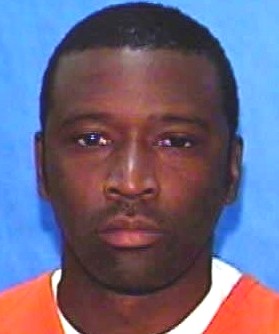 Maurice Lamar Floyd
Murderer · USA · 1998
Maurice Lamar Floyd was born on 11/29/76. He was tried in the Seventh Judicial…
1 victim
Maurice Lamar Floyd
Murderer · USA · 1998
Maurice Lamar Floyd was born on 11/29/76. He was tried in the Seventh Judicial…
1 victim
 James Dunham
Mass murderer · USA · 1896
James C. Dunham was a multiple murderer who killed his wife and members of his…
6 victims
James Dunham
Mass murderer · USA · 1896
James C. Dunham was a multiple murderer who killed his wife and members of his…
6 victims
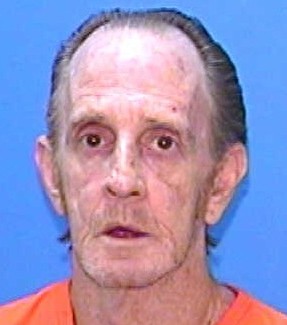 William Melvin White
Murderer · USA · 1978
William Melvin White was convicted of murdering Gracie Mae Crawford. White was…
1 victim
William Melvin White
Murderer · USA · 1978
William Melvin White was convicted of murdering Gracie Mae Crawford. White was…
1 victim
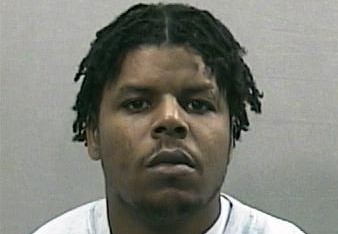 Rasheed Muhammad
Murderer · USA · 1995
April 4, 1995 — A 29-year-old homeless man, Rasheed Muhammed, was described as…
1 victim
Rasheed Muhammad
Murderer · USA · 1995
April 4, 1995 — A 29-year-old homeless man, Rasheed Muhammed, was described as…
1 victim
 G. W. Green
Murderer · USA · 1976
G. W. Green was executed by lethal injection in Texas on November 12, 1991. · 1…
1 victim
G. W. Green
Murderer · USA · 1976
G. W. Green was executed by lethal injection in Texas on November 12, 1991. · 1…
1 victim
- Gender
- male
- Country
- USA
- Location
- Vermont, USA
- Date of birth
- 1925
- Age at first offence
- 23
- Characteristics
- escape
- Victim profile
- Francis Racicot / Elizabeth Weatherup
- Method of murder
- ??? / Beating with a lead pipe
- Date(s) of murder
- 1948 / 1952
- Years active
- 1948–1952
- Date of arrest
- —
- Status
-
Executed
Executed by electrocution in Vermont on December 8, 1954
Case record: Donald DeMag
Background
Donald DeMag died 8 December 1954. He was executed by electric chair in Vermont on December 8, 1954. DeMag was the last person executed by Vermont.
Before his death sentence, DeMag had been sentenced to life imprisonment after being convicted of murder.
The offence
The victim in the murder case was Elizabeth Weatherup.
DeMag and fellow-prisoner Francis Blair attacked Elizabeth Weatherup and her husband in Springfield, Vermont while they were on the run after escaping.
DeMag and Blair beat the couple with a lead pipe as they attempted to rob them. Weatherup died of her injuries.
Investigation
DeMag’s case was decided together in the appeal record with reference to a companion case previously tried involving Francis Blair, State v. Blair, 118 Vt 81, 99 A.2d 677.
Arrest
DeMag and Blair were recaptured two days after their escape.
Trial
DeMag was tried for first-degree murder after the recapture.
The appeal record stated that the case was a prosecution for murder in the first degree, tried by jury, Windsor County Court, December Term, 1953, with Barney, J. presiding. The record stated that there was a verdict of guilty and judgment thereon, and that the judgment was affirmed.
The record stated: “Prosecution for Murder in the first degree. Trial by jury, Windsor County Court, December Term, 1953, Barney, J., presiding. Verdict of guilty and judgment thereon. Affirmed.”
Timeline
- 1952 — Donald DeMag and fellow-prisoner Francis Blair escaped from the state prison in Windsor by crashing a laundry truck through the front gates.
- After the escape — DeMag and Blair attacked Elizabeth Weatherup and her husband in Springfield, Vermont and Weatherup died of her injuries.
- Two days after their escape — DeMag and Blair were recaptured and tried for first-degree murder.
- December Term, 1953 — DeMag was tried by jury in Windsor County Court with Barney, J. presiding.
- October 5, 1954 — Supreme Court of Vermont affirmed the conviction in State of Vermont v. Donald Demag.
- 8 December 1954 — Donald DeMag was executed by electrocution in Vermont.
Sentencing
DeMag was convicted and sentenced to death by electric chair. Blair was executed on 8 February 1954 and DeMag was executed on 8 December.
Appeals
The Supreme Court of Vermont addressed exceptions after DeMag’s trial by jury in the Windsor county court where he was convicted of murder in the first degree.
Supreme Court of Vermont ruling (October 5, 1954)
The record included: “SUPREME COURT OF VERMONT October 5, 1954 STATE OF VERMONT v. DONALD DEMAG SYLLABUS BY THE COURT”
The record included these syllabus points by the court:
- “Inclusion of inadmissible matter in an offer may render the exclusion of the whole offer proper.”
- “Where the defendant proceeds with his case after denial of his motion for a directed verdict he thereby waives his exception.”
- “The trial court cannot be put in error on a point not made below.”
- “Proof of a breaking and entering with intent to commit any larceny is sufficient to convict a respondent of burglary.”
- “The term ‘or other felony’ as used in V. S. 47, § 8300, which lists offenses constituting burglary is not a limitation on what precedes, but is inserted to extend the scope of the section to other offenses not specifically named therein.”
- “An instruction to the jury that unless the respondent’s guilt is proved beyond a reasonable doubt he is entitled to acquittal, carries with it the necessary implication that he must be assumed to be innocent until this is done.”
- “The Fourteenth Amendment to the Federal Constitution does not require a charge on the presumption of innocence.”
- “The Supreme Court will not, even in criminal cases, consider questions not raised in the court below.”
- “The charge to the jury must not be construed piecemeal but as a whole.”
- “Where the charge to the jury substantially complies with the respondent’s request an exception to the charge is of no avail.”
The record stated: “The opinion of the court was delivered by: Cleary.”
Points raised in exceptions
The record stated that the case was here on exceptions of the respondent following his trial by jury.
The record stated the victim was Elizabeth Weatherup and identified a companion case as “State v. Blair, 118 Vt 81, 99 A.2d 677.”
Exclusion of a certified copy of a transcript
The record stated that DeMag excepted to the exclusion by the trial court of a certified copy of the transcript of a proceeding which occurred while the case of State v. Donald Demag was being considered at the March 1948 term of the Chittenden county court.
The record stated that at that time DeMag had been indicted for the first degree murder of one Francis Racicot and, on arraignment, pleaded guilty to murder in the second degree. It stated that the matter being considered was whether the court should accept that plea, and that both the attorney general and counsel for the respondent reviewed DeMag’s history and requested the court to accept the plea.
The record stated that at the trial of the case then being considered, the respondent offered the entire transcript of the former proceeding and, when asked by the court the purpose of the offer, stated: “He purpose of the offer, stated that the offer was made on the ground that the transcript was a judicial admission against the State and might constitute the basis of a verdict in the case then being tried.”
The record stated that the offer included statements of DeMag’s own counsel on his behalf and that much of it was hearsay and self serving.
The record stated: “Much of it was hearsay and self serving. The inclusion of this inadmissible matter rendered the exclusion of the whole offer proper.”
It cited Ravine House Co. v. Bradstreet, 102 Vt 370, 375, 148 A 481; Turgeon v. Baker, 105 Vt 61, 63, 163 A 588, and stated: “The exception is of no avail.”
Directed verdict motions and preservation of exceptions
The record stated that at the close of the State’s case in chief DeMag moved for a directed verdict because the State had failed to prove that DeMag had broken and entered the Weatherup home with intent to commit felonious larceny. It stated that DeMag waived his exception by proceeding with his case after the denial of his motion.
The record cited: Croteau v. Allbee, 117 Vt 332, 334, 91 A.2d 803; Frederick v. Gay’s Express, 111 Vt 411, 413, 17 A.2d 248; Parrow v. Proulx, 111 Vt 274, 281, 15 A.2d 835; and Gregoire v. Willett, 110 Vt 459, 461.
The record stated that at the close of all the evidence DeMag made another motion for a directed verdict on three separate grounds. It stated that he briefed his first motion and also briefed the failure of the court to charge that, in order to prove that DeMag had committed burglary, the State had to prove that DeMag broke and entered the dwelling house with the intent to commit felonious larceny.
The record then stated that the record did not show that DeMag renewed his first motion or included the ground of failure to prove intent to commit felonious larceny in his final motion, or requested a charge or excepted to the failure to so charge.
The record stated:
It cited Campbell v. Howard National Bank, 118 Vt 182, 188, 103 A.2d 96; State v. Hilliker, 117 Vt 569, 571, 97 A.2d 119; Winegar v. Estate of Aubin, 117 Vt 440, 441, 94 A.2d 240; Croteau v. Allbee, 117 Vt 332, 335, 91 A.2d 803; Bonneau v. Russell, 117 Vt 134, 136, 85 A.2d 569; Morrill v. Boardman, 117 Vt 103, 108, 86 A.2d 146; State v. Lindsay, 110 Vt 120, 123, 2 A.2d 201.
The record stated that even if the issue had been properly saved below, it had no merit. It stated that it had long been settled law that proof of breaking and entering with intent to commit any larceny was sufficient to convict of burglary, citing State v. Keyser, 56 Vt 622, 623-624; State v. Hodgdon, 89 Vt 148, 151, 94 A.2d 301.
The record stated: “The respondent admits that we would have to overrule these cases in order to sustain his position. We refuse to do so.”
The record described the common-law logic: “It is a matter of common knowledge that nearly all offenses against the law of burglary are committed with intent to steal; and, in nearly all cases, except when the defendant is caught with the goods, the extent of the larceny which he intended to commit cannot be proved. Therefore, if the State should be required to prove a specific intent to commit grand larceny it would be, in most cases, impossible to procure convictions, however guilty the accused might be.”
The record stated: “We think the term ‘or other felony’, as used in V. S.
It cited State v. Hows, 31 Utah 168 , 87 P 163; Hall v. State , 48 Wis, 688 , 4 NW 1068.
Presumption of innocence charge
The record stated DeMag excepted to the failure of the court to charge in accordance with his request: “All persons charged with crime and brought to trial are presumed by law to be innocent until proved guilty, and the law presumes this respondent to be innocent until the contrary shall have been established.”
The record stated that DeMag did not dispute that in this State the presumption of innocence was not evidence, citing Tyrrell v. Prudential Insurance Co., 109 Vt 6, 192 A 184, 115 ALR 392, and stated that DeMag’s contention was that in a criminal case the trial court was required to charge the jury that the respondent was presumed innocent until the contrary was established, meaning until the State proved him guilty beyond a reasonable doubt.
The record described that there was great conflict in decisions of various courts and cited State v. McDonnell, State v. Patterson, State v. Costa, and State v. Shaw.
The record stated that those decisions were previous to the Tyrrell case adoption of the rule that the presumption of innocence alone contributed no evidence and had no probative value, and then quoted: “Anything and everything in our cases to the contrary of the rule herein adopted as to presumptions is hereafter to be disregarded.”
The record then stated: “State v. Lizotte, 109 Vt 378, 387-388, 197 A 396 is squarely and exactly in point.”
It quoted the reasoning: “There the court refused to instruct the jury, in accordance with requests almost identical with the request here. The decision repeats the rule adopted in the Tyrrell case. The Lizotte case then holds that the function of a presumption is the same in a criminal as in a civil case and, since the presumption has no probative value, it is not for consideration by the jury and is not an appropriate subject upon which to charge the jury.”
The record then concluded: “Therefore the trial court was not required to charge the jury on the presumption of innocence.”
The record stated that the instruction given that unless DeMag’s guilt was proved beyond a reasonable doubt he was entitled to an acquittal carried the necessary implication that he must be assumed innocent until that was done, citing State v. Lizotte.
Fourteenth Amendment claim and reasonable doubt instruction
The record stated DeMag claimed that a right to a charge on the presumption of innocence was protected by State action under the Fourteenth Amendment of the federal constitution. It stated that Howard v. North Carolina, 191 US 126, 24 S. Ct 49, 48 L ed 121 decided the claim adversely and that “the exception is of no avail.”
The record then stated DeMag claimed the failure to charge on presumption of innocence was aggravated by other errors in the charge, specifically citing a quoted instruction by the trial judge: “The law does not require that each particular incriminating fact which may aid the jury in determining that the accused is guilty shall be proved beyond a reasonable doubt. The doubt which will justify an acquittal is not a doubt of any particular fact constituting the sum of the prisoner's guilt, but a doubt, upon all the evidence, that he is guilty.”
The record also stated that DeMag claimed that by twice using the word “the” when referring to burglary the trial judge assumed that a burglary had been committed.
The record stated that the record did not show any exception to these alleged errors and that DeMag claimed none in his brief. It then stated the established rule that the Supreme Court would not consider questions not raised in the court below, citing State v. Monte, State v. Williams, and State v. Stacy.
The record stated DeMag excepted to the failure to charge: “If the evidence upon any essential point admits even a reasonable doubt, the respondent is entitled to it.”
In support, the record stated that DeMag cited and quoted State v. Meyer, 58 Vt 457, 462, 3 A 195, 198. It then explained that in Meyer the court modified the last phrase and charged “of any reasonable doubt, a doubt consistent with reason,” and that the decision held the charge was all DeMag was entitled to.
The record then stated that here the court carefully and correctly charged the jury regarding reasonable doubt, including that the jury had to be satisfied that all essential elements of homicide were established beyond a reasonable doubt, that it charged essential elements of each degree of homicide, and that it charged essential elements the State must prove, including beyond a reasonable doubt either that the respondent did the killing or participated in the killing, or participated in a burglary resulting in the killing and that the respondent was legally sane at the time.
It stated: “The charge must not be construed piecemeal but as a whole.”
It cited State v. Orlandi and State v. Blair.
The record concluded: “It substantially complied with the respondent's request so the exception is of no avail.”
It cited State v. Rivers, State v. Warm, State v. Tubbs, State v. Marini, and State v. Lizotte.
Outcome
The Supreme Court of Vermont affirmed the conviction.
The record stated: Affirmed.”
Aftermath
The record stated that although DeMag was the last person executed by Vermont, he was not the last person to be sentenced to death by a Vermont court.
The record stated that in 1957, Lionel Goyet was sentenced to death, but his sentence was commuted six months later and Goyet was pardoned and released in 1969.
The record stated that the death penalty was abolished by Vermont in 1965.

Spotted an error, or have more information about this case?