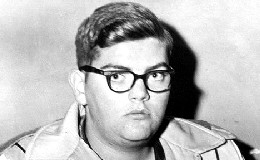
Lowell Lee Andrews
Murderer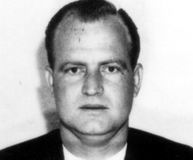 Gary Gene Tison
Murderer · USA · 1967
Gary Gene Tison was serving life sentences at the Arizona state prison. He had…
7 victims
Gary Gene Tison
Murderer · USA · 1967
Gary Gene Tison was serving life sentences at the Arizona state prison. He had…
7 victims
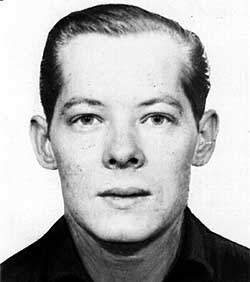 Richard Lee Tingle
Murderer · USA · 1968
Richard Lee Tingle was born out of wedlock in December 1940. He was raised by a…
6 victims
Richard Lee Tingle
Murderer · USA · 1968
Richard Lee Tingle was born out of wedlock in December 1940. He was raised by a…
6 victims
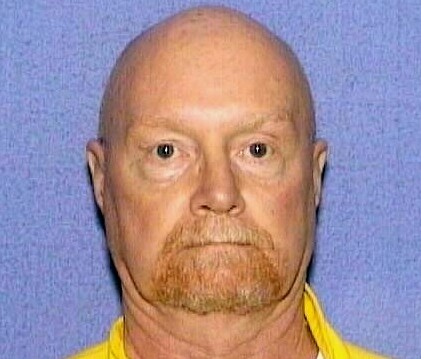 Gary Duane Rardon
Murderer · USA · 1962
Gary Duane Rardon killed a man in 1962 and later served 4 years for manslaughte…
4 victims
Gary Duane Rardon
Murderer · USA · 1962
Gary Duane Rardon killed a man in 1962 and later served 4 years for manslaughte…
4 victims
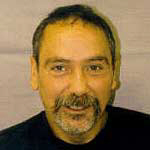 Bert Leroy Hunter
Murderer · USA · 1968
Bert Leroy Hunter Bert Hunter, acting with accomplice Tomas Ervin, forced their…
3 victims
Bert Leroy Hunter
Murderer · USA · 1968
Bert Leroy Hunter Bert Hunter, acting with accomplice Tomas Ervin, forced their…
3 victims
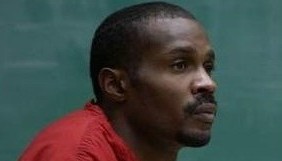 Matthew Macon
Serial killer · USA · 2004
Matthew Emmanuel Macon was 27 when police said he was suspected of killing five…
6 victims
Matthew Macon
Serial killer · USA · 2004
Matthew Emmanuel Macon was 27 when police said he was suspected of killing five…
6 victims
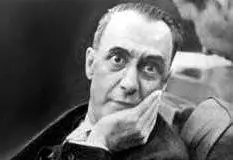 Pierre Jaccoud
Homicide ? · Switzerland · 1958
Pierre Jaccoud (born in 1905) was a Swiss lawyer and politician. He served as “…
1 victim
Pierre Jaccoud
Homicide ? · Switzerland · 1958
Pierre Jaccoud (born in 1905) was a Swiss lawyer and politician. He served as “…
1 victim
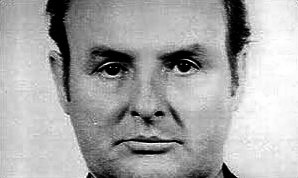 Roy Fontaine
Serial killer · United Kingdom · 1977
17 June 1924 — Archibald Thompson Hall was born in Glasgow. · 1941 — He receive…
5 victims
Roy Fontaine
Serial killer · United Kingdom · 1977
17 June 1924 — Archibald Thompson Hall was born in Glasgow. · 1941 — He receive…
5 victims
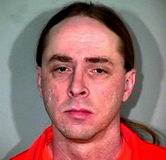 Jeffrey Landrigan
Murderer · USA · 1982
Jeffrey Landrigan In December 1989, Chester Dean Dyer was found dead in his apa…
2 victims
Jeffrey Landrigan
Murderer · USA · 1982
Jeffrey Landrigan In December 1989, Chester Dean Dyer was found dead in his apa…
2 victims
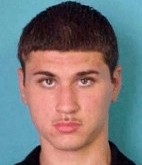 Adam Ezerski
Murderer · USA · 2001
August 11, 2001 — Kevin Begoon met Ezerski at a Polk Street cafe and let Ezersk…
1 victim
Adam Ezerski
Murderer · USA · 2001
August 11, 2001 — Kevin Begoon met Ezerski at a Polk Street cafe and let Ezersk…
1 victim
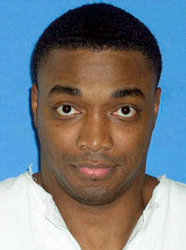 George Whitaker
Murderer · USA · 1994
George Whitaker III was convicted of capital murder and sentenced to death for…
1 victim
George Whitaker
Murderer · USA · 1994
George Whitaker III was convicted of capital murder and sentenced to death for…
1 victim
- Gender
- male
- Country
- USA
- Location
- Wolcott, Wyandotte County, Kansas, USA
- Date of birth
- 1 940
- Characteristics
- parricide
- Victim profile
- His father, William, 50, his mother, Opal, 41, and his sister Jennie Marie, 20
- Method of murder
- Shooting ( .22 caliber rifle and a German Luger)
- Date(s) of murder
- November 28, 1958
- Years active
- 1958
- Date of arrest
- Next day
- Status
-
Executed
Executed by hanging in Kansas on November 30, 1962
Case information
Name: Lowell Lee Andrews Date of execution: November 30, 1962 Status: Executed by hanging in Kansas on November 30, 1962
Timeline
- November 28, 1958 — Lowell Lee Andrews shot and killed his sister, Jennie Marie, and his parents.
- January 18, 1960 — A district court of Wyandotte County sentenced Andrews to death after conviction by a jury on three separate counts of murder in the first degree.
- December 10, 1960 — The Kansas Supreme Court affirmed the judgment of conviction.
- January 25, 1961 — A motion for a rehearing was denied.
- March 6, 1961 — The governor denied an application for a commutation of the death sentence to life imprisonment.
- March 9, 1961 — The Kansas Supreme Court directed that the death sentence be carried out on this date.
- March 16, 1961 — The United States District Court entered an order retaining jurisdiction of the body of the petitioner to grant counsel time to apply to the Supreme Court of the United States for a writ of certiorari.
- October 9, 1961 — An application for certiorari was denied.
- November 8, 1961 — The United States District Court dissolved the stay of execution.
- November 21, 1961 — A hearing was held in the district court of Leavenworth County.
- December 4, 1961 — The hearing concluded and the matter was taken under advisement.
- December 18, 1961 — The district court entered an order discharging the writ and remanding the petitioner to the custody of the respondent.
- June 9, 1962 — The Supreme Court of Kansas affirmed the judgment; it stated the judgment is affirmed.
- November 30, 1962 — Kansas executed Lowell Lee Andrews by hanging.
Background
Lowell Lee Andrews was described as a University of Kansas sophomore zoology major. He played the bassoon in the Kansas University band. He was a University of Kansas sophomore who was home for the Thanksgiving holiday weekend in 1958.
Andrews lived with his father, mother and sister on a suburban farm in Wyandotte County. His sister was near his age and was attending a college in Oklahoma. Both were home for Thanksgiving vacation.
The judgment recited that Andrews was eighteen years of age and in his second year of study at the University of Kansas.
The offence
Andrews was convicted of the murders of his father, mother, and sister on November 28, 1958. The Kansas Supreme Court described the conviction as follows: conviction by a jury on three separate counts of murder in the first degree for the premeditated killing of his father, mother and sister on November 29, 1958, as set out in the habeas corpus proceeding. The case narrative also set out that the crimes were committed on November 28, 1958.
Victims and victim deaths
- William L. Andrews, 50 — shot multiple times; the record described that the father was shot repeatedly with a revolver and that Andrews fired a total of 17 shots into his father.
- Opal Andrews, 41 — shot multiple times.
- Jennie Marie Andrews, 20 — shot between the eyes with a .22 caliber rifle and killed instantly.
Conduct during the killings and immediate events
The case narrative stated that after reading The Brothers Karamazov, Andrews shaved, put on a suit, and went downstairs carrying a .22 caliber rifle and a revolver. He turned on a light and opened fire in the room where his parents and sister were. He killed Jennie Marie and then shot his father and mother multiple times.
The narrative stated that after opening a window in an attempt to make the crime look like a burglary, Andrews left the house and drove to Lawrence. He drove to his apartment to establish an alibi, claiming he needed to pick up his typewriter to write an essay and then went to the Granada movie theater, where he watched “Mardi Gras” (1958), starring Pat Boone. After the film ended, he drove to the Kansas River, dismantled the weapons, and threw them off the Massachusetts Street Bridge. Andrews returned home and called the police to inform them of a robbery at his parents’ house.
The narrative stated that Andrews protested his innocence until the family's minister was able to persuade him to confess.
Investigation and arrest
At approximately 1:00 a.m., officers of the sheriff's patrol arrived at Andrews’ home following Andrews’ call to the sheriff's office reporting the crimes. Officers talked to Andrews for about ten minutes before the assistant county attorney and the sheriff arrived.
Andrews denied any knowledge of the commission of the crimes and stated the same must have been committed by a burglar. When informed he would be given a paraffin test, he stated he had discharged his rifle the previous afternoon when he attempted to shoot a hawk near the Andrews home. During the interview, Andrews wept on one or more occasions and did not appear unconcerned. The county coroner was called to come to the Andrews home and found Andrews rather unconcerned about funeral arrangements.
After ascertaining the family were members of the Baptist Church of which the Reverend V.C. Dameron was the minister, the officers telephoned Reverend Dameron. After completing a preliminary examination of the premises, Andrews was taken into temporary custody. The assistant county attorney and the sheriff returned to the sheriff's office, arriving about 2:30 a.m.
Andrews was taken to the courthouse in Kansas City in a separate car, and after the officers and Andrews arrived at the sheriff's office they were joined by Reverend Dameron. In response to the minister’s request for a private interview, the assistant county attorney said:
"Yes, of course, he is not accused of anything and we certainly don't know whether he has had anything to do with this or not, but talk to him and any information he can tell us relative to this would certainly be helpful."
The minister conferred privately with Andrews and asked him about the details of the day before, Thanksgiving, and whether he committed the crimes. The petitioner admitted to the minister that he had committed the crimes.
The minister advised Andrews that he did not have to make a statement to the investigating officials; that he was entitled to consult an attorney before talking to the officers; and that the minister knew good lawyers in town and would get one to represent Andrews. The minister also told him:
"Andrews: that he (Reverend Dameron) knew some good lawyers in town and would be happy to get one to represent petitioner before he made any statement whatsoever."
The minister also advised he would stay with Andrews and see his rights were protected if he chose to make a statement to the officers. The minister then returned to the waiting room, informed the assistant county attorney and officers that Andrews wished to make a statement, and the assistant county attorney advised Andrews of his constitutional rights and told him he did not have to make any statement.
A stenographer arrived about twenty minutes later. During that time, Andrews was not interrogated. No one talked to him except the minister, although someone asked if he would like some coffee and at his request the minister got him a coke.
After the stenographer arrived, Andrews made a free and voluntary statement to the assistant county attorney in the presence of the minister and two detectives that he had committed the three murders. The statement was transcribed by the stenographer, and read, initialed and signed by him in the presence of the minister and the officers.
After signing the confession, Andrews was taken before a justice of the peace at approximately 4:00 a.m., where able and experienced counsel was appointed to represent him.
Trial
Charges and conviction
The judgment described Andrews as convicted by a jury on three separate counts of murder in the first degree for the premeditated killing of his father, mother and sister. The habeas corpus proceeding described the district court sentencing as occurring on January 18, 1960.
A motion for a new trial was denied. The conviction was affirmed by the Kansas Supreme Court on December 10, 1960.
Plea and insanity defense
The narrative stated that Andrews pleaded not guilty by reason of insanity but was convicted and sentenced to death.
Confession evidence
The case narrative stated that Andrews’ written confession was admitted into evidence without objection. At no time during the trial did Andrews’ able and experienced counsel intimate that the confession was anything but freely and voluntarily given.
The Kansas Supreme Court in the habeas proceeding summarized that the record indicated Andrews gave at least three separate confessions:
- an orally made confession to Reverend Dameron in a private conversation in the sheriff's office,
- a formal written confession to the assistant county attorney,
- a confession made to Andrews’ expert witness, Dr. Joseph Satten, during observations and examinations at the Menninger Clinic in Topeka.
The court stated that all three were substantially identical, and that Andrews elaborated on some details in subsequent conversations with Reverend Dameron and discussed the crimes to some extent with members of the sanity commission.
Trial issues raised on habeas appeal
Andrews contended that the district court refused to permit counsel to advise the jury on voir dire examination that in the event it found Andrews not guilty by reason of insanity, the court would be required under Kansas law to commit him to the state hospital for the dangerous insane “for safekeeping and treatment,” and that the district court refused to instruct the jury on the lesser degrees of homicide.
The Kansas Supreme Court held those points were not well taken, stating they were elements of the trial reviewable only on appeal and that they had been fully reviewed in State v. Andrews, and also stated that a writ of habeas corpus would not be recognized as a substitute for a regular and timely appeal, or to serve as a belated motion for rehearing.
Sentencing
A district court of Wyandotte County sentenced Andrews to death on January 18, 1960 after conviction by a jury on three separate counts of murder in the first degree for the premeditated killing of his father, mother and sister. Following denial of the motion for a new trial, the Kansas Supreme Court affirmed the conviction and judgment.
The Kansas Supreme Court noted that a motion for a rehearing was denied on January 25, 1961, and that under applicable Kansas statutes it entered an order directing that the death sentence be carried out on March 9, 1961.
A commutation application was made to the governor pursuant to applicable Kansas statutes; it was denied on March 6, 1961.
Appeals
Kansas Supreme Court (habeas corpus)
The Supreme Court of Kansas decision on June 9, 1962 addressed a proceeding in habeas corpus.
The caption included: LOWELL LEE ANDREWS, Appellant, v. TRACY A. HAND, Warden, Kansas State Penitentiary, Lansing, Kansas, Appellee.
The court stated the matter involved confinement in the Kansas State Penitentiary pursuant to the death sentence imposed on January 18, 1960, and also described the history of appeals and stays:
- The Kansas Supreme Court affirmed the judgment of conviction on December 10, 1960.
- A rehearing was denied on January 25, 1961.
- The death sentence was ordered carried out on March 9, 1961.
- An application for commutation was denied on March 6, 1961.
- A petition for a writ of habeas corpus was filed in the United States District Court for the District of Kansas the following day after the commutation denial; the writ was issued and a stay was served upon the warden.
- A hearing occurred on March 16, 1961 and the United States District Court entered an order retaining jurisdiction to grant counsel time to apply for certiorari to the Supreme Court of the United States.
- Certiorari was sought and denied on October 9, 1961.
- On November 8, 1961, the United States District Court dissolved the stay of execution.
- On November 8, 1961, Andrews commenced an action in the district court of Leavenworth County.
- A writ of habeas corpus was issued and a hearing was held on November 21, 1961, concluded on December 4, 1961, and taken under advisement.
- On December 18, 1961, the district court entered an order discharging the writ and remanding the petitioner to the custody of the respondent.
U.S. Supreme Court certiorari
The Kansas Supreme Court referenced the following:
- Andrews’ application for certiorari to the Supreme Court of the United States was sought and denied on October 9, 1961.
- The court referenced Andrews, Petitioner, v. Kansas, 368 U.S. 868, 7 L.Ed.2d 65, 82 S.Ct. 80.
Outcome
The Kansas Supreme Court concluded that the district court’s judgment was affirmed and that the writ of habeas corpus was discharged, and it stated the judgment is affirmed.
Aftermath
Kansas executed Andrews by hanging on November 30, 1962. The narrative stated he had no last words.
The narrative stated Andrews was on death row at the Lansing Correctional Facility at the same time as Richard Hickock and Perry Smith, and it described several pages in Truman Capote’s In Cold Blood quoting Hickock and Smith about their Death Row conversations with Andrews. It also described that the following films portrayed Andrews: Capote and Infamous, and that Bowman Upchurch portrayed him in the original film of In Cold Blood. The narrative also stated that in the Lansing Correctional Facility moments before he was hanged at 12:01 a.m. on Nov. 30, 1962, there was no sign of repentance, according to an Associated Press story in the Lawrence Daily Journal-World, and that Andrews declined to offer any last words and was smiling slightly.
The narrative included a quotation attributed to Richard Hickock from Capote’s book, In Cold Blood:
"I really liked Andy. He was a nut - not a real nut, like they keep hollering; but, you know, just goofy. He was always talking about breaking out of here and making his living as a hired gun. He liked to imagine himself roaming around Chicago or Los Angeles with a machine gun in a violin case. Cooling guys. Said he'd charge a thousand bucks per stiff."
The narrative also included a quotation attributed to Andrews:
"I'm not sorry and I'm not glad I did it; I just don't know why I did it,"
It stated Andrews confessed to the murders after he was arrested, and that he initially tried to make the crime scene look like a burglary turned into a multiple murder.
The narrative also included a quotation attributed to a neighbor:
"Why, he was the nicest boy in Wolcott,"
It stated that a Lawrence Daily Journal-World story and an Associated Press story described Andrews and his demeanor before execution.
It also referenced searches at the Kansas River in Lawrence for a rifle and a pistol Andrews used in the shootings, and quoted Gordon Chappell Jr. about the search:
"I can remember they were dragging down there with big magnets and they had divers," Chappell said.
The narrative quoted Chappell Jr. about Andrews showing no remorse:
"But Andrews showed no remorse, I do know that."
The narrative also included quotation and description of Andrews’ size and weight, including that there were rumors Andrews had broken the rope because of his large size and that a news story reported that he slimmed down to 180 pounds while in prison. The narrative quoted Gordon Chappell Jr. about his father, Gordon Dale Chappell Sr.:
"He didn't go," his son said. "He said he just didn't want to witness any execution."
Other details
People mentioned in the case materials
- Reverend V.C. Dameron — minister of the Baptist Church; he conferred privately with Andrews and testified at trial and again at the trial in the United States District Court.
- Tracy A. Hand — warden, Kansas State Penitentiary, Lansing, Kansas.
- Robert J. Foster — assistant county attorney (and later county attorney of Wyandotte County), testified on behalf of the respondent concerning Andrews’ arrest and giving of the confession.
- Dr. Richard F. Schneider — member of the sanity commission; testified on behalf of the state.
- Dr. William F. Roth, Jr. — member of the sanity commission; testified on behalf of the state.
- Dr. Merrill Eaton — appointed to the sanity commission; did not testify at Andrews’ trial but testified in the United States District Court.
- Dr. Joseph Satten — expert witness at the Menninger Clinic; testified on behalf of Andrews.
- Richard Hickock — described as a person on death row in the Lansing Correctional Facility at the same time.
- Perry Smith — described as a person on death row in the Lansing Correctional Facility at the same time.
- Gordon Dale Chappell Jr. — Lawrence resident who watched the search and later described demeanor and search details.
- Gordon Dale Chappell Sr. — Douglas County Sheriff at the time of the murders; invited by the state to watch Andrews hang (he did not go).
- William L. Andrews — Andrews’ father.
- Opal Andrews — Andrews’ mother.
- Jennie Marie Andrews — Andrews’ sister.
Additional case narrative details preserved in the materials
- The narrative stated Andrews drove to his apartment in Lawrence to establish an alibi, claiming that he needed to pick up his typewriter to write an essay and then watched “Mardi Gras” at the Granada movie theater.
- The narrative stated that Andrews stopped on his way out of Lawrence to dismantle the guns and toss the parts off the Massachusetts bridge into the Kansas River.
- The narrative stated the first deputies to arrive found Andrews outside playing with his dog.
- The narrative stated Andrews later told investigators he killed his family because he wanted to inherit the family farm and obtain $1,800 in his father’s savings account.
- The narrative stated that Andrews’ father attempted to crawl to the kitchen and was shot repeatedly with the revolver.
- The narrative stated that Andrews fired a total of 17 shots into his father.
- The narrative stated that Andrews had no last words.
Spotted an error, or have more information about this case?