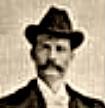
James Dunham
Mass murderer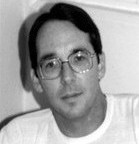 William Zeigler
Mass murderer · USA
William Thomas Zeigler Jr. was prosecuted in Florida for the murders of four pe…
1975 victims
William Zeigler
Mass murderer · USA
William Thomas Zeigler Jr. was prosecuted in Florida for the murders of four pe…
1975 victims
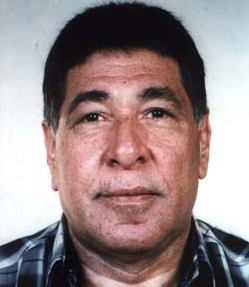 Gameel Al-Batouti
Mass murderer · USA · 1999
Gameel Al-Batouti (also rendered “Gamil ElBatouty” or “El Batouty” in U.S. offi…
216 victims
Gameel Al-Batouti
Mass murderer · USA · 1999
Gameel Al-Batouti (also rendered “Gamil ElBatouty” or “El Batouty” in U.S. offi…
216 victims
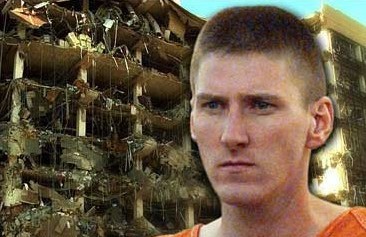 Timothy McVeigh
Mass murderer · USA · 1995
Timothy James McVeigh (April 23, 1968 – June 11, 2001) was a United States Army…
168 victims
Timothy McVeigh
Mass murderer · USA · 1995
Timothy James McVeigh (April 23, 1968 – June 11, 2001) was a United States Army…
168 victims
 Julio Gonzalez
Mass murderer · USA · 1990
Julio Gonzalez was sentenced to 174 twenty-five-year sentences (a total of 4,35…
87 victims
Julio Gonzalez
Mass murderer · USA · 1990
Julio Gonzalez was sentenced to 174 twenty-five-year sentences (a total of 4,35…
87 victims
 Francis Nemechek
Serial killer · USA · 1974
Francis “Don” Nemechek killed women and a small boy in multiple incidents in we…
5 victims
Francis Nemechek
Serial killer · USA · 1974
Francis “Don” Nemechek killed women and a small boy in multiple incidents in we…
5 victims
 Jerry Paul Henderson
Murderer · USA · 1984
Jerry Paul Henderson was convicted of capital murder and sentenced to death for…
1 victim
Jerry Paul Henderson
Murderer · USA · 1984
Jerry Paul Henderson was convicted of capital murder and sentenced to death for…
1 victim
 Donald J. Hall
Murderer · USA · 1992
Donald J. Hall (DOC ID 990113) · Donald Hall was sentenced to death on November…
1 victim
Donald J. Hall
Murderer · USA · 1992
Donald J. Hall (DOC ID 990113) · Donald Hall was sentenced to death on November…
1 victim
 Jean-Claude Romand
Spree killer · France · 1993
Jean-Claude Romand (born February 11, 1954) was a French impostor and murderer…
5 victims
Jean-Claude Romand
Spree killer · France · 1993
Jean-Claude Romand (born February 11, 1954) was a French impostor and murderer…
5 victims
 Christopher Vaughn
Mass murderer · USA · 2007
Christopher Vaughn was sentenced to four consecutive life terms on November 26,…
4 victims
Christopher Vaughn
Mass murderer · USA · 2007
Christopher Vaughn was sentenced to four consecutive life terms on November 26,…
4 victims
 Thomas Quick
Serial killer · and Finland · 1964
Thomas Quick (born Sture Bergwall, 1950, Korsnäs, Falun, Sweden) was sentenced…
15 victims
Thomas Quick
Serial killer · and Finland · 1964
Thomas Quick (born Sture Bergwall, 1950, Korsnäs, Falun, Sweden) was sentenced…
15 victims
- Gender
- male
- Country
- USA
- Location
- Campbell, Santa Clara County, California, USA
- Date of birth
- ???
- Characteristics
- parricide
- Victim profile
- H is wife, Hattie, 25, her mother, Ada McGlincy, 53, her stepfather, Richard P. McGlincy, 56, her brother, James K. Wells, 22, and two of the hired help, Robert Briscoe, 50, and Minnie Shesler, 28
- Method of murder
- Shooting ( .38-caliber revolver and a .45-caliber pistol) / Beating with an axe
- Date(s) of murder
- May 26, 1896
- Years active
- 1896
- Date of arrest
- —
- Status
-
Never apprehended and tried
Overview
James C. Dunham was a multiple murderer who killed his wife and members of his wife’s family, along with two household servants, at the McGlincy home in Campbell, California. Dunham used an axe and firearms. He was never apprehended and never stood trial.
The offence
On the night of May 26, 1896, Dunham killed his wife, Hattie Wells Dunham, along with Hattie’s family and two of that family’s servants. He murdered Hattie Wells Dunham (Hattie’s wife), James Wells (Hattie’s brother), Ada Wells McGlincy (Hattie’s mother), Colonel Richard Parran McGlincy (Hattie’s stepfather), and two household servants, Robert Briscoe and Minnie Shesler.
Dunham spared his infant son, who was 3 weeks old. The killings occurred at the McGlincy home in what is now Campbell.
The firearms used included a .38-caliber revolver and a .45-caliber pistol.
Investigation
An extensive manhunt throughout Santa Clara County, California, did not produce the murderer.
A coroner’s jury investigating the deaths declared that they were committed by “one James C. Dunham, with malice aforethought.”
There were witnesses to at least part of the carnage.
Aftermath
Dunham was not found. “Everybody in the Valley knew who did it, but the suspect escaped and was never found.”
The sole survivors were Dunham’s and Hattie’s 3-week-old son and a farmhand who had hidden in the barn during the massacre.
The baby was adopted by relatives in San Francisco and was given the name Percy Osborne Brewer. Dunham never tried to contact his son. The child did inherit his grandmother’s estate.
The McGlincy house survived into this century at the end of a long driveway that is now McGlincey Lane. Kids who went there reported it was haunted.
Over the years, there were many reported sightings of Dunham or possibly his bones. Investigators checked bones on Mount Hamilton, with the intent of using a detailed description of Dunham and his teeth to identify him if the right skeleton was found. The last reported possibility involved some bones discovered on Mount Hamilton in 1953. Investigators thought they looked more like cattle bones than human ones.
Motive and contemporary theories
Dunham’s motives were still unknown.
George Whipple, a neighbor of the McGlincys, was interviewed in 1947 at the age of 87. Whipple said the killings were due to mother-in-law trouble, stating:
“The way they treated Dunham was something terrible”
Whipple said Ada McGlincy, aided by her son and her husband, was bent on breaking up the couple. Whipple also said the complaints against Dunham were “trifling.”
It was known that Ada McGlincy was keeping notes, apparently as evidence for a divorce suit. Whipple said he saw them.
Another note was found after the killings. It was signed Hattie and read:
“Please say goodbye for me to my dear mother, brother and stepfather.”
There was intense speculation about why Dunham wielded the axe and the guns. Whipple’s theory included that Hattie might have been going off with Dunham, and that possibly Dunham killed her accidentally, perhaps seizing her during a quarrel.
The idea that Dunham was crazed when he was killing was popular. Even his brother, who had once been engaged to marry Hattie, thought him insane.
Escape and pursuit
After the killings, Dunham took his brother-in-law’s horse and rode off.
He was next seen asking for food at Smiths Creek Hotel on Mount Hamilton.
A huge posse was mounted and it found the horse Dunham used, but no Dunham. Many believed he had either committed suicide or starved to death on the mountain. Others thought he might have taken off on his bike. Dunham was considered an excellent cyclist; he had recently bought a used bike and outfitted it with wide tires and other equipment for traveling in the mountains.
Over time, Dunham was also rumored to have been the “wild man” roaming hills near Dulzura, a tiny town near the Mexican border southeast of San Diego. Another possibility was that he might have been part of a Yankee guerrilla gang in Mexico, with a reportedly named member James Dunham who had murdered his family.
Timeline
- May 26, 1896 — Dunham killed his wife Hattie Wells Dunham, Hattie’s family (including Ada Wells McGlincy and Colonel Richard Parran McGlincy), his wife’s brother James Wells, and two household servants (Robert Briscoe and Minnie Shesler) at the McGlincy home in Campbell, California.
- May 28, 1996 — The San Jose Mercury News publication referenced the mass murder and the subsequent manhunt and lack of apprehension.
- 1947 — George Whipple was interviewed at age 87 and gave his theory about the killings.
- 1953 — Some bones discovered on Mount Hamilton were investigated; authorities thought they looked more like cattle bones than human ones.
- Two days after the killings — The coroner’s jury declared the deaths were committed by “one James C.
Victims and ages
- Hattie Wells Dunham — 25
- Ada McGlincy — 53
- Colonel Richard Parran McGlincy — 56
- James K. Wells — 22
- Robert Briscoe — 50
- Minnie Shesler — 28
Other details
Dunham was considered a multiple murderer.
The text associated the case with the “Grim Anniversary of Early Mass Murder,” describing it as an early mass murder in the Santa Clara Valley and contrasting it with a later mass murder at ESL in Sunnyvale where an accused person, Richard Wade Farley, was convicted.
Spotted an error, or have more information about this case?