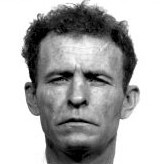
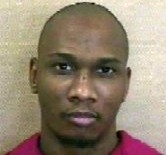
G. W. Green
Murderer Ervil LeBaron
Murderer · USA · 1972
Ervil Morrell LeBaron (1925 to August 16, 1981) was the leader of a polygamous…
35 victims
Ervil LeBaron
Murderer · USA · 1972
Ervil Morrell LeBaron (1925 to August 16, 1981) was the leader of a polygamous…
35 victims
 Brian Kevin Rosenfeld
Murderer · USA · 1985
Brian Kevin Rosenfeld Brian Kevin Rosenfeld was sentenced to three concurrent l…
23 victims
Brian Kevin Rosenfeld
Murderer · USA · 1985
Brian Kevin Rosenfeld Brian Kevin Rosenfeld was sentenced to three concurrent l…
23 victims
 Marvin Gray
Murderer · USA · 1975
Marvin Gray was convicted killer who claimed responsibility for 23 slayings and…
23 victims
Marvin Gray
Murderer · USA · 1975
Marvin Gray was convicted killer who claimed responsibility for 23 slayings and…
23 victims
 Yahweh ben Yahweh
Murderer · USA · 1980
Yahweh ben Yahweh was born and legally named Hulon Mitchell Jr. (October 27, 19…
23 victims
Yahweh ben Yahweh
Murderer · USA · 1980
Yahweh ben Yahweh was born and legally named Hulon Mitchell Jr. (October 27, 19…
23 victims
 Bernard Eugene Amos
Murderer · USA · 1998
Bernard Eugene Amos was a Texas death row prisoner. He made a final statement b…
1 victim
Bernard Eugene Amos
Murderer · USA · 1998
Bernard Eugene Amos was a Texas death row prisoner. He made a final statement b…
1 victim
 Carl Chichester
Murderer · USA · 1991
Carl Chichester · Carl Hamilton Chichester — defendant; was convicted of capita…
1 victim
Carl Chichester
Murderer · USA · 1991
Carl Chichester · Carl Hamilton Chichester — defendant; was convicted of capita…
1 victim
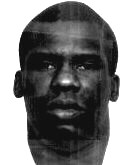 Jermarr Arnold
Murderer · USA · 1983
Jermarr Arnold was convicted of the capital offense of murdering Christine Sanc…
2 victims
Jermarr Arnold
Murderer · USA · 1983
Jermarr Arnold was convicted of the capital offense of murdering Christine Sanc…
2 victims
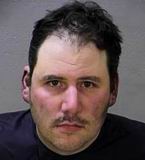 Christopher Speight
Spree killer · USA · 2010
Christopher Speight was the suspect in the Appomattox shootings, a spree shooti…
8 victims
Christopher Speight
Spree killer · USA · 2010
Christopher Speight was the suspect in the Appomattox shootings, a spree shooti…
8 victims
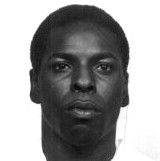 Karl Hammond
Murderer · USA · 1986
Karl Hammond was convicted of capital murder involving the rape and murder of D…
1 victim
Karl Hammond
Murderer · USA · 1986
Karl Hammond was convicted of capital murder involving the rape and murder of D…
1 victim
- Gender
- male
- Country
- USA
- Location
- Montgomery County, Texas, USA
- Date of birth
- November 21, 1936
- Age at first offence
- 40
- Characteristics
- robbery
- Victim profile
- John Denson, 43 (part-time probation officer)
- Method of murder
- Shooting
- Date(s) of murder
- November 19, 1976
- Years active
- 1976
- Date of arrest
- —
- Status
-
Executed
Executed by lethal injection in Texas on November 12, 1991
Overview
G. W. Green was executed by lethal injection in Texas on November 12, 1991.
Timeline
- 1976 — G. W. Green and two accomplices invaded John Denson’s house to steal a $6,000 gun collection.
- September 25, 1991 — Green’s two state habeas petitions were denied.
- November 8, 1991 — The district court denied Green’s petition for rehearing.
- November 9, 1991 — The United States Court of Appeals for the Fifth Circuit denied the request for a stay of execution and declined to issue a certificate of probable cause.
- November 6, 1991 — Green filed his federal habeas petition.
- October 2, 1991 — Green’s execution was scheduled for November 12, 1991.
- September 10, 1987 — Accomplice Joseph Starvaggi was executed.
The offence
Three gunmen broke into a house in 1976, terrorized a family, and then killed the father, John Denson.
G. W. Green and two accomplices invaded Denson’s house in 1976 to steal a $6,000 gun collection. They forced Denson’s wife and 12-year-old daughter to lie under a blanket while John Denson begged for his life and then was shot by Joseph Starvaggi.
Grace Denson later said that G. W. Green had screamed at Joseph Starvaggi to kill Grace and their daughter but that Joseph Starvaggi had refused.
Investigation
Arrest
Trial
Green received a death sentence imposed by a Texas jury.
Sentencing
Texas law provided that any participant in a crime that proves fatal to the victim may be put to death. The account described that it was Joseph Starvaggi who fatally shot John Denson, a 43-year-old part-time probation officer, while Green was treated as a death-eligible participant.
Appeals
Federal habeas proceedings
G. W. Green requested a stay of execution of his death sentence, a certificate of probable cause to enable him to appeal the district court’s denial of an application of writ of habeas corpus and stay of execution, and appointment of counsel. Green was scheduled for execution on November 12, 1991, after midnight and before sunrise.
This was Green’s first federal habeas corpus review by the United States Court of Appeals for the Fifth Circuit.
Green presented seven issues to the district court in his original petition:
- The jury could not give expression to his mitigating evidence as required by Penry v. Lynaugh, 492 U.S. 302.
- Green was denied effective assistance of counsel in five particulars:
- counsel failed to interview and call all witnesses essential to his contention that his confession was coerced and involuntary;
- counsel failed to properly pursue a claim of indigency in support of a court-appointed investigator, handwriting expert, and independent psychiatrist for evaluation;
- counsel failed to obtain rulings on certain pretrial rulings;
- counsel failed to preserve any error of the trial court in not placing the full confession of Green’s co-defendant before the jury; and
- counsel failed to make certain evidentiary objections.
- There was no finding by the state courts as required by Enmund v. Florida, 458 U.S. 782.
- Green was deprived of rights secured by the fifth and fourteenth amendments by certain interrogation techniques of the state.
- The fact-finding procedures in state habeas were inadequate.
- Under Texas law, neither the state trial court nor the Texas Court of Criminal Appeals were authorized to issue findings of fact.
- The federal district court failed to conduct a required evidentiary hearing.
Green moved in district court for reconsideration of the court’s ruling that the state had furnished a psychiatrist. In his motion for reconsideration, Green urged that the appointed psychiatrist considered only competency to stand trial and not legal insanity, arguing that the denial violated Ake v. Oklahoma, 470 U.S. 68. The district court denied the petition for reconsideration, concluding that the state granted the only request made by Green.
Fifth Circuit decision
The United States Court of Appeals for the Fifth Circuit denied the request for stay of execution and declined to issue a certificate of probable cause. The decision stated:
- The court agreed there was no colorable claim of a Penry violation, and it stated that it was persuaded that the jury could give expression to all of Green’s evidence in mitigation in answering the question of future dangerousness or deliberate acts, or both.
- The court rejected the Enmund claim for reasons other than those relied upon by the district court, stating that Enmund requires a state determination of the requisite participation by an accused, and that the jury’s answer to the question in the sentencing phase whether Green acted deliberately met the Enmund requirement.
- The court agreed with the district court’s rejection of Green’s Ake v. Oklahoma claim but emphasized a different reason, stating Green had never made the “preliminary showing that his sanity at the time of the offense was likely to be a significant factor at trial.” It quoted: “Id., 105 S.Ct. at 1091.”
- The court noted that the motion for appointment of counsel in fact requested either a substitution of counsel or the addition of counsel informally assisting court-appointed counsel, and stated that petitioner had at all times been represented by either retained or appointed counsel, finding no reason to disturb the district court’s ruling.
The application for a stay of execution and a certificate of probable cause was DENIED.
Dated court materials and parties
The appeal was styled: G.W. Green, Petitioner-Appellant, v. James A. Collins, Director, Institutional Division Texas Department of Criminal Justice, Respondent-Appellee. The appellate case number was 91-6203. The court included Circuit Judges POLITZ, HIGGINBOTHAM, and BARKSDALE, and it issued a PER CURIAM opinion.
Outcome
He was put to death seven hours after the United States Supreme Court refused, on a vote of 7 to 2, to grant him a stay based on his argument of ineffective assistance of counsel.
Green was strapped to a gurney in the death chamber. He greeted his brother, a sister and a friend who had arrived to witness the execution. He expressed his love and then told the warden, Jack Pursley: “Lock and load. Let's do it, man.” As lethal drugs flowed into his arms, he used an obscenity to describe life, gasped once, and made no further movement. He was pronounced dead at 12:17 A.M., seven minutes after the drugs began flowing.
After execution, Green’s brother, Bobby, growled at state officials as he left the death chamber, saying: “Hope you all are happy.”
Aftermath
Green had refused recent requests for interviews. In earlier conversations, he expressed no remorse, saying: “I have no apologies, no mercy to ask,” he said. “I'll never tell someone I'm sorry for something I didn't commit.” The account described this as a reference to the fact that it was not Green who fatally shot John Denson, a 43-year-old part-time probation officer.
Green’s accomplice Joseph Starvaggi was executed on Sept. 10, 1987. The third gunman, Glen Earl Martin, was serving a life prison term.
John Denson’s daughter Susan, now 27, expressed bitterness about the length of the appeals process, saying: “That night, in 15 minutes, my father lost his life,” she said. “Here it is now, almost 15 years later. There's definitely a problem with that. I have respect for the justice system, but there are problems that haven't been dealt with correctly. There's nothing to put the fear of God in anybody.”
Other details
Green was identified as the offender: G. W. Green #576.
The account stated: “One of three gunmen who broke into a house 15 years ago, terrorized a family and then killed the father was executed by injection at the state prison here early today.” It also said the United States Supreme Court refused to grant a stay based on his argument of ineffective assistance of counsel.
Spotted an error, or have more information about this case?