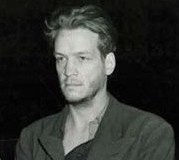
George Sitts
Murderer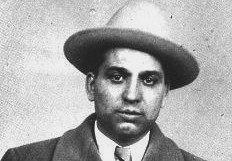 Harry Maione
Murderer · USA · 1937
Harry “Happy” Maione (1908 – February 19, 1942) was a New York mobster who serv…
12 victims
Harry Maione
Murderer · USA · 1937
Harry “Happy” Maione (1908 – February 19, 1942) was a New York mobster who serv…
12 victims
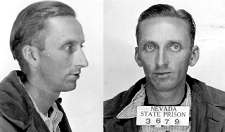 Luther Jones
Murderer · USA · 1936
Luther Jones Luther Jones was executed by asphyxiation-gas in Nevada on January…
4 victims
Luther Jones
Murderer · USA · 1936
Luther Jones Luther Jones was executed by asphyxiation-gas in Nevada on January…
4 victims
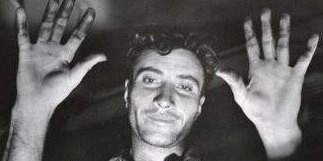 Albert Dyer
Murderer · USA · 1937
Albert Dyer was a 32-year-old WPA crossing guard and traffic guard at Centinela…
3 victims
Albert Dyer
Murderer · USA · 1937
Albert Dyer was a 32-year-old WPA crossing guard and traffic guard at Centinela…
3 victims
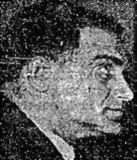 Joseph Medley
Murderer · USA · 1940
Joseph Medley was a male White person identified as being associated with robbe…
3 victims
Joseph Medley
Murderer · USA · 1940
Joseph Medley was a male White person identified as being associated with robbe…
3 victims
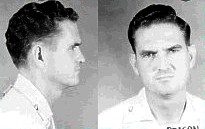 Lester Edward Bartholomew
Murderer · USA · 1955
Lester Edward Bartholomew was charged in Arizona with murder in the Superior Co…
3 victims
Lester Edward Bartholomew
Murderer · USA · 1955
Lester Edward Bartholomew was charged in Arizona with murder in the Superior Co…
3 victims
 Jeyavani Vageswaran
Murderer · United Kingdom · 2014
Jeyavani Vageswaran committed suicide by hanging herself the same day. Jeyavani…
2 victims
Jeyavani Vageswaran
Murderer · United Kingdom · 2014
Jeyavani Vageswaran committed suicide by hanging herself the same day. Jeyavani…
2 victims
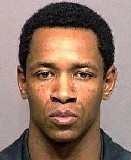 John Allen Muhammad
Spree killer · USA · 2002
John Allen Muhammad carried out the 2002 D.C. sniper attacks with his 17-year-o…
10 victims
John Allen Muhammad
Spree killer · USA · 2002
John Allen Muhammad carried out the 2002 D.C. sniper attacks with his 17-year-o…
10 victims
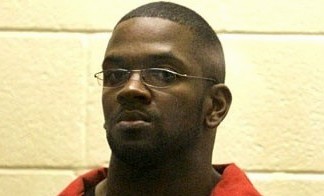 Bobby Lee Cutts
Murderer · USA · 2007
Bobby Lee Cutts, Jr. was a police officer in the Canton, Ohio Police Department…
1 victim
Bobby Lee Cutts
Murderer · USA · 2007
Bobby Lee Cutts, Jr. was a police officer in the Canton, Ohio Police Department…
1 victim
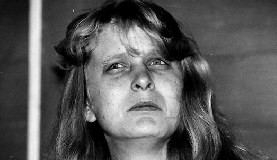 Gunn-Britt Ashfield
Murderer · Australia · 1993
Gunn-Britt Ashfield was the mother of six-year-old John Ashfield. In 2011 she w…
1 victim
Gunn-Britt Ashfield
Murderer · Australia · 1993
Gunn-Britt Ashfield was the mother of six-year-old John Ashfield. In 2011 she w…
1 victim
 Michael Lee Perry
Homicide · USA · 1990
Michael Lee Perry · June 13-14, 1990 — Michael L. Perry and Jacinto (Jason) Ric…
3 victims
Michael Lee Perry
Homicide · USA · 1990
Michael Lee Perry · June 13-14, 1990 — Michael L. Perry and Jacinto (Jason) Ric…
3 victims
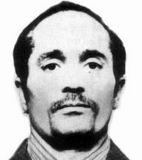 Michael George Hart
Murderer · United Kingdom · 1975
Michael George Hart was involved in a robbery at a Barclays Bank branch on Uppe…
1 victim
Michael George Hart
Murderer · United Kingdom · 1975
Michael George Hart was involved in a robbery at a Barclays Bank branch on Uppe…
1 victim
- Gender
- male
- Country
- USA
- Location
- Minnesota/South Dakota, USA
- Date of birth
- 1913
- Age at first offence
- 32
- Characteristics
- robbery, escape, fugitive
- Victim profile
- Erik Johansson ( liquor store clerk ) / Special Agent Tom Matthews of the State Bureau of Investigation and Sheriff Dave Malcolm of Butte County
- Method of murder
- Shooting
- Date(s) of murder
- December 12, 1945 / January 24, 1946
- Years active
- 1945–1946
- Date of arrest
- February 5, 1946
- Status
-
Executed
Executed by the electric chair on April 8, 1947
Case details
George Sitts was executed by the State of South Dakota on April 8, 1947 for the murder of state Bureau of Investigation special agent Tom Matthews while Matthews was attempting to arrest Sitts on a fugitive warrant from Minnesota. Sitts was the only person to die in South Dakota's electric chair, and the next South Dakota execution occurred more than 60 years later involving Elijah Page.
Timeline
- Dec. 12, 1945 — George Sidney Sitts shot to death Erik Johansson during the robbery of a liquor store in Minneapolis.
- Jan. 20, 1946 — While awaiting transfer to Stillwater State Prison, Sitts and three other men escaped from Hennepin County Jail.
- Jan. 22, 1946 — Sitts stole a 1937 black Buick sedan bearing Minnesota license number 119-804.
- Jan. 23, 1946 — Sitts drove to Brookings and left a gas station without paying for gas; the attendant reported a new Minnesota license number of 117-804.
- Jan. 23, 1946 — Sitts drove away without paying for gas in Kimball, Highmore and Blunt.
- Jan. 24, 1946 — Sitts drove off without paying for gas at Sulphur, 30 miles east of Newell on U.S. Highway 212; station owner Carl Settle attempted to stop Sitts by jumping onto the running board of the Buick, but Settle let go; Settle reported to Butte County Sheriff Dave Malcolm that the license number on the car was 109-409.
- Jan. 24, 1946 — Sitts stopped at a gas station in Belle Fourche and left without paying for gas; Sitts bought a quart of oil and got directions to Sheridan, Wyo.; station owner John Sigman called Malcolm; Malcolm called DCI agent Tom Matthews in Spearfish and requested a meeting at the intersection of U.S. Highway 85 and U.S. Highway 14.
- Jan. 24, 1946 — 7 p.m.: Earl Cook, a Sundance, Wyo., truck driver, saw three cars with lights on facing south; the third car pulled ahead to allow Cook's truck to pass; Cook heard gunshots; Cook stopped, got out, and saw a man shoot a person on the ground and then get in a car and drive away.
- Jan. 25, 1946 — Lawmen found Sitts' Buick abandoned on the Crook City cutoff road south of Spearfish; Sitts hid out in the attic of an abandoned stone schoolhouse; law officers searched the school but did not discover Sitts; law officers removed road blocks east of Spearfish and concentrated the search for Sitts in Wyoming; police noticed a hitchhiker between Deadwood and Spearfish and the suspect turned out to be a nervous Spearfish motorist whose automobile had broken down.
- Jan. 27, 1946 — A large blue car sped through Spearfish and alarmed officers; the driver was stopped but not held.
- Jan. 28, 1946 — Sitts walked to Deadwood and broke into the basement of a house through an unlocked door; the house was owned by Ross Dunn, Deadwood's former chief of police; Arpan farmer Elmer Conner was named Butte County sheriff.
- Jan. 29, 1946 — Officers set up a roadblock at Deadwood, forcing every car to stop and search the vehicles for occupants; Ray Torret, Spearfish, ran the roadblock en route home from his job at the Homestake Mine; officers fired on the vehicle believing it to be Sitts.
- Jan. 30, 1946 — Sheridan, Wyo., police announced the man they detained on Monday was not Sitts; searchers checked isolated shacks and cabins in the Spearfish-Deadwood area.
- Jan. 31, 1946 — Chief investigator Les Price announced: "We have no idea where this man is."
- Feb. 4, 1946 — Sitts left the Dunn house; Leonard Ronneberg reported being kidnapped by Sitts and forced to drive to Beulah, Wyo.; Sitts released Ronneberg west of Beulah, stealing his 1939 Chrysler car.
- Feb. 6, 1946 — Sitts was captured near Lysite, Wyo., after mistaking law officers for ranchers.
- Feb. 11, 1946 — The Lawrence County Commission approved extra pay for two special deputies assigned for continuous guard outside Sitts' cell in Lawrence County Jail; Ross Dunn and Jack McArdle were appointed to guard the jail.
- March 18, 1946 — Sitts was put on trial in Lawrence County for the murder of Tom Matthews.
- March 22, 1946 — A jury found Sitts guilty of murder.
- March 30, 1946 — Judge Charles Hayes sentenced Sitts to die in the electric chair.
- April 8, 1947 — 12:15 p.m.: Sitts was executed at the South Dakota State Penitentiary in Sioux Falls; DCI Agent Floyd Short, a personal friend of the two slain officers, flipped the switch.
Background
George Sitts escaped from prison while serving a life sentence for murder. He had previously been convicted in Minnesota for the 1945 murder of a liquor store clerk during a botched robbery. While awaiting transfer to Stillwater State Prison, Sitts and three other men escaped from Hennepin County Jail. After the slayings of Matthews and Malcom, Sitts fled to Wyoming, where he was arrested on February 5, 1946, and returned to South Dakota. He was tried first for the murder of Matthews, and after his conviction and death sentence in March 1946, the state opted not to try him for Malcom's murder.
South Dakota introduced the electric chair as the manner of execution in 1939, and Sitts was the fourth man sentenced to die in the chair. The three previous sentences were commuted to life in prison.
The offence
Sitts had been convicted in Minnesota for the 1945 murder of a liquor store clerk during a botched robbery. After escaping, Sitts shot and killed Butte County Sheriff Dave Malcom near Spearfish on January 24, 1946.
The murder for which he was executed occurred when Special Agent Tom Matthews was attempting to arrest Sitts on a fugitive warrant from Minnesota. On January 24, 1946, Matthews and Sheriff Dave Malcolm were manning a roadblock on the north edge of Spearfish in Lawrence County. The suspect was described over the police stations as being armed, six foot three, with dark hair, and unshaven for about a week. A vehicle matching the description was pulled over; Sitts emerged from the driver side door, opened fire with his pistol on the two men, and shot them as they lay dying on the road.
Investigation
A five-state manhunt began after law officers organized activity following the gunshots on January 24, 1946. Pilot Clyde Ice gave air support from the Spearfish airport. During the search, law officers found Sitts' Buick abandoned on the Crook City cutoff road south of Spearfish. Sitts hid out in the attic of an abandoned stone schoolhouse but was not discovered there. After roadblocks were removed east of Spearfish and the search concentrated in Wyoming, law officers noticed a hitchhiker between Deadwood and Spearfish; the suspect turned out to be a very nervous Spearfish motorist whose automobile had broken down.
On January 31, 1946, Chief investigator Les Price announced: "We have no idea where this man is." The Rapid City Journal and the Black Hills and Badlands Association started a fund drive for a reward for Sitts' capture.
Arrest
Sitts left the Dunn house on February 4, 1946. Leonard Ronneberg reported being kidnapped by Sitts and forced to drive to Beulah, Wyo. Sitts released Ronneberg west of Beulah, stealing Ronneberg's 1939 Chrysler car. On February 6, 1946, Sitts was captured near Lysite, Wyo., after mistaking law officers for ranchers.
Trial
Sitts was put on trial in Lawrence County on March 18, 1946 for the murder of Tom Matthews. On March 22, 1946, a jury found Sitts guilty of murder. Judge Charles Hayes sentenced Sitts to die in the electric chair on March 30, 1946.
George T. Mickelson prosecuted the case. The jury returned the guilty verdict of murdering Matthews in less than three hours. The presiding judge handed down a sentence of death, making a trial for the murder of Malcolm unnecessary. The state opted not to try Sitts for Malcom's murder after the death sentence.
Sentencing
Sitts’s final requests included wanting a cake of soap and a clean shirt. He then sat down to a meal of chow mien, tea, bread and butter, ice cream and cake.
Appeals
No appeals information appeared in the provided material.
Outcome
Sitts was executed at the South Dakota State Penitentiary in Sioux Falls on April 8, 1947 at 12:15 p.m. DCI Agent Floyd Short, a personal friend of the two slain officers, flipped the switch.
Sitts’s final words were a wry joke to the 41 official witnesses:
"This is the first time authorities helped me escape prison,"
At the time of the execution, 2300 volts of current surged through his body, and the lever was dropped three more times. A second page description reported that Minister Sitts Dies: Defiant to the End.
Special Agent Matthews name was inscribed on Panel 34 of the National Law Enforcement Officers Memorial located on Judiciary Square, Washington, D.C. Sheriff Malcolm’s name was inscribed on Panel 53.
Other details
Sitts was born in 1914 in LeRoy, Minnesota, in a small farming community of 724 people located on the Iowa border, fifty miles south of Rochester. He had an interest in reading and learned to handle firearms and use his fists. He acquired the ambition to become a boxer and was known as “Kid Kramer.” He entered the boxing ring in venues around the country, including St. Paul, Sioux City, and San Francisco.
At the age of 19, Sitts attracted the eyes of the law by receiving stolen property and carrying a concealed weapon. After his conviction he spent 90 days in jail in Iowa. He was later serving a 10-year sentence for burglary, and he was released after his parole board consideration and freedom in 1941. His freedom lasted about as long as his temper, and he was jailed the next year for a parole violation. Over the next three years while incarcerated, Sitts made plans to try to live an honest life.
He later traveled toward Portland, Oregon, with jobs available in 1944. Around 1945, Sitts returned to Minneapolis after separating from his wife shortly after getting hitched. He intended to meet up with a girl who had moved to Texas, and he decided to rob someone to finance his trek southward. He ended up killing liquor store clerk Erik Johansson.
After Sitts was arrested 60 miles outside of town, he pleaded guilty to second-degree murder. The presiding judge sentenced him to life in prison for his cooperation, and he was transferred to the Hennepin County Jail while awaiting transfer to Stillwater State Prison. Enlisting help of three fellow inmates and using a hacksaw blade he acquired, Sitts sawed through two of the bars confining him to his cell during three weeks, and he freed himself a day before his scheduled transfer to prison. His accomplices were described as a pair of auto thieves and a forger, and one accomplice was described as a jailbreak participant named Robert Morris who managed to get caught shortly after the escape.
After escaping, Sitts stole a car and headed toward the Black Hills. Sightings were reported in Madelia, but he never turned up there. A stolen car in Sioux Falls carried Sitts’s scent. He traveled across South Dakota, zigzagging and getting gasoline where he could find it. He burned his shoes to avoid dying from hypothermia after setting up camp in an abandoned schoolhouse. He wrapped his feet in burlap and headed into Deadwood for food and shelter.
The first house he found belonged to Ross Dunn, Deadwood's former chief of police. Sitts hid in the cellar while Dunn spent days scouring the Hills for the murderer; after a week, Sitts took a pair of shoes and fled.
Leonard Ronneberg, who operated a local filling station, reported being confronted in his car with Sitts waiting in the backseat, followed by Sitts demanding Ronneberg drive to Wyoming and stopping at a filling station in Beulah, Wyoming. Sitts handed Ronneberg $10 and ordered him out of the car.
Lawrence County deputies arrested two Minneapolis men for intoxication, and neither man’s fingerprints matched those of Sitts. Witnesses saw a Chrysler speed through Whitewood, and police believed it could be Sitts until learning the car carried two men.
On February 11, 1946, Ross Dunn and Jack McArdle were appointed to guard Sitts at Lawrence County Jail.
Spotted an error, or have more information about this case?