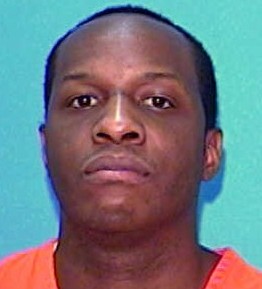
Omar Dent
Murderer Brian Kevin Rosenfeld
Murderer · USA · 1985
Brian Kevin Rosenfeld Brian Kevin Rosenfeld was sentenced to three concurrent l…
23 victims
Brian Kevin Rosenfeld
Murderer · USA · 1985
Brian Kevin Rosenfeld Brian Kevin Rosenfeld was sentenced to three concurrent l…
23 victims
 Marvin Gray
Murderer · USA · 1975
Marvin Gray was convicted killer who claimed responsibility for 23 slayings and…
23 victims
Marvin Gray
Murderer · USA · 1975
Marvin Gray was convicted killer who claimed responsibility for 23 slayings and…
23 victims
 Yahweh ben Yahweh
Murderer · USA · 1980
Yahweh ben Yahweh was born and legally named Hulon Mitchell Jr. (October 27, 19…
23 victims
Yahweh ben Yahweh
Murderer · USA · 1980
Yahweh ben Yahweh was born and legally named Hulon Mitchell Jr. (October 27, 19…
23 victims
 Russell Ellwood
Murderer · USA · 1991
Russell Ellwood was a former taxi driver. Authorities suspected him of killing…
20 victims
Russell Ellwood
Murderer · USA · 1991
Russell Ellwood was a former taxi driver. Authorities suspected him of killing…
20 victims
 Carlyle Harris
Murderer · USA · 1891
Carlyle Harris was executed by electrocution at Sing Sing Prison on May 7, 1893…
1 victim
Carlyle Harris
Murderer · USA · 1891
Carlyle Harris was executed by electrocution at Sing Sing Prison on May 7, 1893…
1 victim
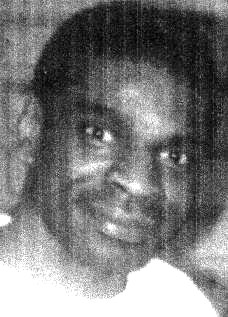 Brian Keith Baldwin
Murderer · USA · 1977
Brian Keith Baldwin (also known as Brian K. Baldwin) was executed by electrocut…
1 victim
Brian Keith Baldwin
Murderer · USA · 1977
Brian Keith Baldwin (also known as Brian K. Baldwin) was executed by electrocut…
1 victim
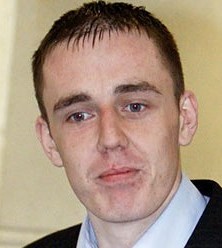 David Meehan
Murderer · United Kingdom · 2007
David Meehan was a 19-year-old from Perth. He admitted murdering James Kerr, a…
1 victim
David Meehan
Murderer · United Kingdom · 2007
David Meehan was a 19-year-old from Perth. He admitted murdering James Kerr, a…
1 victim
 Tony Protopappas
Serial killer · USA · 1982
Tony Protopappas Tony Protopappas was a local dentist. He operated a high-volum…
3 victims
Tony Protopappas
Serial killer · USA · 1982
Tony Protopappas Tony Protopappas was a local dentist. He operated a high-volum…
3 victims
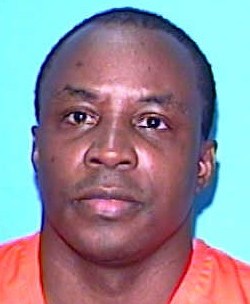 Kenneth Watson
Murderer · USA · 1988
Kenneth Watson was born on 02/23/63. He was tried in the Eleventh Judicial Circ…
1 victim
Kenneth Watson
Murderer · USA · 1988
Kenneth Watson was born on 02/23/63. He was tried in the Eleventh Judicial Circ…
1 victim
- Gender
- male
- Country
- USA
- Location
- Los Angeles County, California, USA
- Date of birth
- 1963
- Age at first offence
- 20
- Characteristics
- gang, robbery, drug addict, alcoholic
- Victim profile
- A musician / Byung Jin Kim, 40 ( liquor store owner )
- Method of murder
- Shooting
- Date(s) of murder
- 1983 / August 19 , 19 88
- Years active
- 1983
- Date of arrest
- August 20, 1988
- Status
-
Life imprisonment
Sentenced to death on November 1, 1991; overturned in 2003; sentenced to life in prison without the possibility of parole on June 5, 2007
Background
Omar Dent III was identified as a member of the Eight-Trey Crips gang. He was 43 when he testified at a retrial and 44 at the time of sentencing to life in prison without the possibility of parole.
Dent said he abused alcohol and drugs every day since he was 14. He said he never worked a day in his life. He also said he had been shot on three occasions in 1980, 1986 and 1988 while walking on the street. He said the last shooting, weeks before the killing of Byung Jin Kim, left him wearing a colostomy bag for nine months.
The offence
Dent killed Hawthorne liquor store owner Byung Jin Kim, 40, in a special-circumstances killing on Aug. 19, 1988, outside California First National Bank in Lawndale.
Dent testified that on the morning of Kim’s killing he headed south from his Los Angeles home in a car he stole the night before with the intent of doing "some dirt"—which he explained was a "ghetto" term for doing something bad to get money. Dent said he saw the bank and Kim going toward it with a flat, green backpack. Dent testified: "I thought to myself: 'Money!' " He said he parked the car a few blocks away and walked back, then saw Kim return to his maroon van. Dent testified that the backpack was no longer flat and became "thick," and he "immediately knew there was money in it."
Dent testified that he approached Kim in the locked van and told him to get out. He then said he saw Kim reach down and grab a gun from the floor near the passenger seat. Dent said the scene turned chaotic and that he fired several rounds at Kim through the partially closed window. Dent testified that he reached through the glass shards, unlocked the door, pushed a still-breathing Kim to the side and drove off. Dent said that when the van stalled on a dead-end street near Leuzinger High School in Lawndale, he grabbed the backpack and ran.
Dent testified that he noticed August Cardino sitting in a white car. Dent said he demanded about four times that Cardino get out but then shot the former police officer when Cardino ignored him and reached down as if to grab a weapon.
A ballistics expert testified that the gun Dent ditched likely fired the bullets based on fragments and casings recovered as evidence. A deputy medical examiner testified that Kim was shot three times, with two of the bullets causing fatal injuries. A detective testified that a gun was found in Kim’s van.
Dent was on trial for special-circumstances murder and was also being retried for the attempted killing of a former police officer.
Investigation
A gun was found in Kim’s van. A ballistics expert testified Tuesday that the gun Dent ditched likely fired the bullets based on fragments and casings recovered as evidence. A deputy medical examiner testified Monday that Kim was shot three times, with two of the bullets causing fatal injuries.
Arrest
Dent was arrested the next day with Vernell Brown after a tip from an anonymous informant. Dent testified that Vernell Brown picked him up at his house, and Dent said he told Brown about the robbery and hid the money at his house before the two went drinking at their gang's hangout.
Trial
First conviction and death sentence
Dent was convicted of robbing and killing Byung Kim, fleeing in his van and shooting a retired police officer who gave chase, in August 1988. Prosecutors said Dent ambushed Kim, a 40-year-old merchant, after Kim withdrew $80,000 from a Lawndale bank in order to cash checks for customers.
Dent was identified as a member of the Eight-Trey Crips gang. Dent was convicted in 1983 of involuntary manslaughter and was on parole when he killed Kim. The source stated Dent was recommitted twice for parole violations after serving his original term.
The earlier conviction resulted from the shooting death of a patron at a takeout chicken eatery. Investigators said Dent apparently tried to rob the victim, and charged him with first degree murder. Prosecutors said they agreed to a manslaughter plea for fear their witnesses would be too afraid to testify.
Dent originally faced a death sentence imposed by Los Angeles Superior Court Judge John Shook following a 1991 conviction.
Defense lawyers included Halvor Miller and Charles Maple. After several continuances, the case was set for trial on March 6, 1991. The source stated that Miller was in another murder trial, so Judge John Shook agreed on March 5 that Maple could try the case alone if Dent agreed. The next day Maple was more than an hour late.
The judge relieved the two lawyers and told Dent about the history of continuances and failures to appear, stating:
“clear and apparent to this court that they are just simply too busy to pay attention to your case and to give your case the attention that it deserves.”
Shook added:
“You must be represented by attorneys that are senior trial attorneys. And you have got to have people here to represent you. You cannot represent yourself in this matter. So that’s what I want to do and those are the reasons that I am doing it.”
After speaking to Dent, Maple objected. Maple said Dent wanted him to proceed and that if he could not have Maple as his lawyer, the alternative proposed to the court was that Dent proceed in pro. per:
“the alternative he proposes to the court is that he proceed in pro. per.”
Shook responded:
“I am not going to let him proceed pro. per....Not in a death penalty murder trial.”
Dent told the judge he would rather represent himself than be saddled with two new attorneys unfamiliar with his case, but Shook rebuffed him and suggested he not speak further, lest he incriminate himself.
The high court later addressed the issue of self-representation. Justice Janice Rogers Brown wrote that:
"Whether the defendant is facing the death penalty or not has no bearing on his rights under Faretta"
Brown also stated that the court had to reversal “under compulsion of Faretta v. California (1975) 422 U.S. 806.” The source stated that all seven justices signed Brown’s opinion, and Brown and Justices Ming Chin and Marvin Baxter joined in a separate concurrence urging reconsideration of whether judges should be required to allow defendants in capital cases to represent themselves.
In the concurrence, Ming Chin wrote:
“is hard to explain in any rational manner,”
Chin also wrote that defense lawyers did at least as good a job as Dent could have done himself, and yet Dent was entitled to a new trial with the right to counsel if he chose.
Retrial testimony and dispute
Dent was described as being on trial for the second time for the special-circumstances killing of Kim. Dent admitted on the witness stand that he killed Kim more than 17 years ago. He became emotional describing his remorse and told the jury:
"Wow. If I had a time machine, I'd shoot myself in the head before I'd shoot Mr. (Byung Jin) Kim,"
Alternate Public Defender Kelly Buck questioned Dent. The source stated that at some points questioning grew contentious and prompted the defense to ask for a mistrial and Judge William Hollingsworth to warn the prosecutor to stop arguing with Dent or he would grant one.
Dent denied anyone else was involved. An eyewitness saw Dent get into a black El Camino similar to one Dent’s friend drove. Dent testified he threw the gun, which was later retrieved, into a bush and hid in an apartment carport until dark, then took a bus home.
The source stated that Cardino died recently. Cardino testified during Dent’s first trial that he followed Dent. Cardino testified that he did reach down, but only to get the keys he dropped. The jury hearing the retrial was read Cardino’s testimony.
The source stated that Closing arguments were expected Thursday and that if the jury convicted Dent of special-circumstances murder, a penalty phase would begin next week and jurors would be asked to decide whether to recommend a death sentence.
Verdict at second trial and penalty deadlock
A Los Angeles Superior Court jury found Omar Dent III guilty of first degree murder with a robbery special circumstance. The jury deadlocked as to penalty, with 8 of 12 jurors favoring his execution. A third trial was averted after prosecutors took the death penalty off the table and Dent waived all rights of appeal.
Sentencing
Omar Dent III was sentenced to life in prison without the possibility of parole on June 5, 2007. The source stated that the sentencing occurred after four years from the state Supreme Court overturning his original death sentence.
The source also stated that Dent’s earlier death sentence was imposed by Los Angeles Superior Court Judge John Shook following a 1991 conviction, and that the state Supreme Court unanimously threw out the conviction and sentence in 2003 for constitutional reasons related to self-representation.
Appeals
In 2003, the state’s highest court overturned Dent’s murder convictions and death sentence. The court found that Judge Shook was wrong to deny Dent the right to represent himself at trial.
The court stated it had to reverse “under compulsion of Faretta v. California (1975) 422 U.S. 806.” Brown wrote for the court, and all seven justices signed Brown’s opinion. Brown and Justices Ming Chin and Marvin Baxter joined in a separate concurrence urging reconsideration of whether judges should be required to allow defendants in capital cases to represent themselves.
Outcome
A death sentence was vacated and replaced by a life sentence without the possibility of parole on June 5, 2007.
Other details
Dent testified that he hid the money at his house and that he and Vernell Brown then went drinking at their gang's hangout. The source also stated that Dent was arrested the next day with Brown after a tip from an anonymous informant.
The source noted that Dent wore a cream-colored sweater and loose blue pants while testifying at the retrial and sometimes rambled and repeated himself as he tried to convince the jury that, although he shot and killed Kim, there were reasons for his behavior beyond greed.
The source also stated that prosecutors pushed Dent on details of the crime, including alleged accomplices, Dent’s plan to kill for money, and the sincerity of his remorse, including measures he could have taken to get help for Kim.
Spotted an error, or have more information about this case?