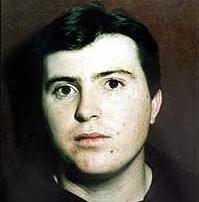
Paul Denyer
Serial killer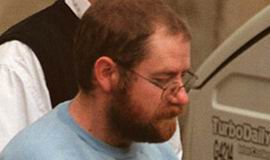 John Justin Bunting
Serial killer · Australia · 1992
John Justin Bunting (born 4 September 1966 in Inala, Queensland) was an Austral…
11 victims
John Justin Bunting
Serial killer · Australia · 1992
John Justin Bunting (born 4 September 1966 in Inala, Queensland) was an Austral…
11 victims
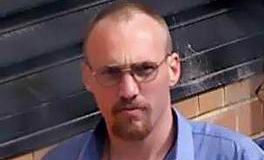 Robert Joe Wagner
Serial killer · Australia · 1992
Robert Joe Wagner (born 28 November 1971 in Parramatta, New South Wales) was an…
10 victims
Robert Joe Wagner
Serial killer · Australia · 1992
Robert Joe Wagner (born 28 November 1971 in Parramatta, New South Wales) was an…
10 victims
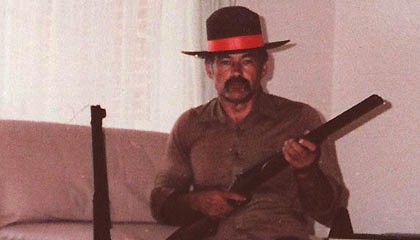 Ivan Milat
Serial killer · Australia · 1989
Ivan Milat was convicted of seven murders and received multiple life sentences.…
7 victims
Ivan Milat
Serial killer · Australia · 1989
Ivan Milat was convicted of seven murders and received multiple life sentences.…
7 victims
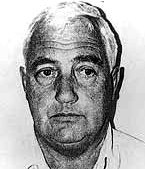 John Wayne Glover
Serial killer · Australia · 1989
John Wayne Glover (26 November 1932 – 9 September 2005) was a British-born Aust…
6 victims
John Wayne Glover
Serial killer · Australia · 1989
John Wayne Glover (26 November 1932 – 9 September 2005) was a British-born Aust…
6 victims
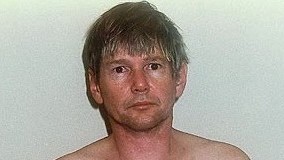 Peter Dupas
Serial killer · Australia · 1997
Peter Norris Dupas was an Australian serial killer known for violence against w…
6 victims
Peter Dupas
Serial killer · Australia · 1997
Peter Norris Dupas was an Australian serial killer known for violence against w…
6 victims
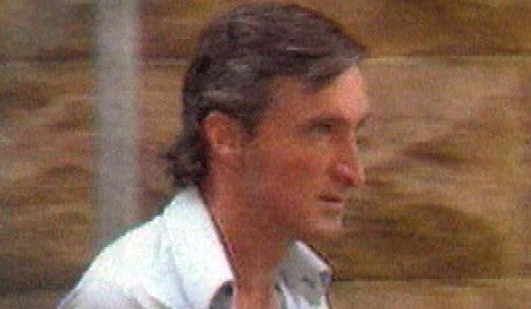 David Birnie
Serial killer · Australia · 1986
David John Birnie (16 February 1951 – 7 October 2005) was an Australian serial…
4 victims
David Birnie
Serial killer · Australia · 1986
David John Birnie (16 February 1951 – 7 October 2005) was an Australian serial…
4 victims
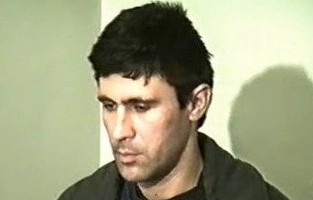 Sergei Golovkin
Serial killer · Russia · 1986
Sergey Golovkin was a Russian serial killer known as "The Fisher" or "The Udav"…
11 victims
Sergei Golovkin
Serial killer · Russia · 1986
Sergey Golovkin was a Russian serial killer known as "The Fisher" or "The Udav"…
11 victims
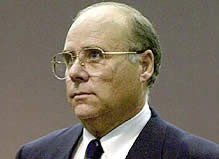 John Edward Robinson
Serial killer · USA · 1984
John Edward Robinson (born December 27, 1943) was an American serial killer. He…
8 victims
John Edward Robinson
Serial killer · USA · 1984
John Edward Robinson (born December 27, 1943) was an American serial killer. He…
8 victims
 Katrina Culberson
Murderer · USA · 2012
Katrina Culberson (22) — Canton resident; pleaded guilty to aggravated murder,…
1 victim
Katrina Culberson
Murderer · USA · 2012
Katrina Culberson (22) — Canton resident; pleaded guilty to aggravated murder,…
1 victim
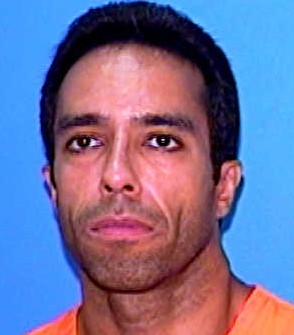 Daniel Lugo
Murderer · USA · 1995
Daniel Lugo DC# M16321 DOB: 04/06/63 Eleventh Judicial Circuit, Dade County, Ca…
2 victims
Daniel Lugo
Murderer · USA · 1995
Daniel Lugo DC# M16321 DOB: 04/06/63 Eleventh Judicial Circuit, Dade County, Ca…
2 victims
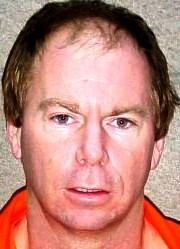 Gregory Dickens
Murderer · USA · 1991
Gregory Dickens was a Caucasian defendant. · Bryan Bernstein and Laura Bernstei…
2 victims
Gregory Dickens
Murderer · USA · 1991
Gregory Dickens was a Caucasian defendant. · Bryan Bernstein and Laura Bernstei…
2 victims
 Warren Leslie Forrest
Serial killer? · USA · 1974
Warren Leslie Forrest was described as 25 years old, 5’9” tall, 155 lbs, with l…
6 victims
Warren Leslie Forrest
Serial killer? · USA · 1974
Warren Leslie Forrest was described as 25 years old, 5’9” tall, 155 lbs, with l…
6 victims
- Gender
- male
- Country
- Australia
- Location
- Melbourne, Australia
- Date of birth
- April 14, 1972
- Age at first offence
- 21
- Characteristics
- history of mental illness
- Victim profile
- Elizabeth Stevens, 18 / Debbie Fream, 22 / Natalie Russell, 17
- Method of murder
- Stabbing with knife / Strangulation
- Date(s) of murder
- June-July 1993
- Years active
- 1993
- Date of arrest
- July 31, 1993
- Status
-
Life imprisonment
Sentenced to life in prison on December 20, 1993; appeal granted a 30-year non-parole period on July 29, 1994; serving life imprisonment in HM Prison Barwon
Case summary
Paul Charles Denyer (b. 1972) was an Australian serial killer. He was serving life imprisonment in HM Prison Barwon for the murders of Elizabeth Stevens, 18, Debbie Fream, 22, and Natalie Russell, 17 in Frankston, Victoria in 1993. He was known as the Frankston Serial Killer because his crimes occurred within the Frankston area. The Frankston Serial Killer was featured in the pilot episode of the Seven Network show Forensic Investigators.
Timeline
- June 11, 1993 — Denyer abducted Elizabeth Stevens after she got off a bus on Cranbourne Road, Langwarrin.
- February 1993 — A scene involving the words “Dead Don” and “Donna - You’re Dead” was found at a block of flats, and Donna did not spend another night there.
- July 8, 1993 — Roszsa Toth was violently attacked by a man who said he had a gun and tried to drag her into a nearby nature reserve; the assault was followed by the disappearance of Debbie Fream after she drove to a local store at Seaford.
- July 30, 1993 — Natalie Russell went missing while riding her bike home from the John Paul College in Frankston.
- August 1, 1993 — Denyer began his confession to the murders of Elizabeth Stevens, Debbie Fream and Natalie Russell, and the attack on Roszsa Toth.
- December 15, 1993 — Denyer pleaded guilty to all charges at trial.
- December 20, 1993 — Justice Frank Vincent sentenced Denyer to three terms of life imprisonment with no fixed non-parole period, and also gave an additional eight years for the abduction of Roszsa Toth.
- February (year not stated) — The reward for information in the disappearance of Sarah MacDIARMID was increased from 75,000 US$ to 1 million.
- July 29, 1994 — Denyer was granted a 30-year non-parole period.
- August 19 (year not stated) — Denyer’s letter to his brother David Denyer was dated.
- September 26, 2004 — Private investigators named Paul Denyer and Jodi JONES as suspects in the case of Sarah MacDIARMID’s disappearance.
- September 29, 2004 — Denyer sent a handwritten airmail letter from Barwon Prison to his brother David Denyer in the United Kingdom.
- September 30, 2004 — David Denyer discussed the letter and said his family should not have contact with prisoners.
- December 11, 2004 — All Victorian prisoners would be barred from changing names under a crackdown on prison security, affecting Denyer’s bid to change his name to Paula.
Background
Paul Denyer was born Paul Charles Denyer in Sydney on April 14, 1972. He was the third of six children, five boys and a girl, to English working class immigrants Maureen and Anthony Denyer. Maureen and Anthony Denyer came to Australia in 1965 and eventually settled in Campbelltown near Sydney. The only significant thing about his infancy was that as a baby he rolled off a bench and knocked his head, which became a family joke for many years.
Denyer had trouble mixing with other kids at kindergarten but appeared to grow out of this by primary school. The family moved to Victoria in 1981 so that Anthony Denyer could take up the position as manager of The Steak Place in Centre Road, South Oakleigh, on the Frankston train line. Denyer found it hard to adjust to his new environment.
At Northvale Primary, Denyer was described as a loner who found it difficult to make friends, lacked self-confidence, and was unmotivated. He was described as taller and fatter than other kids and became fascinated with collecting knives and clubs and making slingshot-guns that fired pebbles or ball bearings. It was described that his murderous intentions started early when he regularly dissected his sister’s teddy bears with a homemade knife and, when he was 10, he stabbed the family kitten and hung it from a tree in the backyard. Later, while working at what would be his last place of employment, he allegedly slaughtered and dismembered two goats in a paddock next door.
Just before his thirteenth birthday, Denyer was charged with stealing a car and was released with a warning. Two months later, he was again in trouble and charged with making a false report to the fire brigade, theft and willful damage. At age 15, Denyer forced another boy to masturbate in front of some children and was charged with assault.
In 1992, Denyer entered into a relationship with Sharon Johnson. Denyer’s job at Safeway’s Supermarket ended when he allegedly deliberately knocked down a woman and a child with a convoy of empty shopping trolleys. Denyer applied to join the Victorian Police Force but was rejected because he was unfit due to his massive bulk. His last place of employment was described as a marine workshop, where he was ultimately fired because he spent more time making crude knives and daggers than doing his work. By 1993, Denyer was described as a social outcast and as being unable to hold down a job.
Denyer developed a nickname of John Candy after the rotund film star because of his bulk and physical appearance. While imprisoned, Denyer requested to be allowed to purchase and wear ladies cosmetics, a request which was denied. He filed freedom of information requests to learn of the Victorian government’s policy on gender reassignment surgery for prisoners, and sought evaluation to determine his suitability for such surgery; it was also rejected by medical specialists. The Herald Sun has reported Denyer’s continuing bid to be treated as a woman while inside Lara men’s prison, including losing a legal battle in July to wear makeup. Under new laws, Victorian prisoners would be banned from changing their names for frivolous or improper reasons, and Denyer would be barred from changing his name to Paula.
Denyer threatened to kill his brother David Denyer’s wife and children in 1992 and it was said that David and his family fled Australia in 1992 after those threats and after harassment. The family returned to Australia for five months last year, and Julie wrote to Denyer describing what she said he had done to his victims and their family. In a letter dated August 19, Denyer apologized to David for sex abuse claims which he said contributed to the murders, and David said the childhood abuse claims were false.
The offence
Murders and attacks in Frankston (1993)
Over a seven week period in the summer of 1993, three young women aged 17, 18 and 22 were violently stabbed and slashed to death in and around Frankston. Another 41-year-old woman was violently assaulted and considered herself lucky to escape with her life. None of the victims knew each other and there was nothing to connect them except that they lived in the Frankston district. Police initially searched widely after the early murders.
Elizabeth Stevens (18)
On Saturday, June 12, 1993, the partially-clothed body of Elizabeth Stevens, 18-year-old student, was found in Lloyd Park on the Cranbourne Road, Langwarrin, a short drive from Frankston. She had been reported missing the previous evening by her uncle and aunt whom she was staying with.
It was described that her throat had been cut and that there were six deep knife wounds to her chest, four deep cuts running from her breast to her navel, and four more running at right angles forming a criss-cross pattern on her abdomen. Her face had several cuts and abrasions and her nose was swollen indicating it had been broken. Her bra was up around her neck. A post-mortem revealed she had not been sexually assaulted.
Denyer confessed to the murder, saying that around 7 p.m. on the bleak, rainy evening of June 11, 1993, Elizabeth Stevens got off a bus on Cranbourne Road, Langwarrin and walked to her home. Denyer said he followed her, grabbed her from behind, and told her he had a gun and that if she screamed or tried to run away he would kill her. He said the “gun” was in fact a piece of aluminum piping with a wooden handle. He marched her to Lloyd Park, said he held the “gun” to the back of her neck, and described turning while she went to the toilet and then walking to the area where she was found.
Denyer described in his confession:
“Walked in a bit of bushland beside the main track in Lloyd Park. Sat there, you know, stood in the bushes for a while just - I can't remember, just standing there I suppose. I held the ‘gun’ to the back of her neck, walked across the track over towards the other small sandhill or something. And on the other side of that hill, she asked me if she could, you know - go to the toilet, so to speak. So I respected her privacy. So I turned around and everything while she did it and everything. When she finished we just walked down towards where the goal posts are and we turned right and headed towards the area where she was found. I got to that area there and I started choking her with my hands and she passed out after a while. You know, the oxygen got cut off to her head and she just stopped. And then I pulled out the knife ... and stabbed her many times in the throat. And she was still alive. And then she stood up and then we walked around and all that, just walking around a few steps, and then I threw her on the ground and stuck my foot over her neck to finish her off.”
Denyer later told police:
“Just wanted ... just wanted to kill. Just wanted to take a life because I felt my life had been taken many times.”
It was also described that Denyer dragged Elizabeth Stevens’s body to a drain and left it, where it was eventually found. He said the blade of the homemade knife he used bent during the assault and broke away from the handle, and that he dumped the pieces beside the road as he made his way from the murder scene.
Roszsa Toth (41) and attempted abduction/abduction charge
On the evening of July 8, 1993, 41-year-old bank clerk Roszsa Toth was making her way home from work to Seaford in the Frankston district when she was violently attacked by a man who said he had a gun and tried to drag her into a nearby nature reserve. She fought back during which the man pulled out clumps of her hair and she bit his fingers to the bone on several occasions. She fought the man off and, with torn stockings and trousers and no shoes, managed to hail down a passing car as her assailant fled.
Roszsa Toth rang police who were at the scene of the assault within minutes. It was described that the attackers were believed at first to have involved a purse snatching gone wrong.
Denyer confessed to the assault, describing that he approached Mrs Toth from behind after he saw her walking near the Seaford station. He said he put a hand over her mouth, held a fake gun to her head with the other hand, and that Mrs Toth resisted strongly and bit his finger to the bone. He said they wrestled and she escaped and ran into the middle of the road but none of the passing cars stopped. He said he chased her, grabbed her by the hair, and said:
“Shut up, or I'll blow your fucking head off,”
Denyer also said:
“I was just gonna drag her in the park and kill her -- that's all.”
He said that after the near miss with Mrs Toth, he went to a nearby railway station and boarded a Frankston-bound train.
Denyer was charged with the attempted murder of Roszsa Toth, which was later changed to the lesser charge of abduction. Justice Vincent also gave an additional eight years for the abduction of Roszsa Toth.
Debbie Fream (22)
Later on the same evening of July 8, 1993, 22-year-old Debbie Fream, who had given birth to a son, Jake, 12 days earlier, went missing after she drove to her local store at Seaford to pick up a bottle of milk while in the middle of preparing dinner. Four days later, her body was found by a farmer in one of his paddocks at nearby Carrum Downs.
Debbie Fream had been stabbed about the neck, head, chest and arms 24 times, and had also been strangled. It was described that she had not been sexually assaulted. The attack on Roszsa Toth was considered to be the work of the same killer as Elizabeth Stevens and Debbie Fream.
Denyer confessed to the murder of Debbie Fream. He told police he followed her and entered her car. He said:
“I waited for her to start up the car so no one would hear her scream or anything,“Denyer said in his confession. “And she put it into gear and she went to do a U-turn. I startled her just as she was doing that turn and she kept going into the wall of the milk bar, which caused a dent in the bonnet. I told her to, you know, shut up or I'd blow her head off and all that shit.”
Denyer told detectives in his confession that he carried a fake gun and a homemade knife. He said:
“I told her when we got there that if she gave any signals to anyone, I'd blow her head off, I'd decorate the car with her brains,”
Denyer said he ordered Debbie Fream to stop the car near some trees and get out, and described the cord he used:
“I popped it over her eyes real quickly, so she didn't see it . . .'cause I was gonna strangle her. But I didn't want her to see the cord first. I lifted the cord up and I said: "Can you see this?" And she just put her hand up to grab it to feel it and when she did that I just yanked on it real quickly around her neck. And then I was struggling with her for about five minutes.”
Denyer said he strangled her until she started to pass out, then drew the knife from his sock and repeatedly stabbed her about the neck and chest. He described stabbing her more times and said:
“She started breathing out of her neck, just like Elizabeth Stevens,” he told the detectives. “I could just hear bubbling noises.”
He described resistance and said:
“Yeah, she put up quite a fight. And her white jumper was pulled off during that time as well. I just felt the same way I did when I killed Elizabeth Stevens.”
When asked what happened after stabbing her round the chest and throat area, Denyer told police:
“I lifted up her top and then ploughed the knife into her gut. I wanted to see how big her boobs were.”
Denyer said he dragged the body into a clump of trees and covered it over with branches, spent about five minutes looking for the murder weapon, drove off in Debbie Fream’s car, dumped it close to where he lived, and walked home to ring Sharon at work and pick her up from the Kananook railway station. Denyer described returning the following morning to collect Debbie Fream’s purse and items including two cartons of milk, eggs, chocolate and a packet of cigarettes she had purchased from the milk bar. He described emptying the milk down the sink, throwing out the eggs and burning the carton because he considered it evidence. He said he buried Debbie Fream’s purse in the nearby golf course and near the bike track where he would later kill Natalie Russell. He also dismantled his homemade knife and hid the parts in an air vent in the laundry of his apartment.
When asked why he killed her, Denyer replied:
“Same reason why I killed Elizabeth Stevens. I just wanted to,”
Natalie Russell (17)
On the afternoon of July 30, 1993, 17-year-old Natalie Russell went missing while riding her bike home from John Paul College in Frankston. Eight hours later, her body was found in the bushes beside a bike track that ran between the Peninsula and the Long Island Golf clubs.
It was described that Natalie Russell had been stabbed repeatedly about the face and neck and her throat had been cut. It was described that she had not been sexually assaulted, and that Denyer had left a piece of skin on her neck that did not belong to the victim. It was described that the only other explanation was that the killer had cut himself and that dried blood attached the slither of flesh onto her skin. It was also described that there was a sighting of a yellow Toyota Corona with no plates near the bike track at 3 p.m., and that detectives traced the registration to Paul Charles Denyer.
Denyer confessed to the murder of Natalie Russell. He described cutting three holes with a pair of pliers in a cyclone wire fence that ran between the bike track and the reserve to abduct a young woman and murder her. He said he waited for a victim at the start of the bike track in Skye Road and followed a girl in a blue school uniform from John Paul College. Denyer described grabbing her and said:
“I stuck about 10 yards behind her until I got to the second hole,” Denyer told the detectives. “And just when I got to that hole, I quickly walked up behind her and stuck my left hand around her mouth and held the knife to her throat…and that's where that cut happened.”
Denyer said the cut on his thumb was from cutting it on his own blade. He said Natalie was struggling at first but stopped when he told her that if she did not he would cut her throat. He described an offer of sex and said:
“She said, ‘You can have all my money, have sex with me,’ and things - just said disgusting things like that, really,” Denyer told the detectives as he shook his head in revulsion.
Denyer described ordering Natalie to kneel and said:
“Shut up. Shut up. Shut up. Shut up.”
Denyer also said:
“If you don't shut up, I'll kill you. If you don't do this, I'll kill you, if you don't do that,”
Denyer described Natalie asking what he wanted and he said:
“All I want you to do is shut up.”
Denyer said he put a strap around her neck to strangle her and that it broke in half. He then said he pushed her head back and cut her throat. Denyer described:
”I cut a small cut at first and then she was bleeding. And then I stuck my fingers into her throat ... and grabbed her cords and I twisted them.”
Denyer said:
“My whole fingers - like, that much of my hand was inside her throat,”
He said:
“Stop her from breathing ... And then she slowly stopped. She sort of started to faint and then when she was weak, a bit weaker, I grabbed the opportunity of throwing her head back and one big large cut which sort of cut almost her whole head off. And then she slowly died.”
Denyer said:
“Just same reason as before, just everything came back through my mind again. I kicked her before I left.”
He said he kicked Natalie Russell’s body to ensure she was dead, slashed her down the side of her face, and left her where she lay. It was described that he washed his clothes afterward, hid the murder weapon in his backyard, and later picked up Sharon from her work and spent a quiet evening with her at her mother’s place.
Denyer also confessed to the slaughter of Donna’s cats, stating he had brought a knife with the sole purpose of “cutting Donna's throat” because he “didn't like her.”
Investigation and arrest
After early murders and an assault where the victim escaped, police recognized they were looking for a serial killer. Police used a life-sized mannequin at a roadblock at a bus stop where Elizabeth Stevens was last seen and hoped someone would recognize her or someone she may have been with. They knocked on every door in the district, questioned bus drivers and passengers from Elizabeth Stevens’s last known bus ride, and checked known libraries in the vicinity.
Detectives also received a sighting of a yellow Toyota Corona on a road near the bike track near the time Natalie Russell was believed murdered. An observant police officer wrote down its number from its registration label because the car had no plates. Detectives fed the number into their computer and the registration matched a report from a postman who had spotted a man slumped in a suspicious position in the front seat of a yellow Toyota Corona. It was also described that the car had been spotted near the location where Debbie Fream’s body was found. The car was registered to Paul Charles Denyer.
Detectives Mick Hughes and Charlie Bezzina called at Denyer’s address at 3.40 p.m. Denyer was not home. They left a card asking him to contact them as soon as he arrived home. At 5.15 p.m., the detectives received a call from Sharon Johnson and told her it was a routine inquiry. Within ten minutes a team of detectives converged at the block of flats at 186 Frankston-Dandenong Road. Denyer answered the door, commented on the number of detectives for a routine inquiry, and let them in. He explained that although his car had no plates, he had a permit to drive it for 28 days while repairs were made to register it.
As detectives noticed Denyer’s hands were cut in several places, they mentally noted missing skin that would have resembled the piece of skin found on Natalie Russell’s body. Denyer admitted being in the vicinity of two murders at the time believed to have taken place but denied knowledge of the killings other than what he had read in the papers. He offered excuses about a car breakdown and being at locations, including stating he got his hands caught in the fan while working underneath the bonnet.
Denyer was taken to Frankston police station and questioned in an interrogation room while being video-recorded. He maintained his innocence through the early hours of the following morning. When police asked for a blood sample and hair sample and said DNA testing would be used for a match, Denyer asked questions about how long results would take and whether police had something to compare his DNA to. Then he volunteered:
“Okay, I killed all three of them,” to Detective Darren O'Loughlin.
Just before 4 o’clock on the morning of August 1, 1993, Denyer began his confession.
Trial
Denyer was charged with the murders of Elizabeth Stevens, Debbie Fream and Natalie Russell, and the attempted murder of Roszsa Toth, which was later changed to the lesser charge of abduction.
At his trial on December 15, 1993, before Justice Frank Vincent at the Supreme Court of Victoria, Denyer pleaded guilty to all charges.
Clinical psychologist Ian Joblin was appointed to examine Denyer in prison while he awaited sentence. Joblin told the court that Denyer showed no remorse and appeared to revel in telling of the murders and seemed to take pleasure in recounting them. Joblin described Denyer’s reasons for his actions as including his hard upbringing, alleged sexual abuse by his elder brother, and habitual unemployment. Joblin said he did not accept those excuses, and said that thousands of people in the community lived under similar circumstances without resorting to serial murder.
Joblin told the court that Denyer was a very rare breed, a killer who murdered at random and without motive, which made him the most dangerous type of criminal. Joblin said Denyer had a cruel and demeaning nature, had shown aggressive behavior since childhood, and seemed amused by the suffering he had inflicted. Joblin added that Denyer was a sadist and that his pleasure and satisfaction after each murder dissipated quickly so that he would again feel the desire to kill. Joblin said there was no effective treatment for Denyer’s sadistic personality.
Sentencing
On December 20, 1993, Justice Vincent sentenced Paul Charles Denyer to three terms of life imprisonment with no fixed non-parole period. Justice Vincent also gave Denyer an additional eight years for the abduction of Roszsa Toth.
Justice Vincent said:
“The apprehension you have caused to thousands of women in the community will be felt for a long time. For many, you are the fear that quickens their step as they walk home, or causes a parent to look anxiously at the clock when a child is late.”
Denyer appealed to the Full Court of the Supreme Court of Victoria against the severity of his sentence. On July 29, 1994, he was granted a 30-year non-parole period, described as the equal highest non-parole period ever imposed in Victoria. The other recipient mentioned was triple murderer Ashley Coulston.
Outcomes
Denyer remained imprisoned. He was serving life imprisonment in HM Prison Barwon.
Other details
Motivation and statements in police interview
During a police interview, Denyer’s motivation was described as hate of women in general. In the interview, Detective Chief Inspector Darren O'Loughlin asked about the presence of women victims, and Denyer replied “I just hate ‘em,” then “General.”
The quoted exchanges included:
POLICE: Can you explain why we have women victims?
DENYER: I just hate them.
POLICE: I beg your pardon.
DENYER: I hate them.
POLICE: Those particular girls or women in general?
DENYER: General.
Denyer also stated:
“I just hate 'em.”
He said Sharon Johnson was different and that he would never hurt her:
“Sharon's not like anyone else I know. I'd never hurt her. She's a kindred spirit,”
He described the prison and gender reassignment attempts and that his bid for a sex change was refused in June (year not stated in that segment), and that his legal battle in July to wear makeup had been lost.
Donna’s cats
It was described that Denyer brought a knife with the purpose of “cutting Donna's throat” and that he “didn't like her.” In relation to the early February 1993 scene, Donna’s cat Buffy and the kittens were described as being found with throats cut, and the scene included words written in blood including “Dead Don” and “Donna - You’re Dead.”
Sarah MacDIARMID disappearance claims (2004)
In September 2004, a case involving the disappearance of Sarah MacDIARMID was discussed. Police had probed a house and its back yard using a sniffer dog without success. Sarah MacDIARMID disappeared from the Kananook railway station on July 11, 1990, aged 23, with blood stains found near her Honda Civic but no body ever found. The reward increased to 1 million in February (year not stated). A group of private investigators named Paul Denyer and Jodi JONES as suspects. It was stated that Jodi JONES died from a heroin overdose in 1991 aged 26 and once killed a man by trampling his chest with her stilettos. It was also said police rejected those claims and any new clues in the disappearance case.
Letter from prison and family contact (2004)
Denyer tracked down his estranged brother and sister-in-law and sent a letter to his brother David Denyer at his workplace in Surrey, south of London. The sender was listed on the outside of the letter as Paula Denyer. Corrections Victoria said that unless it was notified by the recipient that correspondence from a prisoner was unwanted, inmates could send letters to anyone. Corrections Commissioner Kelvin Anderson said no prisoners had access to the internet or online search engines. Anderson said a prison governor could inspect letters if believed threatening or harassing. Crime Victims Support Association president Noel McNamara called for letters to be censored and asked what would stop Denyer from writing to victims’ families.
In his letter dated August 19, Denyer apologized to David for sex abuse claims and said:
“I'm sorry about allowing lies to be said about you David,” Denyer writes.
“I have looked over my life and do not agree that once believed abuse from you contributed to my actions.”
David said the claims were false and that for a long time it caused hardship for his family. It was described that David and his UK-born wife Julie fled Australia in 1992 after Denyer cornered her in Frankston and threatened to kill her and their children. It was also described that David’s 19-year-old daughter picked up the letter from the Surrey store where she works and was too afraid to hand it over, and that their 13-year-old daughter gave it to Julie, who said:
“I shoved it up my jumper and I walked off to the toilet,” Julie said.
“I had to read the letter twice, and I thought 'Oh, my God, it's Paul'. We have just been in a daze ever since. We just can't believe it - it will not go away. It scares me that he's managed to find out where David works.”
David said the system had failed his family and should be changed to make sure prisoners could not contact their victims. He said:
“First I was numb with shock, it was hard for me to understand,” he told Melbourne radio station 3AW.
“The more I've been thinking about it the last 24 hours, the more angry I have been becoming - it's an insult to us, it really is.”
“It could have been the parents of one of the girls that he killed,” he said.
“We think we should get an apology because that is just not right. ”
“The law should be changed to stop prisoners from having any contact in any way shape or form with any of their victims or the victims' families.”
David described how Denyer threatened his wife Julie in a Frankston shopping centre in 1992 and said Denyer stood “nose to nose” with her and said basically:
'I am going to kill you and kill your kids'
Julie said she took the letter, went to the bathroom, had to read it twice, and then had to come to terms with having it in her hands that was written by Paul.
Paul Denyer said in reference to never wanting to hear from his brother again:
“As far as I'm concerned the man doesn't exist,”
“If he died tomorrow I wouldn't shed a tear.”
It was stated that Denyer got David’s brother’s address from a friend who was a music teacher in London, and that prisoners’ letters were scanned but not read before they were sent. Denyer signed the letter as Paula, the name he had used since he began his bid for a sex change, which was refused in June.
Name-change crackdown (December 11, 2004)
On December 11, 2004, violent serial killer and transsexual Paul Denyer would be barred from changing his name to Paula under a crackdown on prison security. The legislation would ban Victorian prisoners from changing their names for frivolous or improper reasons, introduced into Parliament. Corrections Minister Andre Haermeyer said Denyer perpetrated heinous crimes on innocent women and was causing pain to their families with offensive behaviour. Haermeyer stated:
“We will not stand by while a prisoner attempts to flout the law to gain notoriety and, at the same time, cause great offence to victims of crime,”
The minister said prisoners changing names could create security issues if attempting to avoid detection or escape monitoring by police after release. The legislation would allow name changes for legitimate reasons, including assisting police for witness protection, female prisoners getting divorced, or prisoners with numerous aliases in the police database. The Secretary of the Department of Justice would have the right to veto any application if deemed unnecessary or would cause offence to victims. Prison authorities would have the ability to stop or censor prisoners’ mail before it is sent.
Spotted an error, or have more information about this case?