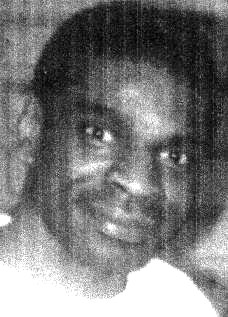
Brian Keith Baldwin
Murderer Ervil LeBaron
Murderer · USA · 1972
Ervil Morrell LeBaron (1925 to August 16, 1981) was the leader of a polygamous…
35 victims
Ervil LeBaron
Murderer · USA · 1972
Ervil Morrell LeBaron (1925 to August 16, 1981) was the leader of a polygamous…
35 victims
 Brian Kevin Rosenfeld
Murderer · USA · 1985
Brian Kevin Rosenfeld Brian Kevin Rosenfeld was sentenced to three concurrent l…
23 victims
Brian Kevin Rosenfeld
Murderer · USA · 1985
Brian Kevin Rosenfeld Brian Kevin Rosenfeld was sentenced to three concurrent l…
23 victims
 Marvin Gray
Murderer · USA · 1975
Marvin Gray was convicted killer who claimed responsibility for 23 slayings and…
23 victims
Marvin Gray
Murderer · USA · 1975
Marvin Gray was convicted killer who claimed responsibility for 23 slayings and…
23 victims
 Yahweh ben Yahweh
Murderer · USA · 1980
Yahweh ben Yahweh was born and legally named Hulon Mitchell Jr. (October 27, 19…
23 victims
Yahweh ben Yahweh
Murderer · USA · 1980
Yahweh ben Yahweh was born and legally named Hulon Mitchell Jr. (October 27, 19…
23 victims
 Carlton Gary
Serial killer · USA · 1975
Carlton Gary was an American serial killer convicted for the murders of elderly…
8 victims
Carlton Gary
Serial killer · USA · 1975
Carlton Gary was an American serial killer convicted for the murders of elderly…
8 victims
 Robert Lloyd Henry
Murderer · USA · 1993
Robert Lloyd Henry was executed in Texas on November 20, 2003. Henry was descri…
2 victims
Robert Lloyd Henry
Murderer · USA · 1993
Robert Lloyd Henry was executed in Texas on November 20, 2003. Henry was descri…
2 victims
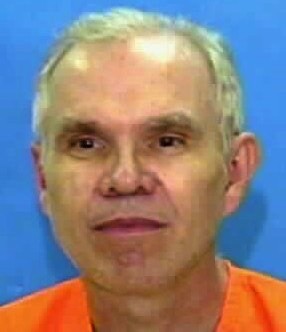 George James Trepal
Murderer · USA · 1988
George James Trepal was convicted and sentenced to death for the murder of Pegg…
1 victim
George James Trepal
Murderer · USA · 1988
George James Trepal was convicted and sentenced to death for the murder of Pegg…
1 victim
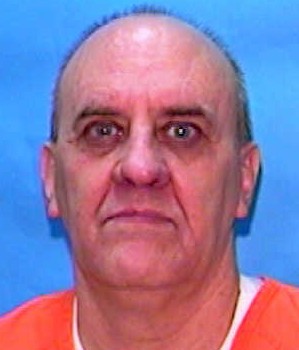 Curtis Wilkie Beasley
Murderer · USA · 1995
Curtis Wilkie Beasley was charged with Robbery, Grand-Theft Auto, and the First…
1 victim
Curtis Wilkie Beasley
Murderer · USA · 1995
Curtis Wilkie Beasley was charged with Robbery, Grand-Theft Auto, and the First…
1 victim
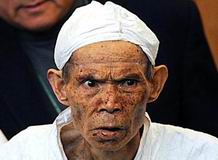 Jieming Liu
Murderer · USA · 2012
Jieming Liu was a 79-year-old man from Shrewsbury. His wife, Yuee Zhou, was 73…
1 victim
Jieming Liu
Murderer · USA · 2012
Jieming Liu was a 79-year-old man from Shrewsbury. His wife, Yuee Zhou, was 73…
1 victim
- Gender
- male
- Country
- USA
- Location
- Monroe County, Alabama, USA
- Date of birth
- J une 16, 1958
- Age at first offence
- 19
- Characteristics
- kidnapping, rape, robbery
- Victim profile
- Naomi Rolon (female, 16)
- Method of murder
- S tab wounds and cut throat with axe - Run over with car
- Date(s) of murder
- March 14, 1977
- Years active
- 1977
- Date of arrest
- March 15, 1977 Gender: Male Race: African American Trial counsel: Windell C. Owens Convicted of: Capital murder Prior adult felony conviction record: None; when the crime occurred, Baldwin was an escapee from juvenile detention center when he had been sent for auto theft Trial judge: Robert E. Lee Key Prosecutor(s): Theodore Pearson No. of victims: 1 Age of victim: 16 Gender of victim: Female Race of victim: Caucasian Relationship of victim to defendant: None; she apparently had picked up Baldwin as a hitchhiker Evidence used to obtain conviction: Alleged confession, fingerprints in victim’s car. Major issues on appeal: Coerced confessions. Ineffective assistance of counsel. Racial discrimination in jury selection. Prosecutorial misconduct. Evidence suggesting innocence: Coerced confessions. No fingerprints on murder weapon. No blood on Baldwin’s clothes or shoes. Wounds inflicted by left-handed person; Baldwin right handed. Co-defendant admitted the crime. Date of execution: June 18, 1999 Time lapse arrest to execution: 287 months Final appellate counsel(s): Jack Martin and Michael McIntyre Center on Wrongful Convictions home last updates contact
- Status
-
Executed
Executed by electrocution in Alabama on June 18, 1999
Case identification
Brian Keith Baldwin (also known as Brian K. Baldwin) was executed by electrocution in Alabama on June 18, 1999. His DOC number was Z-357. His address was Holman Unit, Atmore, Alabama (deceased). He was born July 16, 1958. He was 40 years old at execution.
Timeline
- June 18, 1999 — Brian K. Baldwin was pronounced dead at 12:29 a.m. after being executed in the electric chair.
- March 14, 1977 — 16-year-old Naomi Rolon was murdered.
- March 1977 — Baldwin and Horsley fled a North Carolina prison camp minutes before abducting Naomi Rolon.
- 1983 — Alabama resumed executions.
- 1996 — Edward Horsley was executed.
Background
Baldwin was a male. He was African American. His trial counsel was Windell C. Owens. His trial judge was Robert E. Lee Key. His prosecutor was Theodore Pearson. Baldwin had no prior adult felony conviction record. At the time of the crime, Baldwin was an escapee from a juvenile detention center when he had been sent for auto theft.
Baldwin became the 1st condemned inmate to be put to death in Alabama this year, and the 18th overall since the state resumed executions in 1983.
The offence
Baldwin and Edward Horsley escaped from a youth detention center in March 1977 and fled a North Carolina prison camp minutes before they abducted Naomi Rolon. Rolon was on the way to visit her father in a hospital. Prior to her murder, Rolon picked up Brian Baldwin, age 18, and Edward Horsley, age 17, in North Carolina and proceeded to drive with them to Alabama.
In Alabama, Baldwin stole a truck. Horsley drove off with Rolon. Horsley later returned alone and on foot. Prosecutors said that before being driven to Alabama, Rolon was choked, stabbed and sexually assaulted.
Prosecutors said Rolon was eventually killed with a hatchet. Prosecutors said Baldwin admitted striking the fatal blow, but later said Horsley wielded the hatchet.
Investigation and arrest-related allegations
After Baldwin had been arrested, his parents were not informed of his whereabouts until after he had been convicted of capital murder.
The record described police repeatedly beat and intimidated Baldwin until he signed a confession. The confession failed to name the correct weapon and failed to provide an accurate description of the murder. The confession was later altered to fit the facts, as revealed by Baldwin's co-defendant.
Salient issues on appeal included allegations that forensic evidence suggested Baldwin's innocence but was not introduced at trial. It was alleged that Baldwin was beaten and cattle-prodded to obtain information about the whereabouts of Naomi Rolon. When Rolon's body was found, Baldwin was beaten and prodded again until he signed a confession that named the wrong weapon and the wrong method used to kill Naomi Rolon.
A separate confession was described: Horsley claimed Baldwin was the murderer, but supplied accurate information about the murder weapon and the attack. The information was described as having been added to Baldwin's confession after the fact, and as having included the signature of a deputy who claimed to have witnessed Baldwin's waiver of rights, but who was not present.
Forensic evidence discovered shortly before Baldwin's execution showed that the deadly blows were the work of a left-handed assailant. Horsley was described as left-handed. It was also described that Horsley's clothes and shoes were stained with blood, while Baldwin's clothing tested negative.
Years after Baldwin had been convicted and sentenced to death, it was described that Horsley confessed in a letter that he, alone, was responsible for the murder of Naomi Rolon and that Baldwin knew nothing about the killing until Rolon's body was discovered by police.
Trial
Baldwin was convicted by an all-white jury of Naomi Rolon's murder. The trial lasted a total of one and one-half days, including jury selection, jury deliberation, and sentencing.
The record described that the prosecution excluded all African-American persons from the jury and Baldwin's court-appointed attorney did not object. Intentional exclusion of jurors solely on the basis of race has since been found to be unconstitutional (Batson v. Kentucky, 1986).
Baldwin's conviction was described as based largely on his confession, which was alleged to have been obtained under torture. The prosecutor was described as repeatedly suggesting that Baldwin had committed sexual assault, although Baldwin was never charged with sexual assault.
Baldwin was found guilty of murder and sentenced to die.
The record further described that Baldwin was in the courtroom in handcuffs throughout jury selection.
Sentencing
Baldwin was sentenced to die.
Appeals
The initial appeal, claiming Baldwin's trial was marred by improper procedure and racism, was assigned to the original trial judge in the case. The judge denied the appeal and upheld the earlier decision. The Alabama Court of Criminal Appeals accepted the ruling and denied Baldwin relief.
The action was later denounced in a brief signed by 33 prosecutors and judges across the country, including six justices of state supreme courts.
During the appeals process, complete transcripts of Baldwin's trial were described as being withheld from his attorneys. A court recorder was described as claiming no voice tapes of the trial had been made, although both the tapes and short-hand notes were discovered 20 years later. Both tapes and notes were described as revealing discrepancies in the transcript provided by the state after Baldwin's trial. It was further described that Baldwin was never provided with the opportunity to present this evidence in any court.
Despite discovery of the suppressed trial record and alleged violations of Baldwin's constitutional rights, the U.S. Court of Appeals for the Eleventh Circuit and the U.S. Supreme Court were described as denying relief.
Major issues on appeal were described as including coerced confessions, ineffective assistance of counsel, racial discrimination in jury selection, and prosecutorial misconduct.
Clemency and execution
Defense attorneys, along with former President Jimmy Carter, Coretta Scott King and members of the Congressional Black Caucus, described Baldwin as a victim of racism in the judicial system and sought clemency. Siegelman declined to grant clemency. It was described that Siegelman said he was "deeply troubled" by some aspects of the case but declined to grant clemency.
Carter wrote to Alabama Gov. Don Siegelman that: "There is no doubt that racial prejudice was a factor in both his trial and his death sentence."
Defense lawyers also claimed Baldwin was beaten into confessing in a county and state dominated by white law officers. Nathaniel Manzie, described as the only black deputy in neighboring Wilcox County in 1977, provided a sworn statement that white officers beat Baldwin to get him to confess. Manzie told a judge Monday he did not witness a beating.
Baldwin was executed after sitting in the electric chair for one hour. He was pronounced dead at 12:29 a.m.
Before he died, Baldwin spoke to the warden softly saying: "it's OK."
His accomplice, Edward Horsley, was executed in 1996.
Outcome
Baldwin was executed despite compelling evidence of his innocence and evidence that he did not receive a fair trial. It was described that allegations of torture and racial bias by the State of Alabama, in violation of constitutional and international human rights, were sufficiently egregious to warrant a reversal of the trial court's decision. The initial appeal alleging improper procedure and racism was heard by the same judge who had convicted Baldwin, and against whom some of the allegations of racism and misconduct were being made. Nonetheless, the trial court's decision held and both state and federal courts, including the U.S. Supreme Court, denied relief.
Aftermath
Baldwin's case was described as the first condemned inmate to be put to death in Alabama that year and as the 18th overall since the state resumed executions in 1983.
Other details
- Victim: Naomi Rolon, 16-year-old female, Caucasian.
- Relationship of victim to defendant: None; she apparently had picked up Baldwin as a hitchhiker.
- No. of victims: 1.
- Evidence used to obtain conviction: Alleged confession and fingerprints in victim’s car.
- Evidence suggesting innocence (as described): coerced confessions; no fingerprints on murder weapon; no blood on Baldwin’s clothes or shoes; wounds inflicted by left-handed person; Baldwin right handed; co-defendant admitted the crime.
- Ineffective-assistance and trial-preparation allegations: Baldwin's trial attorney failed to undertake an independent pre-trial investigation, to prepare his client to testify, to call any defense witnesses, to introduce exculpatory forensic evidence, or to object to the improper actions of the prosecution; it was described that the attorney met with Baldwin for a total of 20 minutes before the trial; it was described that no witnesses were presented except Baldwin, who was not prepared for testifying; it was described that the forensic evidence was not presented and objections were not made when the prosecution suggested a sexual assault might have taken place.
- Final appellate counsel(s): Jack Martin and Michael McIntyre.
- Time lapse arrest to execution: 287 months.
- Allegation of torture and racial discrimination: the state and federal governments were described as failing to ensure Baldwin's right to a fair and impartial trial, his right to be free from torture, and his right to be free from racial discrimination; state torture and an unfair, racially discriminatory trial were described as resulting in his execution.
Spotted an error, or have more information about this case?