
Gregory Despres
Homicide Jeffrey Arenburg
Homicide · Canada · 1995
Jeffrey Arenburg was a Canadian gunman who shot and killed broadcaster Brian Sm…
1 victim
Jeffrey Arenburg
Homicide · Canada · 1995
Jeffrey Arenburg was a Canadian gunman who shot and killed broadcaster Brian Sm…
1 victim
 David Michael Krueger
Homicide · Canada · 1956
David Michael Krueger was best known by his birth name, Peter Woodcock. In 1982…
4 victims
David Michael Krueger
Homicide · Canada · 1956
David Michael Krueger was best known by his birth name, Peter Woodcock. In 1982…
4 victims
 David Michael Krueger
Homicide · Canada · 1956
Peter Woodcock (birth name) was a Canadian serial killer and child rapist. · Da…
4 victims
David Michael Krueger
Homicide · Canada · 1956
Peter Woodcock (birth name) was a Canadian serial killer and child rapist. · Da…
4 victims
 Mathew Charles Lamb
Homicide · Canada · 1966
Mathew Charles “Matt” Lamb was found not guilty by reason of insanity and was c…
2 victims
Mathew Charles Lamb
Homicide · Canada · 1966
Mathew Charles “Matt” Lamb was found not guilty by reason of insanity and was c…
2 victims
 Leroy Drayton
Murderer · USA · 1984
Leroy Joseph "Ricky" Drayton was executed by lethal injection in South Carolina…
1 victim
Leroy Drayton
Murderer · USA · 1984
Leroy Joseph "Ricky" Drayton was executed by lethal injection in South Carolina…
1 victim
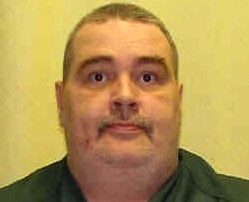 Jessie James Cowans
Homicide - Murderer · USA · 1977
Jessie James Cowans Jessie James Cowans was arrested for armed robbery when he…
2 victims
Jessie James Cowans
Homicide - Murderer · USA · 1977
Jessie James Cowans Jessie James Cowans was arrested for armed robbery when he…
2 victims
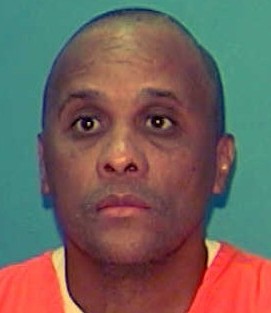 Frederick Cumming-El
Murderer · USA · 1991
Frederick Cumming-El (also known as Frederick Wooden) was born on 01/11/58. He…
1 victim
Frederick Cumming-El
Murderer · USA · 1991
Frederick Cumming-El (also known as Frederick Wooden) was born on 01/11/58. He…
1 victim
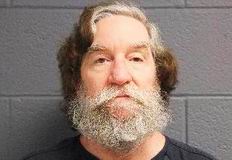 John Douglas White
Murderer · USA · 1994
John Douglas White was a former pastor of a small Mount Pleasant church and lat…
2 victims
John Douglas White
Murderer · USA · 1994
John Douglas White was a former pastor of a small Mount Pleasant church and lat…
2 victims
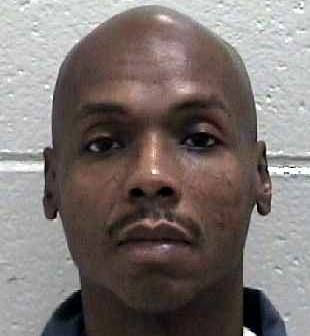 Alphonso Stripling
Murderer · USA · 1988
Alphonso Stripling was convicted by a jury in Douglas County of shooting four e…
2 victims
Alphonso Stripling
Murderer · USA · 1988
Alphonso Stripling was convicted by a jury in Douglas County of shooting four e…
2 victims
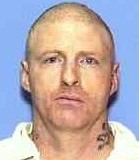 John Wade Adams
Murderer · USA · 1997
John Wade Adams was born on January 26, 1963. He was previously convicted of bu…
1 victim
John Wade Adams
Murderer · USA · 1997
John Wade Adams was born on January 26, 1963. He was previously convicted of bu…
1 victim
- Gender
- male
- Country
- Canada
- Location
- Minto, New Brunswick, Canada
- Date of birth
- J uly 1982
- Age at first offence
- 23
- Characteristics
- decapitation
- Victim profile
- Fred Fulton, 74, and Veronica "Verna" Decarie, 70 (his neighbours)
- Method of murder
- St abbing with knife
- Date(s) of murder
- April 23, 2005
- Years active
- 2005
- Date of arrest
- 4 days after (in USA)
- Status
-
Found guilty, but not criminally responsible for his actions at the time on March 5, 2008.
Case record: Gregory Despres
Timeline
- July 1982 — Gregory Allan Despres was born in Minto, New Brunswick, Canada.
- April 23, 2005 — Despres left his trailer and went on foot to the residence of Fred Fulton and Veronica “Verna” Decarie in Minto, New Brunswick, and gained access by cutting open the screen of one door with a knife and kicking in the second door. While at the residence, he stabbed Decarie to death, overpowered Fulton on the porch, dragged Fulton back to the kitchen, and decapitated him.
- April 25, 2005 — Despres arrived at the Calais, Maine, border crossing carrying a homemade sword, a hatchet, a knife, brass knuckles and a chainsaw stained with what appeared to be blood; the weapons were confiscated and Despres was fingerprinted. Despres had told border officials he was an assassin for the United States government and that he had killed 700.
- April 27, 2005 — A trooper spotted Despres wandering on the side of the road; during a routine check for outstanding warrants, it was found that Despres was expected in court that day in Fredericton, New Brunswick, for an assault on Fulton's son-in-law in August 2004.
- September 15, 2005 — Despres was extradited from Boston to Fredericton, New Brunswick.
- September 5, 2006 — Despres’ trial was originally scheduled for September 5, 2006.
- August 4, 2006 — Despres fired his lawyer, Randy Maillet, with whom he disagreed on how the defense should be presented; the trial date moved to January 8, 2007.
- January 8, 2007 — The trial date was moved to January 8, 2007; the case was heard by a judge and not a jury, before Judge Judy Clendenning.
- February 1 — Despres lashed out at his new lawyer, Ed Darrah, accusing him of working for Al-Qaeda and Saddam Hussein; he demanded his lawyer be fired, but Clendenning refused; Darrah requested a psychological evaluation and Clendenning agreed, ending the trial.
- April 24, 25 and 26, 2007 — Hearings were held regarding Despres’ fitness; expert Dr. Scott Theriault testified Despres was unfit to stand trial due to paranoid schizophrenia; another expert testified that medication could help; Clendenning ruled Despres was unfit on April 26.
- April 26, 2007 — Clendenning ruled Despres was unfit to stand trial.
- July 11, 2007 — Despres was brought before the provincial mental health review board; the board found he had responded well to treatment and was fit to stand trial; a new trial was ordered.
- November 5, 2007 — Despres’ second trial began; evidence from the first trial was admitted; it was heard by Justice Grant.
- January 8, 2008 — The trial continued with defense presenting evidence.
- January 28, 2008 — The trial continued with defense presenting Despres’ mother and Dr. Scott Theriault as witnesses, focusing on whether the defendant’s mental state could allow him to be criminally responsible for the murders.
- January 29, 2008 — Despres’ psychiatrist, Dr. Louis Theriault, presented evidence on Despres’ mental state.
- January 30, 2008 — Prosecution and defense presented their summation to the court; Justice Grant reserved decision until March 5, 2008.
- March 5, 2008 — Justice William Grant found Gregory Despres guilty of causing the deaths of Fred Fulton and Verna Decarie in 2005, but agreed with the defense that Despres was not criminally responsible for his actions at the time.
- within 45 days of March 5, 2008 — A disposition hearing was scheduled to determine what would happen next to Despres.
Background
Gregory Allan Despres was born in Minto, New Brunswick in July 1982. Despres’ mother, Jenny Despres, separated from Despres’ father, Glendon Meyer. Despres lived a nomadic existence nearly his entire life.
As a young child, Despres moved with his mother to Massachusetts. Despres easily made friends and was involved in community activities. As a teenager, he took part in sports and Cadets and worked part-time jobs.
By the age of 16, Despres’ mother began noticing changes in his personality which she dismissed as teenage rebellion. At 17, Despres moved back to Minto with his estranged father. Despres severed ties with his mother for almost 2 years, until she returned to Minto.
After that, Despres became isolated from society, locking himself away in his residence for long periods rarely being seen by outsiders. His mother asked him if he was doing drugs; Despres denied it. His condition continued to deteriorate beyond that point.
The offence
On the evening of April 23, 2005, Despres left his trailer and traveled a short distance on foot to the residence of Fred Fulton and Veronica “Verna” Decarie in Minto, New Brunswick.
Despres gained access to the house by cutting open the screen of one door with a knife and kicking in the second door. Despres went to the couple’s bedroom and stabbed Decarie to death. While Fred Fulton attempted to escape the house, he made it to the porch before being overpowered by Despres. Despres then dragged Fulton back to the kitchen and decapitated him.
The court heard that there were footprints made in blood by bare feet and a pair of boots throughout the house and on the back porch indicating a struggle in which Fulton had at one point likely escaped his attacker to the outside and also attempted to barricade himself in the bathroom.
The court heard that Fulton had 30 clusters of stab wounds and that his decapitated head was found in a pillowcase under the kitchen table. The court heard that Decarie’s body had 31 wounds, with the most substantial stabs to her face and upper neck.
It had been reported to the media that Despres had thrown Fulton's head out the back door; it was later found under the kitchen table in a pillowcase.
Investigation
The weapons were confiscated at the Calais, Maine, border crossing and Despres was fingerprinted.
The RCMP suspected Despres after learning he had been arrested in the United States and was currently jailed in Boston.
Arrest and extradition
Shortly after the murders, Despres packed up a car with the murder weapons and drove toward the United States. The car was later found in a gravel pit near the Canada–U.S. border and identified as Fulton's.
On April 25, 2005, Despres arrived at the Calais, Maine, border crossing carrying a homemade sword, a hatchet, a knife, brass knuckles and a chainsaw stained with what appeared to be blood. At the border, Despres boasted of being an assassin for the United States government and of having killed 700. The weapons were confiscated and Despres was fingerprinted.
Although it was determined that Despres was due in court to be sentenced for an assault conviction, Despres held U.S. citizenship and officers could not legally compel him to return to Canada. Although contact was made with the RCMP, they had no other information that would have allowed officers to detain Despres. The bodies had not yet been discovered, so he was permitted to enter the United States.
The commentary included the following quotations:
- “Joseph Gutheinz, a University of Phoenix criminal justice professor said they could have arrested Despres for lying to a customs officer. The comment about 700 kills should have tipped them that he was not telling the truth, he said.”
- “if the customs agents wanted to exercise their discretion in regard to a person who they believed might be mentally ill, there was also a non-criminal option. In Maine, as in many states, there is a protective custody statute, which permits law enforcement officers to take into custody individuals they have reasonable grounds to believe may be an imminent threat to themselves or others. This authority to apprehend and process a person is designed to permit a psychological evaluation.”
From there, Despres hitchhiked south to Massachusetts. On April 27, 2005, a trooper spotted Despres wandering on the side of the road. During a routine check for outstanding warrants, it was found that Despres was expected in court that day in Fredericton, New Brunswick, for an assault on Fulton's son-in-law in August 2004.
Fulton's daughter discovered the bodies of her father and Decarie at their residence in Minto, New Brunswick the day prior.
Despres was extradited from Boston to Fredericton on September 15, 2005. Despres was brought to Canada on a RCMP plane from a prison in Plymouth, Mass., accompanied by several police officers in plain clothes. He had been in jail since he was arrested in Massachusetts on April 27 in connection with the murders.
After a brief hearing in U.S. District Court in Boston, the U.S. State Department signed an extradition order to have Despres turned over to Canadian officials. A prosecutor told the extradition hearing that police matched blood on Despres’ clothes to Fulton. Despres did not fight extradition at the hearing.
Trial
First trial and fitness proceedings
Despres’ trial was originally scheduled for September 5, 2006. On August 4, 2006, Despres fired his lawyer Randy Maillet. The trial date moved to January 8, 2007.
The first trial was heard by a judge and not a jury. Judge Judy Clendenning presided over the case. The prosecution focused on the blood trail, DNA evidence, and Despres’ relations with Fulton. The prosecution stated Despres and Fulton were constantly fighting over the waterline, a conflict worsened by Despres’ use of recreational drugs.
On February 1 (year as part of the first trial period), Despres lashed out at his new lawyer Ed Darrah and accused him of working for Al-Qaeda and Saddam Hussein. Despres demanded his lawyer be fired, but Clendenning refused. Darrah requested Despres be sent for a psychological evaluation; Clendenning agreed and the trial ended.
Hearings were held on April 24, 25 and 26, 2007. During these hearings, Dr. Scott Theriault testified that Despres was unfit to stand trial because he believed Despres had paranoid schizophrenia. Jeannie Despres backed this up by saying her son seemed to act strangely since the age of 17. Another expert testified that Despres was fit to stand trial and that medication could help any mental disorder he was facing. Clendenning disagreed and ruled Despres unfit to stand trial on April 26.
On July 11, 2007, Despres was brought before the provincial mental health review board, which found he responded well to treatment and was fit to stand trial. A new trial was ordered.
Second trial
Despres’ second trial began on November 5, 2007, and was heard by Justice Grant. Evidence from the first trial was admitted into court.
During the second trial:
- On the second day, Despres’ grandfather, Adolph, testified that Despres had repeatedly tried to join the military and had been rejected every time. Adolph also testified that Despres would stay in his room for hours talking to himself.
- On the second day, the court was shown a video of the crime scene with graphic images of Fulton's house, including blood on the walls of the bedroom, Decarie’s body on the floor, blood smeared kitchen where Fulton's decapitated body was sprawled out, and the pillowcase in which Fulton's head was found.
- On day three, Fulton's grandson, Fred Mowat, testified that his grandfather feared Despres and often required medications to sleep at night. Mowat also testified that he and Despres had had a fight in 2004 over noise coming from his trailer, and that Despres pulled a knife on him. Charges were filed in this incident and Despres was found guilty.
- On day four, the court heard from one witness who had seen Despres cross the U.S. border and another witness who had picked him up hitchhiking and drove him south.
On November 16, the court adjourned the trial until January 2008 to allow counsel time to prepare expert witnesses.
In January 2008, Despres’ mother and Dr. Scott Theriault testified for the defense. On January 29, 2008, Dr. Louis Theriault also presented evidence going to Despres’ mental state. On January 30, 2008, prosecution and defense presented their summation, and Justice Grant reserved decision until March 5, 2008.
The proceedings described the legal standard for guilt and non-criminal responsibility based on mental condition, stating that guilt required “beyond a reasonable doubt” and non-criminal responsibility required the lower standard of a “balance of probabilities”.
Sentencing
Despres was found guilty of causing the deaths of Fred Fulton and Veronica Decarie, and was found not criminally responsible for his actions at the time.
On March 5, 2008, Despres was remanded to Shepody Healing Centre, which served as a secure mental health centre for New Brunswick’s medium-security Dorchester Penitentiary.
Outcome
On March 5, 2008, Justice William Grant found that the Crown had proven beyond a reasonable doubt that Despres caused the deaths of Fred Fulton and Verna Decarie in April 2005. The defense successfully argued that Despres was not criminally responsible for his actions at the time. Despres was convicted and was remanded to Shepody Healing Centre.
The following quotation was attributed to Justice William Grant:
“The sheer brutality of the murders makes me question whether this could be carried out by a person who understood the wrongfulness of their actions,” Grant said.
The following additional quotation was attributed to Michael Richardson, Fulton's nephew:
“I think that's too grey of [an] area in the law,” said Michael Richardson, Fulton's nephew. "I just think that you're responsible for your actions regardless of what you do. If you're not responsible for your actions, who is? "Someone should pay for these two people being murdered, and I don't think we got justice today."
A disposition hearing was scheduled to be held within 45 days to determine what would happen next to Despres.
Other details
Despres was charged with two counts for first-degree murder.
Fulton and Decarie were found dead in their Minto, N.B., home on April 26, 2005.
Justice Grant referenced testimony indicating Despres had been suffering from a mental illness for at least a year before the killings and was delusional for at least 24 hours after the incident. The judge referenced testimony from Despres’ grandfather that Despres would stay in the bathroom for hours talking to himself in voices.
Despres’ delusions were described as appearing when he crossed the border at Calais, Maine, and told border officials that he was a marine sniper and an assassin with 700 kills.
During the first trial period, Despres fired lawyer Randy Maillet and later demanded lawyer Ed Darrah be fired after accusing him of working for Al-Qaeda and Saddam Hussein.
Despres was declared unfit to stand trial and ordered to undergo treatment for paranoid schizophrenia after a psychiatric assessment. A provincial review board later ruled he had responded well to psychiatric treatment and was fit to stand trial again.
The Crown argued that Despres knowingly entered the home of his neighbours with a weapon and wearing protective clothing, then committed a crime, fled the scene, and crossed the border into the United States.
Despres’ defense lawyers argued that he was delusional and believed he was carrying out a military mission at the time of the slayings.
Despres had been expected in court in Fredericton for an assault on Fulton's son-in-law in August 2004.

Spotted an error, or have more information about this case?