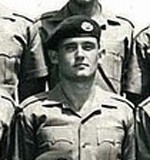
Mathew Charles Lamb
Homicide David Michael Krueger
Homicide · Canada · 1956
David Michael Krueger was best known by his birth name, Peter Woodcock. In 1982…
4 victims
David Michael Krueger
Homicide · Canada · 1956
David Michael Krueger was best known by his birth name, Peter Woodcock. In 1982…
4 victims
 David Michael Krueger
Homicide · Canada · 1956
Peter Woodcock (birth name) was a Canadian serial killer and child rapist. · Da…
4 victims
David Michael Krueger
Homicide · Canada · 1956
Peter Woodcock (birth name) was a Canadian serial killer and child rapist. · Da…
4 victims
 Michael Slobodian
Homicide · Canada · 1975
Michael Slobodian committed suicide by shooting himself on the same day as the…
2 victims
Michael Slobodian
Homicide · Canada · 1975
Michael Slobodian committed suicide by shooting himself on the same day as the…
2 victims
 Gregory Despres
Homicide · Canada · 2005
July 1982 — Gregory Allan Despres was born in Minto, New Brunswick, Canada. · A…
2 victims
Gregory Despres
Homicide · Canada · 2005
July 1982 — Gregory Allan Despres was born in Minto, New Brunswick, Canada. · A…
2 victims
 David Dobson
Homicide · Canada · 1982
David James Dobson was born in 1965 and was from Mississauga, Ontario. He was 1…
1 victim
David Dobson
Homicide · Canada · 1982
David James Dobson was born in 1965 and was from Mississauga, Ontario. He was 1…
1 victim
 Parveen Bibi
Murderer · Pakistan · 2016
Parveen Bibi was convicted of murdering Zeenat Rafiq by burning her to death in…
1 victim
Parveen Bibi
Murderer · Pakistan · 2016
Parveen Bibi was convicted of murdering Zeenat Rafiq by burning her to death in…
1 victim
 Took Leng How
Murderer · Singapore · 2004
Defendant: Took Leng How (vegetable packer) · Victim: Huang Na (female, 8 years…
1 victim
Took Leng How
Murderer · Singapore · 2004
Defendant: Took Leng How (vegetable packer) · Victim: Huang Na (female, 8 years…
1 victim
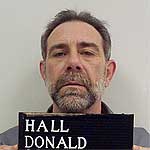 Donald J. Hall
Murderer · USA · 1992
Donald J. Hall (DOC ID 990113) · Donald Hall was sentenced to death on November…
1 victim
Donald J. Hall
Murderer · USA · 1992
Donald J. Hall (DOC ID 990113) · Donald Hall was sentenced to death on November…
1 victim
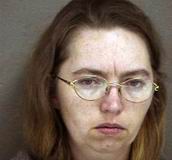 Lisa Montgomery
Murderer · USA · 2004
Lisa Marie Montgomery (born February 27, 1968) was an American woman from Melve…
1 victim
Lisa Montgomery
Murderer · USA · 2004
Lisa Marie Montgomery (born February 27, 1968) was an American woman from Melve…
1 victim
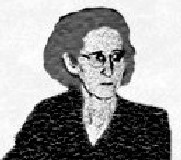 Earle Dennison
Murderer · USA · 1952
Earle Dennison was a widow and worked as a surgical nurse. She worked at the We…
2 victims
Earle Dennison
Murderer · USA · 1952
Earle Dennison was a widow and worked as a surgical nurse. She worked at the We…
2 victims
- Gender
- male
- Country
- Canada
- Location
- Windsor, Ontario, Canada
- Date of birth
- January 5, 1948
- Age at first offence
- 18
- Characteristics
- shooting spree
- Victim profile
- Edith Chaykoski, 20, and Andrew Woloch, 21
- Method of murder
- Shooting (shotgun)
- Date(s) of murder
- June 25, 1966
- Years active
- 1966
- Date of arrest
- Next day
- Status
-
Died in custody
Found not guilty by reason of insanity and committed to indefinite psychiatric care on January 20, 1967; released in 1973; killed in action in Rhodesia on November 7, 1976 by an errant shot from one of his own men
Case record: Mathew Charles Lamb
Status and outcome
Mathew Charles “Matt” Lamb was found not guilty by reason of insanity and was committed to indefinite psychiatric care on January 20, 1967. He was released in 1973. He was killed in action in Rhodesia on November 7, 1976 by an errant shot from one of his own men.
Personal details
Mathew Charles Lamb (5 January 1948 – 7 November 1976) was a Canadian spree killer. He was born in Windsor, Ontario on 5 January 1948. He was the only child of a 15-year-old mother who abandoned him soon after birth. Lamb grew up with his maternal grandmother and her new husband Christopher Collins, and rarely saw his mother while growing up. Lamb never knew his father, who died in the United States while Lamb was young.
Lamb’s presence was resented by his step-grandfather Christopher Collins at the family home on York Street in the South Central neighbourhood of Windsor. According to interviews with relatives, friends and neighbours conducted by Lamb’s legal counsel Saul Nosanchuk in the mid-1960s, Collins subjected the boy to sustained emotional and physical abuse, beating him and frequently calling him a “little bastard”. The violence also included fights between Lamb’s step-grandfather and grandmother while Lamb was a small boy.
Lamb developed violent tendencies from an early age. Nosanchuk wrote that Lamb lured his cousins into his bedroom, locked them in a closet and threatened them, and on one occasion beat one of his cousins so badly that medical attention was required at a local hospital. A childhood friend, Greg Sweet, said:
"I remember once," said Greg Sweet, "when he was about seven years old, he held a knife to a smaller kid and made him eat dog faeces".
Lamb attended Colbourne School in Tecumseh. Collins later said he appeared to be normal there. School staff later told the Windsor Star that he rarely got into trouble, and was capable, but unable to concentrate for extended periods.
Starting with Grade 8, when he was 13, Lamb attended St Jude’s School in Windsor. A fellow pupil said Lamb was distant and quiet and spurned attempts by other children to include him in social circles. For example, Lamb once refused an invitation to a party and said he “didn't like to dance.”
Lamb developed a keen interest in weapons. Sweet said:
Sweet later told the Windsor Star that police were not informed when, as a teenager, Lamb strolled down a residential street "firing a shotgun at the houses of people he didn't like".
Sweet also said that around this time Lamb assembled a collection of bullets and wrote the names of various local policemen on them. Lamb taught himself to produce crude bombs using parts of various weapons, and when he accidentally detonated one during preparation his leg was sprayed with shrapnel.
At age 16, on 10 February 1964, Lamb confronted a police sergeant outside the Windsor Arena, and repeatedly punched him in the face in front of a large crowd. Journalist Bob Sutton wrote that Lamb did this “for no apparent reason”.
Lamb was convicted of assault under the Juvenile Delinquents Act and served six months at the House of Concord, a young offenders’ unit near London, Ontario, run by the Salvation Army.
After Lamb’s release, he was sent by his step-grandfather to live in East Windsor with his uncle, Earl Hesketh. With Hesketh’s support, Lamb briefly attended Assumption College School. He disliked learning Latin but performed creditably. He later dropped out to look for work and could not hold down a permanent job, drifting through short-term engagements none lasting more than three months.
Background and prior conduct
Lamb’s development of violent tendencies included weapon-carrying at school, fascination with firearms, and involvement in violent conduct toward others. Sweet said Lamb and Sweet “always had guns, from the time [they] were about 12 years old”. Lamb also threatened and attacked a cousin, and carried crude bombs and detonated one during preparation, spraying his leg with shrapnel.
The offence: June 1966 shooting spree in Windsor
Seventeen days after Lamb’s release from Kingston Penitentiary in June 1966, Lamb took a shotgun from his uncle’s house and went on a shooting spree around his East Windsor neighbourhood.
On the evening of 25 June 1966, Lamb discovered a shotgun in his uncle’s house. He took the weapon and left the house shortly before 22:00 Eastern Time. He walked a single block north along Ford Boulevard and hid behind a tree outside number 1872.
Six young people were heading south from 1635 Ford Boulevard on their way to a bus stop on Tecumseh Road when they approached the tree behind which Lamb was hiding at about 22:15:
- Edith Chaykoski, 20
- Kenneth Chaykoski, her 22-year-old brother
- Kenneth’s wife
- Andrew Woloch, 21
- Vincent Franco
- Don Mulesa
Lamb stepped out in front of the strangers, pointed the shotgun at them and said:
"Stop. Put up your hands!"
When Edith Chaykoski stepped forward toward Lamb, he shot her in the abdomen. Andrew Woloch moved and was hit in the stomach by a second shot that also wounded Kenneth Chaykoski. Lamb then ran across the street to 1867 Ford Boulevard and fired on a girl whose silhouette he spotted in a side doorway of the house; his target was Grace Dunlop, 19, who was injured.
As law enforcement and medical assistance were summoned, Lamb strolled away and walked two blocks before knocking on a door he had seemingly chosen at random. Pointing the shotgun at the elderly lady who lived there, Ann Heaton, Lamb threatened to kill her. When Heaton cried out to her husband Forrest to phone the police, Lamb fled, throwing the shotgun over the elderly couple’s fence into a field. He returned to the Hesketh house and went to sleep.
Edith Chaykoski died from her wounds at Windsor Metropolitan Hospital at about 05:30 on 26 June. Police searched the neighbourhood during the morning and found the shotgun where Lamb had thrown it. They identified it as Hesketh’s and concluded that the 18-year-old must have taken it and gone on a shooting spree the previous day.
Lamb was arrested at 15:30 on 26 June and charged with the capital murder of Edith Chaykoski. Under Canadian law at that time, he faced a mandatory death penalty if convicted. When Woloch’s injuries proved fatal at 14:45 on 11 July 1966, his murder was added to Lamb’s charge.
Investigation and police actions
After the shootings, police searched the neighbourhood during the morning and found the shotgun where Lamb had thrown it. Police identified it as Hesketh’s and concluded Lamb had taken it and committed the spree.
Arrest and court custody for psychiatric examination
On 26 June 1966, Lamb was arrested at 15:30.
On the morning of 27 June 1966, Lamb appeared without legal counsel at Essex County Magistrate’s Court in Windsor and was remanded for psychiatric examination. While being escorted from the courthouse at around noon, Lamb attempted to escape custody. When restrained, he begged officers to shoot him.
Psychiatric examination and reports (June 1966)
A private psychiatrist from Windsor, Walter Yaworsky, interviewed Lamb starting at 12:30 on 27 June 1966. Yaworsky described Lamb as “hyperactive and agitated”; Lamb was unable to sit still, rose from his seat and paced around the room, and laughed “as if in a state of euphoria.” Yaworsky recorded that Lamb laughed when asked about his spell in Kingston Penitentiary and treated the murder charge lightly. After dismissing questions as “unimportant,” Lamb giggled childishly and said he “needed a lawyer.”
Yaworsky described Lamb’s conversation as incoherent, with him “leaping from topic to topic.” When asked about his parents, Lamb said:
"I don't remember."
When asked where his mother was, Lamb replied:
"I don't remember. Somewhere."
When asked directly about the night of the shootings, Lamb said he could not recall shooting anybody and remembered going home in a taxi and being awoken by his uncle shaking him. When the interview ended at 13:35, Yaworsky noted that Lamb’s hour-long maintenance of the seemingly hypomanic behaviour was “remarkable.” Yaworsky stated that simulation was unlikely, and that lack of memory was credible.
Yaworsky wrote that Lamb was “suffering from a disease of the mind” at the time of the shootings, causing him to be in a kind of dream world outside of reality. Standing before the magistrate later that afternoon, Yaworsky testified that Lamb was mentally unsound and not fit to stand trial. The magistrate remanded Lamb to custody at Penetanguishene Mental Health Centre for a minimum of 30 days.
Lamb was examined again on 29 June 1966 by James Dolan, Clinical Director of Psychiatry at St Thomas Elgin General Hospital. Lamb described the incident in far more detail. He told Dolan that on 25 June he finished his woodworking job at 15:00, refused to work overtime after having put in 62 hours that week, then drunk six beers at home during the afternoon and went to sleep at 21:00. Lamb said he woke up soon after and loaded his uncle’s shotgun, intending to kill himself. He then said:
"Next thing I knew," he continued, "I was on the street."
Lamb said he saw people “as if they were on television.” He heard the sound of a gun being fired “as if it were coming from far away,” and remembered a voice that was not his own saying:
"Put up your hands".
He remembered a dim, far-off gun again, and “a vision of a terrified man standing before him,” then another shot. Dolan recorded that Lamb said he remembered crossing the street, seeing a girl’s outline in a doorway and “somehow” shooting at her. Lamb said he fired at a passing car, and that “everything seemed unreal.” He then said his next memory was confronting an elderly lady, and then thinking “what the hell am I in here for” before leaving. He concluded that he hailed a cab at the corner of Pillette and Tecumseh Road and went back to his uncle’s house.
After 30 days, staff at Penetanguishene still deemed Lamb unfit to stand trial. By 27 August 1966, his state had improved enough for doctors to allow his return to custody at Windsor. The doctors reported that he could face the court and was capable of working alongside a legal advisor.
Justice Saul Nosanchuk was assigned by a local legal aid plan to advise Lamb in the upcoming trial. Nosanchuk said that Lamb had “no hesitation” in signing a paper authorising representation.
Defence preparation and insanity defence
Nosanchuk decided the defence should pursue a mental disorder defence to prevent Lamb from being hanged. Nosanchuk stated that Lamb appeared “slightly built, almost frail, quiet and detached 18-year-old ... very boyish in appearance. He had an exceedingly polite demeanour. He was most appreciative and grateful that I had undertaken his defence.”
Nosanchuk said Lamb became hesitant, disjointed and confused when asked about the events of 25 June. Lamb said he had a faint recollection of what had happened but could not remember taking the shotgun, loading it or shooting anybody. Lamb told Nosanchuk he had watched a television film during the afternoon on 25 June in which someone shot and killed several people, but did not make clear whether he was reenacting the movie.
Nosanchuk said Lamb showed emotional detachment from relatives and events he described, and appeared profoundly troubled. Nosanchuk stated there was no doubt that Lamb had killed Chaykoski and Woloch, had not acted in self-defence and there was no evidence of provocation. Nosanchuk believed a murder-to-manslaughter reduction was therefore unlikely, and felt obliged to explore an insanity plea.
Nosanchuk interviewed Yaworsky and Dolan and secured them as witnesses for the trial, and reviewed a report from four doctors at Penetanguishene who had previously interviewed Lamb. The Penetanguishene report concluded Lamb “suffered from a disease of the mind as a pathological anti-social or psychopathic personality,” which was described as a recognised psychiatric disorder under the Canadian Criminal Code and grounds for an insanity defence in court. Nosanchuk stated that although Lamb claimed amnesia for the events of 25 June at first, on continued questioning Lamb related what had happened “in detail.” Nosanchuk described that Lamb admitted responsibility but did not seem concerned about what had happened and did not have real underlying remorse.
Yaworsky warned Nosanchuk that even if an insanity defence succeeded, Lamb would probably be committed for life.
Nosanchuk said the defence could still approach the prosecution to propose a plea bargain offering to plead guilty to non-capital murder, which would result in life imprisonment but allow a parole hearing after 10 years.
Nosanchuk said he could not use his prepared case unless he first received unequivocal written instruction from his client to plead insanity. Nosanchuk said Lamb wrote a letter instructing him to attempt a mental disorder defence. Nosanchuk stated that Lamb understood that if found not guilty under these terms, the state could detain him for the rest of his life.
Nosanchuk considered whether to call Lamb to testify but decided not to because he feared a cross-examination could lead the jury to believe Lamb was sane.
Trial (October 1966 to January 1967)
A preliminary hearing began on 8 October 1966 and, as Lamb reportedly showed no signs of emotion, it preceded the trial. The trial for capital murder began on 16 January 1967 at Essex County Courthouse in Windsor. The case was heard by a judge and jury under the auspices of Ontario’s Supreme Court. Justice Alexander Stark presided.
Lamb pleaded not guilty to the capital murder of Edith Chaykoski and Andrew Woloch. Nosanchuk opened the mental disorder defence under Section 562 of the Canadian Criminal Code. Stark allowed relevant psychiatric doctors to remain and allowed the Crown to open its case.
Prosecution evidence and witnesses
Eugene Duchesne QC prosecuted the case. Duchesne called Mathew Lamb’s uncle, Stanley Hesketh.
Hesketh testified that three hours after the shootings, Lamb told him:
"must have done it"
Hesketh stated that since Lamb came to live with him after his release from prison, Lamb had always been exceptionally polite and helpful to his family, and that during the morning of 26 June Lamb was hesitant for the first time, not giving full answers and acting less openly.
Duchesne called witnesses of the shootings who agreed unanimously that Lamb had been unhurried, cool and collected. During cross-examination by Nosanchuk, witnesses said Lamb appeared very distant and did not seem to notice a loud party across the street. One witness said Lamb did not appear to notice it.
Heaton testified that Lamb looked frightened and fled without reason when she called for her husband. The police officers who arrested Lamb agreed that he had been unusually cool and silent.
Hesketh testified that when he came home, his nephew had been fast asleep in bed.
Defence evidence and psychiatric witnesses
The defence presented psychiatric evidence beginning on 18 January 1967, when Yaworsky testified on Lamb’s behalf. Yaworsky described his examination two days after the shootings and said Lamb laughed during the interview while incoherently describing the events of 25 June. Yaworsky said Lamb giggled and exclaimed “poor broad,” referring to Edith Chaykoski.
Yaworsky said Lamb sat silently through trial and showed no emotion, but giggled again similarly when Yaworsky mentioned the “giggled” point from the 27 June interview.
Yaworsky said he interviewed Lamb four more times between December 1966 and the trial, and that during these discussions Lamb remembered more about the incident, saying he remembered confronting people in the street and that everything then “felt fuzzy” when he fired the gun. Yaworsky quoted Lamb:
"It was as if I was invisible. ... The next clear memory I have is standing minutes later in the Heaton living room. All of a sudden, I was standing there with a gun in my hand – that is when I ran out."
Yaworsky hypothesised that this occurred when Lamb returned to the real world following a psychopathic episode in which he had been divorced from reality.
Dolan testified along similar lines. In his cross-examination of the doctors, Duchesne cited psychological reports from Penetanguishene in 1966 stating Lamb had an IQ of 125, far above most of his 18-year-old peers. Duchesne suggested it was possible Lamb invented amnesia and confusion to avoid responsibility. Yaworsky and Dolan stated they were sticking to their conclusions.
John Robinson, governor of Essex County Jail, testified for the defence that during Lamb’s time in the county jail, his conduct had been impeccable except for an incident five weeks before the trial on 10 December 1966. Robinson described that episode:
in an episode lasting three hours, the defendant had smashed over 100 windows, set fire to blankets and broken plumbing, causing cells to flood.
Robinson said:
"I was amazed by what I saw," Robinson said. "The pupils were dilated like someone who comes in heavy on narcotics – except their eyes appear sunk in and his were bulged out."
George Scott of Kingston Penitentiary testified that Lamb lived in a fantasy dream world since early childhood and had been in a pre-psychotic state when released from Kingston on 8 June 1966. Scott said this boiled over into an “acute schizoid episode” on the night of the shootings. In cross-examination, Scott was asked why he had allowed Lamb’s release; Scott replied that prison officers were concerned about Lamb’s mental state on release, but there had not been conclusive grounds to certify him insane at that time.
Nosanchuk called three more psychiatrists from Penetanguishene. George Darby testified that Lamb’s story changed three times. Darby said Lamb was anti-social, aggressive and psychopathic and was unable to appreciate the incident’s consequences with any depth of feeling. Elliot Barker testified that Lamb told him he treated all people “like bugs” except for his uncle and grandmother. Barker testified that killing a human being meant nothing more to Lamb than swatting a fly.
Barry Boyd testified that Lamb had said:
"I hate everybody on the street. I probably will kill someone else before I die – it doesn't bother me – it's like killing a bug."
Elizabeth Willet, a psychologist from the Penetanguishene unit, testified that in tests Lamb had a high IQ but had the emotional maturity of a small child aged between 3 and 6. Willet testified that Lamb had few defence mechanisms and acted on impulses almost without exception and without appreciating their consequences.
Prosecution counter-evidence
After the defence evidence, Duchesne called Basil Orchard and Wilfred Boothroyd. Orchard testified that Lamb had abandoned amnesia during an interview in August 1966 and said there was no evidence Lamb was insane, and that he was “simply a young man with strong impulses who sometimes could not control them.”
Boothroyd argued that Lamb acted out anger and bitterness and intended to kill the people he confronted. Boothroyd said Lamb understood what it meant. Justice Stark intervened during Boothroyd’s testimony, asking how Boothroyd could give a reliable opinion without examining Lamb, and Stark remarked that Boothroyd’s opinion was contrary to every doctor who had testified so far.
Closing statements
Nosanchuk delivered closing statement first. Nosanchuk reminded the jury that every doctor speaking for the defence had originally been engaged by the state and that Yaworsky was the only one not employed in the public sector. Nosanchuk conceded Lamb’s actions were senseless and violent but argued that if the jury found Lamb not guilty by reason of insanity, Lamb would stay in custody and could be kept in psychiatric care for the rest of his life if necessary.
Nosanchuk argued the actions on 25 June made no sense. He said the victims were not known to Lamb and Lamb made no attempt to disguise himself. Nosanchuk said Lamb acted alone and had nothing to gain, and he argued Lamb inexplicably diverted his fire from the original group to a shadow in a doorway. Nosanchuk said Lamb chose another house at random, threatened to kill the occupant, then left without doing anything. Nosanchuk said Lamb did not attempt to hide the weapon and left it in a nearby field where it would surely be found. Nosanchuk argued that Lamb went home to bed as if nothing had happened.
Nosanchuk asked the jury whether the behaviour was that of a premeditated killer or that of a profoundly disturbed young man who did not appreciate what he was doing.
Duchesne responded with a “well-reasoned argument.” Duchesne argued the incident was the cold, calculated murder of a defenceless group of innocent young people by an ex-convict released only three weeks earlier and known as an anti-social psychopath. Duchesne argued Lamb gave wildly conflicting stories to different doctors yet convinced each one, and suggested Lamb’s intelligence enabled a false front.
Duchesne then argued criminal responsibility generally. He said five of eight psychiatrists testified Lamb understood on an intellectual level that shooting Chaykoski and Woloch would kill them, which should incur criminal responsibility even with psychiatric evidence. Duchesne argued a not-guilty-by-reason-of-insanity verdict would provide an inexpedient precedent in Canadian law and cause a spate of similar insanity-defence attempts.
Verdict
Justice Stark told the jury that, in his opinion, the weight of psychiatric evidence favoured the defence, while stating the jury decided. The jury retired at 16:30 on 20 January 1967 and returned before 19:00 to give their verdict.
The jury found Lamb to be not guilty by reason of insanity. Lamb showed no reaction when the verdict was read.
Sentencing and psychiatric care after verdict
Because Lamb was not found guilty by reason of insanity, he was not a free man. Lamb was escorted by police back to Penetanguishene and placed in the hospital’s maximum security unit at Oak Ridge, where he remained indefinitely pending an order from Ontario’s Executive Council.
Elliot Barker interviewed Lamb in 1966 and spoke on his behalf at his trial. Barker became the head of Oak Ridge’s therapeutic division. Barker described that he arrived at Penetanguishene in 1959 and in 1965 stepped up efforts to reform programmes based on neuroleptic tranquillisation and electroconvulsive therapy with long isolation.
Barker innovated a programme called a “Social Therapy Unit” (STU). Barker said he believed that patients could evolve a social structure resolving internal conflicts in community. The STU began in September 1965 with a programme of 80 hours of treatment a week focusing on cures through mutual cooperation and interaction. Joan Hollobon volunteered in 1967 to spend two days as if she were a patient, and afterward praised the inmates as “pioneering a brave and exciting experiment in self-government and self-therapy ... [displaying] individual responsibility, co-operation with colleagues and authority, and acceptance of rules reached by consensus.”
In August 1968 the unit created a “Total Encounter Capsule.” Barker described it as a windowless, soundproofed room 8 feet wide and 10 feet long, with green-painted walls and a ceiling containing a one-way mirror. It contained a sink and lavatory. Barker said:
"My original vision," he writes, "was that I wasn't really dealing with patients. I thought we could evolve a social structure where people could resolve the internal conflicts in community."
The Capsule’s purpose, Barker said, was to provide “a place of undisturbed security where a small group of patients could focus on issues they felt important enough to warrant the exclusion of the usual physical and psychological distractions.” Participation in STU required entering the Capsule, which was voluntary, and each patient could choose how many days to spend inside. Groups ranged from two to seven and stayed as little as 24 hours or as long as 11 days. Patients entered the Capsule naked, and they were administered with LSD-25. The room was lit at all times. While inside, other patients operated the room, watched, ran cameras, kept records and maintained an appropriate temperature. Liquid nourishment was provided through drinking straws built into the door.
After his arrival in January 1967, Lamb took part enthusiastically and thrived. He became widely respected and was nominated as ward’s “patient therapist.” Barker told the Globe and Mail that Lamb was:
"He was helpful to the other patients," Barker told the Globe and Mail , "and they looked up to him."
Barker told the Windsor Star that during 1972 Lamb was “one of the most respected therapists in the hospital.” Lamb started a newspaper at Oak Ridge and wrote articles while encouraging others to contribute.
After about five years at Oak Ridge, the matter of Lamb’s liberty was taken up by a five-man Advisory Review Board made up of Ontario Supreme Court Justice Edson Haines, two independent psychiatrists unrelated to Lamb’s case, a lawyer and a lay person. The board recommended Lamb’s release, and the recommendation was approved by the Ontario Executive Council in early 1973. The board gave him a clean bill of health and said he was no longer dangerous.
Release conditions and supervision in 1973
The conditions of Lamb’s release required him to spend a year living with Elliot Barker’s family on Barker’s 200-acre farm under the doctor’s observation. Lamb fenced the property and became one of the farm’s best workers.
Barker and his wife trusted Lamb closely enough to allow him to babysit their three-year-old daughter, who became very attached to him.
Lamb read books on psychiatry, including The Mask of Sanity by Hervey M. Cleckley, which affected him particularly. Lamb told Barker he had come to terms with his condition as a psychopath and wished to go overseas and do something purposeful. Barker supported both a military career and Lamb’s desire to seek esprit de corps, which Barker said in a later statement:
"He wanted that kind of life," Barker later told the Globe and Mail . "He really seemed to need the esprit de corps of an army organisation."
Subsequent activities: Israel plan and Rhodesian Security Forces
When Egypt and Syria attacked Israel on 6 October 1973, starting the Yom Kippur War, Lamb thought he had found his calling. Using money saved from his labourer salary and gifts from his grandmother, he bought State of Israel Bonds and traveled to Israel to volunteer for the front with Barker’s encouragement.
After hitch-hiking to the Israeli lines, Lamb became disillusioned by conversations with soldiers who were loath to fight and wanted to go home. He applied anyway but was turned down because of his psychiatric history. He resolved to tour the world and left Israel days after arriving, intending to travel to Australia.
On his way to Australia in October 1973, Lamb stopped off in South Africa and Rhodesia, and enlisted with the Rhodesian Security Forces. Barker described Lamb as having traveled to Africa with the intention all along.
Rhodesia’s unrecognised government was fighting a war against black communist guerrillas attempting to overthrow it and introduce majority rule. Lamb mustered into the Rhodesian Light Infantry (RLI), an all-white heliborne commando battalion engaged largely in counter-insurgency operations. He and foreign soldiers received the same pay and conditions as Rhodesians.
Chris Cocks wrote that the RLI was “in many respects” like the French Foreign Legion and asked no questions about a man’s past. The narrative stated that Lamb kept his past secret and became a highly regarded and popular member of 3 Commando, RLI.
Lamb visited his aunt and uncle in Windsor on leave in May 1975, and was described as proudly wearing his uniform. Journalist Tony Wanless wrote that Lamb was conspicuous walking along Ouellette Avenue and wore the RLI’s tartan green ceremonial dress and green beret. A funeral procession was held for Edith Chaykoski’s grandmother along the same street and at the same time, leading Edith Chaykoski’s younger brother Richard to spot Lamb. Richard told the Windsor Star a year later:
"He had the uniform and looked a little different," Richard told the Windsor Star a year later, "but I never forgot his face."
Chaykoski’s mother refused to leave the house alone for some time after being upset by the incident.
While staying with the Hesketh family, Lamb saw Barker and said that serving in Rhodesian forces had enriched him personally and made him respect himself for the first time. Lamb wanted to forget his previous life in Canada and said he “didn't want it associated with his adopted country”. He said he was concerned that if he were killed or captured, the Canadian press might reveal his prior history and embarrass the Rhodesian Army, the Canadian government and the Penetanguishene mental hospital.
He expressed loyalty toward Rhodesia and said he would still go back to continue his service. He was described as being saddened by the perceived bias of Western media against Rhodesian government and army. Barker told the Windsor Star:
"He sympathised with the blacks," Barker told the Windsor Star , "but believed that chaos would result if they took over immediately. He used to scrap with other soldiers who treated blacks badly. He was very bright and knew the blacks would eventually take over the country."
A profile maintained by the RLI Regimental Association described Lamb as “very professional ... [and] very popular with all his fellow soldiers.” The narrative stated this matched Barker’s words to the Globe and Mail regarding Lamb’s competence to serve, quoting:
"The Rhodesians thought he was a first-class soldier."
Soon after a furlough to Canada, Lamb was transferred from the RLI to the elite Special Air Service (SAS) unit in September 1975, trained as a paratrooper, passed selection, and then served in covert reconnaissance actions described as “acting as eyes and ears.” He requested a posting back to the RLI, granted, and rejoined 3 Commando.
In late 1976, at age 28, Lamb was promoted to lance-corporal and took command of a stick of four men from 12 Troop, 3 Commando on Fireforce duty on Operation Thrasher covering Rhodesia’s eastern highlands against guerrilla activity.
Killing in action (7 November 1976)
On the late afternoon of 7 November 1976, three insurgents from a group of seven were spotted by an Army observation post in the Mutema Tribal Trust Lands, just south-west of Birchenough Bridge in Manicaland province. Fireforce was called up and Rhodesians readied themselves to fly out by helicopter and engage guerrillas. There were eight four-man “stops” involved in a Fireforce, and Lamb headed Stop 2.
Just before leaving, Lamb ran to Lance-Corporal Phil Kaye, leader of Stop 3, and shouted over the aircraft noise:
"They are going to get me this time," he yelled, sardonically; "Just you watch, Phil Kaye!"
Kaye and his MAG gunner, Trooper Pat Grogan, waved away the comment and told Lamb to get moving. Kaye called after Lamb:
"Go nail gooks!"
Stop 2 included three other named troopers:
- Trooper Soares, a Portuguese-Rhodesian extraction national service MAG gunner aged 18
- Trooper Cornelius Olivier, a 20-year-old Rhodesian regular carrying an FN FAL battle rifle
- Trooper Tony Rok, an Australian Vietnam veteran aged 28, also equipped with an FN
Lamb carried the stick’s radio on his back with his FN FAL ready. Stop 2 landed, formed up into a sweep line, and marched carefully to the north alongside a dry riverbed. As darkness fell, they were suddenly fired upon by an unseen foe. All four men dropped to the ground to avoid being hit.
Lamb called for covering fire from Soares as Lamb and Rok rose and moved forward. A dark figure ran across the soldiers’ line of sight between Lamb and the riverbed. Olivier reflexively swung his rifle and fired an imprecise burst of fire. Lamb was mortally wounded by two errant shots through the chest. He stumbled, slumped, and lay face-down in a heap. A bullet exited through the back of his body and smashed the radio he was carrying. He died almost instantly.
The cadres ahead ran into Stop 1 led by Sergeant Derrick Taylor and all were killed in the ensuing fire fight. Taylor’s stick sustained no casualties. After the battle, Stops 1 and 3 joined Olivier, Rok and Soares and waited beside Lamb’s lifeless body all night until it could be evacuated by helicopter to the local hospital at Chipinga.
The death was officially recorded as “killed in action”, with no reference to friendly fire.
Reactions and aftermath in Rhodesia and Canada
Lamb’s death provoked stories in Canadian local and national media that stressed his history of violence and insanity. It caused a heated debate in the Canadian House of Commons over why, considering his personal history in Ontario and subsequent service in a country Canada did not recognise, Lamb had been issued a valid Canadian passport and allowed to renew it on 26 April 1976.
The Chaykoski family received the news with some relief, having “lived in terror” since Lamb’s release from Penetanguishene three years earlier.
In Rhodesia, Lamb was held in high regard by men who served alongside him. His photograph in full dress uniform was placed on 3 Commando’s Wall of Honour and remained there until the RLI was disbanded in 1980.
When the story of Lamb’s earlier life in Canada ran in the Rhodesia Herald, the paper received numerous strongly worded letters from soldiers who refused to believe it. They demanded a printed retraction and apology, and the Herald gave one to preempt further scandal.
Military funeral and burial
Lamb received what the Windsor Star and Newsweek described as a “hero’s funeral” in Salisbury, the Rhodesian capital, on 15 November 1976. No members of his family were present. His coffin was draped in the Rhodesian flag and topped with a large bouquet of flowers. It was carried on a gun carriage to Warren Hills Cemetery on the western outskirts of Salisbury.
At the cemetery, soldiers of the RLI fired three volleys and senior officers saluted as the coffin was carried to the crematorium on the shoulders of eight RLI men. After cremation, a black military band played “When the Saints Go Marching In.”
Lamb’s ashes were returned to his relatives in Windsor, Ontario, where they were buried alongside the remains of his grandmother.
Spotted an error, or have more information about this case?