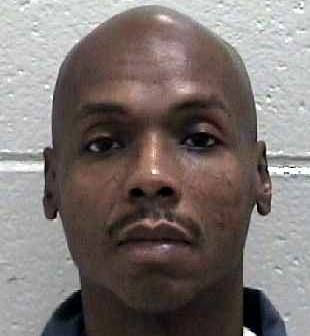
Alphonso Stripling
Murderer Brian Kevin Rosenfeld
Murderer · USA · 1985
Brian Kevin Rosenfeld Brian Kevin Rosenfeld was sentenced to three concurrent l…
23 victims
Brian Kevin Rosenfeld
Murderer · USA · 1985
Brian Kevin Rosenfeld Brian Kevin Rosenfeld was sentenced to three concurrent l…
23 victims
 Yahweh ben Yahweh
Murderer · USA · 1980
Yahweh ben Yahweh was born and legally named Hulon Mitchell Jr. (October 27, 19…
23 victims
Yahweh ben Yahweh
Murderer · USA · 1980
Yahweh ben Yahweh was born and legally named Hulon Mitchell Jr. (October 27, 19…
23 victims
 Russell Ellwood
Murderer · USA · 1991
Russell Ellwood was a former taxi driver. Authorities suspected him of killing…
20 victims
Russell Ellwood
Murderer · USA · 1991
Russell Ellwood was a former taxi driver. Authorities suspected him of killing…
20 victims
 Robert Martines Perez
Murderer · USA · 1994
Name: Robert Martines Perez · Other name used in proceedings: Robert Martinez P…
15 victims
Robert Martines Perez
Murderer · USA · 1994
Name: Robert Martines Perez · Other name used in proceedings: Robert Martinez P…
15 victims
 Todd Hall
Homicide · USA · 1996
Todd Hall was described by neighbors as "mentally slow" and was said to have su…
9 victims
Todd Hall
Homicide · USA · 1996
Todd Hall was described by neighbors as "mentally slow" and was said to have su…
9 victims
 Joachim Knychala
Serial killer · Poland · 1975
Joachim Knychała (September 8, 1952 - October 28, 1985) was a Polish serial kil…
5 victims
Joachim Knychala
Serial killer · Poland · 1975
Joachim Knychała (September 8, 1952 - October 28, 1985) was a Polish serial kil…
5 victims
 Robert Baltovich
Murderer? · Canada · 1990
Robert Baltovich was a Canadian man born July 17 1965. He was educated at the U…
1 victim
Robert Baltovich
Murderer? · Canada · 1990
Robert Baltovich was a Canadian man born July 17 1965. He was educated at the U…
1 victim
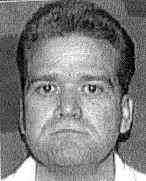 Ricky Eugene Kerr
Murderer · USA · 1994
Name: Ricky Eugene Kerr Court: Court of Criminal Appeals of Texas Docket / Case…
2 victims
Ricky Eugene Kerr
Murderer · USA · 1994
Name: Ricky Eugene Kerr Court: Court of Criminal Appeals of Texas Docket / Case…
2 victims
 Mitchell Carlton Sims
Murderer · USA · 1985
Name: Mitchell Carlton Sims Also known as: “a human ashtray”; “Jeff Richardson”…
3 victims
Mitchell Carlton Sims
Murderer · USA · 1985
Name: Mitchell Carlton Sims Also known as: “a human ashtray”; “Jeff Richardson”…
3 victims
- Gender
- male
- Country
- USA
- Location
- Douglas County, Georgia, USA
- Date of birth
- 1957
- Age at first offence
- 31
- Characteristics
- armed robbery, rape, mentally ill, mentally retarded
- Victim profile
- Anthony Evans, 19, and Gregory Bass , 34 (restaurant employees)
- Method of murder
- Shooting
- Date(s) of murder
- October 16, 1988
- Years active
- 1988
- Date of arrest
- Same day
- Status
-
Sentenced to death
Sentenced to death on July 28, 1989
Case overview
Alphonso Stripling was convicted by a jury in Douglas County of shooting four employees of a fast food restaurant on October 15, 1988, killing two of them. He was sentenced to death in July 1989 in Douglas County. He appealed, and the convictions and death sentences were affirmed.
Timeline
- October 15, 1988 — Stripling shot four employees of a fast food restaurant after it closed for the day; two employees were killed; Stripling left with the restaurant’s cash receipts, stole a getaway car at gunpoint, and was arrested after a high-speed chase.
- June 5, 1989 — Stripling filed a special plea of incompetence to stand trial.
- June 19 and 20, 1989 — The special plea was tried before a jury; the jury found against the plea.
- June 21, 1989 — The trial of the case-in-chief began.
- July 1, 1989 — The trial of the case-in-chief ended.
- July 10, 1990 — The case was docketed in the appellate court.
- September 19, 1990 — The case was orally argued.
- February 22, 1991 — The appellate decision was decided.
- March 15, 1991 — Reconsideration was denied.
- July 28, 1989 — Stripling was sentenced to death.
The offence
On October 15, 1988, very soon after the restaurant closed for the day, Stripling shot four employees of the fast food restaurant, killing two of them. Stripling left with the restaurant’s cash receipts and stole a getaway car at gunpoint. He was arrested a short time later after a high-speed chase. In his possession at the time of his arrest were the stolen car, the restaurant receipts, and the murder weapon.
Two employees were killed:
- 19-year-old Anthony Evans
- 34-year-old Gregory Bass
Stripling was a cook trainee at the fast food restaurant in Douglasville.
Prior convictions and context
Stripling had previously been convicted three times for armed robbery—in 1973, 1979, and 1980. The 1988 crime on trial included charges of armed robbery and murder.
Investigation and arrest
Stripling was arrested shortly after the crime following a high-speed chase. The arrest occurred after he had taken the restaurant cash receipts and stolen a getaway car at gunpoint. The stolen car, the restaurant receipts, and the murder weapon were found in his possession at the time of his arrest.
Trial
Court and judge
The trial occurred in Douglas Superior Court before Judge Noland.
Jury determinations
Stripling was convicted by a jury in Douglas County on:
- two counts each of murder, armed robbery, and aggravated assault.
The jury found in favor of a death sentence on each of the two murder counts.
Competency trial (special plea of incompetence)
Stripling filed a special plea of incompetence to stand trial under OCGA 17-7-130. A special jury found Stripling competent to stand trial.
At the trial of the case-in-chief, Stripling contended he was insane, mentally ill, and mentally retarded. The court charged the jury on possible verdicts of:
- guilty
- not guilty
- not guilty by reason of insanity
- guilty but mentally ill
- guilty but mentally retarded under OCGA 17-7-131 (a) (3).
On each count, the jury found Stripling guilty.
Evidence at the competency issue
Stripling’s expert witness testified that Stripling was mildly mentally retarded and was a “mild to moderate,” chronic paranoid schizophrenic. The expert testified that Stripling was not psychotic and was capable of cooperating with his attorneys. The expert testified that Stripling understood the charges against him, the potential consequences of the trial, and could remember and discuss the facts of the crime.
The state’s expert witness testified that Stripling was competent to stand trial. Law enforcement witnesses testified that they had the opportunity to observe and converse with the defendant and were of the opinion that Stripling was of normal and adequate intelligence and did not seem to be suffering any serious mental disabilities.
The appellate opinion restated the test for competency: a criminal defendant is competent to stand trial if capable of understanding the nature and object of the proceedings and capable of assisting his attorney with his defense.
The appellate court concluded there was no significant conflict in the evidence on competency and that the evidence supported the special jury’s finding.
Guilt phase evidence on mental condition
Defence expert evidence
Two experts testified on behalf of the defendant at the guilt phase of the trial.
Both agreed Stripling was not insane at the time of the crime, and that Stripling had “the mental capacity to distinguish between right and wrong in relation to the act[s]” constituting the crime under OCGA 16-3-2.
One defence expert was a licensed psychologist and cognitive therapist. The psychologist administered a battery of tests, including an IQ test. Stripling achieved an IQ score of 64. The psychologist testified this score was consistent with a previous score of 68 from a test administered some years earlier while Stripling was in prison. The psychologist testified the score was inconsistent with an IQ score of 111 on another prison test. The psychologist thought Stripling probably had cheated on the test that produced the 111 score. The psychologist conceded:
- an IQ score is subject to some margin of error,
- an IQ test contains at least some cultural bias that could affect the score, and
- emotional factors, including depression, could also affect the score.
The psychologist testified that, in the psychologist’s opinion, Stripling was mildly mentally retarded.
The psychologist also concluded, based in part on Stripling’s self-reported auditory hallucinations and the results of the Minnesota Multiphasic Personality Inventory (MMPI), that Stripling was mildly schizophrenic and mentally ill at the time of the crime under OCGA 17-7-131 (a) (2).
The psychologist testified there was no evidence of organic brain damage.
The other defence expert was a psychiatrist. The psychiatrist relied largely on the psychologist’s testing results and agreed that Stripling is mentally retarded. The psychiatrist also agreed, based in part on Stripling’s self-reported auditory hallucinations and the MMPI results, that Stripling was mildly schizophrenic and mentally ill at the time of the crime. The psychiatrist also agreed there was no evidence of organic brain damage.
State expert evidence
The state’s expert did not agree that Stripling was either mentally ill or mentally retarded. The state expert did not administer an IQ test for two reasons:
- Stripling had recently been tested by the defence psychologist, and recent experience taking an IQ test can affect performance.
- Stripling was severely depressed, and a score on a test administered while depressed would not have been a true indication of his intellectual ability.
Based on interviews with the defendant and adaptive skills demonstrated by the defendant, the state expert concluded that Stripling was not mentally retarded.
The state expert also concluded Stripling was not “mentally ill” as defined by OCGA 17-7-131 (a) (2). The expert noted Stripling scored “exceedingly high” on the “F” or “fake” scale on MMPI tests administered by both this witness and the defence psychologist. Unlike the defence witnesses, the state expert testified that the high “fake” score could not be attributed to mental illness, and the expert concluded Stripling “was trying to make himself appear more mentally ill than he probably is.”
Appellate analysis of the jury’s mental-condition findings
The appellate court stated that, under its statutory definition, “mental illness” did not include a mental state manifested only by repeated unlawful or antisocial conduct, citing OCGA 17-7-131 (a) (2). One defence expert conceded that Stripling’s record “sound[s] like repeated unlawful antisocial conduct.” The other defence expert conceded that if Stripling acted on his own during one of the prior armed robberies and the evidence showed he did, it would make a difference to the conclusion that Stripling is mentally retarded.
The appellate court concluded the jury was entitled to conclude either that Stripling did not have a disorder of thought or mood significantly impairing judgment, behavior, recognition of reality, or the ability to cope with ordinary demands of life, or that his mental state manifested itself only by repeated unlawful or antisocial conduct, or both. The appellate court held the evidence supported the jury’s conclusion that Stripling was not mentally ill.
Regarding mental retardation, the appellate court discussed that significantly subaverage intellectual functioning was generally defined as an IQ of 70 or below but that an IQ score of 70 or below was not conclusive and that other factors could affect the score. The court held the evidence did not demand a finding that Stripling was mentally retarded and that the evidence supported the jury’s conclusion that he was not mentally retarded.
Sentencing phase
At the sentencing phase, Stripling relied in large part on his mental condition in mitigation. The jury found in favor of capital punishment.
The appellate court affirmed the death sentences.
Appeals and appellate rulings
Appellate posture
Stripling appealed the convictions and death sentences. The appellate court affirmed the conviction and death sentences and addressed multiple enumerations of error.
Voir dire and jury-related issues
The appellate court rejected several challenges related to jury selection and voir dire, including:
- denial of sequestered voir dire,
- control of voir dire,
- and the court’s rulings on prospective jurors’ attitudes toward the death penalty. The appellate court held there was no abuse of discretion and that rulings were within the deference due to the trial judge’s determination.
The appellate court also addressed a Batson v. Kentucky issue at the competency trial. The court stated the state peremptorily challenged two black prospective jurors and accepted one. Assuming a prima facie claim, the appellate court concluded the trial court’s determination that the prosecutor successfully rebutted the prima facie case was entitled to great deference and not clearly erroneous.
The appellate court also ruled that the defendant was not entitled to review the prosecution’s jury records.
Lunch with prosecutor while case was pending
During voir dire, an assistant district attorney accepted an invitation to have lunch with the sheriff and law officers in the library of the Douglas County jail. After arrival, the assistant district attorney discovered the defendant also had been invited. The defendant was the only jail inmate dining with the group, though two or three others were present to serve the meal. After lunch, the defence attorney discovered what had happened and moved to disqualify the district attorney’s office and bar further prosecution; the court denied the motion.
Stripling contended the state’s conduct violated his right to counsel under Massiah v. United States. The appellate court noted Stripling conceded he was not interrogated at the luncheon and that the case was not discussed. The appellate court concluded there was no reversible constitutional issue because Stripling was in custody during and for several months preceding trial, including under a suicide watch, and the record did not show the assistant district attorney gained knowledge not otherwise readily available. The appellate court added that a prosecutor should not dine with a criminal defendant without the knowledge of his attorneys while the case was being prosecuted, characterizing the practice as dangerous and one it disapproved.
Parole file in-camera review
Stripling sought a pre-trial in-camera review of his parole file and the parole files of his father and brother. The appellate court discussed that records in the possession of the State Board of Pardons and Paroles are confidential under OCGA 42-9-53, but that non-disclosure can give way to the defendant’s right of access to potentially mitigating evidence.
The appellate court held:
- the trial court reviewed Stripling’s parole file and determined there was no potentially mitigating evidence not already known to and available to the defendant, and the appellate court found no error in non-disclosure of the defendant’s parole file;
- the trial court did not review the parole files of the defendant’s brother or father because the request contained no more than speculation these files might contain mitigation evidence, and refusal was not erroneous.
Punishment and other claimed errors
The appellate court addressed issues including:
- a claim that electrocution was cruel and unusual punishment prohibited by the Federal and Georgia Constitutions, stating there was no merit to the claim and finding the trial court’s response sufficient to cure potential harm from an improper remark;
- instructions given to prospective jurors about investigative duties and not discussing or reading about the case;
- an argument about a remark near the conclusion of the guilt phase referencing jurors’ inability to question witnesses and an appellate court reversal, and concluding there was no reversible error under Caldwell v. Mississippi;
- no requirement to sequester a competency-trial jury even in a death penalty case;
- no victim-impact evidence introduced in violation of Booth v. Maryland;
- the doctrine regarding mutually supporting aggravating circumstances, concluding reversal was not required where each murder conviction was supported by an independent statutory aggravating circumstance (armed robbery);
- rejection of claims that the death sentences were imposed under passion, prejudice, or other arbitrary factor and that the sentences were not excessive or disproportionate to penalties in similar cases.
Attorney-client communications monitoring allegations
One ground of Stripling’s motion for new trial alleged that conversations between Stripling and his attorneys were electronically monitored by agents of the Douglas County Sheriff’s Department in violation of rights under the Fifth, Sixth, Eighth, and Fourteenth Amendments and related Georgia provisions and statutory and case law.
Hearings were conducted on the allegations. A witness was a reporter for the Fulton County Daily Report who wrote an article based on information from “confidential sources” allegedly reporting “precise details on a systematic policy of eavesdropping” of attorney-client communications at the Douglas County jail. The reporter was called by the defendant. She declined to reveal the identity of her confidential sources (“three former employees of the Douglas County Sheriff's Department”), relying on a “shield law” creating a qualified privilege for members of the news media against disclosure of information.
The trial court allowed the reporter to invoke the privilege except as to information already publicly disclosed in the article or elsewhere, and as to which the privilege was waived. The appellate court set out the relevant Georgia statute OCGA 24-9-30 in full, including the qualified privilege language and exceptions.
The appellate court held:
- it was not error to allow the reporter to invoke the privilege because even assuming the information was material and relevant and necessary for proper preparation, Stripling failed to show the information could not be reasonably obtained by alternative means;
- the evidence including testimony by the sheriff and his staff failed to establish a violation of attorney-client privilege, and denial of the motion for new trial was not erroneous.
Other appellate points
The appellate court also addressed additional claims, including:
- any error in allowing a state’s exhibit to be displayed with a chain of custody label was harmless;
- the court’s instructions defining mitigating circumstances were sufficient under Davis v. State;
- evidence supported the jury’s findings of statutory aggravating circumstances under OCGA 17-10-35 (c) (2).
Outcome
The appellate court affirmed the conviction and death sentences. It held that the jury’s verdicts of competency to stand trial, guilt, and the death sentences were supported by the evidence and declined to vacate them.
Parties and representation
Frank C. Winn, District Attorney, Michael J. Bowers, Attorney General, and Mary H. Hines appeared for appellee. Michael R. Hauptman and John A. Beall IV appeared for appellant.
Amici curiae listed in the appendix included Long, Aldridge & Norman, Albert G. Norman, Jr., and Bruce P. Brown.
Other details
The crime occurred on October 15, 1988.
On June 5, 1989, Stripling filed a special plea of incompetence to stand trial. The plea was tried before a jury on June 19 and 20, 1989, and the jury found against the plea.
The trial of the case-in-chief began on June 21, 1989, and ended on July 1, 1989.
A motion for new trial was filed August 9, 1989. The motion, as amended, was denied, after hearing, on April 27, 1990.
The case was docketed in the appellate court on July 10, 1990, and orally argued on September 19, 1990.
DECIDED FEBRUARY 22, 1991; RECONSIDERATION DENIED MARCH 15, 1991.


Spotted an error, or have more information about this case?