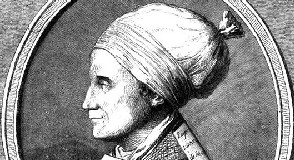
Antoine François Desrues
Murderer Albert Foulcher
Murderer · France · 1993
Albert Foulcher was described as a former insurance agent and a gun enthusiast.…
5 victims
Albert Foulcher
Murderer · France · 1993
Albert Foulcher was described as a former insurance agent and a gun enthusiast.…
5 victims
 Alfredo Stranieri
Murderer · France · 1997
Alfredo Stranieri (born July 30, 1956) was nicknamed "the killer ads." Alfredo…
4 victims
Alfredo Stranieri
Murderer · France · 1997
Alfredo Stranieri (born July 30, 1956) was nicknamed "the killer ads." Alfredo…
4 victims
 Edmond de la Pommerais
Murderer · France · 1862
Edmond de la Pommerais presented himself as a count and married a woman from a…
2 victims
Edmond de la Pommerais
Murderer · France · 1862
Edmond de la Pommerais presented himself as a count and married a woman from a…
2 victims
 Henri Girard
Murderer · France · 1912
Henri Girard Henri Girard was a French killer-for-profit. He insured his victim…
2 victims
Henri Girard
Murderer · France · 1912
Henri Girard Henri Girard was a French killer-for-profit. He insured his victim…
2 victims
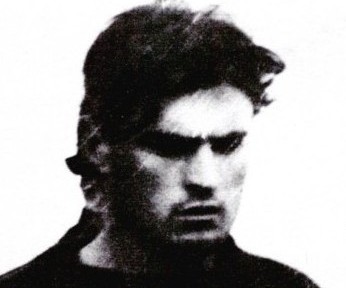 Jean-Laurent Olivier
Murderer · France · 1967
Jean-Laurent Olivier was born in 1944 in the Aisne. He was abandoned very early…
2 victims
Jean-Laurent Olivier
Murderer · France · 1967
Jean-Laurent Olivier was born in 1944 in the Aisne. He was abandoned very early…
2 victims
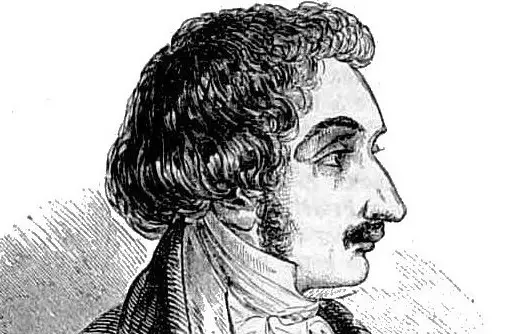 Pierre François Lacenaire
Murderer · France · 1834
Pierre François Lacenaire Pierre François Lacenaire was a famous French poet an…
2 victims
Pierre François Lacenaire
Murderer · France · 1834
Pierre François Lacenaire Pierre François Lacenaire was a famous French poet an…
2 victims
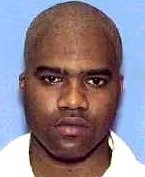 Roderick Newton
Murderer · USA · 1999
Name: Roderick Newton · TDCJ Number: 999348 · Date of Birth: 12/07/1977 · Gende…
1 victim
Roderick Newton
Murderer · USA · 1999
Name: Roderick Newton · TDCJ Number: 999348 · Date of Birth: 12/07/1977 · Gende…
1 victim
 Kevin Dunlap
Murderer · USA · 2008
Kevin Wayne Dunlap (DOB 5-15-72) was sentenced to death on March 19, 2010 in Li…
3 victims
Kevin Dunlap
Murderer · USA · 2008
Kevin Wayne Dunlap (DOB 5-15-72) was sentenced to death on March 19, 2010 in Li…
3 victims
 Gregory Madej
Murderer · USA · 1981
Gregory Madej was sentenced to death in 1982. On January 10, 2003, the Governor…
1 victim
Gregory Madej
Murderer · USA · 1981
Gregory Madej was sentenced to death in 1982. On January 10, 2003, the Governor…
1 victim
 Jerry Walter McFadden
Murderer · USA · 1986
Jerry Walter McFadden nicknamed himself "Animal". He was a former telephone cab…
3 victims
Jerry Walter McFadden
Murderer · USA · 1986
Jerry Walter McFadden nicknamed himself "Animal". He was a former telephone cab…
3 victims
 David Camm
Justice miscarriage · USA · 2000
David R. Camm was a former Indiana State Trooper who was acquitted after three…
0 victims
David Camm
Justice miscarriage · USA · 2000
David R. Camm was a former Indiana State Trooper who was acquitted after three…
0 victims
 Timothy Charles Palmes
Murderer · USA · 1976
Defendant: Timothy Charles Palmes (also styled Timothy Charles PALMES) Age at e…
1 victim
Timothy Charles Palmes
Murderer · USA · 1976
Defendant: Timothy Charles Palmes (also styled Timothy Charles PALMES) Age at e…
1 victim
- Gender
- male
- Country
- France
- Location
- Paris, France
- Date of birth
- 1744
- Age at first offence
- 33
- Characteristics
- poisoner
- Victim profile
- Madame de la Motte and her son, a youth of sixteen
- Method of murder
- Poisoning
- Date(s) of murder
- January-February 1777
- Years active
- 1777
- Date of arrest
- —
- Status
-
Executed
Executed on May 6, 1777
Case identification
Antoine François Desrues (1744–1777) was a French poisoner.
Background
Desrues was born at Chartres to humble parents. He went to Paris to seek his fortune and started in business as a grocer. He was known as a man of great piety and devotion, and his business was reputed to be a flourishing one, but when, in 1773, he gave up his shop, his finances, owing to personal extravagance, were in a deplorable condition.
Desrues entered negotiations with Madame de la Motte for the purchase from her of a country estate. When the time came for the payment of the purchase money, he invited her to stay with him in Paris pending the transfer. While she was his guest, he poisoned first her and then her son, a youth of sixteen.
After the poisonings, Desrues forged a receipt for the purchase money and took on the aristocratic name “Desrues de Bury” in an attempt to obtain possession of the property. By that time the disappearance of Madame de la Motte and her son had aroused suspicion. Desrues was arrested, and the bodies of his victims were discovered; the crime was brought home to him.
Desrues had acquired his wife’s social ambitions while being financially unstable. The material describes that he was insolvent and that he had turned money-lender, lending to spendthrift and embarrassed noblemen at enhanced interest. It also describes that noblemen either forgot to pay while they were alive or were found insolvent on their death. Desrues therefore ordered goods and merchandise on credit and sold them at a lower price for ready money. Victims of this treatment began to press him for money or goods, and he was driven further into financial disaster.
The material says that Desrues purchased a place near Rueil early in 1775, paying 1,000 livres on account, but that non-payment of the rest resulted in the annulment of the contract. It further says that because he failed to pay 9,000 livres for the modest estate near Rueil, he pledged himself to pay 130,000 livres for the lordly domain of Buisson-Souef.
Desrues rehearsed his future style and title in writing as: “Antoine Francois de Cyrano Derues de Bury, Seigneur de Buisson-Souef et Valle Profonde.”
The narrative gives biographical details: Desrues’s father was a corn merchant; Desrues’s parents died when he was three years old. The material says that for some time after his birth he was assumed to be a girl, and that it was not until he was twelve years old that an operation determined his sex to be masculine. It says that he was apprenticed by relatives to a grocer, succeeded in the business, and was able in 1770 to set up on his own account in Paris. It says that in 1772 he married.
The narrative identifies Desrues’s wife as Marie Louise Nicolais, daughter of a non-commissioned artillery officer turned coachbuilder. It describes that Desrues suppressed the S at the end of her name, and also erased it in his marriage contract, to describe her as connected with the noble house of Nicolai. It also describes that Desrues said she was of noble birth and an heiress; it says the material’s account treated his first statement as untrue but accepted that she was an heiress. It describes that her kinsman Beraud had become heir to a Marquis Desprez, with Beraud taking a title from one of his estates and calling himself lord of Despeignes-Duplessis after inheriting.
The material describes Despeignes-Duplessis as living alone in his castle of Candeville, hated by neighbours, a terror to poachers; it says he was found lying dead in his bedroom, shot in the chest, and that the assassin escaped through an open window. The mystery of Beraud’s murder was described as never having been solved.
The offence
The material describes that while Desrues hosted Madame de la Motte in Paris, he poisoned both her and her son, a youth of sixteen. Later, the bodies were discovered and doctors examined them.
Doctors declared themselves satisfied that both mother and son had died from “a bitter and corrosive poison administered in some kind of drink.” One of the doctors, in the light of subsequent investigation, arrived at the conclusion that Desrues had used corrosive sublimate. The narrative says that how or where he had obtained the poison was never discovered.
The material gives the execution narrative as also describing him as “the now famous poisoner.”
Investigation
The material describes the legal and investigative development around the disappearances and the estate purchase.
It states that Desrues’s plan depended on the disappearance, willing or unwilling, of Madame de la Motte and her son. It describes that Madame de la Motte and her son were brought into Desrues’s household in Paris and that their health deteriorated while Desrues attended to them.
The narrative describes that on February 1 the servant was still at Montrouge, and that Madame de la Motte had become a corpse. It says Desrues bought a large leather trunk and that he was engaged in preparations for coffining her when a female creditor came to the door. The material describes movement of the body concealed in trunks.
The narrative describes that on the following day, a pale little gentleman using the name Ducoudray hired a vacant cellar in the Rue de la Mortellerie; a large grey trunk was deposited there, and a hole was dug in the floor. It describes that Ducoudray was seen going in and out of his cellar with a lighted candle and that eventually he was no longer seen. It further describes that Desrues later sent down to Buisson-Souef a large trunk filled with china, received by M. de Lamotte, and that the body of Madame de la Motte had been conveyed to its last resting place in the cellar.
The narrative describes investigative pressure from creditors. It says Mesvrel-Desvergers, an importunate creditor, met Desrues while Desrues was depositing a cask of wine and followed him to ascertain the sample was deposited at a house in the Rue de la Mortellerie.
It also describes a separate death during the same broader period: on Wednesday, February 12, M. Beaupre of Commercy arrived at Versailles with his nephew, described as a fat boy in reality about fourteen years of age but given out as older, and it gives that the boy died after vomiting over subsequent days. The material gives a burial description for “Louis Anotine Beaupre, aged twenty-two and a half” and says he was buried at Versailles.
It then describes that when Desrues returned to Paris from Lyons, on March 11, the police had already visited the house and questioned his wife, and that he was under close surveillance. It says that an advocate named Duclos revealed the fictitious character of the loan of 100,000 livres which Desrues alleged he had paid to Madame de la Motte as the price of Buisson-Souef.
It states that when a new power of attorney arrived from Lyons, signatures were compared and pronounced forgeries. Desrues was arrested and lodged in the Prison of For l’Eveque.
It describes that on April 18 information was received by authorities which determined them to explore the wine-cellar in the Rue de la Mortellerie, and that the corpse was soon brought to light. It says Desrues initially said he failed to recognise it as the remains of Madame de la Motte but later admitted giving medicine and then awakening to find her dead. It further says he admitted to hiding the body and also that of her son, who he confessed had died and had been buried by him at Versailles.
On April 23 the body of the young de Lamotte was exhumed. Both bodies were examined by doctors, who concluded they died from corrosive poison administered in drink.
Arrest
Desrues was arrested and lodged in the Prison of For l’Eveque after the signatures on a power of attorney were compared and pronounced forgeries.
Trial
The material describes that the preliminary investigation ended on April 28. Two days later his trial commenced before the tribunal of the Chatelet and lasted one day.
Both Desrues and his wife were interrogated. Desrues maintained that he had not poisoned either Madame de la Motte or her son; he said his only crime lay in having concealed their deaths. The narrative includes a statement by Desrues’s wife:
“It is Buisson-Souef that has ruined us! I always told my husband that he was mad to buy these properties--I am sure my husband is not a poisoner--I trusted my husband and believed every word he said.”
The court condemned Desrues to death, but deferred judgment in his wife’s case due to her pregnancy.
Sentencing
Desrues was sentenced to death and executed in Paris in 1777. Prior to execution, the material states that he was originally sentenced to life in prison, but was retried after the Revolution and was condemned to be torn asunder alive and burned. It also states that he was condemned to death and executed in Paris in 1777.
During the execution period described, torture was applied to wring a confession from him. The material says he was too delicate to undergo the torture of pouring cold water into him and that he instead endured the “boot” torture: his legs encased in wood, wedges hammered in until flesh was crushed and bones broken. It states he endured four wedges constituting the ordinary torture and at the third of the extraordinary he fainted.
At Notre Dame, he made the amende honorable, but reiterated the assertion of his innocence when the sentence was read aloud.
Appeals
The material states that an appeal lay from the Chatelet to the Parliament of Paris. It says the appeal was heard on March 5. Desrues’s appeal was rejected, and he was ordered for execution on the morrow.
Outcome
Desrues was executed on May 6, 1777. The material describes the manner of execution:
- He was stripped of all but his shirt.
- He lay flat on the scaffold, his face looking up to the sky, his head resting on a stone, and his limbs were fastened to the wheel.
- The executioner broke his limbs one after another with a heavy bar of iron, with a fearful cry each time he struck.
- The customary three final blows on the stomach were inflicted, but the material says he still lived.
- He was then thrown on to the fire, and his burnt ashes were scattered to the winds and picked up by the mob.
It also states that at six o’clock on the morning of May 6 he returned to the Palais de Justice, submitted to torture, and that at two o’clock in the afternoon he was taken to Notre Dame with candle in hand and rope around his neck.
Just before dying, the material reproduces his statement at Hotel de Ville:
“I want above all to state that my wife is entirely innocent. She knew nothing. I used fifty cunning devices to hide everything from her. I am speaking nothing but the truth, she is wholly innocent--as for me, I am about to die.”
Aftermath
The material describes that some two months after Desrues’s execution, Madame Derues was delivered in the Conciergerie of a male child, and that the child died in fifteen days. It says that the fatherhood was never determined.
It states that in January 1778 the judges of the Parliament decided by a majority of one that she should remain a prisoner in the Conciergerie for another year while judgment in her case was reserved.
In the following August, she was charged with having forged the signature of Madame de la Motte on the deeds of sale. In February 1779 two handwriting experts decided in her favour and the charge was abandoned.
The material then describes that the case against her continued through other developments. It says that M. de Lamotte believed the wife to have been his partner in guilt, and that he thirsted for revenge, even stooping to suborn witnesses; it says the conspiracy was exposed and sympathy with the accused woman increased, with a young proctor publishing a pamphlet in her defence asking for an immediate inquiry into charges which had not in any instance been proved.
It states that in March 1779 the Parliament decided to finish the affair. It describes that in secret session the judges examined the documents, listened to a report, interrogated the prisoner, and by a large majority condemned her to a punishment just short of the supreme penalty.
It states that she was sentenced to be publicly flogged, branded on both shoulders with the letter V (Voleuse), and imprisoned for life in the Salpetriere Prison. On March 13, in front of the Conciergerie, she underwent the first part of her punishment; that day her hair was cut short and she was dressed in the uniform of the prison where she was to pass the remainder of her days.
The material describes her prison life: it reports that ten years passed and that a fellow prisoner described Madame Derues as “scheming, malicious, capable of anything.” It says she was accused of being violent and of wishing to revenge herself by setting fire to Paris.
It then describes the Revolution breaking on France and the Bastille falling. In the same year an old uncle of Madame Derues, an ex-soldier of Louis XV., living in Brittany, petitioned for her release, protesting her innocence and asking to take her home and restore her to her children. It states that for three years he persisted vainly.
It says that in the year 1792 it seemed as if success might come, with the case to be re-examined and possible unjust judgment acknowledged. It then describes the September 4 prison massacres in Paris prisons, stating that at four o’clock in the afternoon of September 4 the slaughterers visited the Salpetriere Prison, and that fifth among their victims fell the widow of Derues.
Other details
The narrative includes multiple quotations and direct speech from participants during the events described, including a quoted warning and later statements, such as:
- Desrues’s message after Mme. de Lamotte’s disappearance: “Do not send me oysters,” and “I am too ill with worry. I thank you for all your kindness to my son. I love him better than myself, and God grant he will be good and grateful.”
- Desrues’s statement made while awaiting an outcome at the Palais de Justice: “My case,” and “will soon be over; we'll meet again yet and have a good time together.”
- The remark to the visitor pretending to look at a picture: “Come, sir,” and “you haven't come here to see the pictures, but to see me. Have a good look at me. Why study copies of nature when you can look at such a remarkable original as I?”
- The remark by Desrues at Notre Dame recorded within the narrative: he reiterated his assertion of innocence when the sentence was read aloud.
- Desrues’s statement while facing the will record at Hotel de Ville: “I want above all...”
The narrative also includes the description that there was an extended debate after Desrues’s death, seen as a touchstone for understanding both the last years of the Ancien Régime and the early revolutionary period, with Balzac, Hugo, and Dumas among the participants. It further states that as late as 1828 a dramatic version of it was performed in Paris.


Spotted an error, or have more information about this case?